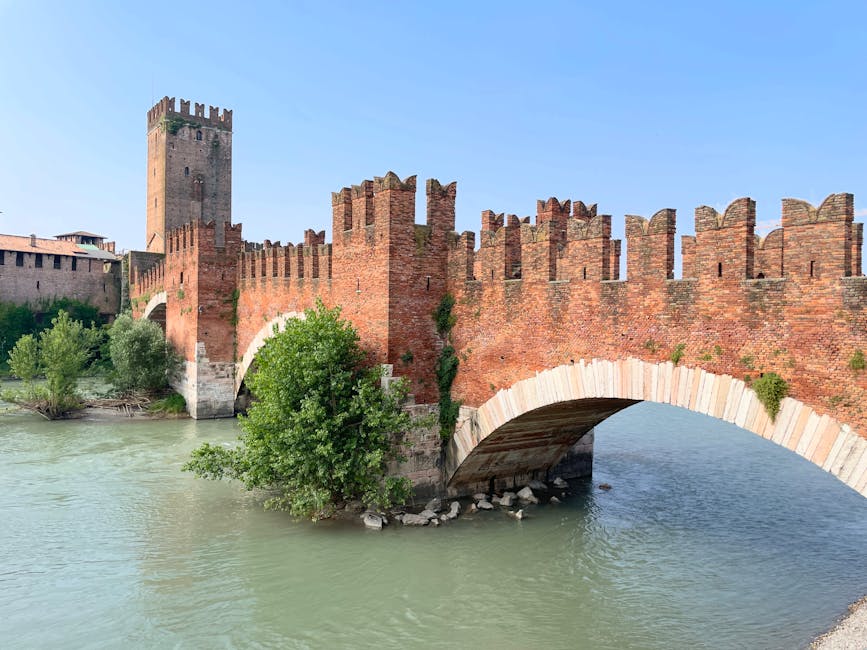
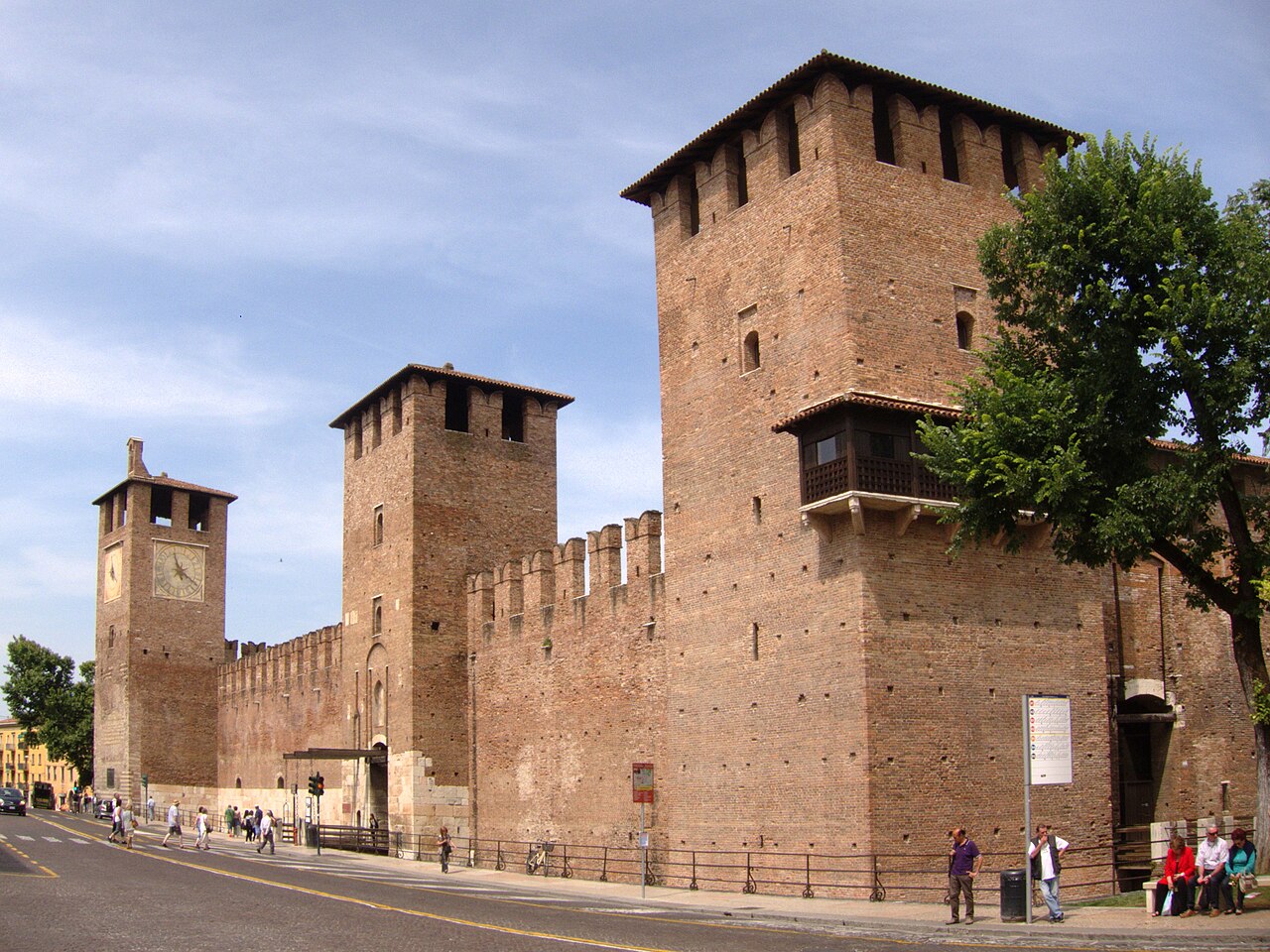
Montorio Castle Ruins
Montorio Castle ruins stand prominently on the hill of Montorio Veronese in Verona, Italy, representing a complex historical site that spans from Roman times through the Early Medieval period and into the 19th century. Originally established as a defensive fortress in the 10th century AD, the castle evolved over centuries, reflecting changes in military architecture and the shifting political landscape of northern Italy.
The origins and early development
The earliest known reference to Montorio Castle dates back to 995 AD, when it functioned primarily as a lookout post integrated into the broader fortifications protecting the city of Verona. The castle's initial construction culminated in the early 12th century, building upon earlier Roman foundations. Constructed largely from volcanic tuff and marble bases, the castle's keep and towers were designed to maximize defensive capabilities on the strategic hilltop.
Medieval expansions under the Scaligeri
During the late 14th century, Montorio Castle underwent significant expansion under the rule of the Scaligeri family, the lords of Verona. This period saw the addition of the bastia, an outer defensive enclosure that enhanced the fortress' protection. The Scaligeri modifications included projecting stone elements and reinforced curtain walls, adapting the castle to contemporary military needs. The castle's walls and towers on the southern, western, and northeastern sides bear visible traces of these 14th-century improvements.
Transition through the Renaissance and Venetian periods
Following the Scaligeri era, Montorio Castle's military importance declined, especially during the Venetian dominion over Verona. By the 18th century, the fortress had largely fallen into disrepair, with many sections deteriorated or ruined. The castle was repurposed over time, including transformation into a fortified farmhouse after the annexation of the county into the Grand Duchy of Tuscany. Ownership changes brought architectural adaptations but also gradual loss of original defensive features.
19th-century military resurgence and Austrian modifications
The 19th century marked a renewed military role for Montorio Castle, particularly under Austrian control. In 1820, four of the original seven towers and parts of the curtain walls were demolished to make way for modern artillery emplacements. A large artillery battery was constructed, integrating with the medieval structures and connecting Montorio to nearby fortresses such as Forte San Michele and Forte Preara. This network was designed to control strategic routes and the surrounding plains.
Artillery and garrison details
The battery was equipped with a formidable array of cannons, including nine rifled muzzle-loading guns of 9.5 centimeters, nine smoothbore cannons, and two large smoothbore mortars measuring 24 centimeters in caliber. A bombproof powder magazine capable of safely storing over 48,000 kilograms of gunpowder supported these weapons. The fortress housed a permanent garrison of approximately 160 soldiers, including artillery and infantry units.
Defensive features and communication
Additional defensive measures included a broad dry moat excavated at the hill's base and bombproof shelters within the battery, interior redoubt, and near the keep along the Scaligeri walls. These shelters provided protection against artillery fire. The castle also contained a telegraph station in its tower, which maintained communication with Forte San Mattia, facilitating coordination within the defensive system.
Architectural layout and surviving structures
The castle consists of two main enclosures shaped irregularly to conform to the hilltop terrain. The smaller northern section, known as the castrum, includes the tall 12th-century keep built from squared volcanic tuff blocks on a marble base, with later brick additions. Adjacent to it stands a closed tower from the same period, constructed similarly. The larger outer enclosure, the bastia, originally featured crenellated walls and defensive towers, though much of its southern and eastern walls were destroyed during the Austrian modifications.
Despite the loss of original battlements and crenellations, much of the masonry and structural layout remain visible. The 19th-century entrance gate provides access to the main courtyard, where restoration efforts have preserved key elements such as the powder magazine and sections of medieval walls. Earthwork fortifications from the artillery battery, including parapets, traverses, and ramparts, are still identifiable.
Modern status and cultural significance
Today, Montorio Castle serves as a cultural venue, hosting events during the summer months that engage visitors with its layered history. Restoration projects in the early 21st century have focused on preserving the remaining medieval walls and powder magazine, allowing for public access and educational opportunities. The castle's ruins offer insight into the evolution of military architecture from the Early Medieval period through the 19th century, illustrating adaptations to changing warfare technologies and political regimes.
Montorio Castle remains a significant historic landmark within Verona, reflecting the city's strategic importance and the complex military history of northern Italy. Its combination of medieval fortifications and 19th-century artillery works provides a tangible connection to the past and a valuable resource for understanding regional defensive systems.
Frequently asked questions (FAQ)
- How do I visit Montorio Castle ruins?
- Montorio Castle ruins are accessible to the public, especially during the summer months when cultural events are held. Visitors can explore the site freely, although some areas may be restricted for preservation reasons. Check local tourism websites for specific event dates and visiting hours.
- What is the historical significance of Montorio Castle?
- Montorio Castle was a strategic military fortress from the 10th century, expanded by the Scaligeri family in the 14th century and later modified by the Austrians in the 19th century. It illustrates the evolution of defensive architecture in Verona and northern Italy over several centuries.
- Can I see the original medieval architecture at Montorio Castle?
- Yes, parts of the 12th-century keep, curtain walls, and towers from the medieval period remain visible. Restoration efforts have preserved key sections, allowing visitors to appreciate the castle's medieval construction alongside 19th-century artillery additions.
- Is Montorio Castle suitable for families and children?
- The castle ruins are open-air and involve walking on uneven terrain, which may require supervision for children. The site offers an educational experience about medieval and 19th-century military history, making it suitable for families interested in history and architecture.
- Are there guided tours available at Montorio Castle?
- Guided tours may be offered during special events or by local tourism organizations. Visitors are advised to check with the Municipality of Verona or local tourist offices for available tours and schedules.
Information
Opening hours
Summer months, dates vary
Ticket prices
Free
Current owner
Municipality of Verona
Website
Visit websiteSources & official resources
Verify the information above using these authoritative references.
Loading map...
Visitor reviews
No reviews yet. Been here? Write the first review and help other travelers!
Write the first reviewVisited this castle? Share your experience
Your review helps other travelers and adds first-hand knowledge to our encyclopedia.