Castelvecchio
Castelvecchio, located in Verona, Italy, stands as a monumental example of Gothic military architecture from the 14th century. Constructed primarily under the rule of the Scaliger dynasty, it remains one of the most important and best-preserved medieval fortresses in northern Italy. Its name, meaning "Old Castle," reflects its role as a defensive stronghold and symbol of power during the Late Medieval period.
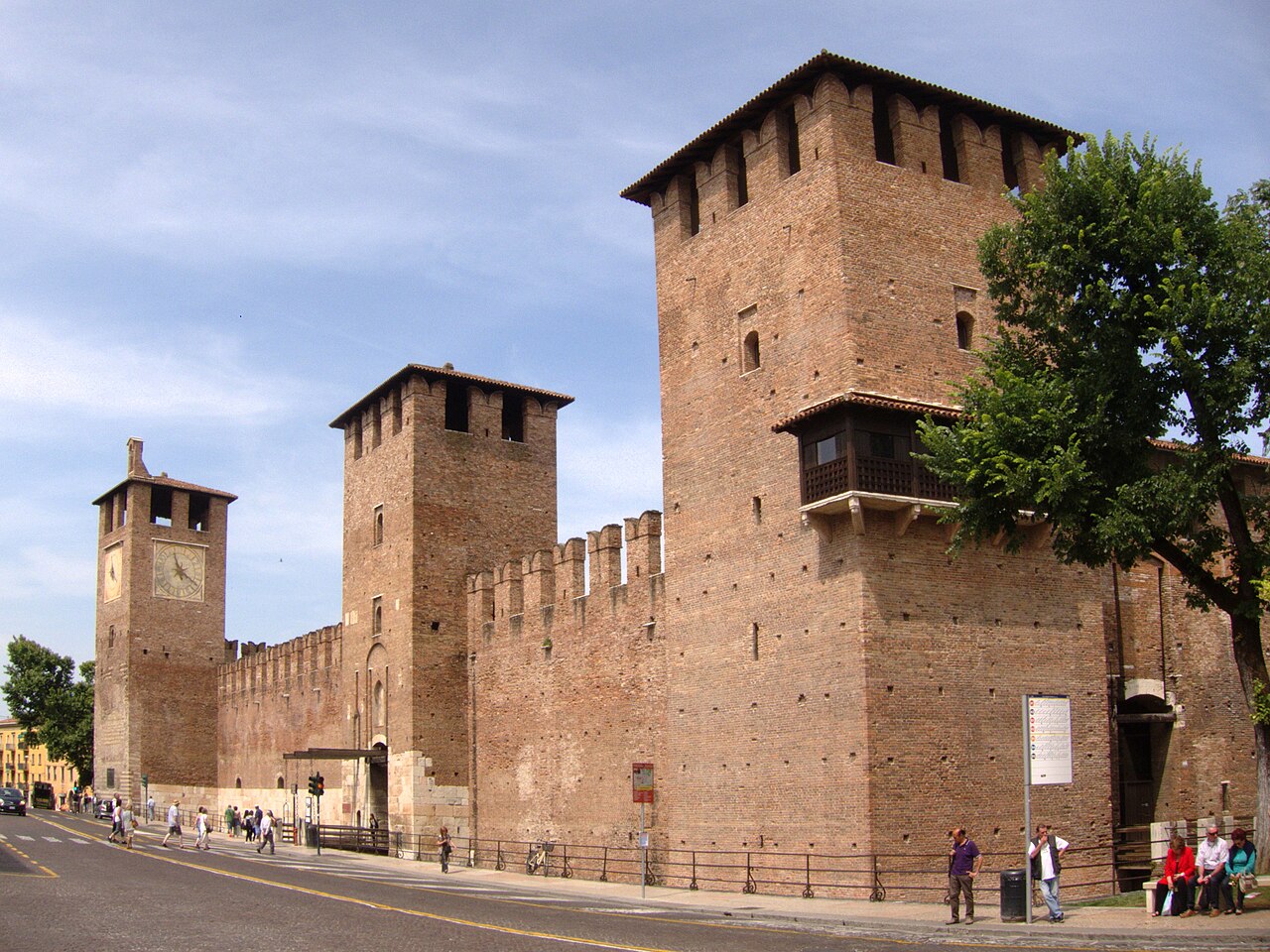
The castle's strategic position on the banks of the Adige River allowed it to control key access points to Verona and secure the city against rival powers such as Venice, the Gonzaga, and the Sforza families. Built between 1354 and 1376 initially by Lord Cangrande II della Scala, the fortress was designed not only as a military bastion but also as a fortified residence for the Scaliger lords. Its compact, square layout is defined by imposing red brick walls topped with distinctive M-shaped merlons, a hallmark of Gothic defensive architecture.
Architectural design and features
Castelvecchio's architecture reflects a blend of military functionality and Gothic stylistic elements. The fortress is composed of a square compound featuring seven towers and a prominently elevated keep (mastio). The walls are reinforced with a dry moat that historically was filled with water diverted from the Adige River, enhancing the castle's defensive capabilities.
Fortified bridge and defensive mechanisms
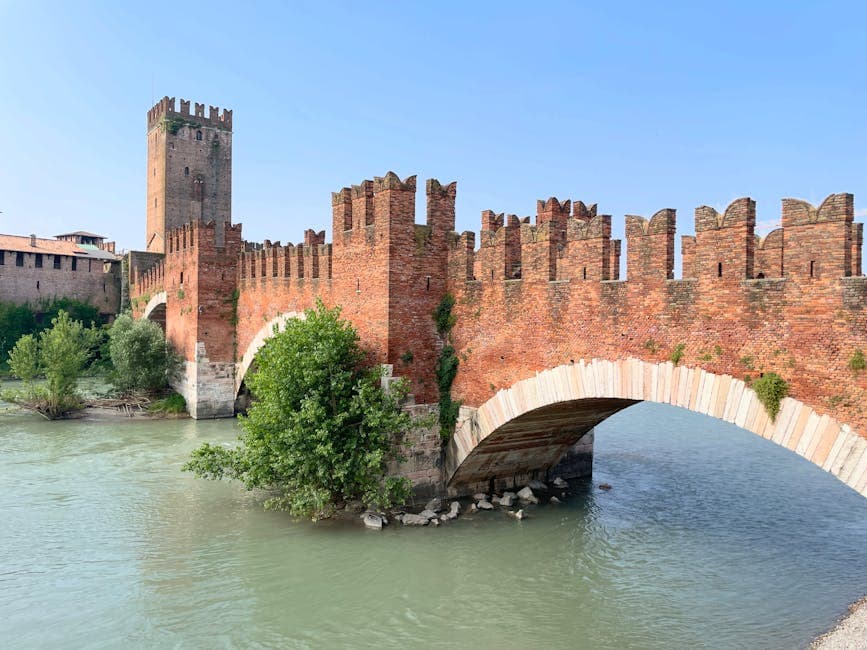
An iconic feature of Castelvecchio is the Ponte Scaligero, a fortified bridge spanning the Adige River. This bridge was constructed to provide a secure escape route northwards to the Tyrol, reflecting the Scaligeri's alliance with the Holy Roman Empire and their need for a strategic retreat in case of rebellion or siege. The bridge's three uneven arches rest on pentagonal stone piers, a design that was faithfully reconstructed after being destroyed during World War II.
The castle's battlements include the characteristic M-shaped merlons, which served both as protection for archers and as a symbol of the Scaliger family's power. During the Venetian period, cannon slits were added to adapt the fortress to evolving military technology.
Internal courtyards and building layout
Castelvecchio is divided into three main courtyards: the southern Corte della Reggia (residence courtyard), the northern Corte d’Armi (armory courtyard), and the central Corte del Mastio (keep courtyard). The Corte della Reggia housed the lord's residence and was built along the riverbank, while the Corte d’Armi served as a military parade ground and was surrounded by four defensive towers with wooden pavilion roofs.
The mastio is the dominant tower of the castle, a massive brick structure that historically served as a last refuge and command post. Its terrace once hosted an optical telegraph station during the Austrian period, linking Verona with other fortresses in the region.
Historical context and transformations
Castelvecchio was constructed during a turbulent period marked by dynastic rivalries and shifting alliances. The Scaliger family commissioned the castle to assert their dominance over Verona and to defend against external threats. The fortress also functioned as a symbol of their political and military power.
Following the Scaligeri's decline, the castle's military importance diminished but it remained integral to Verona's defenses under subsequent rulers. During the Venetian domination, the castle was adapted for multiple uses including a residence for the castellan, barracks, an artillery arsenal, and a prison. The 18th century saw the establishment of the Veneto Militar Collegio, a military engineering school, which prompted further modifications.
The Napoleonic Wars brought significant damage to Castelvecchio, including the demolition of key structures and the lowering of towers to accommodate artillery. The French occupation also led to the destruction of the Torre dell’Orologio and the Arco dei Gavi to widen roads, reflecting the changing urban landscape.
Later under Austrian rule, the castle continued as a military barracks and arsenal. An optical telegraph station was installed on the mastio's roof, integrating Castelvecchio into the broader defensive network known as the Quadrilatero.
20th-century restoration and museum conversion
Between 1923 and 1926, architects Ferdinando Forlati and Antonio Avena led a major restoration project that sought to remove many of the 18th- and 19th-century alterations. The Torre dell’Orologio was rebuilt in a more recessed position, and the Napoleonic barracks were transformed into a neo-Scaliger-Venetian style palace. This restoration laid the groundwork for the castle's conversion into the Museo Civico di Castelvecchio.
World War II inflicted heavy damage on the castle, including the destruction of the Ponte Scaligero by retreating German forces. Reconstruction efforts completed by 1951 faithfully restored the bridge and eastern wing. The renowned architect Carlo Scarpa undertook an innovative redesign of the museum interiors between 1958 and 1964, introducing modern display techniques that enhanced the presentation of the castle's extensive art collection.
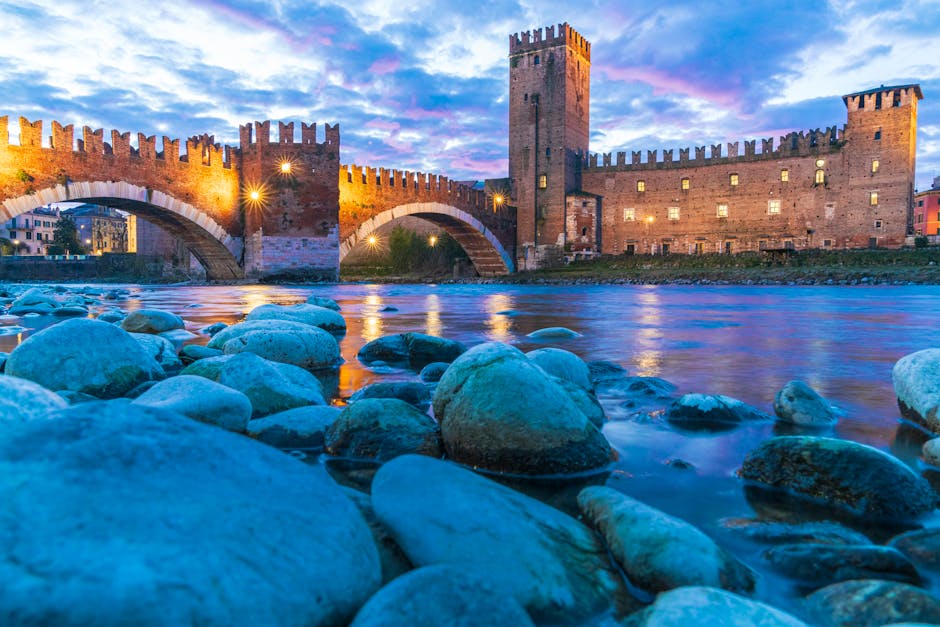
Photo by Alessandro Carrarini
Art collection and cultural significance
The Museo Civico di Castelvecchio houses a rich collection of artworks spanning from the Gothic period through the 18th century. The museum's holdings include masterpieces by Pisanello, Giovanni Bellini, Vittore Carpaccio, Andrea Mantegna, Peter Paul Rubens, Tintoretto, Paolo Veronese, and Giambattista Tiepolo. Among its prized exhibits is the 14th-century equestrian statue of Cangrande della Scala, relocated from the Scaliger tombs.
Castelvecchio also played a notable role in 20th-century history, hosting events such as the 1943 Republican Fascist Party congress and the 1944 Verona trial during World War II. The castle remains a vital cultural landmark and a testament to Verona's medieval heritage.
Visitor information and accessibility
Today, Castelvecchio is open to the public as both a museum and historical site. Visitors can explore its fortified walls, towers, and courtyards, as well as the extensive art collections displayed within. The museum offers insight into the castle's military past and its evolution through centuries of political change.
The castle is accessible via Corso Cavour, with entry through the left door leading to the museum and local officer's club. Its well-preserved state, combined with thoughtful modern interventions, makes Castelvecchio a must-visit destination for those interested in medieval architecture, art history, and Italian heritage.
Frequently asked questions (FAQ)
- What is the historical significance of Castelvecchio?
- Castelvecchio, originally built in the 14th century, served as a fortress and residence for the ruling Scaliger family. It is a prime example of medieval military architecture and has played a crucial role in the defense of Verona throughout history.
- When was Castelvecchio constructed?
- Construction of Castelvecchio began in 1354 and was completed in the 1370s. The castle was designed by the architect Cangrande II della Scala, showcasing the military engineering of the period.
- Can I visit Castelvecchio year-round?
- Yes, Castelvecchio is open to visitors throughout the year, although specific hours may vary by season. It's recommended to check the official website for the most current opening hours before planning your visit.
- What are the ticket prices for Castelvecchio?
- Ticket prices for Castelvecchio are generally affordable, with discounts available for students and seniors. Children under a certain age may enter for free, making it an accessible option for families.
- Is it possible to explore the architecture of Castelvecchio?
- Absolutely! Castelvecchio features impressive Gothic architecture, including its iconic towers and fortified walls. Guided tours are available, providing in-depth insights into the architectural details and historical context of the castle.
- When is the best time to visit Castelvecchio?
- The best time to visit Castelvecchio is during the spring and fall when the weather is mild and crowds are smaller. Visiting during these seasons allows for a more enjoyable experience as you explore the castle and its surroundings.
- Are there any nearby attractions to visit along with Castelvecchio?
- Yes, Castelvecchio is located near several other attractions, including the picturesque Ponte Scaligero and the Verona Arena. A visit to these sites can enhance your experience and provide a deeper understanding of Verona's rich history.
- How do I get to Castelvecchio?
- Castelvecchio is easily accessible by public transport, and there are several bus and tram lines that stop nearby. For those driving, there are parking facilities within walking distance of the castle.
- Is Castelvecchio wheelchair accessible?
- Yes, Castelvecchio offers wheelchair access to most areas of the castle. Visitors should check with the staff for any specific assistance or routes that may be required to navigate the site comfortably.
Photo gallery

Photo by Stefano D’Aronco


Information
Website
Visit websiteSources & official resources
Verify the information above using these authoritative references.
Loading map...
Visitor reviews
No reviews yet. Been here? Write the first review and help other travelers!
Write the first reviewVisited this castle? Share your experience
Your review helps other travelers and adds first-hand knowledge to our encyclopedia.