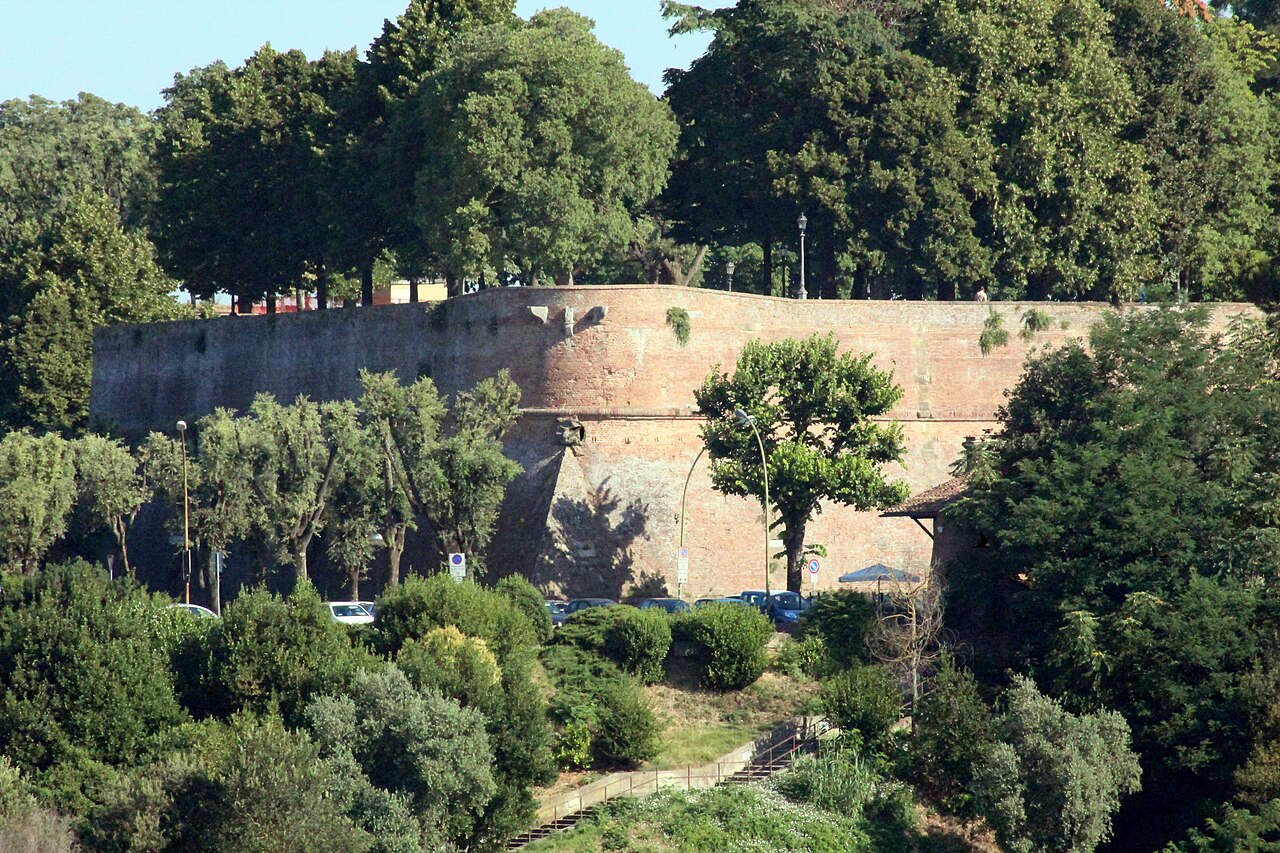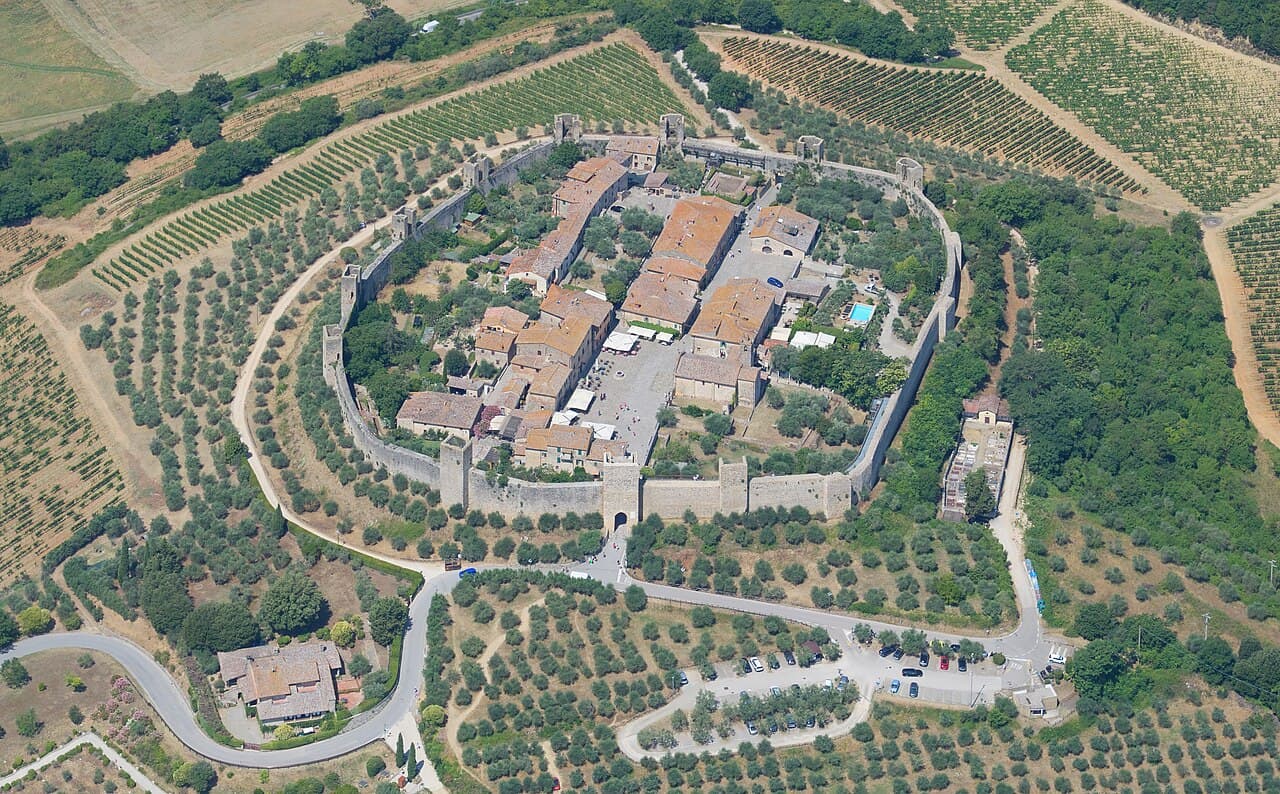
Monteriggioni is a remarkable example of a hill castle located in the province of Siena, within the renowned Italian region of Tuscany. This medieval fortress town is famed for its intact defensive walls and towers, which have preserved the appearance of a fortified settlement from the early 13th century. Monteriggioni stands on a strategic hilltop, offering commanding views of the surrounding Tuscan landscape, which historically provided both defense and control over the region.
Historical background and significance
The origins of Monteriggioni date back to around 1214-1219, when it was constructed by the Sienese Republic as a defensive outpost against the rival city-state of Florence. Its position was crucial in the ongoing conflicts of the Middle Ages, particularly during the wars between Siena and Florence. The fortress was designed to protect the southern borders of Siena and to control the important road connecting Siena to Florence and other parts of Tuscany.
The castle and its walls are mentioned in literary works such as Dante Alighieri's Divine Comedy, which underscores its cultural and historical importance during the medieval period. Monteriggioni's role as a military stronghold diminished after the decline of the Sienese Republic, but its walls and towers have remained largely intact, preserving a vivid snapshot of medieval military architecture.
Architectural features and layout
Monteriggioni is characterized by its circular curtain wall, which is approximately 570 meters in circumference and is punctuated by 14 towers. These towers are spaced evenly along the wall, providing vantage points for defense and surveillance. The walls are constructed primarily of local stone, exhibiting the robust and practical style of early medieval military architecture.
The fortress includes two main gates: the Porta Fiorentina facing Florence and the Porta Romana facing Siena. These gates were heavily fortified and served as controlled entry points. Inside the walls, the small village maintains its medieval street plan, with narrow alleys and a central piazza. The interior includes residential buildings, a church, and other structures typical of a fortified medieval settlement.
Defensive elements
The walls of Monteriggioni are topped with walkways and battlements, allowing defenders to patrol and defend the perimeter effectively. The towers vary in height and design but generally feature machicolations—stone projections with openings through which defenders could drop objects or pour boiling substances on attackers. The overall design reflects the military engineering knowledge of the High Middle Ages.
Cultural and touristic importance
Today, Monteriggioni is a popular tourist destination known for its well-preserved medieval architecture and scenic location. The castle's walls are accessible to visitors, offering panoramic views of the Tuscan countryside. The town hosts medieval reenactments and festivals that celebrate its history and heritage.
Monteriggioni's preservation is exceptional compared to many other medieval fortifications, making it a valuable site for understanding medieval fortification techniques and the social structure of fortified towns. Its inclusion in Dante's Divine Comedy adds literary significance, attracting scholars and enthusiasts of medieval literature.
Preservation and condition
The castle is well preserved, with most of its walls and towers intact since their construction. Restoration efforts over the centuries have maintained the structural integrity of the fortress, ensuring that it remains a prominent example of early 13th-century military architecture in Tuscany.
Monteriggioni is managed as a cultural heritage site and is open to the public, with visitor facilities and guided tours available. Its accessibility and state of preservation make it an important case study for the conservation of medieval castles.
Frequently asked questions (FAQ)
- When was Monteriggioni castle built?
- Monteriggioni castle was constructed in the early 13th century, around 1214 to 1219, by the Sienese Republic as a defensive fortress.
- What makes Monteriggioni architecturally significant?
- Monteriggioni is architecturally significant for its nearly intact circular curtain wall with 14 towers, showcasing early medieval military design and Romanesque style.
- Can visitors walk along the walls of Monteriggioni?
- Yes, visitors can walk along the fortress walls, which provide panoramic views of the Tuscan countryside and a close-up experience of medieval fortifications.
- Why is Monteriggioni mentioned in Dante's Divine Comedy?
- Monteriggioni is referenced in Dante's Divine Comedy, highlighting its cultural importance and recognition as a symbol of medieval fortification during Dante's time.
- Is Monteriggioni castle well preserved today?
- Yes, Monteriggioni is well preserved, with most of its walls and towers intact, maintained through ongoing restoration efforts.
Photo gallery

Information
Loading map...
Visitor reviews
No reviews yet. Been here? Write the first review and help other travelers!
Write the first reviewVisited this castle? Share your experience
Your review helps other travelers and adds first-hand knowledge to our encyclopedia.