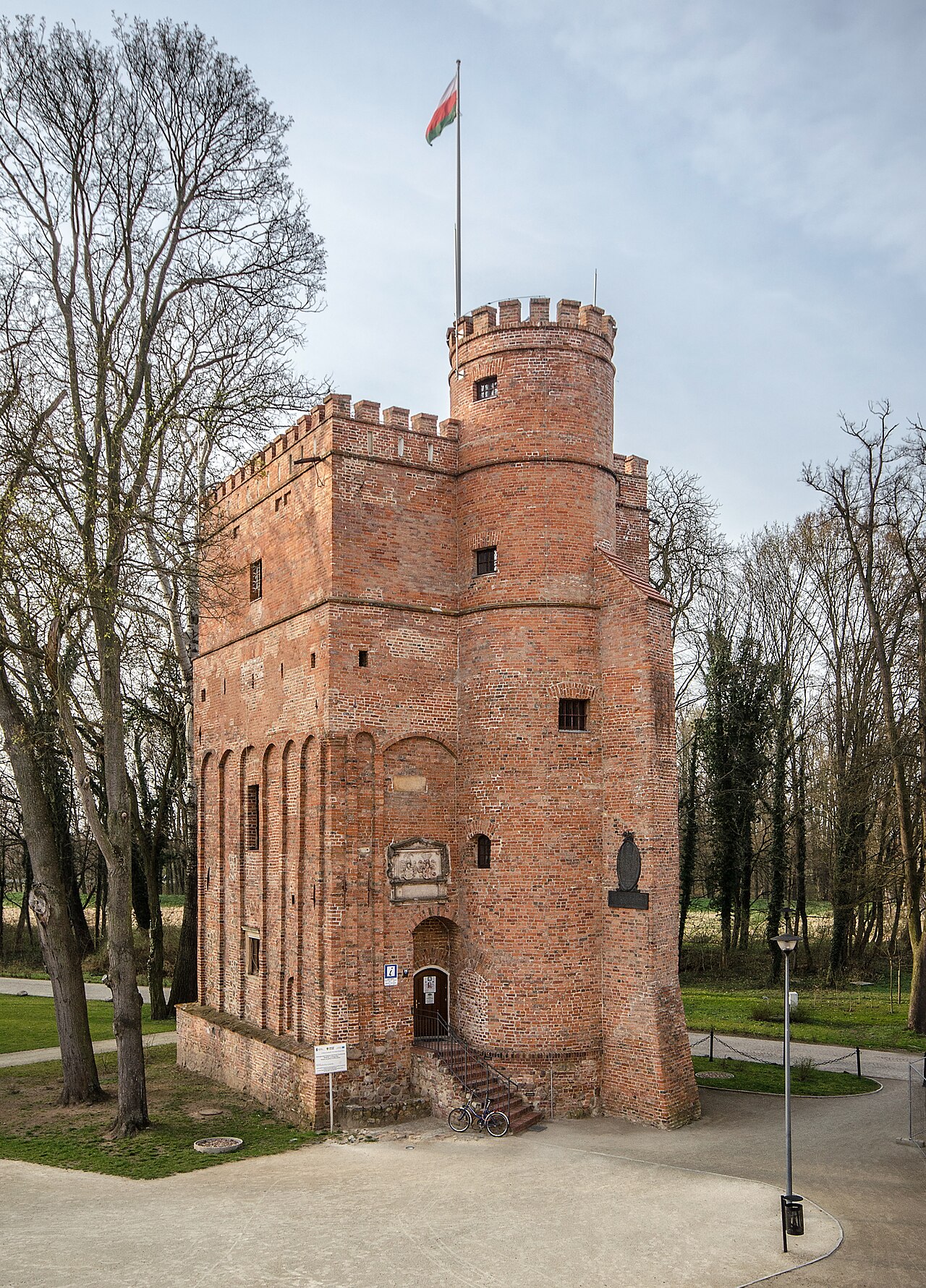
Milicz Castle
Milicz Castle stands as a testament to centuries of historical evolution and architectural transformation in the town of Milicz, Poland. Originally mentioned in 1136, the site began as a fortified stronghold guarding a critical river crossing over the Barycz River. Its early strategic importance is reflected in its initial ownership by the Archbishopric of Gniezno and later the Wrocław Cathedral Chapter, highlighting its ecclesiastical significance during the High Medieval period.
In 1338, the stronghold was seized by the forces of King John of Bohemia, marking a pivotal moment in its history. However, diplomatic efforts by the church ensured its return to the Bishop of Wrocław by 1342. This period marks the transition from a purely defensive fortification to a more complex castle structure, initiated under the ownership of Konrad I, Duke of Oleśnica, who acquired Milicz in 1358. He commissioned the construction of a castle on the left bank of the Barycz, characterized by an irregular polygonal plan enclosed by brick walls and a moat.
Architectural features and castle layout
The castle's design featured a three-story residential tower situated on the southern part of the courtyard, which served as the main living quarters. The courtyard also contained various ancillary buildings whose precise functions remain less documented. The main entrance was likely positioned on the eastern side, aligning with typical medieval defensive strategies.
Constructed primarily from brick, the castle's walls and defensive structures reflect the regional building practices of the late medieval period. The use of brick was common in Silesian castles, offering both durability and relative ease of construction compared to stone. Surrounding the castle was a moat, enhancing its defensive capabilities.
Historical transitions and ownership
Following the death of Konrad X the White in 1492, the last of the Piast dukes of Oleśnica, Milicz passed into the hands of the Crown of Bohemia. Two years later, the castle was acquired by Baron Zygmunt Kurzbach, whose family played a crucial role in the castle's Renaissance transformation.
Renaissance rebuilding after the fire of 1536
The castle suffered a devastating fire in 1536 that destroyed much of the medieval structure. The Kurzbach family undertook extensive reconstruction efforts, introducing Renaissance architectural elements that significantly altered the castle's appearance and function. A new building was constructed featuring a large hall with a distinctive vaulted ceiling supported by a single central pillar, demonstrating advanced engineering and aesthetic sensibilities of the period.
Later modifications and decline
In 1590, ownership transferred to the von Maltzan family, who retained possession until 1945. The 17th century saw further modifications, including the erection of a new building replacing the original gatehouse. The 18th century brought the construction of a nearby palace and the establishment of a surrounding park, reflecting the changing tastes and residential needs of the nobility. The castle buildings themselves were repurposed as a cotton spinning mill, illustrating adaptive reuse during the industrial era.
Unfortunately, another fire in 1797 inflicted severe damage on the castle's walls. Although attempts were made to restore the structure, by the mid-19th century, the castle was abandoned and gradually fell into ruin.
Current condition and preservation
Today, the remains of Milicz Castle are located within the park that surrounds the adjacent palace, which currently houses a Forestry Technical School. The site features densely overgrown fragments of the original 14th-century brick residential tower and remnants of later buildings from the Renaissance and post-medieval periods. Visitors can also discern traces of the former moat that once encircled the castle, offering a glimpse into its defensive past.
Despite its ruinous state, Milicz Castle holds significant cultural and historical value. It exemplifies the architectural evolution from a medieval defensive stronghold to a Renaissance noble residence and later industrial facility. The castle's layered history provides insight into the shifting political and social landscape of Silesia over several centuries.
Milicz castle in the context of silesian heritage
As part of the rich tapestry of Silesian castles, Milicz Castle illustrates the region's complex history of territorial disputes, noble lineage, and architectural trends. Its transformation from a fortified medieval stronghold to a Renaissance residence and eventual industrial site mirrors broader European patterns of castle adaptation and decline.
The castle's location by the Barycz River also underscores the strategic importance of waterways in medieval defense and trade. The preservation of the ruins within a park setting allows for public engagement with this heritage, fostering appreciation for the architectural and historical significance of the site.
Visiting milicz castle today
While the castle itself remains in ruins, the surrounding park and the nearby palace offer visitors an opportunity to explore the historical landscape of Milicz. The site is accessible to the public, and the Forestry Technical School housed in the palace contributes to the ongoing use and maintenance of the area.
Visitors interested in medieval architecture, Renaissance art, and Silesian history will find Milicz Castle a fascinating destination. The visible remnants of its defensive walls, residential tower, and moat evoke the castle's storied past and its role in regional history.
Frequently asked questions (FAQ)
- When was Milicz Castle originally built?
- Milicz Castle was originally constructed in 1338 under the initiative of Duke Konrad I of Oleśnica, following earlier mentions of a fortified stronghold at the site dating back to 1136.
- What architectural styles are visible at Milicz Castle?
- The castle features a combination of late medieval defensive architecture and Renaissance elements introduced during the 16th-century reconstruction after a major fire.
- Is Milicz Castle open to visitors?
- The castle ruins are accessible to the public within the park surrounding the nearby palace, which houses a Forestry Technical School. Visitors can explore the site freely, though facilities may be limited.
- What remains of Milicz Castle can be seen today?
- Today, visitors can see overgrown fragments of the 14th-century brick residential tower, remnants of Renaissance buildings, and traces of the original moat that once surrounded the castle.
- Why is Milicz Castle historically significant?
- Milicz Castle is significant for its long history of ownership transitions from ecclesiastical authorities to noble families, its architectural evolution, and its role in regional defense and administration in Silesia.
Information
Loading map...
Visitor reviews
No reviews yet. Been here? Write the first review and help other travelers!
Write the first reviewVisited this castle? Share your experience
Your review helps other travelers and adds first-hand knowledge to our encyclopedia.