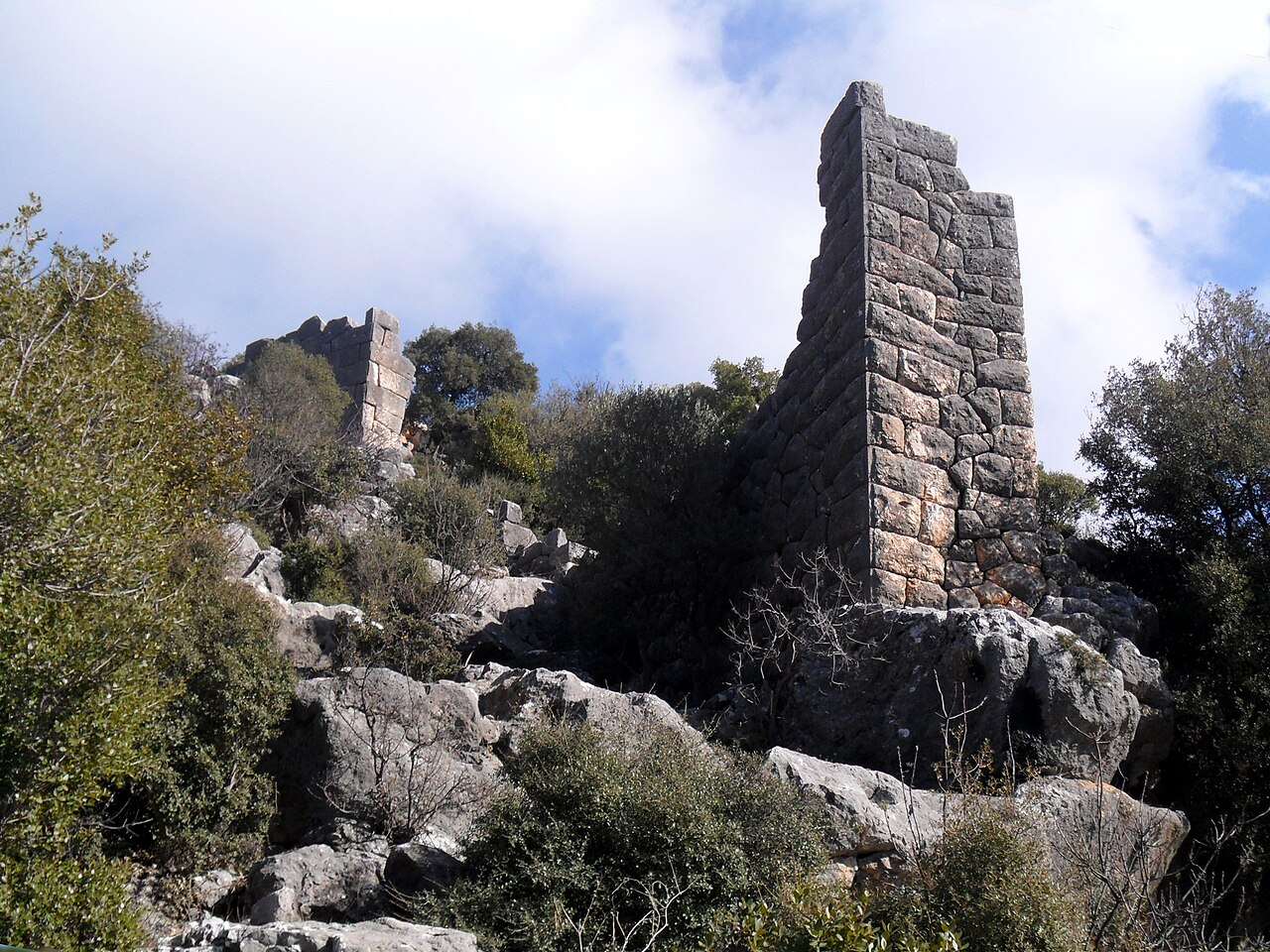
Gökburç Tower
Gökburç Tower, located east of the village of Ovacık in the Mersin province of Turkey, is a remarkable example of early medieval military architecture integrated within a Roman villa complex. This tower is part of a larger fortified villa rustica, a type of rural estate that began to be fortified in this region from the 4th century AD onward, reflecting the turbulent times and the need for protection against raids and invasions.
Historical context and origins
The tower and its surrounding complex date back to either the 4th or 6th century, a period that bridges the late Roman Empire and the early Byzantine era. During this time, many rural estates in Asia Minor were transformed into fortified compounds to secure agricultural production and provide refuge. The presence of fortified villas in this area is well documented, indicating a trend where landowners adapted their residences to military needs.
The villa rustica to which Gökburç Tower belonged had a trapezoidal plan and was enclosed by a perimeter wall fortified with towers at three of its corners. The surviving Gökburç Tower is the only remaining tower from this defensive system, standing as a solitary sentinel over the site.
Architectural features of gökburç tower
The tower rises to a height of approximately 18 meters, with walls measuring between 0.54 and 0.67 meters thick. These walls are constructed from local stone and mortar, typical of Roman and early Byzantine masonry techniques. The structure features narrow slit windows, designed primarily for defense, allowing archers to observe and shoot while minimizing exposure.
Although much of the villa's perimeter walls have either been buried by time or reduced to small remnants, the tower itself remains well preserved and stands as a prominent example of fortified residential architecture from this transitional period.
Defensive design elements
The narrow slit windows are a key defensive feature, providing protection while enabling surveillance and defense against attackers. The tower's considerable height would have offered a vantage point over the surrounding landscape, crucial for early warning of approaching threats.
The trapezoidal layout of the villa complex, with towers on three corners, suggests a strategic design to cover multiple angles of approach, enhancing the defensive capabilities of the estate.
Current condition and accessibility
Today, Gökburç Tower is partially preserved and freely accessible to visitors. The site is somewhat overgrown with vegetation, which adds a natural ambiance but can obscure some architectural details. Despite this, the tower remains an impressive sight for those interested in early medieval fortifications and Roman rural architecture.
Nearby, the Hançerkale Tower offers another point of interest for visitors exploring the region's fortified heritage.
Significance in regional history and architecture
Gökburç Tower exemplifies the adaptation of Roman villa architecture to the defensive needs of the early medieval period in Anatolia. The transition from purely residential villas to fortified complexes reflects the changing political and military landscape of the region during Late Antiquity and the early Byzantine era.
The tower's survival provides valuable insight into construction techniques, defensive strategies, and rural life in this part of Turkey during a time of significant upheaval and transformation.
Architectural legacy
The combination of residential and military functions in the villa rustica at Gökburç illustrates a broader trend in late Roman architecture, where security concerns increasingly influenced building design. This site contributes to the understanding of how rural elites protected their estates and resources in a period marked by instability.
Visitor experience
Visitors to Gökburç Tower can explore the remains at their own pace, appreciating the tower's robust construction and strategic location. The overgrown surroundings provide a sense of discovery, though care should be taken when navigating the site due to uneven terrain.
Frequently asked questions (FAQ)
- What is the historical significance of Gökburç Tower?
- Gökburç Tower, dating back to the Byzantine period, served as a crucial defense point during various historical conflicts. Its strategic position allowed for surveillance and protection of the surrounding area, making it a vital part of the region's history.
- When was Gökburç Tower constructed?
- The tower's construction is believed to have taken place in the 10th century, reflecting the architectural styles of the Byzantine era. Over the centuries, it has undergone several restorations to preserve its structure and historical value.
- Can I visit Gökburç Tower?
- Yes, Gökburç Tower is open to the public, allowing visitors to explore its historical architecture and enjoy panoramic views of the surrounding landscape. It is recommended to check local guidelines and opening times before planning your visit.
- What are the opening hours for Gökburç Tower?
- Gökburç Tower is typically open from 9 AM to 6 PM, with extended hours during the summer months. It is advisable to verify the hours on the official site or local tourism information as they may change seasonally.
- Is it possible to access Gökburç Tower with mobility aids?
- The tower is located on elevated terrain, and while there are paths leading to it, accessibility may be limited for those using mobility aids. Visitors with specific accessibility needs should contact local tour services for assistance and information on available options.
- What is the best time to visit Gökburç Tower?
- The best time to visit Gökburç Tower is during the spring and fall when the weather is mild and pleasant for exploring. Summer can be hot, while winter may bring rain or snow, affecting accessibility and comfort.
- Are there any nearby attractions to visit after Gökburç Tower?
- Yes, nearby attractions include the beautiful landscapes of the Gökburç region, historical ruins, and local villages that showcase traditional Turkish culture. Exploring these sites can enhance your experience of the area's rich history.
- How much does it cost to visit Gökburç Tower?
- The entrance fee for Gökburç Tower is relatively low, making it an affordable option for visitors. Prices may vary, so it's best to check on-site or with local tourism offices for the latest information.
Loading map...
Visitor reviews
No reviews yet. Been here? Write the first review and help other travelers!
Write the first reviewVisited this castle? Share your experience
Your review helps other travelers and adds first-hand knowledge to our encyclopedia.