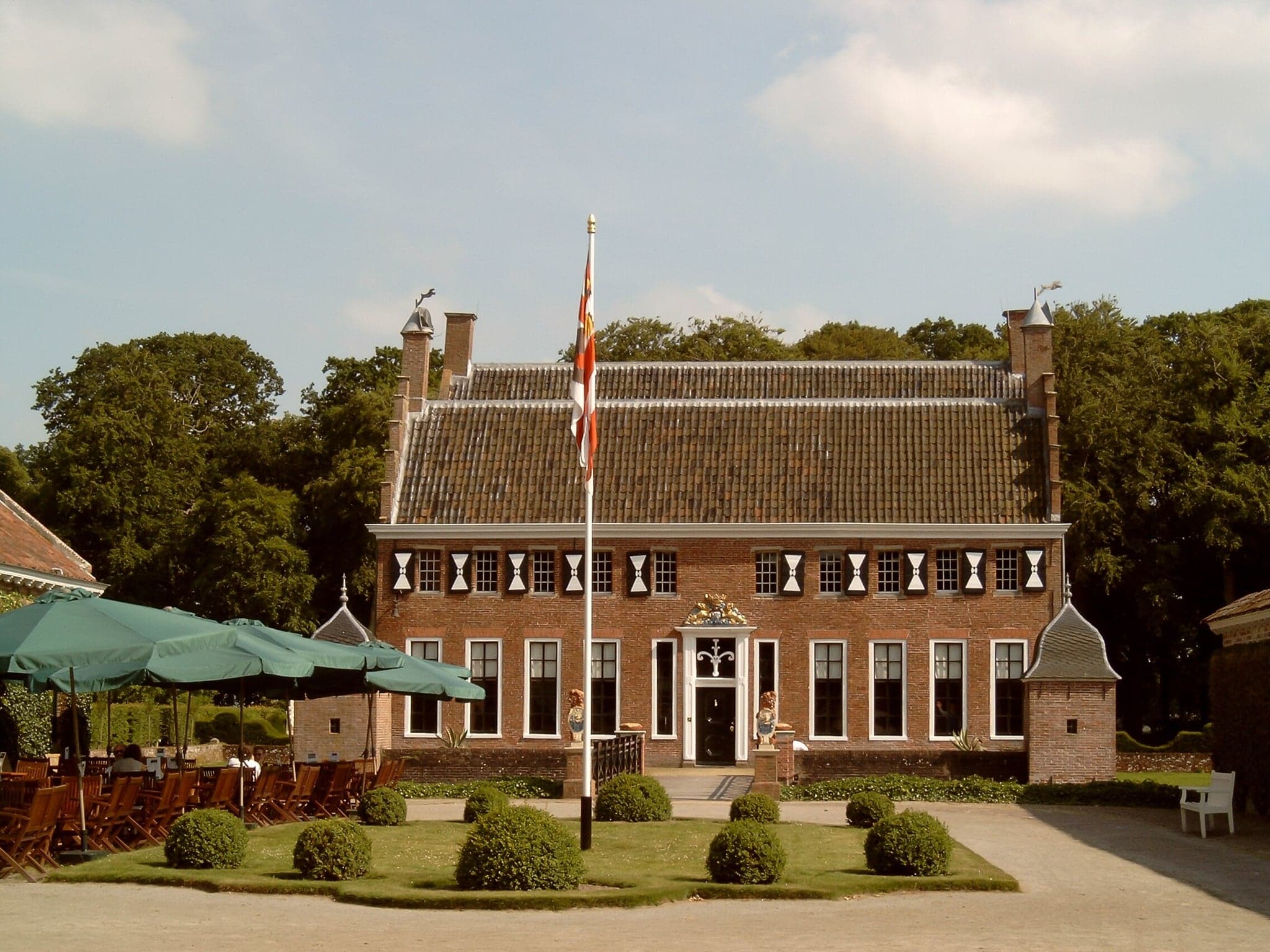
Menkemaborg
Menkemaborg stands as a remarkable example of a northern Dutch borg, originally constructed in the 14th century in Uithuizen, Groningen. This brick-built manor house was initially a fortified residence belonging to the Menkema family, part of the local nobility. Over centuries, it evolved from a medieval stone tower into a stately noble residence, embodying architectural and cultural shifts spanning the Late Medieval through the Baroque periods.
The earliest recorded lord, Eppo Menkema, is documented in 1376 as the ruler of Uithuizen, with the original structure likely comprising a quadrangular stone tower designed for defense and habitation. Around 1400, the initial building was destroyed, leaving the site in ruins for over two centuries. The borg was rebuilt in 1614 by Osebrand Clant, as commemorated by an inscription on the northeastern wing stating the house was "ruined in 1400 and repaired by God's grace in 1614." This reconstruction marked a transition from a purely defensive tower to a more complex manor house with residential and representative functions.
Architectural evolution and design
The 1614 rebuilding expanded the castle from a simple rectangular plan into an L-shaped layout with the addition of a stair tower, enhancing both its functionality and status. The Clant family’s modifications reflect the architectural trends of the early modern period in Groningen, blending practicality with noble grandeur.
In 1682, ownership passed to the Alberda family, who retained the estate for over two centuries. Around 1700, Unico Alberda commissioned significant renovations, likely designed by the esteemed Groningen city architect Allert Meijer. These changes introduced Baroque interior decorations, including elaborate chimney-pieces carved with ornamental motifs and mythological paintings. The interiors were further enriched with luxurious furnishings such as a four-poster bed draped with yellow silk damask from China, reflecting the wealth and refined tastes of the Alberda lineage.
Interior features and collections
The castle’s rooms are meticulously furnished to represent the lifestyle of 17th- and 18th-century Dutch nobility. Visitors can explore reception rooms, a gentlemen's room, study, dining room, bedroom, kitchen, and cellars, all containing authentic furniture, silverware, china, brassware, and portrait paintings from the period. The preservation of these interiors provides a vivid insight into the domestic and social customs of the time.
A highlight is the Grote Zaal (Great Hall), which houses a historic cabinet organ built in 1777 by Jan Jacob Vool and Hermanus Adolfus Groet. This instrument, restored in 2010-2011, was originally crafted for a wealthy family in Nieuwolda and later used in a church in Zijldijk before its donation to the Groninger Museum. The castle also contains two additional 18th-century cabinet organs, including the largest surviving example by Hendrik Hess from Gouda, underscoring the estate’s cultural richness.
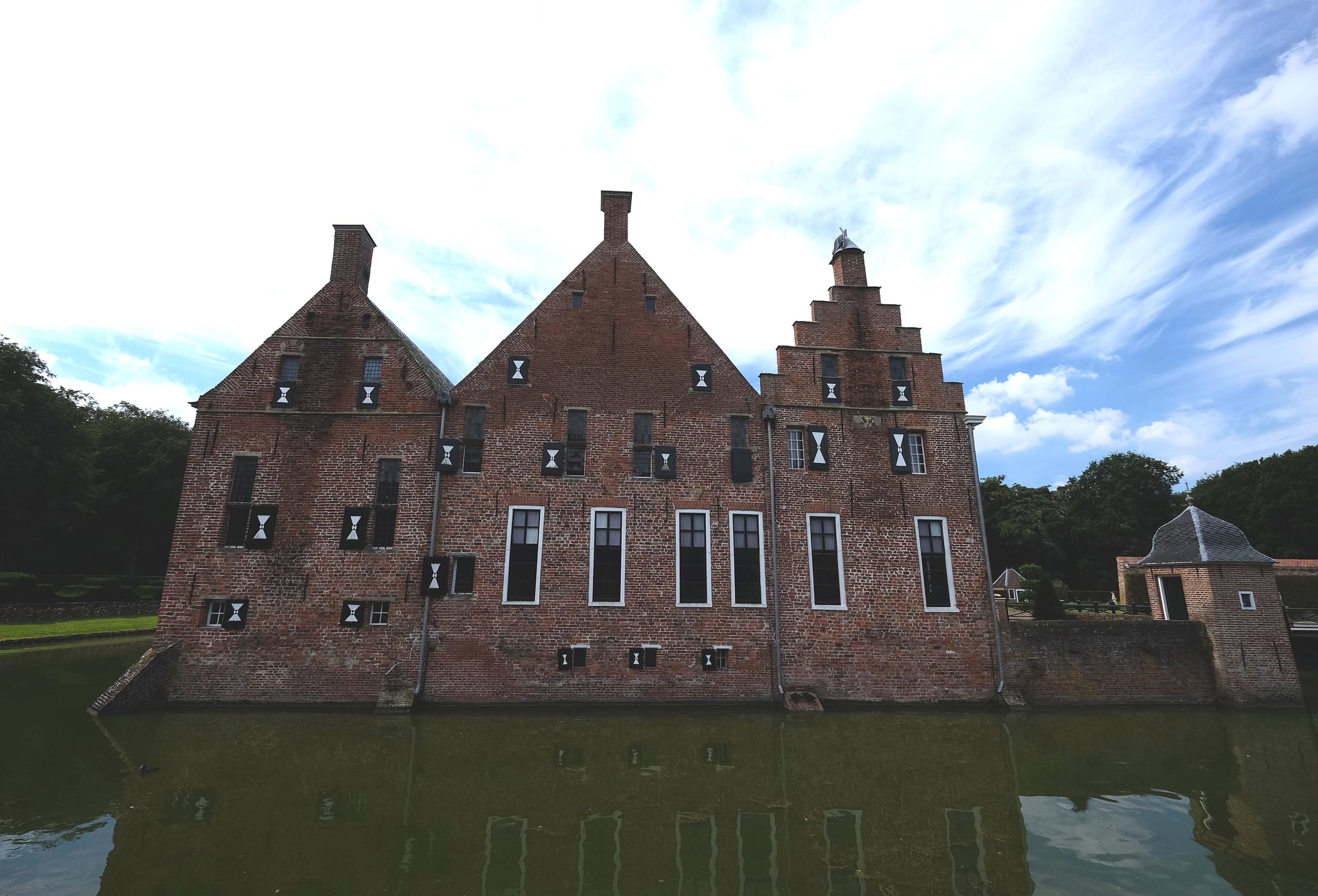
Photo by Ben Bender, relaunch Ulamm (talk) • CC BY-SA 4.0
Gardens and grounds
The Menkemaborg is surrounded by gardens restored to reflect an 18th-century Dutch style. These include tulip beds featuring varieties from the 17th and 18th centuries, one of the few original labyrinths in the Netherlands, a fruit orchard with historic apple and pear varieties, and a kitchen garden cultivated according to recipes from an 18th-century family cookbook. The grounds also feature a tea house, replicas of 18th-century statues, and a sundial dated 1722, all contributing to the authentic historic atmosphere.
The former Schathuis, once used for storing garden produce, has been converted into a café and restaurant, enhancing the visitor experience. Additionally, the entrance gates and posts from the demolished Dijksterhuis borg near Pieterburen were relocated to Menkemaborg after 1902, integrating regional heritage elements into the estate.
Historical significance and preservation
Throughout its history, Menkemaborg has been a symbol of noble life in Groningen. The estate remained in the hands of prominent families such as the Menkemas, Clants, and Alberdas, with notable figures including Gerhard Alberda van Menkema, a provincial nobleman and politician born and deceased at the borg in the 18th century.
After the death of Gerhard Alberda van Menkema en Dijksterhuis in 1902 without heirs, the property passed to relatives who eventually sold it to the Groninger Museum in 1921. Restoration efforts in the 1920s preserved the building’s historical character, allowing it to open to the public as a historic house museum. Since 1971, the museum managing foundation has maintained the site, ensuring its preservation as one of the few surviving borgs in Groningen and a national heritage monument.
The Menkemaborg’s well-preserved architecture, rich interior collections, and carefully restored gardens make it a unique destination for those interested in Dutch noble heritage, architectural history, and cultural traditions of the northern Netherlands.
Frequently asked questions (FAQ)
- How do I get to Menkemaborg?
- Menkemaborg is located in Uithuizen, Netherlands, and can be easily reached by car or public transport. If you're traveling by train, the nearest station is Uithuizen, from which you can take a short bus ride or a pleasant walk to the castle.
- What is the historical significance of Menkemaborg?
- Menkemaborg is a well-preserved 17th-century castle that reflects the rich history of the Groningen region. Originally built as a defensive structure, it showcases the transition from a fortification to a residential manor, highlighting the lifestyle of the nobility during its peak.
- When was Menkemaborg built?
- The origins of Menkemaborg date back to the 14th century, with significant renovations and expansions occurring in the 17th century. The castle's architecture and interiors provide a glimpse into the historical evolution of noble residences in the Netherlands.
- Can I take guided tours at Menkemaborg?
- Yes, guided tours are available at Menkemaborg, providing visitors with in-depth knowledge about its history and architecture. These tours are typically conducted by knowledgeable staff who can answer any questions you may have during your visit.
- Why is Menkemaborg considered an architectural gem?
- Menkemaborg is considered an architectural gem due to its unique blend of Renaissance and Baroque styles, which are evident in its intricate facades and beautifully landscaped gardens. The castle's interiors are also richly decorated with period furnishings, making it a fascinating site for architecture enthusiasts.
- Is it possible to host events at Menkemaborg?
- Yes, Menkemaborg offers facilities for hosting various events, including weddings and private gatherings. The picturesque setting and historical ambiance make it a popular choice for those looking to celebrate special occasions in a unique environment.
- What are the opening hours for Menkemaborg?
- Menkemaborg is generally open to visitors from Tuesday to Sunday, with specific hours that may vary by season. It is advisable to check the official website for the most current opening hours before planning your visit.
- What are the ticket prices for Menkemaborg?
- Ticket prices for Menkemaborg are reasonably priced, with discounts available for children, students, and seniors. Group rates may also apply, so it's beneficial to check the castle's website for the latest pricing information and any special offers.
- When is the best time to visit Menkemaborg?
- The best time to visit Menkemaborg is during the spring and summer months when the gardens are in full bloom, and outdoor activities are plentiful. However, the castle also hosts special events throughout the year, making it worthwhile to check the events calendar for unique experiences.
- Are there any nearby attractions to visit?
- Yes, there are several nearby attractions to explore, including the picturesque village of Uithuizen and the stunning landscapes of the Groningen countryside. Additionally, the nearby town of Winsum offers charming streets and local shops that can enhance your visit to Menkemaborg.
Photo gallery


Information
Website
Visit websiteSources & official resources
Verify the information above using these authoritative references.
Loading map...
Visitor reviews
No reviews yet. Been here? Write the first review and help other travelers!
Write the first reviewVisited this castle? Share your experience
Your review helps other travelers and adds first-hand knowledge to our encyclopedia.


