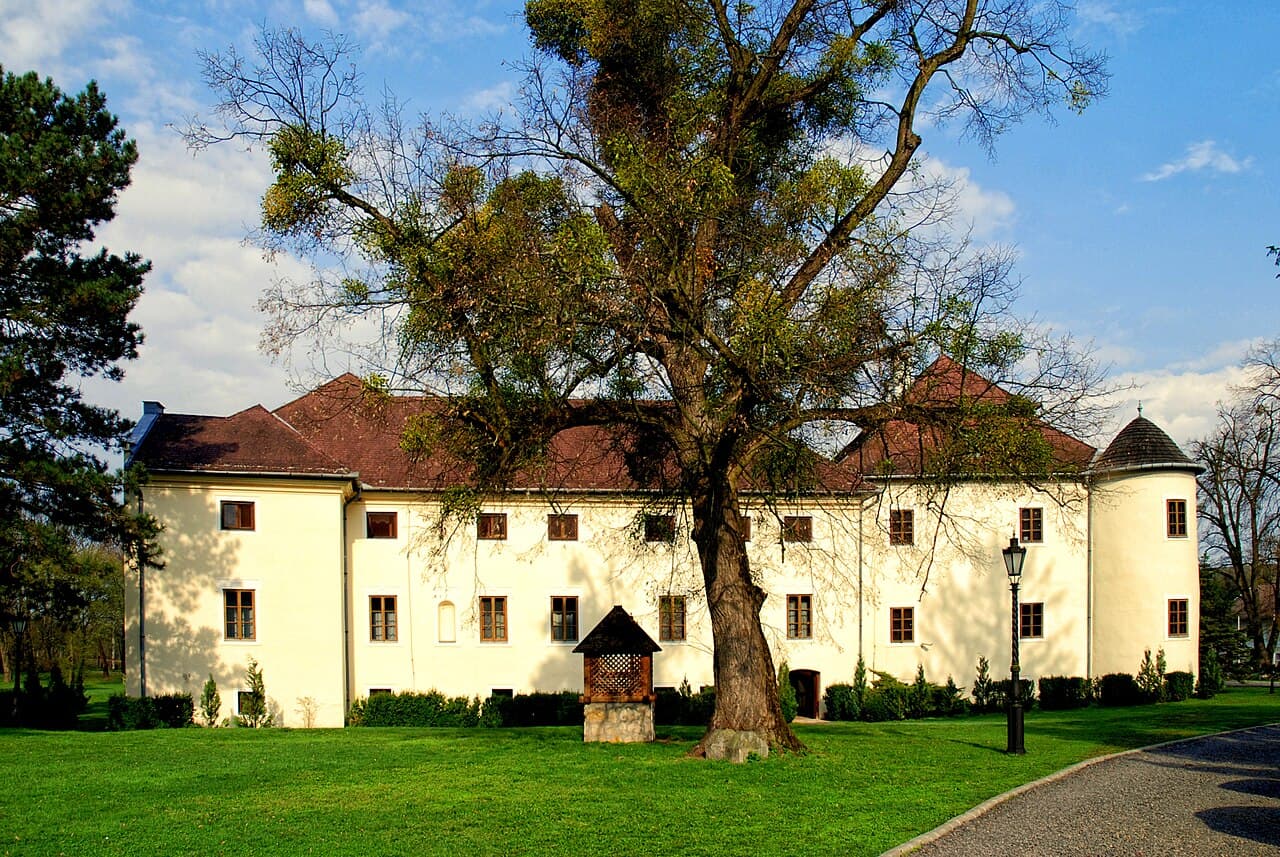
Melczer Mansion in Alsókéked (Kéked) — Hungary castle

Melczer Mansion in Alsókéked (Kéked)

Melczer Mansion in Alsókéked, Hungary

The Melczer Mansion located in Alsókéked (also known as Kéked) in Hungary is a notable example of a hill castle that reflects the architectural and historical heritage of the region. This mansion, set on elevated terrain, offers a commanding view of the surrounding landscape, which was a typical strategic choice for defensive structures in the past.

Historical background and significance

While detailed records about the Melczer Mansion's origins are limited, it is understood to have been constructed during a period when fortified residences were common among the Hungarian nobility. The mansion likely served both as a residence and a defensive stronghold, combining residential comfort with military utility. The location in Alsókéked situates it within a region that has witnessed various historical developments, including feudal conflicts and territorial changes.

Architectural features and style

The Melczer Mansion exemplifies characteristics typical of hill castles, including elevated positioning and integration with the natural topography. The mansion's design would have incorporated defensive elements such as thick walls and possibly towers or bastions to oversee the surrounding area. Although specific architectural details are scarce, such structures often blend residential elements with fortification features, including courtyards, gatehouses, and possibly moats or ditches adapted to the hillside setting.

Construction materials and techniques

Traditional building materials in the region during the relevant period included stone and timber. The mansion's construction likely used locally sourced stone for the main structural elements, providing durability and defense, while timber would have been used for roofing and interior structures. The masonry techniques would have reflected the craftsmanship available at the time, emphasizing sturdiness and longevity.

Current condition and preservation

The Melczer Mansion today is recognized as a hill castle of historical interest, though detailed information on its current physical condition is limited. It may be partially preserved or in a state of ruin, as is common with many historic castles and mansions in the region. Preservation efforts, if any, would aim to maintain the structural integrity and historical authenticity of the site, potentially opening it to visitors interested in Hungary's architectural heritage.

Visiting information and cultural importance

Visitors to Alsókéked can appreciate the Melczer Mansion for its historical and architectural value. The mansion contributes to the cultural landscape of the area, offering insights into the lifestyle and defensive strategies of past Hungarian nobility. While specific visiting hours and ticket information are not widely published, local tourism offices or heritage organizations may provide access details.

The mansion's setting on a hill makes it an attractive destination for those interested in castle architecture, history, and scenic views. It stands as a testament to the region's medieval and early modern history, reflecting the blend of residential elegance and military necessity that characterized many such estates.

Frequently asked questions (FAQ)

What is the historical significance of Melczer Mansion?
Melczer Mansion served as a fortified residence combining defensive and residential functions, reflecting the lifestyle of Hungarian nobility in its era.
Can I visit Melczer Mansion in Alsókéked?
While specific visiting information is limited, the mansion is a point of interest in Alsókéked and may be accessible through local tourism channels.
What architectural features does Melczer Mansion have?
The mansion features typical hill castle elements such as elevated positioning, thick stone walls, and possibly towers or bastions for defense.

Photo gallery

Melczer Mansion in Alsókéked (Kéked)
Click to view

Photo by Laszlo Kulisics•CC BY-SA 3.0

1 photo • Click any image to view in full screen

Information

Hill Castle

Loading map...

Visitor reviews

No reviews yet. Been here? Write the first review and help other travelers!

Write the first review

Visited this castle? Share your experience

Your review helps other travelers and adds first-hand knowledge to our encyclopedia.
Write a review

(5/5)

0/2000 characters

Your review will be visible after admin approval

Nearby castles

3.4 km
Abaúj Castle — Hungary castle

Abaúj Castle

, Hungary

Abaúj Castle is a notable medieval fortress located in the historical region of Abaúj in northeastern Hungary. Although today only ruins remain, the castle once played a significant role in the defense and administration of the region during the High Medieval period. Its remains provide valuable insights into the architectural and military strategies employed in Hungarian castles of the era. Historical background and significance The castle was constructed in the High Medieval period, likely during the 13th century, a time when fortifications were essential for controlling strategic territories and protecting against invasions. Abaúj Castle was part of a network of fortresses in the Kingdom of Hungary designed to secure borders and important trade routes. The castle's location in the Abaúj region, which has a rich medieval history, made it a key stronghold for local nobility and royal authorities. Throughout its history, Abaúj Castle witnessed various military conflicts and political changes. It served as a defensive bastion against invasions and internal disputes, reflecting the turbulent medieval history of Hungary. The castle's decline began in the late medieval or early modern period, leading to its eventual abandonment and deterioration into ruins. Architectural features and layout Although much of Abaúj Castle lies in ruins today, archaeological studies have revealed important aspects of its original structure. The castle was built primarily as a hill castle, utilizing the natural elevation for defensive advantage. Its design likely included typical medieval features such as stone curtain walls, a keep or donjon, towers, and a gatehouse to control access. The castle's walls would have been reinforced with battlements and possibly a moat or ditch to enhance its defense. The interior likely contained residential quarters, storage rooms, and a chapel, which were common in castles of this period. Excavations have uncovered foundations and remnants of these structures, providing a glimpse into the castle's functional layout. Archaeological research and preservation Today, Abaúj Castle is classified as archaeological ruins, with ongoing efforts to study and preserve the site. Archaeologists have conducted excavations to uncover the castle's foundations, artifacts, and defensive features. These findings contribute to understanding the region's medieval history and castle-building techniques. Preservation efforts aim to protect the ruins from further decay while making the site accessible to visitors interested in Hungary's medieval heritage. Interpretive signage and guided tours help contextualize the castle's historical importance and architectural characteristics for the public. Visiting Abaúj Castle ruins The ruins are a point of interest for tourists and historians alike, offering a tangible connection to Hungary's medieval past. Visitors can explore the remains and enjoy panoramic views of the surrounding landscape, which once provided strategic defense advantages. The site is accessible by local roads, and while facilities may be limited, it offers a quiet and evocative experience for those interested in castle archaeology and history. Legacy and cultural importance Abaúj Castle represents an important chapter in the medieval history of northeastern Hungary. Its ruins serve as a reminder of the region's feudal past and the architectural ingenuity of medieval fortifications. The castle's story enriches the cultural heritage of Hungary and contributes to the broader understanding of Central European medieval castles.

High Medieval (11th–13th c.)
Details
8.1 km
Fuzer Füzér — Hungary castle

Fuzer Füzér

Füzér, Hungary

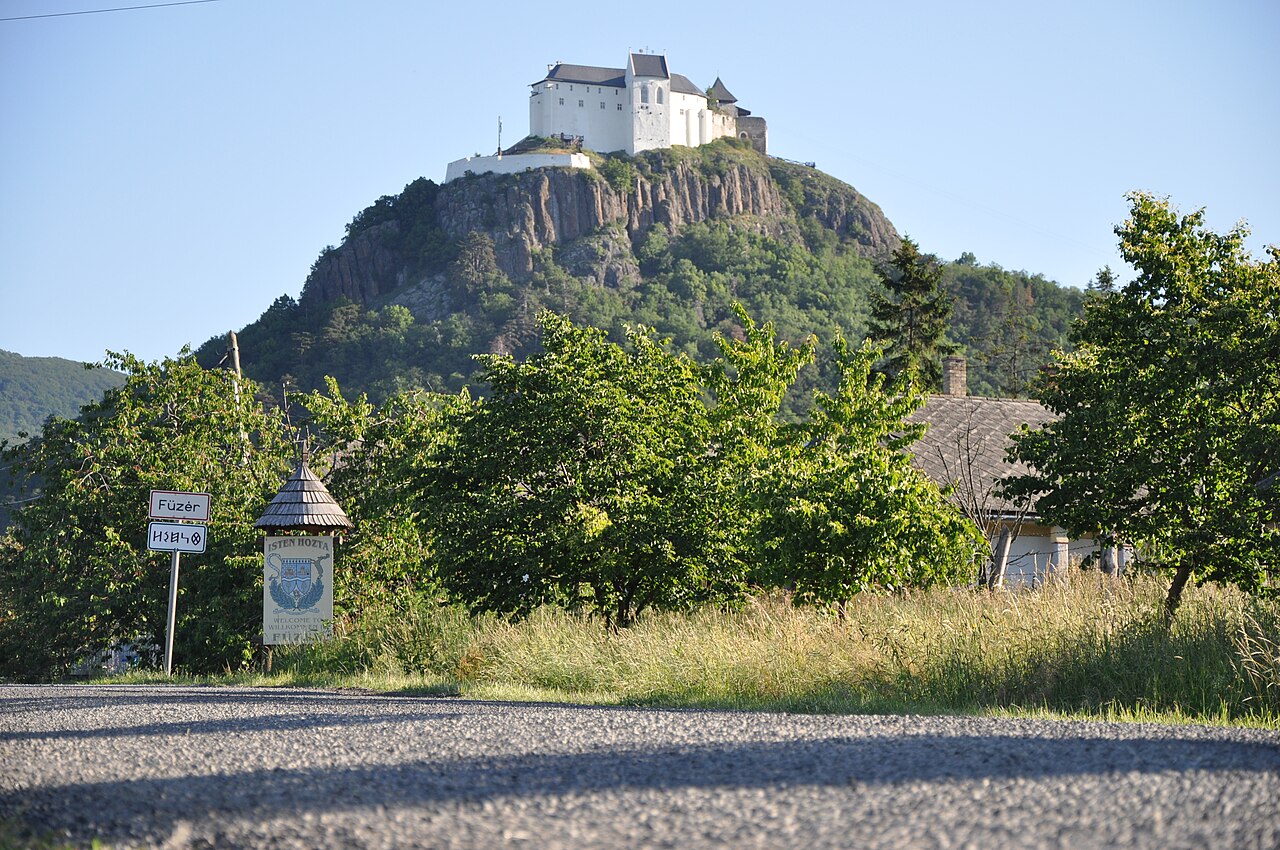
Füzér Castle, located in the village of Füzér in northern Hungary, is one of the country's oldest and most historically significant medieval fortresses. Perched atop a solitary volcanic hill at an elevation of 552 meters above sea level in the Zemplén Mountains, the castle commands breathtaking panoramic views of the surrounding landscape. Its strategic hilltop position made it a key defensive stronghold against invasions, particularly during the turbulent High Medieval period. The exact date of the castle's construction remains uncertain, but historical records first mention Füzér Castle in 1264. It is believed to have been built before the death of King Andrew II of Hungary in 1235, making it a structure with origins in the early 13th century. The castle was part of Hungary's frontier defenses against frequent incursions, including those by the Tatars. Its early ownership was closely tied to the royal family, with King Béla IV gifting the castle and its surrounding lands to his daughter Anna around 1262. Later, the castle was seized by Béla's son Stephen, who entrusted it to the Rošd family, known locally as the Füzéry brothers. Historical significance and ownership changes Throughout the 13th and 14th centuries, Füzér Castle changed hands multiple times, reflecting the complex political landscape of medieval Hungary. After the Battle of Rozhanovce in 1312, the influential Aba family lost control of the castle, which was then granted by King Charles I Robert to Palatine Philip Druget. By the late 14th century, ownership passed to Peter Perényi, under whose family the castle underwent significant architectural transformation. 15th-century renovations and gothic chapel During the 15th century, the Perényi family undertook extensive rebuilding efforts, including the construction of a magnificent Gothic chapel that remains one of the castle's most remarkable surviving features. The chapel's architecture exemplifies the Gothic style prevalent in medieval Hungary, with pointed arches, ribbed vaults, and intricate stonework. This period also saw the castle briefly held by royal steward Ladislaus Palóczy in the 1440s. 16th-century fortifications and renaissance additions The 16th century brought further modifications as military technology evolved. Under the initiative of Peter Perényi, who was the castle's guardian of the Holy Crown of St. Stephen, additional fortifications were added to adapt to the use of firearms. A new tower was constructed to strengthen the main gate, designed to withstand cannon fire. His son Gabriel Perényi contributed a Renaissance-style residential wing in the 1560s, blending defensive features with more comfortable living quarters. Notable historical events and figures Füzér Castle played a role in several key moments of Hungarian history. In 1526, after the Battle of Mohács, it temporarily housed the Holy Crown of Hungary, safeguarding it during a period of political upheaval. The castle was also associated with the infamous Elizabeth Báthory, known as the "Blood Countess," who owned the castle from 1603. Although legends of her crimes are widespread, historical evidence ties her ownership to this period. In the early 17th century, the castle briefly fell under the control of Gábor Bethlen's forces during his anti-Habsburg uprising. Later, in the mid-17th century, the castle was seized by Habsburg troops who deliberately burned it to prevent its use by Hungarian insurgents during ongoing conflicts. Architectural features and current condition Today, Füzér Castle stands as well-preserved ruins, with significant portions of its walls still intact. The castle's layout reflects its medieval military architecture, including bastioned fortifications adapted for gunpowder weapons. The most notable surviving structure is the beautifully restored Gothic chapel, which was renovated and had its shingle roof rebuilt, with the chapel's reopening celebrated in 2002. The castle hill itself is a protected historic site, home to unique flora and fauna, and forms an important cultural landmark in the region. Visitors can explore the ruins and enjoy spectacular views from the hilltop, making it a popular tourist destination in the Zemplén Mountains. Archaeological and restoration efforts Archaeological excavations and restoration work began in earnest in 1977, aiming to preserve the castle's historical legacy and stabilize its structures. These efforts have helped to reveal details about the castle's construction phases and historical usage, contributing valuable insights into medieval Hungarian fortifications. Visiting füzér castle Access to the castle requires a hike up the steep volcanic hill, which rewards visitors with both the chance to explore the ruins and to take in sweeping views of the surrounding Zemplén region. The site is accessible year-round, with spring through autumn being the most popular times to visit due to favorable weather conditions. Interpretive signage and guided tours help visitors understand the castle's rich history and architectural significance. Füzér Castle remains an emblematic monument of Hungary's medieval past, combining historical intrigue, architectural beauty, and natural splendor in one remarkable location.

High Medieval (11th–13th c.)
Details
13.5 km
Slanec Castle Ruins — Slovakia castle

Slanec Castle Ruins

Slanec, Slovakia

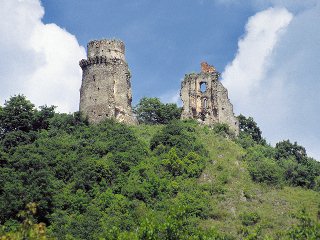
Slanec Castle stands as a remarkable hilltop fortress ruin in Slovakia, perched on a volcanic cone overlooking the village of Slanec. Its origins trace back to the high medieval period, with construction likely commencing in the 13th century following the Mongol invasion of Europe. The castle's strategic location atop a 170-meter-high volcanic hill provided commanding views over a natural passage through the Szalánc Mountains, underscoring its military and economic importance through centuries of Central European history. The castle's earliest documented mention appears in a 1303 charter from the chapter of Eger, referencing the Szalánczi family, who were instrumental in the castle's early development. Over the following centuries, Slanec Castle was a focal point of regional power struggles, ownership transfers, and military engagements that reflect the turbulent history of Upper Hungary (present-day eastern Slovakia). Historical development and ownership The initial establishment of Slanec Castle is attributed to Peter, son of Csama from the Aba clan, a prominent noble family of the Kingdom of Hungary. Originally known as Castrum Salis due to its role as a fortified salt storage site, the castle evolved into a stone fortress by 1281, featuring a distinctive round tower that symbolized its defensive strength. That year, it was besieged and captured by royal forces during a conflict between Palatine Aba Finta and King Ladislaus IV, highlighting its strategic significance. By the late 13th century, the castle returned to the Szalánc family and later passed to the influential Drugeth family around 1330. The Drugeths enhanced the castle’s defenses by constructing the prominent old tower or donjon, a central keep that served as the stronghold's core defensive feature. The 15th century saw the castle under the ownership of the Losonczy family, who undertook major rebuilding efforts circa 1490 after damage sustained during a siege led by John Giskra's mercenaries in 1440. In the 17th century, the castle became embroiled in the anti-Habsburg uprisings. It was seized by forces loyal to Stephen Bocskai in 1605 and later occupied by Imre Thököly in 1678. The castle changed hands multiple times amid these conflicts, culminating in its destruction by imperial troops under General Count Jakab Lestie in 1679. This event marked the end of its military use, leaving Slanec Castle in ruins. Despite its ruinous state, the castle remained significant to the Forgách family, who owned it from 1601 until the 19th century. In 1815, Count József Forgách initiated partial repairs on the old tower to secure family valuables, reflecting a shift from military fortress to heritage site. The ruins suffered further damage during World War II but have since been the focus of conservation and archaeological efforts led by the local municipality since 2010. Architectural features and layout Slanec Castle was originally constructed on a rectangular plan adapted to the volcanic hill’s shape, narrowing on the northwest side. Defensive earthworks and a ditch protected the northern approach, remnants of which remain visible today. The castle’s core featured a three-story residential tower with a defensive gallery—a covered walkway for guards—later extended by two additional floors. The uppermost floor included a gallery supported by large stone corbels, which are projecting stones that provide structural support. Adjacent to this tower stood a large round tower equipped with a corbelled gallery at the same height as the palace gallery. This tower remains one of the most prominent surviving elements of the ruins. The entire complex was enclosed by a defensive wall approximately 140 centimeters thick, emphasizing the fortress's robust construction. In the 15th century, the castle expanded northwestward with the addition of a bastion near the entrance, which was fortified by a Gothic gate and a drawbridge. This bastion enhanced the castle’s defensive capabilities against siege warfare. Nearby, a circular cistern about 10 meters deep was carved into the living rock and lined with stone blocks, providing a vital water supply for the castle’s occupants. The old tower or donjon remains a key architectural highlight, alongside the northwest Nebojsa tower, which still rises to four stories and retains parts of its original roof. Sections of the palace’s southeast wall survive, including a window from a Gothic chapel decorated with early 14th-century profile moldings. These architectural details reflect the castle’s evolution through the medieval period. At the foot of the hill, remnants of a 19th-century landscaped garden reveal the site’s later cultural significance beyond its military origins. Recent conservation efforts have stabilized the ruins, including wall reinforcements, vault replacements, and roofing restorations on the tower, ensuring the preservation of this historic monument. Military and political significance Throughout its history, Slanec Castle played a crucial role in the military and political landscape of Upper Hungary. Its strategic location allowed control over important trade and military routes through the Szalánc Mountains. The castle was repeatedly contested during conflicts such as the struggles between Hungarian noble families, the Hussite incursions in the 15th century, and the anti-Habsburg uprisings of the 17th century. Notable historical figures associated with the castle include Miklós III Drugeth, the supremus comes of Ung County and ban of Szörény, and George I Rákóczi, a Transylvanian prince involved in the Thirty Years’ War. The castle’s capture and destruction in 1644 by Transylvanian troops and its final ruin in 1679 by imperial forces illustrate its central role in regional power dynamics. Conservation and cultural heritage Today, Slanec Castle is a protected cultural monument owned by the municipality of Slanec. Conservation efforts focus on preserving the structural remains and facilitating archaeological research to uncover further insights into the castle’s layered history. The site attracts visitors interested in medieval architecture, Hungarian and Slovak history, and the dramatic stories of noble families and military conflicts that shaped the region. Interpretive signage and guided tours provide educational opportunities, while the castle’s scenic hilltop location offers panoramic views of the surrounding landscape. As a significant example of a high medieval hill castle with a complex history of construction, destruction, and restoration, Slanec Castle remains a valuable heritage site in Slovakia.

High Medieval (11th–13th c.)
Details