Medzianský hrádek — Slovakia castle

Medzianský hrádek

Medzianský hrádek castle in Slovakia
High Medieval (11th–13th c.)
Ruins

Medzianský hrádek is a high medieval hill castle located in Slovakia, dating back to the 13th century. This castle exemplifies the typical defensive architecture of the High Middle Ages in Central Europe, strategically positioned on elevated terrain to oversee and control the surrounding landscape.

Historical background and significance

The castle was constructed during a period marked by frequent territorial conflicts and the need for fortified residences for nobility and local rulers. Its establishment in the 13th century places it within the broader context of medieval fortification development in the region, where castles served both as military strongholds and administrative centers.

While specific historical records about the castle's founders or notable occupants are scarce, its location and design indicate its role in regional defense and control of trade routes or local settlements. The castle likely played a part in the feudal system, providing protection and asserting the power of its owners.

Architectural features and layout

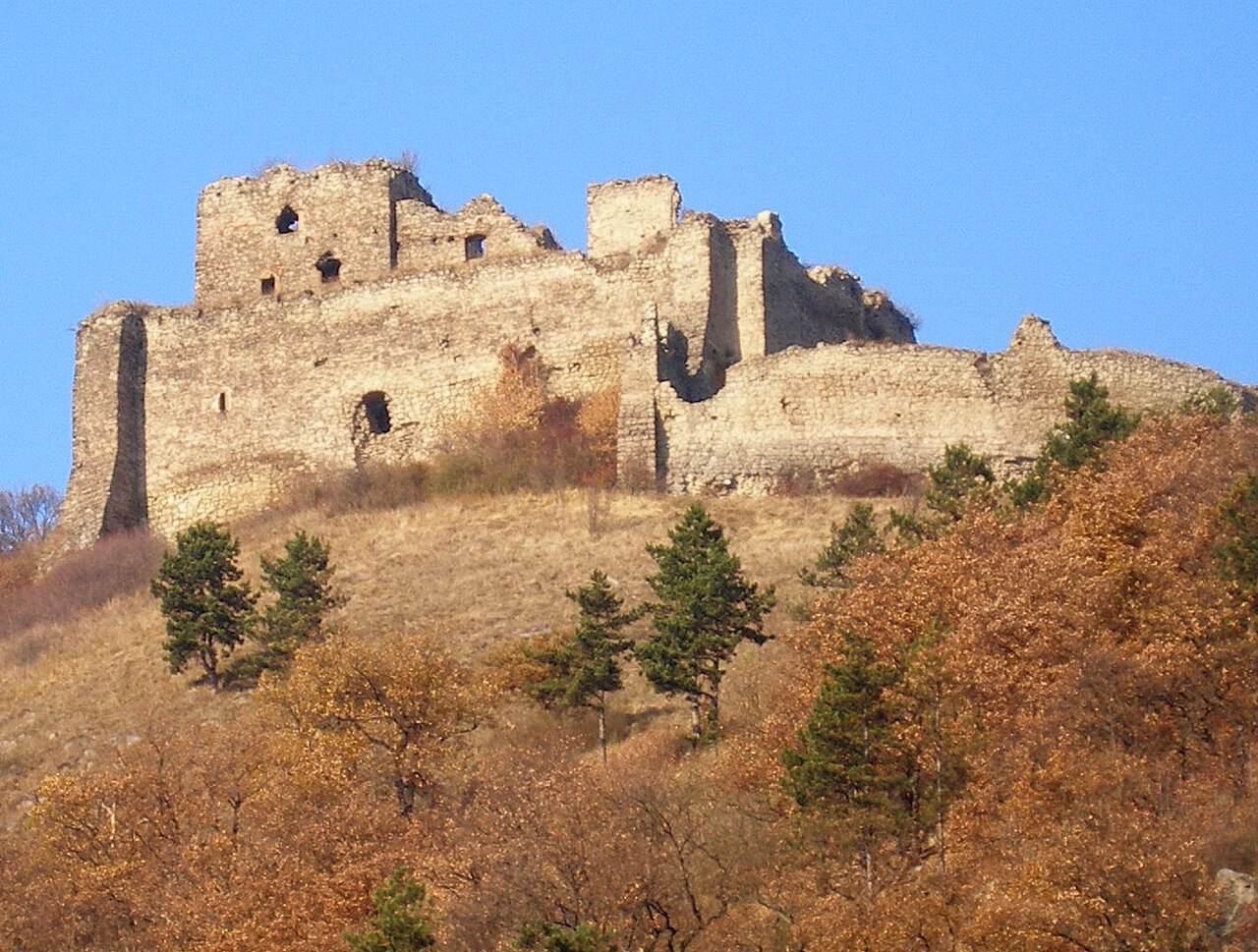
Medzianský hrádek is classified as a hill castle, built on elevated ground to maximize defensive advantage. The castle's remains reveal typical medieval fortification elements such as thick stone walls, remnants of towers, and defensive gates. These features were designed to withstand sieges and attacks common during the turbulent medieval period.

The castle's layout would have included a central courtyard surrounded by residential buildings, storage facilities, and defensive structures. The elevated position also allowed for visibility over the surrounding valleys and routes, enabling early warning of approaching enemies.

Defensive structures

The castle likely featured a combination of curtain walls and towers, which were standard for high medieval fortifications. These would have provided vantage points for archers and guards. Although now in ruins, traces of these structures can still be discerned, offering insights into medieval military architecture.

Current condition and preservation

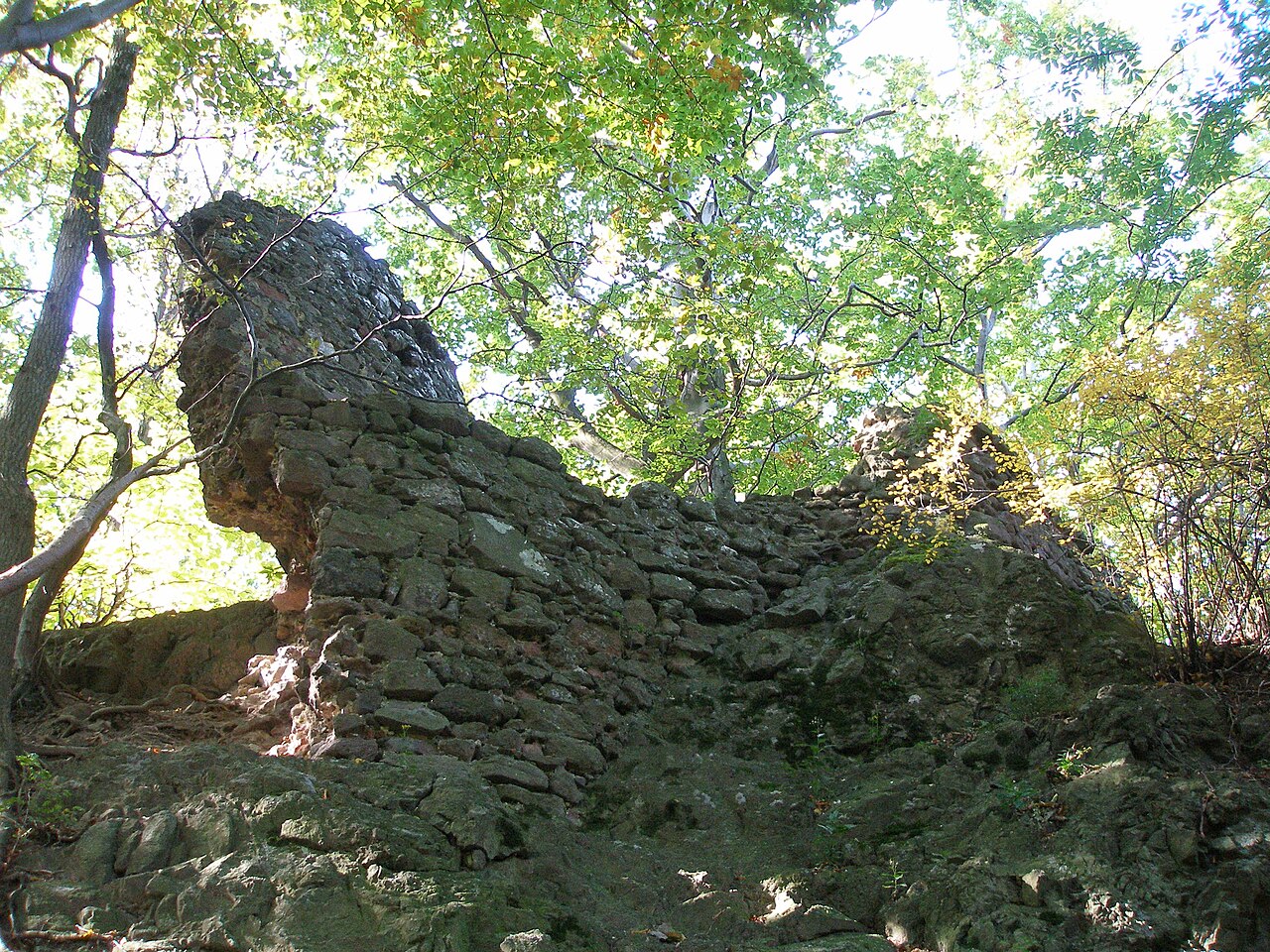
Today, Medzianský hrádek exists primarily as ruins, with only partial remains of its original structures visible. The castle has not been fully restored, but archaeological studies have helped document its layout and historical importance.

Its condition reflects the natural decay over centuries and the impact of historical conflicts and abandonment. Despite this, the site remains a valuable cultural heritage location, attracting interest from historians, archaeologists, and visitors interested in medieval architecture.

Visiting Medzianský hrádek

As a ruin situated on a hill, the site offers visitors a glimpse into medieval defensive architecture and the landscape that shaped its strategic importance. Access may require hiking or walking on uneven terrain, typical of hill castles.

Visitors can explore the remains and enjoy panoramic views of the surrounding Slovak countryside. The castle's remote location adds to its historical ambiance, providing a tangible connection to the medieval past of the region.

Frequently asked questions (FAQ)

What is the historical significance of Medzianský hrádek?
Medzianský hrádek is a historically significant castle located in Slovakia, known for its strategic position in the region. It played a crucial role during various conflicts and showcases the architectural styles prevalent during its construction in the late Middle Ages.
When was Medzianský hrádek built?
The construction of Medzianský hrádek began in the 13th century, with significant modifications made in the following centuries. This long history has contributed to its unique architectural features and the preservation of its medieval charm.
Can I visit Medzianský hrádek year-round?
Yes, Medzianský hrádek is open to visitors year-round, although specific tours or events might be scheduled seasonally. It is advisable to check the castle's official website for any updates regarding accessibility and tour availability during different times of the year.
What are the opening hours of Medzianský hrádek?
Medzianský hrádek typically opens from 9 AM to 5 PM during the summer months and may have reduced hours in the winter. It's recommended to confirm the exact opening hours before your visit, as they can vary based on the season and special events.
Is it possible to purchase tickets in advance?
Yes, visitors can often purchase tickets in advance through the castle's official website or at designated ticket offices. This can help you avoid long queues on busy days and ensure a smoother entry into the castle.
What nearby attractions can I explore while visiting Medzianský hrádek?
While visiting Medzianský hrádek, you can also explore nearby attractions such as the picturesque town of Banská Štiavnica and the beautiful Slovak Paradise National Park. These sites offer rich cultural experiences and stunning natural landscapes, making them perfect additions to your itinerary.
What is the best time to visit Medzianský hrádek?
The best time to visit Medzianský hrádek is during the spring and early autumn months when the weather is pleasant, and the surrounding landscapes are vibrant. Additionally, visiting during these seasons allows you to enjoy special events and guided tours that may not be available in winter.
How do I get to Medzianský hrádek?
Medzianský hrádek is accessible by car or public transport from major cities in Slovakia. For those traveling by public transport, local buses and trains connect to nearby towns, followed by a short hike to the castle.
Is Medzianský hrádek accessible for people with disabilities?
While Medzianský hrádek strives to accommodate all visitors, certain areas of the castle may have limited accessibility due to its historic architecture. It is recommended to contact the castle administration in advance to inquire about specific accessibility options available during your visit.

Photo gallery

Medzianský hrádek
Click to view

Photo by Ing.Mgr.Jozef Kotulič•CC BY-SA 4.0

1 photo • Click any image to view in full screen

Information

Hill Castle

Loading map...

Visitor reviews

No reviews yet. Been here? Write the first review and help other travelers!

Write the first review

Visited this castle? Share your experience

Your review helps other travelers and adds first-hand knowledge to our encyclopedia.
Write a review

(5/5)

0/2000 characters

Your review will be visible after admin approval

Nearby castles

10.3 km
Hrad Šebeš — Slovakia castle

Hrad Šebeš

Podhradík, Slovakia

Hrad Šebeš stands as a significant medieval hill castle ruin nestled within the municipality of Podhradík in present-day Slovakia. This castle, perched on a steep rocky spur in the Slanské vrchy mountain range, represents a remarkable example of early stone fortifications that evolved from earlier wooden structures. Its historical roots trace back to a wooden watchtower known as Havranov príbytok or Hulloudzalasa, which was abandoned by the late 13th century. This early fortification likely functioned as a strategic outpost for a knightly order distinguished by black habits, indicating a military and possibly religious role in the region. The castle's location on the hill originally called Mačka (now known as Zámek) became the site of a stone fortress constructed between 1307 and 1315. This construction is attributed to Synek, son of Tomáš, a knight who secured official ownership of the land and castle through a royal grant from King Charles Robert in 1315. This grant established the castle as a hereditary stronghold of Synek's family for nearly two centuries, marking its importance in the feudal landscape of medieval Slovakia. Historical significance and ownership The castle remained in the hands of Synek’s descendants until 1491, when it was transferred by King Vladislaus to the city of Košice. This transfer marked a turning point in the castle's history, as it ignited tensions between the castle's new controlling authorities and the nearby town of Prešov. These tensions culminated in a prolonged legal dispute in 1475 that ultimately failed to resolve the conflicts. The discord escalated dramatically in 1550 when the inhabitants of Prešov launched a violent assault on the castle. During this attack, the castle owner, František Sebesi, attempted to negotiate peace, but the mayor of Prešov led the assault regardless. The castle’s castellan, Geraki, and Sebesi were captured and executed at the castle gate. Following their execution, the attackers set fire to the fortress, causing extensive damage. The royal authorities subsequently punished those responsible in Prešov, but the castle was never rebuilt and gradually fell into ruin. Architectural features and defensive design Constructed predominantly from stone, Hrad Šebeš occupies a narrow rocky spur approximately 529 meters above sea level. The spur measures about 8 meters in width and extends around 60 meters in length, creating a compact yet highly defensible position. The castle’s design cleverly exploits the natural topography, particularly the steep slopes and rocky terrain, which provided inherent defensive advantages. Defensive structures The eastern slope, being less steep and more accessible, was protected by a neck ditch—a deep and wide trench carved directly into the rock, measuring between 8 and 10 meters across and 5 to 6 meters deep. This ditch served as a formidable obstacle against any attacking force attempting to approach from this vulnerable side. Encircling the plateau atop the spur was a perimeter defensive wall, forming an unbroken protective barrier around the castle’s edge. On the western side, near the main approach, stood a circular tower with a diameter of about 5 meters and walls 1.5 meters thick. This tower functioned as a lookout and defensive strongpoint, overseeing the approach path and providing a strategic vantage point. Residential and inner fortifications Within the eastern part of the spur lay the residential palace, a rectangular stone building approximately 9 by 6 meters in size. The palace’s western wall also served as a defensive wall above the main entrance, integrating living quarters with fortification needs. Behind the palace, about 21 meters away, a second neck ditch added an extra layer of defense, further isolating the castle’s core from potential attackers. In the northeastern section of the site, archaeologists have identified an earthen rampart fortification, a raised embankment made of compacted soil. This rampart complemented the stone walls and ditches, enhancing the overall defensive system of the fortress. Natural environment and current condition The castle hill is today densely overgrown with forest vegetation, and the ruins intermingle with numerous natural rock formations, making the remaining stone structures challenging to discern. A stream named Šebastovka flows along the southeastern flank of the hill, contributing to the natural defensive advantages of the site. On the eastern side, a steep vertical rock face shows evidence of historic quarrying, suggesting that stone was extracted locally for the castle’s construction or other purposes. Beyond the described features, no additional masonry ruins are visible on the plateau today, and the site remains a subtle yet important trace of medieval fortification in the region. Cultural heritage and archaeological importance Hrad Šebeš is recognized as a nationally protected cultural monument and an archaeological site within the cadastral area of Podhradík. Its ruins offer valuable insights into medieval military architecture and feudal society in Central Europe. The castle’s history of ownership, conflict, and eventual destruction reflects the turbulent dynamics of the region during the late medieval period. Despite its ruined state, the site attracts historians, archaeologists, and visitors interested in medieval fortifications and Slovak heritage. The castle’s strategic location, architectural features, and documented history contribute to its significance as a cultural landmark.

High Medieval (11th–13th c.)
Details
12.1 km
Kapušany castle Hill — Slovakia castle

Kapušany castle Hill

, Slovakia

Kapušany castle hill represents a significant high medieval archaeological site located in Slovakia, dating back to the 13th century. The castle is now in a state of ruins, offering valuable insights into medieval fortification techniques and the historical landscape of the region. Historical context and significance The construction of Kapušany castle hill in the 13th century places it within the high medieval period, a time characterized by the proliferation of stone castles across Europe. These fortifications served both defensive and administrative functions, reflecting the feudal structure and territorial disputes of the era. Kapušany castle was likely built to oversee and control the surrounding lands, providing protection against invasions and asserting the authority of local nobility. Though the exact founders of the castle remain uncertain, its strategic location on a hilltop would have offered commanding views of the surrounding terrain, an essential feature for early warning and defense. The castle's presence in Slovakia contributes to understanding the region's medieval history and the evolution of castle architecture in Central Europe. Architectural features and layout As an archaeological ruin, Kapušany castle hill retains remnants of its original structures, which help to reconstruct its former appearance and function. The castle was likely a hill castle, utilizing the natural elevation for defense, a common trait in medieval fortifications. Typical features of such castles include thick stone walls, defensive towers, a central courtyard, and possibly a keep or donjon serving as the last line of defense and residence for the lord. Although much of the superstructure has not survived, archaeological studies have revealed foundation outlines and wall fragments indicative of a complex layout designed for both military and residential purposes. The castle's construction techniques would have involved local stone materials, with masonry work reflecting the building practices of the high medieval period. Defensive elements such as battlements, arrow slits, and possibly a moat or ditch might have been part of the original design, although these features are now largely lost to time. Preservation and archaeological research Kapušany castle hill is classified as ruins, with ongoing archaeological interest aimed at uncovering and preserving its remains. Excavations have helped to document the castle's layout and artifacts, providing valuable data on the daily life, military technology, and architectural trends of the period. Efforts to stabilize the ruins ensure that visitors can safely explore the site while protecting it from further decay. The castle serves as an important cultural heritage site, attracting historians, archaeologists, and tourists interested in medieval history and architecture. Visiting Kapušany castle hill Visitors to Kapušany castle hill can experience the atmospheric ruins set within the natural landscape of Slovakia. The site offers opportunities for hiking, photography, and historical exploration. Due to its status as an archaeological site, access may be limited or regulated to protect the fragile remains. Informational signage and guided tours, where available, provide context about the castle's history and architectural significance. The surrounding region also features other historical landmarks and natural attractions, making a visit to Kapušany castle hill part of a broader cultural itinerary.

High Medieval (11th–13th c.)
Details
12.4 km
Zbojnícký Castle — Slovakia castle

Zbojnícký Castle

Ruská Nová Ves, Slovakia

Zbojnícký Castle is a significant medieval hill fortress located near the village of Ruská Nová Ves in eastern Slovakia. Constructed in the late 13th century, this castle was strategically positioned on a rocky plateau to oversee and control the surrounding landscape, including vital salt trade routes that were crucial to the regional economy. Its historical roots tie deeply to the salt production and administration in the Prešov region, making it an important site for understanding medieval economic and defensive architecture in Slovakia. Historical background and origins The castle's foundation traces back to a royal permit granted in 1288, which authorized the construction of a new stronghold to replace one or two earlier fortifications known as Soľnohrad. These earlier castles were located in what is now the Solivar district of Prešov. The new fortress, later known as Zbojnícký Castle, was established by Juraj Bokša, a nobleman who sought to consolidate control over the area and its valuable resources. The castle's medieval name, documented in Latin as Castrum S(o)owar, reflects its connection to the salt industry, with the controlling family adopting the surname Šóš derived from these place names. The Šóš family maintained dominion over the castle for an extended period, with their control largely uninterrupted until 1671, despite occasional ownership changes. Following the decline of the Šóš family's influence, references to the castle diminish, culminating in a recorded destruction ordered by the regional assembly in 1715. This demolition marked the end of Zbojnícký Castle's role as a regional power center, after which it fell into ruin and gradually lost its strategic importance. Architectural layout and defensive features Strategic location and natural defenses Perched at an elevation of 661 meters above sea level on a rocky plateau known locally as Zámek, the castle occupies an area approximately 45 by 35 meters. Its position atop steep cliffs on the north, south, and west sides provided formidable natural defenses against attackers. The eastern side, featuring two natural terraces, was adapted for construction and served as the primary approach to the fortress. Upper castle structures The upper castle occupies the southwestern portion of the site, extending about 45 meters in length and 12 meters in width. Among its most prominent features is the remains of a square stone tower measuring 8 by 8 meters, with only half of the tower surviving today. Inside, the tower contained a circular chamber approximately 4.5 meters in diameter, supported by wooden beam ceilings, indicative of typical medieval construction techniques. Encircling the upper castle was a robust stone defensive wall, with the southern segment still preserved to a thickness of approximately 130 centimeters. Adjacent to the tower stood a larger palace building measuring 17 by 8.5 meters, featuring a partially subterranean basement and a northern wall integrated into the defensive perimeter. This palace likely served as the residential and administrative center within the castle complex. Lower courtyard and fortifications Below the upper castle lies a smaller lower courtyard measuring about 10 meters in length. Portions of the original masonry perimeter wall survive here, with a thickness of roughly 120 centimeters. A round tower approximately 5 meters in diameter guarded the northern side of this courtyard, reinforcing the defensive capabilities of the castle's lower section. The defensive layout also included a wide moat about 13 meters across and still 2.5 to 3 meters deep, which fortified the eastern approach where the terrain allowed access. This moat, combined with the steep cliffs and stone walls, created a layered defense system that maximized the natural topography for protection. Historical significance and legacy While Zbojnícký Castle does not have documented records of major military engagements, royal occupations, or religious functions, its significance lies in its role as a fortified center for the administration of salt resources and local governance. The castle's connection to the salt trade is underscored by its various historical names, such as Soľnohrad, Soľný hrad, and Nový Soľnohrad, all of which emphasize its economic importance in the region. The long tenure of the Šóš family as the castle's lords highlights the stability and continuity of noble influence in this part of Slovakia during the High to Late Medieval periods. Their stewardship likely shaped the castle's development and its integration within the local landscape and economy. The castle's destruction in 1715 by order of the regional assembly reflects broader political and military changes in the region, where many medieval fortresses lost their strategic value due to evolving warfare and administrative reforms. Present condition and visitor experience Today, Zbojnícký Castle stands as a ruined hill castle, with substantial remains that allow visitors to appreciate its original scale and defensive ingenuity. The combination of natural cliffs, surviving walls, towers, and the moat provides a vivid impression of medieval fortification adapted to the rugged terrain. The site is accessible via a narrow path ascending the eastern side, which was historically the castle's only approach. Visitors can explore the rocky plateau, observe the remnants of the square tower, the palace foundations, and the defensive walls that once protected the stronghold. The castle's elevated position offers panoramic views of the surrounding landscape, enhancing its appeal as a cultural and historical destination. As a heritage site, Zbojnícký Castle contributes to the understanding of medieval Slovak fortifications and the socio-economic history of the Prešov region. Its ruins serve as a tangible link to the past, inviting exploration and study of Slovakia's medieval noble estates and their architectural legacy.

Late Medieval (14th–15th c.)
Details