Hrad Šebeš
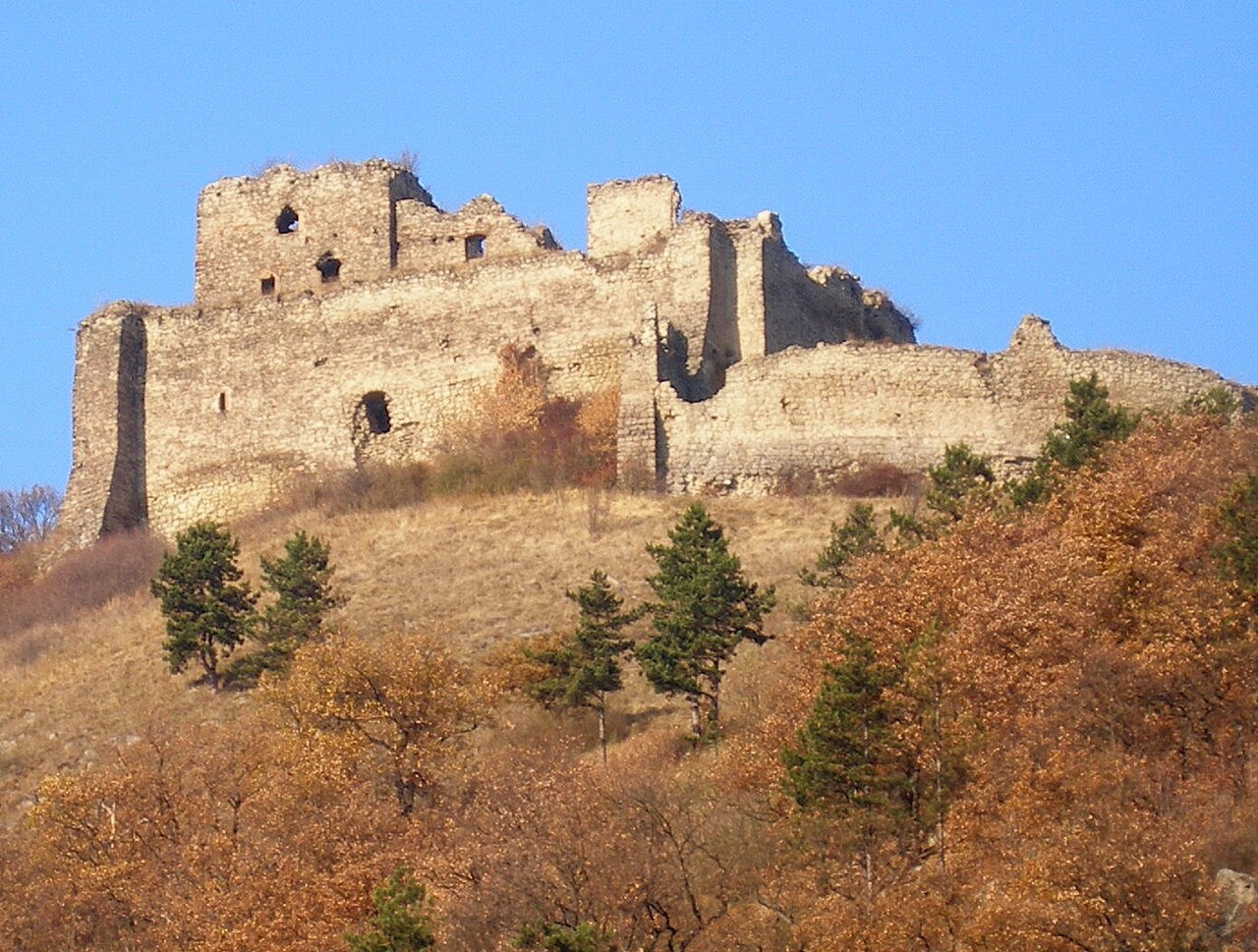
Hrad Šebeš stands as a significant medieval hill castle ruin nestled within the municipality of Podhradík in present-day Slovakia. This castle, perched on a steep rocky spur in the Slanské vrchy mountain range, represents a remarkable example of early stone fortifications that evolved from earlier wooden structures. Its historical roots trace back to a wooden watchtower known as Havranov príbytok or Hulloudzalasa, which was abandoned by the late 13th century. This early fortification likely functioned as a strategic outpost for a knightly order distinguished by black habits, indicating a military and possibly religious role in the region.
The castle's location on the hill originally called Mačka (now known as Zámek) became the site of a stone fortress constructed between 1307 and 1315. This construction is attributed to Synek, son of Tomáš, a knight who secured official ownership of the land and castle through a royal grant from King Charles Robert in 1315. This grant established the castle as a hereditary stronghold of Synek's family for nearly two centuries, marking its importance in the feudal landscape of medieval Slovakia.
Historical significance and ownership
The castle remained in the hands of Synek’s descendants until 1491, when it was transferred by King Vladislaus to the city of Košice. This transfer marked a turning point in the castle's history, as it ignited tensions between the castle's new controlling authorities and the nearby town of Prešov. These tensions culminated in a prolonged legal dispute in 1475 that ultimately failed to resolve the conflicts. The discord escalated dramatically in 1550 when the inhabitants of Prešov launched a violent assault on the castle.
During this attack, the castle owner, František Sebesi, attempted to negotiate peace, but the mayor of Prešov led the assault regardless. The castle’s castellan, Geraki, and Sebesi were captured and executed at the castle gate. Following their execution, the attackers set fire to the fortress, causing extensive damage. The royal authorities subsequently punished those responsible in Prešov, but the castle was never rebuilt and gradually fell into ruin.
Architectural features and defensive design
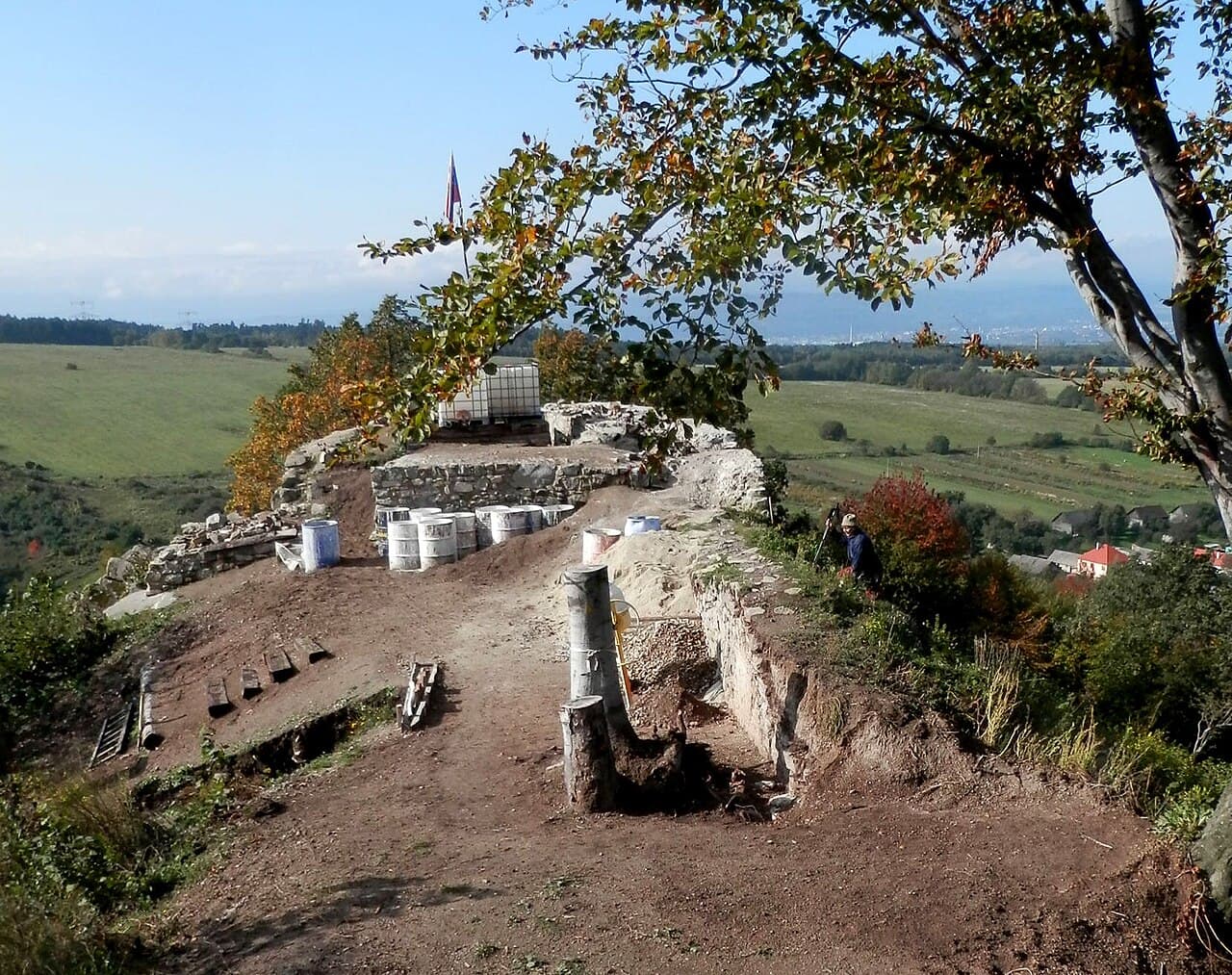
Constructed predominantly from stone, Hrad Šebeš occupies a narrow rocky spur approximately 529 meters above sea level. The spur measures about 8 meters in width and extends around 60 meters in length, creating a compact yet highly defensible position. The castle’s design cleverly exploits the natural topography, particularly the steep slopes and rocky terrain, which provided inherent defensive advantages.
Defensive structures
The eastern slope, being less steep and more accessible, was protected by a neck ditch—a deep and wide trench carved directly into the rock, measuring between 8 and 10 meters across and 5 to 6 meters deep. This ditch served as a formidable obstacle against any attacking force attempting to approach from this vulnerable side.
Encircling the plateau atop the spur was a perimeter defensive wall, forming an unbroken protective barrier around the castle’s edge. On the western side, near the main approach, stood a circular tower with a diameter of about 5 meters and walls 1.5 meters thick. This tower functioned as a lookout and defensive strongpoint, overseeing the approach path and providing a strategic vantage point.
Residential and inner fortifications
Within the eastern part of the spur lay the residential palace, a rectangular stone building approximately 9 by 6 meters in size. The palace’s western wall also served as a defensive wall above the main entrance, integrating living quarters with fortification needs. Behind the palace, about 21 meters away, a second neck ditch added an extra layer of defense, further isolating the castle’s core from potential attackers.
In the northeastern section of the site, archaeologists have identified an earthen rampart fortification, a raised embankment made of compacted soil. This rampart complemented the stone walls and ditches, enhancing the overall defensive system of the fortress.
Natural environment and current condition
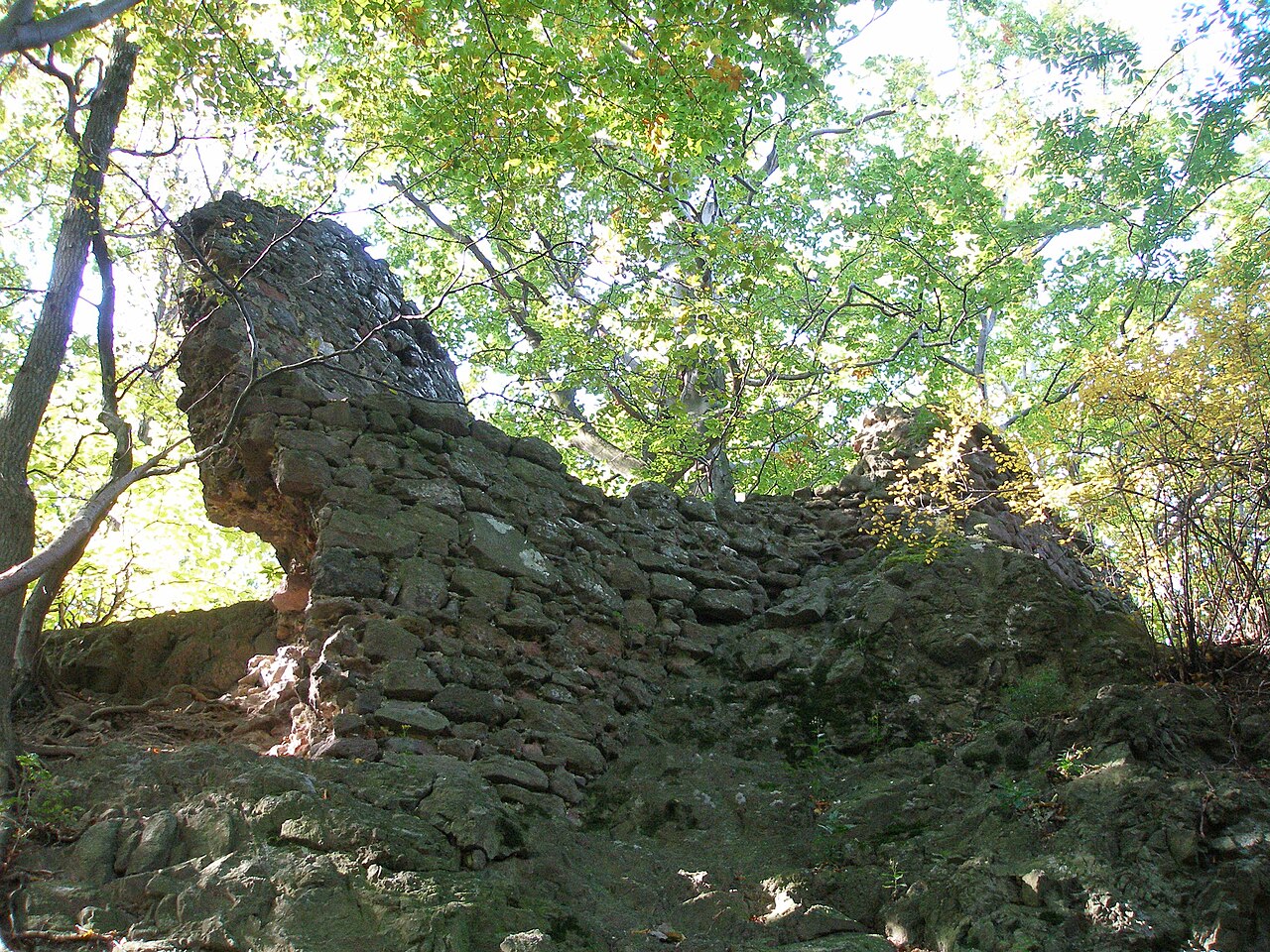
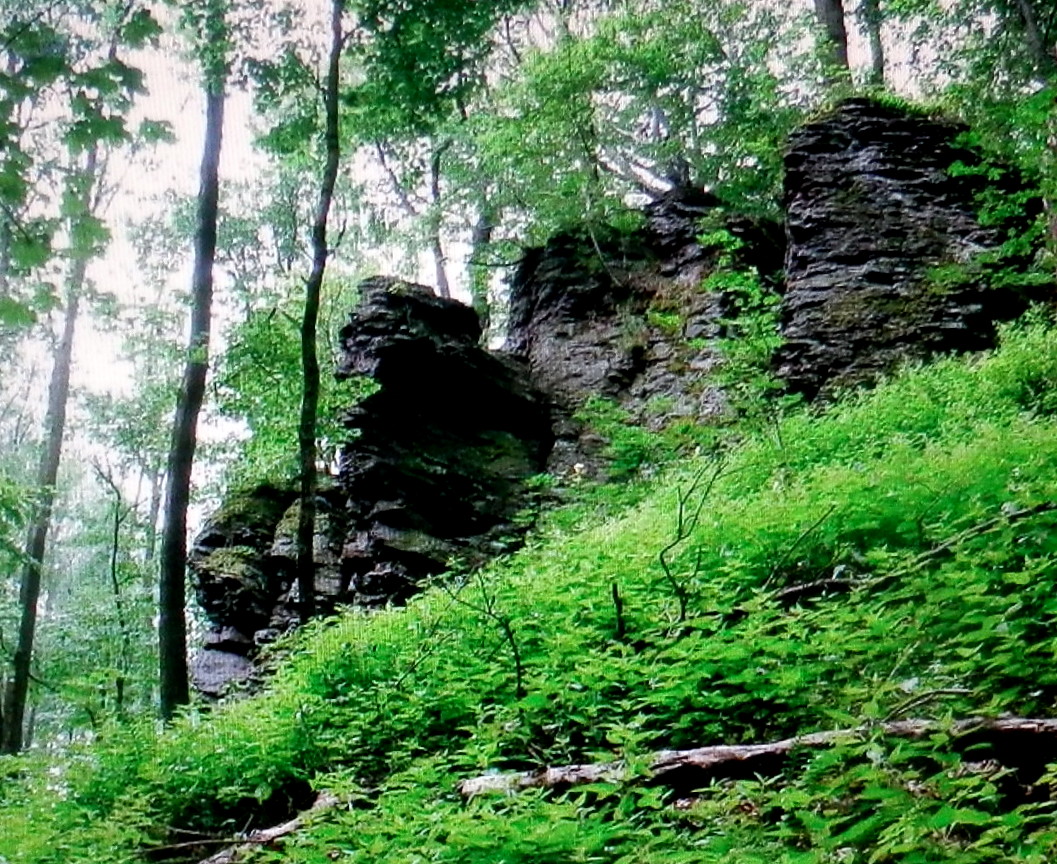
The castle hill is today densely overgrown with forest vegetation, and the ruins intermingle with numerous natural rock formations, making the remaining stone structures challenging to discern. A stream named Šebastovka flows along the southeastern flank of the hill, contributing to the natural defensive advantages of the site.
On the eastern side, a steep vertical rock face shows evidence of historic quarrying, suggesting that stone was extracted locally for the castle’s construction or other purposes. Beyond the described features, no additional masonry ruins are visible on the plateau today, and the site remains a subtle yet important trace of medieval fortification in the region.
Cultural heritage and archaeological importance
Hrad Šebeš is recognized as a nationally protected cultural monument and an archaeological site within the cadastral area of Podhradík. Its ruins offer valuable insights into medieval military architecture and feudal society in Central Europe. The castle’s history of ownership, conflict, and eventual destruction reflects the turbulent dynamics of the region during the late medieval period.
Despite its ruined state, the site attracts historians, archaeologists, and visitors interested in medieval fortifications and Slovak heritage. The castle’s strategic location, architectural features, and documented history contribute to its significance as a cultural landmark.
Frequently asked questions (FAQ)
- How do I get to Hrad Šebeš?
- Hrad Šebeš is located near the village of Podhradík in the Prešov Region of Slovakia. Visitors can reach the site by car or local transport, followed by a hike up the hill where the castle ruins are situated.
- What is the best time to visit Hrad Šebeš?
- The best time to visit Hrad Šebeš is during late spring to early autumn when the weather is favorable for hiking and the forest vegetation is less dense, allowing better views of the ruins.
- Is Hrad Šebeš accessible for visitors with limited mobility?
- Due to its location on a steep rocky spur and the nature of the terrain, Hrad Šebeš is not easily accessible for visitors with limited mobility. The path to the castle involves uneven ground and some steep sections.
- Are there guided tours available at Hrad Šebeš?
- Guided tours may be available through local tourist offices or cultural organizations in the Prešov Region. It is recommended to check in advance for availability and scheduling.
- What remains can be seen at Hrad Šebeš today?
- Visitors to Hrad Šebeš can see the remnants of the stone defensive walls, the circular tower base, the residential palace foundations, neck ditches, and parts of the earthen rampart fortifications amid natural rock formations and forest growth.
Photo gallery

Information
Sources & official resources
Verify the information above using these authoritative references.
Loading map...
Visitor reviews
No reviews yet. Been here? Write the first review and help other travelers!
Write the first reviewVisited this castle? Share your experience
Your review helps other travelers and adds first-hand knowledge to our encyclopedia.