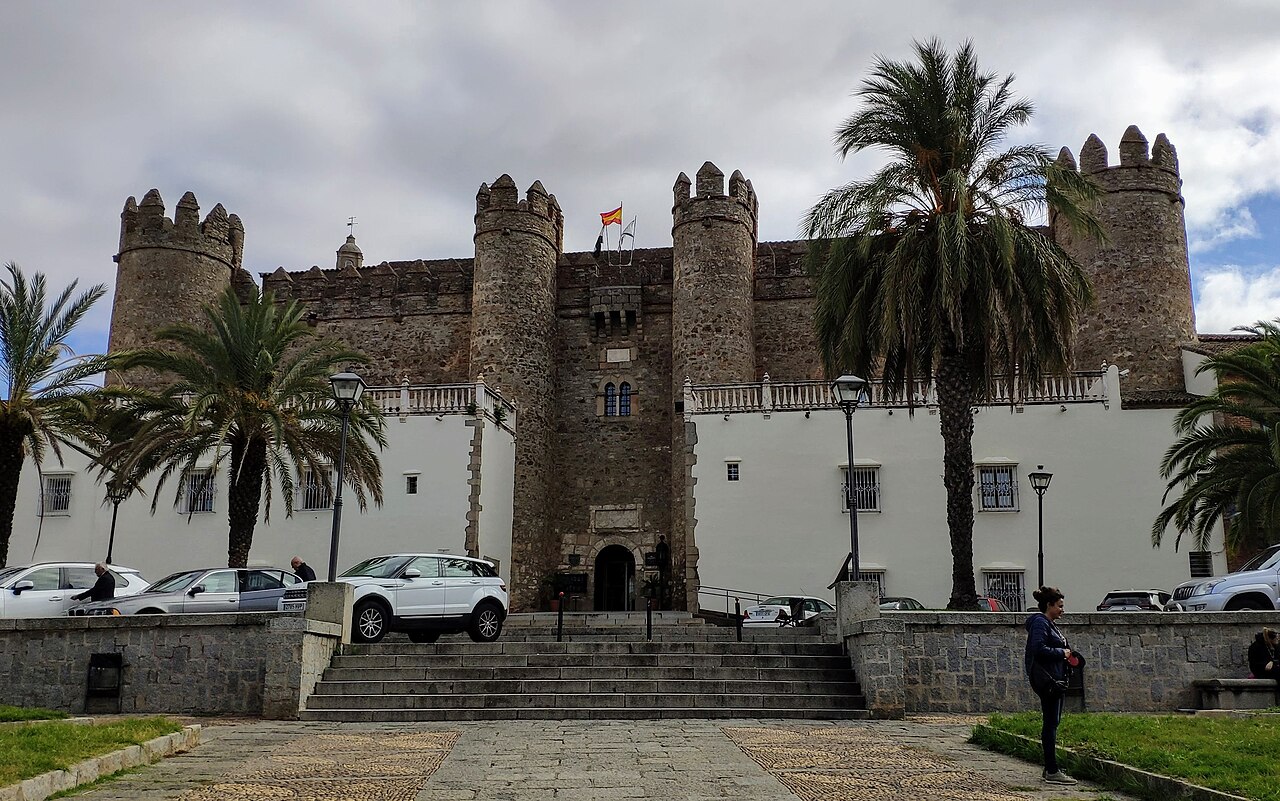
Medina de las Torres Castle
Medina de las Torres Castle stands as a significant example of a late medieval hill castle constructed in the 14th century by the Order of Santiago in Spain. Situated on a modest low hilltop in the municipality of Medina de las Torres, this fortress served as the headquarters of the Encomienda de Medina de las Torres, a territorial commandery managed by the military religious order during the period following the Christian Reconquista. While the castle's origins span from the 14th to the 16th centuries, its core construction dates back firmly to the 14th century, reflecting the strategic and administrative needs of the Order in consolidating their control over the region.
The fortress's location on a low hill was chosen for its natural defensive advantages, though the design notably adapts to the terrain's contours rather than imposing a dominating height. The castle's elliptical layout is unusual among Reconquista fortifications, which more commonly employed elongated plans. This elliptical shape was carefully planned to maximize the defensive capabilities afforded by the hilltop's crest while accommodating the natural landscape.
Architectural features and defensive structures
The castle's perimeter was originally enclosed by robust masonry ramparts, portions of which survive today, alongside remnants of a defensive ditch or moat that further protected the fortress from assault. The entrance lies on the southeast side, guarded by two imposing square towers that controlled access to the interior. This gateway connected the castle to the important road between Medina de las Torres and Valencia del Ventoso, underscoring the fortress's role in regional communication and defense.
Within the main enclosure, which covers approximately 250 square meters and rises to two stories, several key defensive and residential structures were situated. A prominent feature is the torre del homenaje, a cylindrical keep that served as the last line of defense and command center. This tower includes a chamber at its summit, likely used for observation and strategic planning. Adjacent to it is a semicircular tower, complementing the castle's defensive network.
The castle's fortifications also included multiple other towers positioned along the elliptical walls, providing overlapping fields of fire and surveillance. The robust walls were constructed with large cornerstones known as sillares, some of which have been lost over time but were replaced during restoration efforts to maintain structural integrity.
Functional spaces and daily life within the castle
The fortress was designed to support both military and administrative functions. The first enclosure contained essential facilities such as a dungeon, kitchen, cellar, and stables, catering to the needs of the garrison and residents. The main inner enclosure housed living quarters, a water cistern (locally known as an aljibe) for water storage, various storerooms, a chapel, and additional stables. The presence of the chapel highlights the religious affiliation of the fortress with the Order of Santiago, reflecting the spiritual as well as military role of the site.
The castle's design allowed it to function as a self-sufficient stronghold capable of withstanding sieges and supporting the Order's administrative control over the surrounding lands. The inclusion of a water cistern was particularly important for sustaining the inhabitants during times of conflict or isolation.
Historical significance and context
Despite its name, Torre de los Moros (Tower of the Moors), the fortress was not constructed during the Islamic period but was built by the Christian Order of Santiago in the late 14th or early 15th century. This distinction is crucial as it situates the castle firmly within the post-Reconquista era, when Christian military orders established fortified centers to secure their newly acquired territories.
The castle functioned as the seat of the encomienda, a territorial unit managed by the Order of Santiago, which combined military, administrative, and religious duties. This role made Medina de las Torres Castle an important node in the network of fortifications that maintained Christian dominance in the borderlands of medieval Spain.
While specific military campaigns or prominent rulers associated with the castle are not extensively documented, its strategic location and association with the Order underscore its importance in the region's defense and governance during the late Middle Ages.
Preservation and current condition
Today, Medina de las Torres Castle remains in a deteriorated condition despite several restoration efforts over the centuries. Visitors can still appreciate the surviving masonry walls, the remains of the defensive ditch, and the towers that once guarded the fortress. The loss of some original cornerstones and other architectural elements reflects the challenges of preserving medieval structures exposed to natural decay and human activity.
Access to the site has improved from an initial dirt path to a modern road approximately 170 meters long, facilitating visitor entry. The castle's setting near the arroyo del Prado stream provided a natural water source historically important for the fortress's sustainability.
Architectural restoration efforts
Restoration work has included the replacement of lost sillares and stabilization of the walls to prevent further collapse. These efforts aim to preserve the castle's historical fabric and allow for continued study and appreciation of its architectural and historical significance.
Visitor experience
While the castle does not have extensive visitor facilities, its evocative ruins offer insight into the military and religious history of medieval Spain. The site is of interest to historians, architects, and travelers seeking to understand the role of military orders in shaping the Iberian Peninsula's landscape.
Frequently asked questions (FAQ)
- How do I get to Medina de las Torres Castle?
- Medina de las Torres Castle is located in the heart of Medina de las Torres, Spain. You can easily reach the castle by car or public transport from nearby cities, making it a convenient destination for visitors exploring the region.
- What is the historical significance of Medina de las Torres Castle?
- Medina de las Torres Castle dates back to the 15th century and played a crucial role in the region's defense against invasions. Its strategic location and impressive architecture reflect the historical importance of the area during medieval times.
- When was Medina de las Torres Castle built?
- The construction of Medina de las Torres Castle began in the early 15th century, with significant architectural developments occurring over the following decades. The castle has been well-preserved, allowing visitors to appreciate its historical grandeur.
- Can I visit Medina de las Torres Castle year-round?
- Yes, Medina de las Torres Castle is open to visitors throughout the year; however, it is advisable to check specific opening hours during holidays or off-peak seasons. Always confirm your visit in advance to ensure the best experience.
- Why is Medina de las Torres Castle notable for its architecture?
- The castle showcases a blend of Gothic and Mudejar architectural styles, which is characteristic of the region's historical influences. Its towers, thick walls, and intricate details make it a remarkable example of medieval fortifications in Spain.
- Is it possible to access the castle with mobility assistance?
- Medina de las Torres Castle offers limited accessibility due to its historic structure and uneven terrain. Visitors with mobility concerns are encouraged to contact the castle administration for information on available accommodations.
- What are the best times to visit Medina de las Torres Castle?
- The best times to visit Medina de las Torres Castle are during the spring and fall when the weather is mild and pleasant. These seasons also tend to have fewer tourists, allowing for a more enjoyable and immersive experience.
- Are there any nearby attractions to explore after visiting the castle?
- Yes, the surrounding area of Medina de las Torres offers several attractions, including beautiful hiking trails and picturesque villages. Visitors can also explore local museums and enjoy the rich cultural heritage of the region.
- How much do tickets cost to enter Medina de las Torres Castle?
- Ticket prices for Medina de las Torres Castle are generally affordable, with discounts available for students and seniors. It is recommended to check the official website for the most current pricing and any special promotions.
- What are the opening hours for Medina de las Torres Castle?
- Medina de las Torres Castle typically opens at 10 AM and closes at 6 PM, but these hours may vary seasonally. Always verify the current opening hours before your visit to ensure a smooth experience.
Information
Website
Visit websiteSources & official resources
Verify the information above using these authoritative references.
Loading map...
Visitor reviews
No reviews yet. Been here? Write the first review and help other travelers!
Write the first reviewVisited this castle? Share your experience
Your review helps other travelers and adds first-hand knowledge to our encyclopedia.