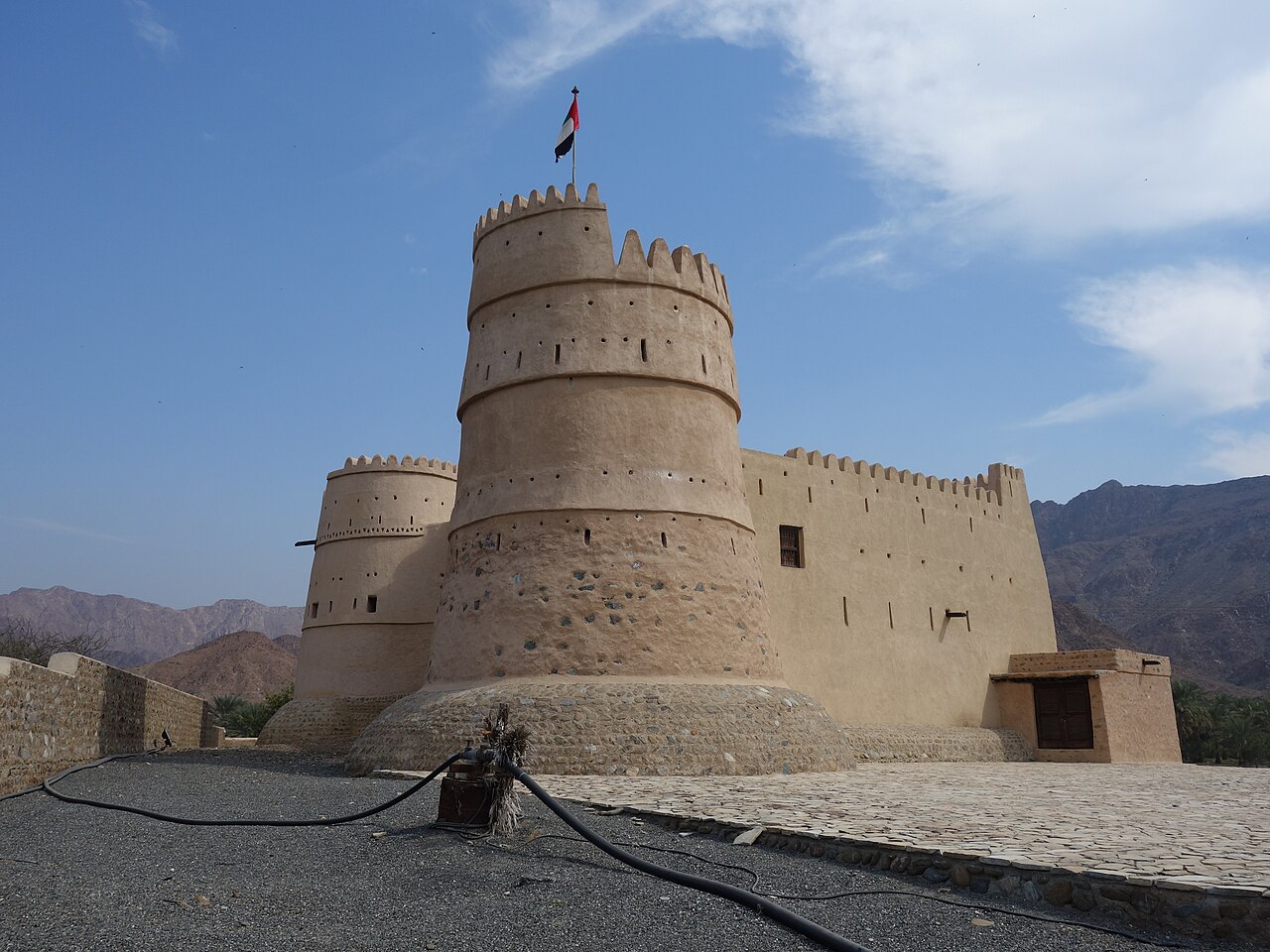
Masafi Fort

Masafi Fort in Ras Al Khaimah, UAE
Modern (19th–20th c.)
Well Preserved

Masafi Fort is situated in the town of Masafi within the Al Hajar mountain range in the emirate of Ras Al Khaimah, United Arab Emirates. This modest fortification dates back to the 19th century and occupies a strategic position overseeing a vital passage connecting the east and west sides of the Al Hajar Mountains. Its location suggests it was built to protect an important oasis and control trade routes traversing the rugged terrain.

Historical context and strategic importance

While detailed historical records about Masafi Fort are scarce, its construction in the 19th century aligns with a period when local tribes and rulers fortified key points to safeguard vital resources and trade corridors. The fort's position in the Al Hajar Mountains would have made it a crucial defensive and monitoring post for caravans and travelers moving between the interior and coastal regions of the emirates.

Architectural features and layout

The fort is relatively small and simple in design, characteristic of mountain forts built primarily for defense and control rather than lavish residence. It features thick stone walls that provide protection against attacks and harsh weather conditions. Although the interior is currently bare and lacks furnishings or detailed interpretive displays, the structure's robust walls and battlements remain intact, illustrating traditional defensive construction techniques of the era.

Water management system

One notable feature of the site is the presence of remains of an ancient underground water system on the fort's grounds. This system likely served to collect and store water from the surrounding oasis, ensuring a reliable supply for the fort's occupants during sieges or dry periods. Such water management was essential in the arid mountain environment and reflects the ingenuity of local builders in adapting to challenging conditions.

Access and current condition

Today, Masafi Fort is freely accessible to visitors during daylight hours. Visitors are required to sign a guestbook maintained by the on-site guard, reflecting the fort's status as a protected heritage site. The fort is signposted, although the final approach involves unpaved roads, which may require careful driving.

The fort is in a well-preserved state externally, but its interior spaces remain empty, with no on-site informational panels or exhibits. Despite this, the fort offers a tangible connection to the region's historical defensive architecture and the traditional ways communities protected vital resources like water and trade routes.

Visiting Masafi Fort and surrounding attractions

Visitors to Masafi Fort can explore the rugged landscape of the Al Hajar Mountains and nearby natural attractions, including wadis and mountain trails. The fort provides insight into the modest but effective military architecture of the 19th century in the United Arab Emirates and serves as a quiet historical landmark within the emirate of Ras Al Khaimah.

Frequently asked questions (FAQ)

What is the historical significance of Masafi Fort?
Masafi Fort, located in the picturesque Hajjar Mountains, dates back to the 19th century and served as a vital defense structure for the region. It played a crucial role in protecting the local population and trade routes, reflecting the strategic importance of the area during its time.
When was Masafi Fort built?
Masafi Fort was built in the early 19th century, around the year 1940. Its construction was part of a broader effort to fortify the region against external threats and to establish a stronghold for local rulers.
What are the opening hours for Masafi Fort?
Masafi Fort is open to visitors from 8:00 AM to 6:00 PM daily. It is advisable to check for any special holiday hours or events that might affect the regular schedule.
Can I visit Masafi Fort year-round?
Yes, Masafi Fort is open for visitors throughout the year. However, the best time to visit is during the cooler months, from October to March, when the weather is more pleasant for outdoor exploration.
Is it possible to access Masafi Fort by public transportation?
While public transportation options are limited, visitors can reach Masafi Fort by taxi or rideshare services from nearby cities. It is also accessible by car, with parking facilities available for those driving to the site.
What is the ticket price for entering Masafi Fort?
Entry to Masafi Fort is free, making it an accessible destination for all visitors. This allows everyone to enjoy the rich history and stunning architecture without any financial barrier.
What nearby attractions can I explore after visiting Masafi Fort?
After your visit to Masafi Fort, you can explore the nearby Masafi Market, known for its fresh produce and local crafts. Additionally, the stunning landscapes of the Hajjar Mountains offer numerous opportunities for hiking and outdoor activities.
How do I get the best experience while visiting Masafi Fort?
To enhance your visit, consider taking a guided tour that provides insights into the fort's history and architecture. Also, bringing along a camera is recommended, as the fort offers breathtaking views of the surrounding mountains and desert landscape.

Information

Hill Castle

Loading map...

Visitor reviews

No reviews yet. Been here? Write the first review and help other travelers!

Write the first review

Visited this castle? Share your experience

Your review helps other travelers and adds first-hand knowledge to our encyclopedia.

Write a review

(5/5)

0/2000 characters

Your review will be visible after admin approval

Nearby castles

13.9 km

Red Fort

Al Manama, United Arab Emirates

The Red Fort is a prominent historic structure located in the town of Al Manama within the emirate of Ajman in the United Arab Emirates. This fort served as a royal residence and stands as a significant example of early 20th-century defensive architecture in the region. Historical background and construction Constructed during the rule of Sheikh Humaid bin Abdulaziz Al Nuaimi between 1910 and 1928, the Red Fort was originally designed as a fortified palace for the ruling family. The initial structure included only two towers, which were typical defensive elements of forts in the Arabian Peninsula at the time. These towers provided vantage points for surveillance and protection against potential threats. The fort's construction reflects the architectural and cultural influences of the early 20th century in the Gulf region, combining traditional Arabian fort design with adaptations suitable for the local climate and materials available. The use of local reddish stones and thick masonry walls contributed both to its defensive capabilities and its distinctive appearance. Architectural features and layout The Red Fort's layout centers around a fortified enclosure with thick walls and towers at strategic points. Originally, the fort featured two prominent towers, which were integral to its defensive strategy. In 1986, a third tower was added during a restoration project aimed at preserving the fort and enhancing its historical character. The fort's facades have undergone changes over time. Earlier photographs show that the exterior walls were covered with a simple red wash, which gave the fort a more understated look. The restoration enhanced the fort's appearance by exposing the reddish stones and emphasizing the thick gray joints between them, creating a more robust and visually striking facade. Restoration and current status The restoration undertaken in 1986 was significant in preserving the Red Fort's structural integrity and historical value. The addition of the third tower during this period was intended to restore the fort's original defensive symmetry and enhance its architectural completeness. Currently, the Red Fort is undergoing further renovation and is not open to the public. The ongoing work aims to maintain the fort's condition and potentially prepare it for future uses, though specific plans have not been publicly disclosed. Its proximity to the White Fort, another historic site in Ajman, highlights the area's rich cultural heritage. Significance and cultural context The Red Fort is an important symbol of Ajman's history and the legacy of the Al Nuaimi ruling family. As a royal residence, it played a central role in the governance and social life of the emirate during the early 20th century. The fort's architecture reflects the strategic and aesthetic considerations of the time, blending functionality with regional style. While detailed records of the fort's uses after its time as a royal residence are limited, its preservation and restoration underscore its value as a cultural landmark. The fort contributes to the understanding of the region's historical development and offers insights into the architectural practices of the period. Visiting information and accessibility At present, the Red Fort is closed to visitors due to ongoing renovation works. Once restoration is complete, it is expected to become accessible for public visits, allowing people to explore its historical and architectural significance firsthand. Visitors interested in the heritage of Ajman can also explore the nearby White Fort, which offers additional context on the emirate's fortifications and history.

Post-Renaissance (17th–18th c.)
Details
15 km

White Fort

Al Manama, United Arab Emirates

The White Fort, originally known as Al Mareer Fort, is located in the town of Al Manama within the emirate of Ajman in the United Arab Emirates. This fort has served multiple roles throughout its history, most notably as a royal residence and currently as a cultural institution housing the Al Manama Museum, which opened in 2012. Historical background and construction The exact date of construction of the White Fort is subject to some uncertainty. Some sources suggest it was built during the rule of Sheikh Rashid bin Humaid Al Nuaimi between 1873 and 1891. However, other accounts place its construction in the 20th century, during the reign of Sheikh Rashid ibn Humaid Al Nuaimi, who ruled Ajman from 1928 until 1981. This discrepancy reflects the challenges in documenting the architectural history of many regional forts, where oral histories and limited archival records coexist. Despite the uncertainty surrounding its precise construction date, the fort was evidently significant as a royal residence for the ruling family of Ajman. Its name, "White Fort," likely derives from the distinctive whitewashed walls that characterize its exterior, a common feature in the region to reflect sunlight and reduce heat absorption. Architectural features and style The White Fort exhibits architectural traits typical of coastal defensive structures in the Arabian Peninsula. While detailed architectural surveys are limited, the fort's design reflects pragmatic considerations for both defense and residence. The structure likely includes thick walls, battlements, and possibly watchtowers or turrets to monitor the surrounding area. The fort’s construction materials traditionally include coral stone, gypsum, and lime plaster, which were commonly used in the region to provide insulation against the harsh climate. The whitewash exterior not only serves an aesthetic purpose but also helps in maintaining cooler interior temperatures. The fort's role and transformation Originally serving as a defensive stronghold and residence for the ruling family, the White Fort played a role in the local governance and protection of the emirate. Its strategic location in Al Manama allowed for oversight of the coastal area and nearby settlements. In recent decades, the fort has undergone a transformation from a military and residential structure to a cultural site. Since 2012, it has housed the Al Manama Museum, which aims to preserve and showcase the heritage of Ajman and the wider region. The museum features exhibits on traditional life, maritime history, and the cultural evolution of the emirate. Visiting the White Fort and surroundings The White Fort is accessible to visitors as part of the museum experience. The museum provides insight into the fort’s historical significance and the broader history of Ajman. Visitors can explore the fort’s interior spaces, which have been adapted to display cultural artifacts and educational exhibits. Nearby, the Red Fort offers additional historical context and is often visited in conjunction with the White Fort. Together, these sites provide a glimpse into the defensive architecture and ruling heritage of Ajman. While the museum has experienced occasional closures, it remains an important cultural destination in the emirate. Visitors are advised to check current opening hours before planning their visit.

Post-Renaissance (17th–18th c.)
Details
15.1 km
Al Bithnah Fort — United Arab Emirates castle

Al Bithnah Fort

East of the E89 road, United Arab Emirates

Al Bithnah Fort stands as a prominent bastioned fortress in the emirate of Fujairah within the United Arab Emirates. Situated east of the E89 road near the village of Bithnah, the fort commands a strategic position overlooking the Wadi Ham, a vital passage through the Hajar Mountains that historically connected the coastal city of Fujairah to the interior town of Manama. The exact date of construction remains uncertain, but the fort is generally attributed to the 18th century, with many sources citing 1735 as a probable founding year. Other accounts suggest it was built later in the century, possibly in response to the Wahhabi incursions that culminated in the Battle of Bithnah in 1745. Regardless of its precise origins, the fort has played a significant role in controlling the main trade and travel route through the region. Architectural features and layout Al Bithnah Fort exhibits a classic bastioned fortress design, characterized by a rectangular ground plan reinforced with two sturdy round corner towers strategically positioned on the side facing the wadi. Constructed primarily from rock, coral, and mudbrick, the fort's walls are thick and robust, designed to withstand sieges and attacks common during its active use. The fort is a double-story structure, with the upper level providing vantage points for surveillance and defense. The towers offered overlapping fields of fire along the approaches, enhancing the fort's defensive capabilities. The interior likely contained living quarters, storage rooms, and defensive positions, although detailed records of the internal layout are limited. Historical significance and strategic role Al Bithnah Fort's location was crucial for controlling the Wadi Ham, which served as the main route from the coast into the mountainous interior before modern roads were constructed. This made the fort a key military and administrative post, especially during the turbulent 18th and early 19th centuries, when tribal conflicts and external threats shaped the region's political landscape. The fort is closely linked to the history of the Sharqiyin tribe, who used it as a stronghold to assert control over the area. Its strategic position allowed it to dominate trade and travel routes, contributing to the emergence of Fujairah as an independent emirate in the early 20th century. The fort replaced an earlier Iron Age fortification on the site, indicating the long-term military importance of this location. Role in regional conflicts The fort's history includes involvement in conflicts such as the Battle of Bithnah in 1745, which was part of the broader struggle against Wahhabi expansion in the region. Control of the fort was vital for local rulers to maintain dominance over the trade routes and to resist external incursions. Restoration and current status In the early 21st century, Al Bithnah Fort underwent restoration efforts to preserve its structure and historical significance. The restoration helped stabilize the fort and made it accessible to visitors. Today, it is well preserved and open to the public free of charge. The fort is maintained by a caretaker who often provides guided tours, offering insights into its history and architecture. The fort's commanding views of the Wadi Ham and surrounding landscape continue to attract visitors interested in the military history and cultural heritage of the United Arab Emirates. Its preservation contributes to understanding the region's transition from tribal strongholds to modern states. Access and visitor information Visitors to Al Bithnah Fort can explore the fortress and its towers, gaining a sense of the defensive strategies employed in the 18th century. The site is accessible year-round, with no entrance fee, although tipping the caretaker is customary for the personalized attention and tours provided. The fort's location near the village of Bithnah makes it a convenient stop for those traveling through Fujairah. Its proximity to the E89 road allows easy access by car. Visitors are advised to wear suitable footwear for walking on uneven terrain and to bring water, especially during the hotter months.

Post-Renaissance (17th–18th c.)
Details