Malahide Castle
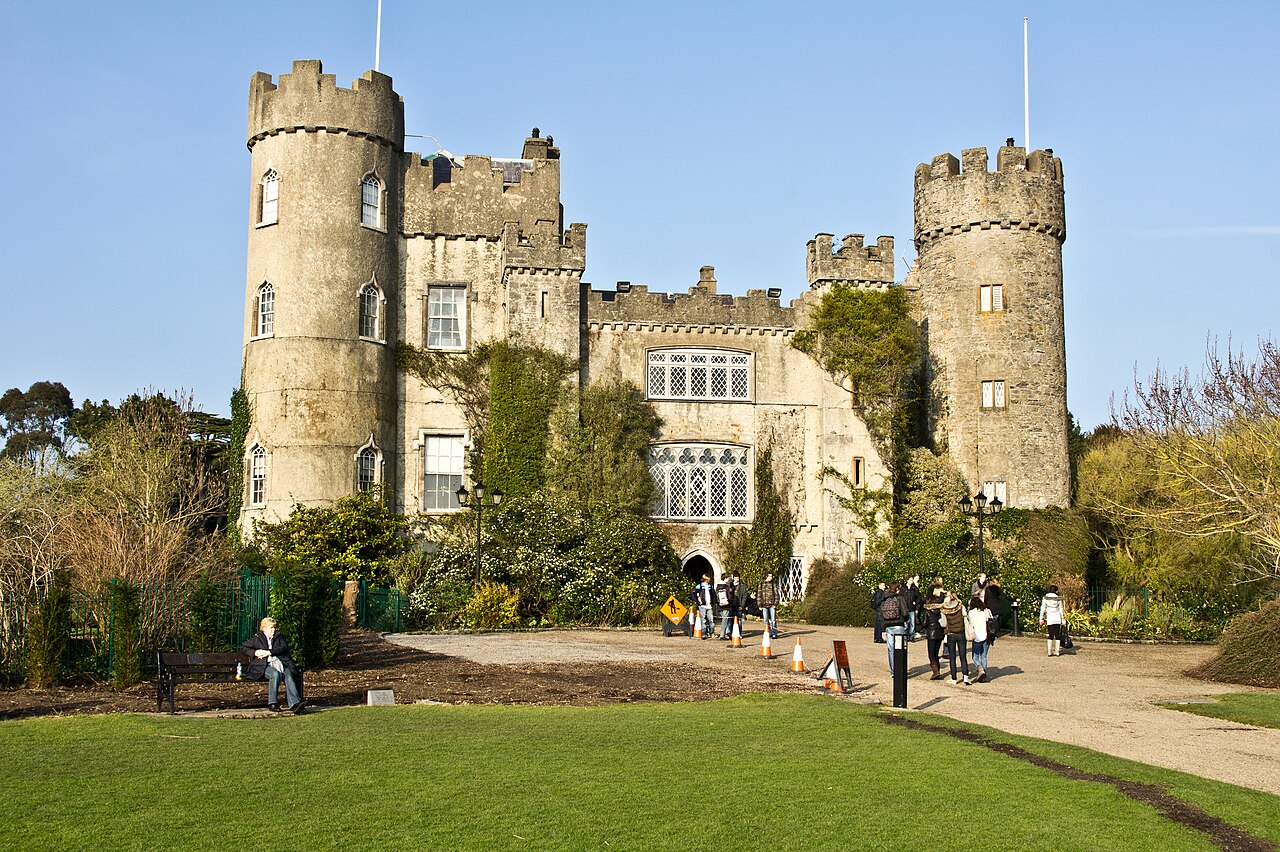
Malahide Castle stands as a remarkable example of medieval architecture and Irish heritage, with parts dating back to the 12th century. Located near the seaside village of Malahide, approximately 14 kilometers north of Dublin, this historic fortress is set within the expansive Malahide Demesne Regional Park, which encompasses over 260 acres of parkland. The castle's long and storied history is deeply intertwined with the Talbot family, who called it home for nearly eight centuries, from 1185 until 1976, with only a brief interruption during the mid-17th century.
The origins of Malahide Castle trace back to 1185 when Richard Talbot, a knight who accompanied King Henry II to Ireland in 1174, was granted the lands and harbour of Malahide. This grant marked the beginning of an enduring legacy for the Talbot family in Irish history. The castle's earliest sections, constructed in the High Medieval period, showcase the defensive and residential architectural styles of the time, including thick stone walls and fortified towers.
Architectural evolution and features
Over the centuries, Malahide Castle underwent several significant expansions and modifications that reflect changing architectural tastes and defensive needs. During the reign of Edward IV (1461–1483), the castle was notably enlarged, enhancing its stature and residential comfort. The addition of towers in 1765 further fortified the structure, blending medieval defensive elements with later architectural styles.
The castle's layout today is a composite of these historical phases, featuring a large stone keep, battlemented walls, and several towers that provided vantage points for defense. The interior includes the famous Great Hall, a Gothic-style space that serves as a focal point for visitors and private events. The Oak Room is another notable chamber, richly decorated and steeped in the history of the Talbot family.
Defensive and residential design
Malahide Castle's design balances fortification with domesticity. Its thick stone walls and battlements were essential for defense during turbulent periods in Irish history. The towers added in the 18th century not only enhanced security but also provided elegant living quarters and panoramic views of the surrounding estate.
The castle's courtyard, adjacent to the main building, houses modern amenities such as a café and craft shop, integrating visitor services within the historic setting without detracting from the castle's medieval character.
Historical significance and events
The castle's history is marked by notable events that shaped both the Talbot family and Irish history. The Talbots endured the Battle of the Boyne in 1690, a pivotal conflict in Irish and British history. Remarkably, fourteen members of the family were present at breakfast in the Great Hall on the day of the battle, all of whom perished by evening, illustrating the personal toll of political upheaval.
Despite the Penal Laws that restricted Roman Catholics, the Talbot family maintained their faith until 1774, demonstrating resilience in the face of religious and political adversity. The castle was temporarily confiscated during the Cromwellian conquest of Ireland (1649–1660) and granted to Miles Corbet, a Commonwealth supporter. Following Corbet's execution, the property was restored to the Talbots, reaffirming their long-standing connection to the estate.
During World War I, the castle grounds served a military purpose as a mooring base for airships conducting anti-submarine patrols over the Irish Sea. This adaptation highlights the castle's strategic location and continued relevance through different historical eras.
Literary and cultural heritage
The discovery of the private papers of James Boswell, the renowned 18th-century writer and biographer, in the 1920s at Malahide Castle added a significant cultural dimension to its history. These documents were sold to an American collector and later contributed to Boswell scholarship, linking the castle to literary history.
The talbot botanic gardens and estate parkland
Behind the castle lies the extensive Talbot Botanic Gardens, spanning several hectares. The gardens include a 1.6-hectare walled garden and seven glasshouses, among them a Victorian conservatory. These gardens feature a diverse collection of plants, particularly from the southern hemisphere, including species from Chile and Australia. This botanical collection reflects the interests of the 7th Lord Talbot and adds a unique horticultural attraction to the estate.
The surrounding Malahide Demesne Regional Park preserves the 18th-century landscaped design with broad lawns and tree-lined avenues. The park offers a variety of outdoor recreational facilities such as woodland walks, sports pitches including cricket, football, tennis, and golf courses, as well as playgrounds for children. These amenities make the demesne a popular destination for both history enthusiasts and families seeking leisure activities.
Visitor experience and facilities
Malahide Castle is managed by Fingal County Council and is open to the public for guided tours, which include access to the castle interiors, the museum, and the walled gardens. The Great Hall can be hired for private banquets, providing a unique historic setting for events. Adjacent to the castle, visitors will find a café and a craft shop offering local handicrafts and souvenirs.
The estate also features seasonal transport options, such as a road train connecting the castle with the nearby railway station and a coastal tour bus that departs twice daily, enhancing accessibility for visitors. The castle's comprehensive visitor facilities and diverse attractions contribute to its status as one of the premier heritage sites near Dublin.
Preservation and public ownership
In 1975, the castle was sold to the Irish State by Rose Talbot, the last private owner, to settle inheritance taxes. This transfer led to the dispersal of many original furnishings, although efforts were made to recover significant items. Since then, the castle and its grounds have been preserved as a public heritage site, with ongoing restoration and maintenance ensuring its survival for future generations.
Malahide Castle today stands as a testament to Ireland's rich medieval past, the resilience of the Talbot family, and the evolving nature of castle architecture. Its combination of historical significance, architectural grandeur, and natural beauty makes it a must-visit destination for those interested in Irish history and heritage.
Frequently asked questions (FAQ)
- How do I get to Malahide Castle from Dublin city center?
- Malahide Castle is easily accessible from Dublin city center by train or bus. The DART train service runs regularly to Malahide station, which is a short walk from the castle. Several bus routes also connect Dublin to Malahide village.
- What are the main attractions inside Malahide Castle?
- Key attractions include the Gothic Great Hall, the Oak Room, and the museum showcasing the Talbot family history. Visitors can also explore the Talbot Botanic Gardens and the walled garden with its Victorian glasshouses.
- Can I host events or banquets at Malahide Castle?
- Yes, the castle's Great Hall is available for private banquets and events. It offers a unique historic ambiance suitable for weddings, corporate events, and special occasions.
- Is Malahide Castle suitable for families with children?
- Absolutely. The castle grounds include playgrounds, woodland walks, and sports facilities such as tennis courts and golf courses, making it an excellent family-friendly destination.
- When is the best time to visit Malahide Castle?
- The castle and gardens are open year-round, but spring and summer offer the best weather for exploring the outdoor parkland and botanic gardens. Special events and guided tours are more frequent during these seasons.
- Are there any dining options at Malahide Castle?
- Yes, there is a café on the castle grounds offering refreshments and light meals. Additionally, nearby Malahide village has a variety of restaurants and pubs to complement your visit.
Information
Opening hours
10:00-17:00, daily
Ticket prices
€10 adult, €5 child
Current owner
Fingal County Council
Website
Visit websiteSources & official resources
Verify the information above using these authoritative references.
Loading map...
Visitor reviews
No reviews yet. Been here? Write the first review and help other travelers!
Write the first reviewVisited this castle? Share your experience
Your review helps other travelers and adds first-hand knowledge to our encyclopedia.