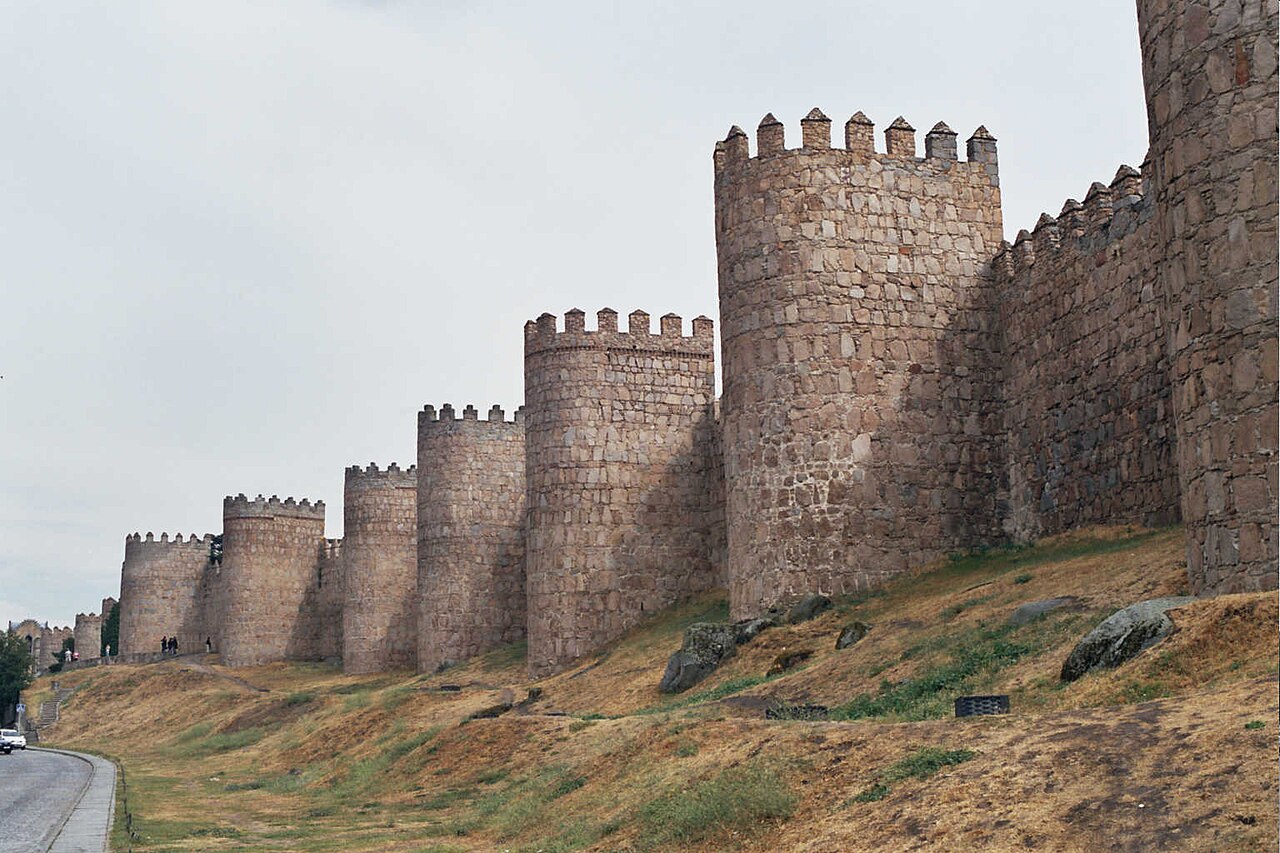
Magalia Castle
Magalia Castle-palace, located in the scenic municipality of Las Navas del Marqués in Spain, is a remarkable example of Renaissance architecture harmoniously integrated with medieval fortifications. Built originally upon an 11th-century circular tower foundation, the castle evolved over centuries into a refined noble residence that reflects the cultural and historical richness of the region. Its unique combination of defensive features and elegant residential spaces makes it a significant monument in Spanish heritage.
Historical evolution and noble heritage
The origins of Magalia Castle date back to the 11th century, when the initial fortification consisted of a circular tower base, likely constructed during the Christian Reconquista period. This early medieval structure provided a strategic defensive position atop a hill, characteristic of hill castles designed to control surrounding territories.
In the first half of the 16th century, the castle underwent a major transformation, evolving into a Renaissance castle-palace. This phase, initiated in 1533 by the first Marquises of Las Navas, blended the martial solidity of the medieval fortress with the refined aesthetics and residential comforts of the Renaissance. Over time, successive marquises enhanced the castle through alliances and marriages, notably linking it to the prestigious Duchy of Medinaceli in the early 18th century.
Throughout its history, the castle served various roles beyond noble residence, including its 20th-century use as a teacher training college and later as a cultural and artistic center. Its designation as a Historic-Artistic Monument in 1931 underscores its cultural importance.
Architectural features and layout
Fortifications and exterior
The castle’s exterior retains its fortified character, dominated by two large defense towers that crown the structure, emphasizing its original military purpose. The building is uniquely constructed partially on exposed bedrock, a rare feature that enhances its defensive stability and integrates the natural terrain into the architecture.
The main façade presents a harmonious Renaissance design, with four prominent balconies, elegantly framed Renaissance windows, and a large semicircular arched entrance. This front portal leads into a spacious vestibule with majestic stone steps, signaling the transition from fortress to noble residence.
Courtyard and galleries
The central courtyard is a highlight of the castle’s Renaissance character. It is surrounded on two levels by arcades: the lower gallery features 24 arches supported by Ionic columns decorated with the coats of arms of the Dávila and Córdoba families, the castle's historic owners. Above, the upper gallery consists of 24 Doric columns, creating an elegant classical ensemble that reflects Renaissance ideals of symmetry and order.
Interior spaces and artistic treasures
Inside, the castle offers a blend of Renaissance and late Gothic architectural elements. Doors with conopial arches and stone benches dedicated by the first marquises underscore its residential and ceremonial functions. The library tower is notable for its two flat vaults, an architectural rarity of the period, comparable to those in the Monastery of El Escorial but unique in their preservation here.
The chapel houses early 20th-century Cubist paintings by Francisco Farreras, integrating modern art within a historic religious setting. The castle’s art collection includes oil paintings by renowned artists such as Ramón Bayeu, José del Castillo, Jacopo Amigoni, Pancho Cossío, and Rosario de Velasco, alongside an anonymous 13th-century copy of a Veronese masterpiece.
Valuable artifacts enrich the interior, including a 13th-century bargueño (a decorative chest), a Gothic Catalan-style trunk, and several reliquaries. One reliquary bears the handwritten signature of Saint Teresa of Ávila, adding spiritual and historical significance to the collection.
Preservation and modern use
The castle’s structure is well preserved, maintaining its Renaissance character while showcasing elements from earlier medieval phases. The integration of natural rock into the courtyard and foundation is a distinctive feature that contributes to its uniqueness among Spanish castles.
After serving as a teacher training college and later a venue for cultural events, the castle underwent extensive renovations and reopened in July 2025 as a center dedicated to artistic creation. This contemporary role continues its tradition as a cultural hub, supported by Spain’s national arts institutions.
Visitors can explore key areas such as the Salón de Honor, where many artworks and historical artifacts are displayed, offering insight into the castle’s multifaceted history as a fortress, noble residence, and cultural repository.
Architectural style and classification
Magalia Castle is classified as a hill castle due to its elevated strategic location. Its architectural style is predominantly Renaissance, reflecting the 16th-century transformation that emphasized classical symmetry, proportion, and decorative elements. However, the castle also preserves medieval features, including Gothic-Mudéjar galleries that illustrate the cultural fusion characteristic of the Iberian Peninsula.
Visiting information and cultural significance
As a monument of significant historical and architectural value, Magalia Castle attracts visitors interested in Spanish Renaissance architecture, noble history, and art collections. Its location in the natural enclave of Las Navas del Marqués offers a tranquil setting for cultural tourism.
Its designation as a Historic-Artistic Monument and its continued use as an artistic center highlight its ongoing relevance in Spain’s cultural landscape.
Frequently asked questions (FAQ)
- What is the historical significance of Magalia Castle?
- Magalia Castle is significant for its origins dating back to the 11th century and its transformation into a Renaissance castle-palace in 1533, reflecting the evolution of Spanish noble residences and fortifications.
- Can visitors explore the interior art collections of Magalia Castle?
- Yes, visitors can explore key interior spaces such as the Salón de Honor, which displays valuable artworks and historical artifacts including paintings by renowned artists and religious relics.
- When is the best time to visit Magalia Castle?
- The castle is best visited during spring and summer months when the natural surroundings of Las Navas del Marqués are most pleasant, and the castle often hosts cultural events and exhibitions.
- Is Magalia Castle accessible to the public?
- Yes, Magalia Castle is open to the public for guided tours, especially after its recent reopening in 2025 as a center for artistic creation.
- How has the architecture of Magalia Castle evolved over time?
- The castle evolved from an 11th-century medieval tower into a Renaissance palace with fortified features, blending Gothic-Mudéjar elements and Renaissance classical styles.
Information
Sources & official resources
Verify the information above using these authoritative references.
Loading map...
Visitor reviews
No reviews yet. Been here? Write the first review and help other travelers!
Write the first reviewVisited this castle? Share your experience
Your review helps other travelers and adds first-hand knowledge to our encyclopedia.