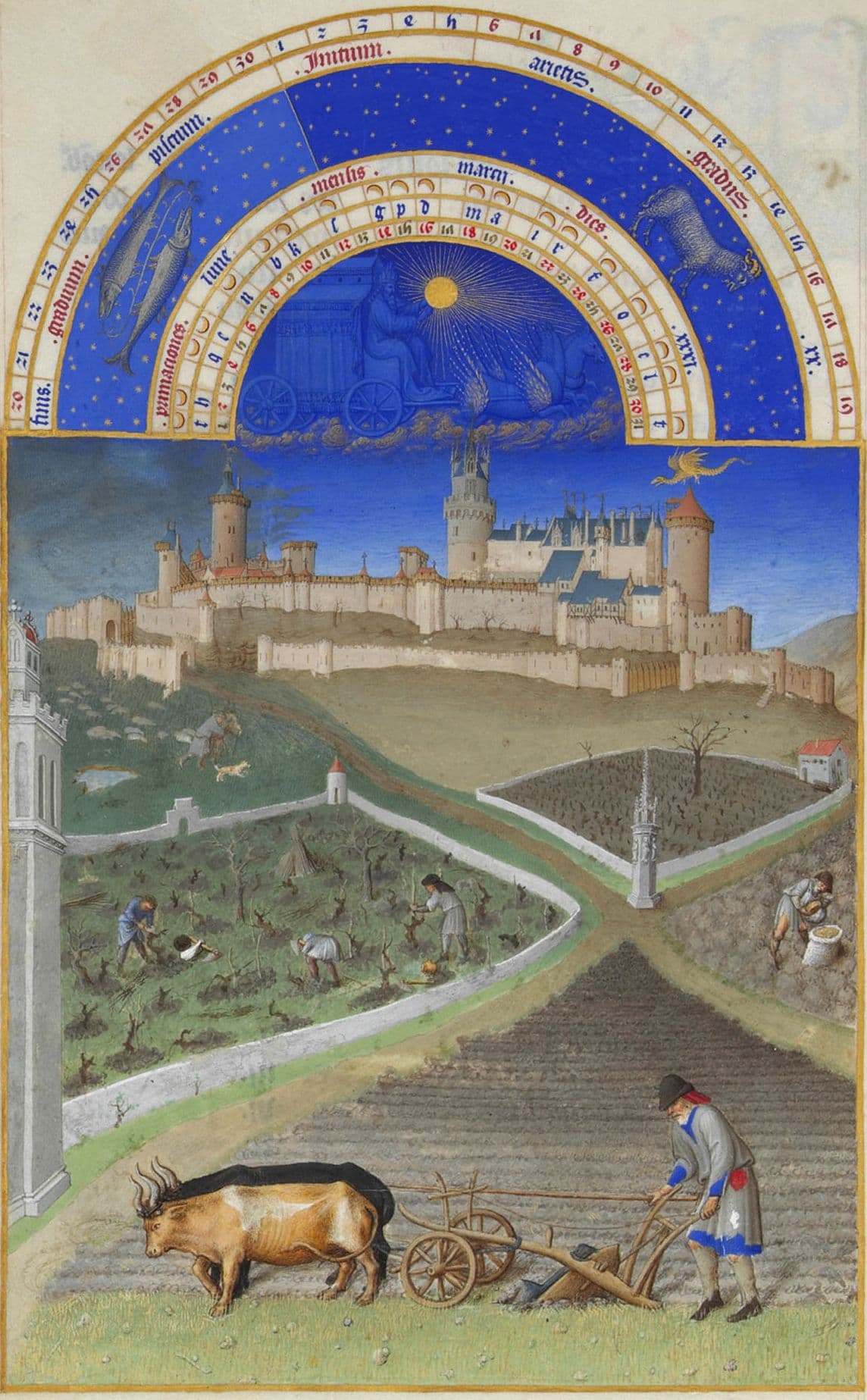
Lusignan Castle
Lusignan Castle, located in the town of Lusignan in the Nouvelle-Aquitaine region of France, stands as a remarkable example of a high medieval hill castle with a rich history spanning from the 11th to the 16th century. This castle was the ancestral seat of the powerful House of Lusignan, Poitevin Marcher Lords who rose to prominence during the First Crusade and went on to establish royal dynasties in the Kingdom of Jerusalem, the Kingdom of Cyprus, and the Armenian Kingdom of Cilicia. The castle's strategic location on a narrow promontory overlooking steep valleys made it a formidable defensive stronghold in the heart of Poitou.
The origins and legendary foundation of Lusignan Castle
The castle's foundation dates back to the 11th century, when it was constructed to command the surrounding landscape and protect the interests of the Lusignan family. Its position on a natural strongpoint provided excellent vantage points and defensive advantages. By the 12th century, Lusignan had already gained a reputation for its impressive fortifications and architectural presence. This prominence inspired a captivating legend involving the mythical water spirit Melusine, said to have magically built the castle and its church as a gift for her husband, Raymondin, the castle's founder. This legend became deeply entwined with the identity of the castle and the Lusignan family, symbolized by the gilded dragon that appears in medieval manuscripts.
Architectural features and layout at its height
The castle's design evolved over several centuries, reflecting the changing needs of defense and residence. Lusignan featured a complex arrangement of towers, walls, and gates that maximized its natural terrain advantages. Notably, the barbican tower guarded the main entrance, while the clock tower stood prominently with its external garderobe chute, a typical medieval sanitary feature. The Tour Poitevine, or Poitevin Tower, was another significant defensive structure, crowned with the emblematic gilded dragon representing Melusine's protective spirit.
The castle's fortified walls enclosed not only the keep and main buildings but also the growing settlement beneath its gates. This village, which later became a walled town, formed an additional enceinte that enhanced the overall defensive system. The castle and town together formed a vital stronghold in the region of Poitou, controlling important routes and asserting Lusignan's influence.
The castle in medieval art and noble residence
Lusignan Castle's prominence is immortalized in the Très Riches Heures of Jean, duc de Berri, a renowned illuminated manuscript from the early 15th century. The miniature for the month of March depicts Lusignan in detailed perspective, highlighting its towers, walls, and the dragon emblem. Jean, duc de Berri, favored Lusignan as a residence until his death in 1416, underscoring the castle's status as a noble seat of power and culture during the late medieval period.
Following the duc de Berri's death, ownership passed briefly to John, Dauphin, and then to Charles, the future Charles VII of France. This transition reflects Lusignan's continued political and strategic importance in the shifting landscape of French royal power.
Military significance and modifications through the centuries
Throughout its history, Lusignan Castle remained a key military site in Poitou. During the French Wars of Religion in the 16th century, the castle's defenses were carefully documented in a plan made in 1574, now preserved in the Bibliothèque Nationale in Paris. This plan reveals the castle's adaptation to contemporary military needs, including bastions and artillery positions.
In the 17th century, the castle underwent further modernization under the direction of Vauban, the famous military architect of Louis XIV. Vauban's enhancements reinforced Lusignan's defensive capabilities in line with evolving siege warfare techniques, demonstrating the castle's enduring strategic value.
Decline, reuse, and present condition
Despite its formidable past, Lusignan Castle fell into decline in the 18th century. It was partially dismantled by Paul Esprit Marie de La Bourdonnaye, comte de Blossac, who transformed parts of the site into a pleasure ground for the town. Over time, the castle's stones were quarried locally, contributing to the loss of much of its above-ground structure.
Today, Lusignan Castle exists primarily as ruins. Visitors can explore the remains of the foundations, parts of the keep, the base of the Tour Poitevine, and various subterranean features such as cisterns, cellars, and a passage likely leading to the church. These remnants offer valuable insights into medieval castle construction and the site's long history.
The castle's story reflects the broader narrative of medieval fortifications in France: from powerful noble residence and military bastion to ruin and cultural heritage site. Lusignan remains a symbol of medieval legend, military architecture, and the historical legacy of the Lusignan family.
Visiting Lusignan Castle today
While the castle is in a ruined state, its location on a hillside overlooking the town of Lusignan provides scenic views and a tangible connection to medieval history. The site is accessible to visitors interested in exploring the remains and understanding the castle's role in regional history. Nearby, the town offers additional historical and cultural attractions that complement a visit to the castle ruins.
Architectural highlights to explore
- The barbican tower: remains of the outer defensive gatehouse protecting the main entrance.
- The clock tower: notable for its medieval garderobe chute and structural prominence.
- The Tour Poitevine: the main tower with symbolic dragon emblem.
- Subterranean passages and cisterns: illustrating the castle's water management and defensive escape routes.
Historical significance in regional and crusader history
The House of Lusignan's influence extended far beyond Poitou, with members becoming kings and princes in the Crusader states. The castle served as the family's power base before their ventures abroad, linking Lusignan to the broader history of medieval Europe and the Near East.
Preservation and cultural heritage
As a ruined hill castle, Lusignan is protected as a cultural heritage site. Efforts to preserve the remaining structures and promote awareness of its historical importance continue to attract scholars, tourists, and enthusiasts of medieval architecture.
Frequently asked questions (FAQ)
- How do I get to Lusignan Castle?
- Lusignan Castle is located in the charming town of Lusignan, France. You can reach it by car via the D9 road, or by public transport, with the nearest train station being in Poitiers, approximately 30 km away. Local buses also connect Poitiers to Lusignan, making it accessible for visitors.
- What is the historical significance of Lusignan Castle?
- Lusignan Castle dates back to the 10th century and has a rich history tied to the Counts of Lusignan. It played a key role in the feudal system and was a stronghold during various conflicts, including the Hundred Years' War. Today, it stands as a testament to medieval architecture and the region's historical heritage.
- When was Lusignan Castle built?
- Construction of Lusignan Castle began in the 10th century, with significant expansions and renovations occurring over the following centuries. The castle has seen various architectural styles as it evolved through time. Its enduring structure showcases the ingenuity and resilience of medieval builders.
- Can I visit Lusignan Castle?
- Yes, visitors are welcome to explore Lusignan Castle and its grounds. Guided tours are often available, allowing you to learn more about its history and architecture. Be sure to check the castle's official website for any special events or tours during your visit.
- Why is Lusignan Castle a popular tourist attraction?
- Lusignan Castle attracts visitors due to its impressive ruins and rich history, making it a fascinating destination for history buffs and architecture enthusiasts alike. The scenic views from the castle enhance the experience, offering a glimpse into medieval life. Its proximity to other historical sites in the region also adds to its appeal.
- Is it possible to access the castle grounds with a disability?
- Lusignan Castle has made efforts to accommodate visitors with disabilities, but some areas may be challenging due to the castle's historical layout and terrain. It is advisable to contact the castle administration ahead of your visit to inquire about specific accessibility options. They can provide guidance on the best routes and facilities available.
- What are the opening hours for Lusignan Castle?
- Lusignan Castle typically opens to visitors from April to October, with varying hours depending on the season. During peak months, the castle may offer extended hours to accommodate tourists. Always check the official website or contact the visitor center for the most current opening times before planning your visit.
- What are the ticket prices for visiting Lusignan Castle?
- Ticket prices for Lusignan Castle are generally quite affordable, with discounts available for students and seniors. Family tickets are also offered to encourage group visits. Pricing may vary during special events or exhibitions, so it's recommended to verify the current rates on the official website before your visit.
- What are some nearby attractions to visit while at Lusignan Castle?
- While visiting Lusignan Castle, you can also explore the picturesque town of Lusignan itself, known for its medieval streets and charming architecture. Nearby attractions include the Château de Javarzay and the beautiful landscapes of the Poitou-Charentes region. For a full day of exploration, consider visiting the city of Poitiers, which is just a short drive away.
Photo gallery

Photo by Limbourg brothers / Barthélemy d'Eyck•Public domain
Information
Loading map...
Visitor reviews
No reviews yet. Been here? Write the first review and help other travelers!
Write the first reviewVisited this castle? Share your experience
Your review helps other travelers and adds first-hand knowledge to our encyclopedia.



