Lupca Castle
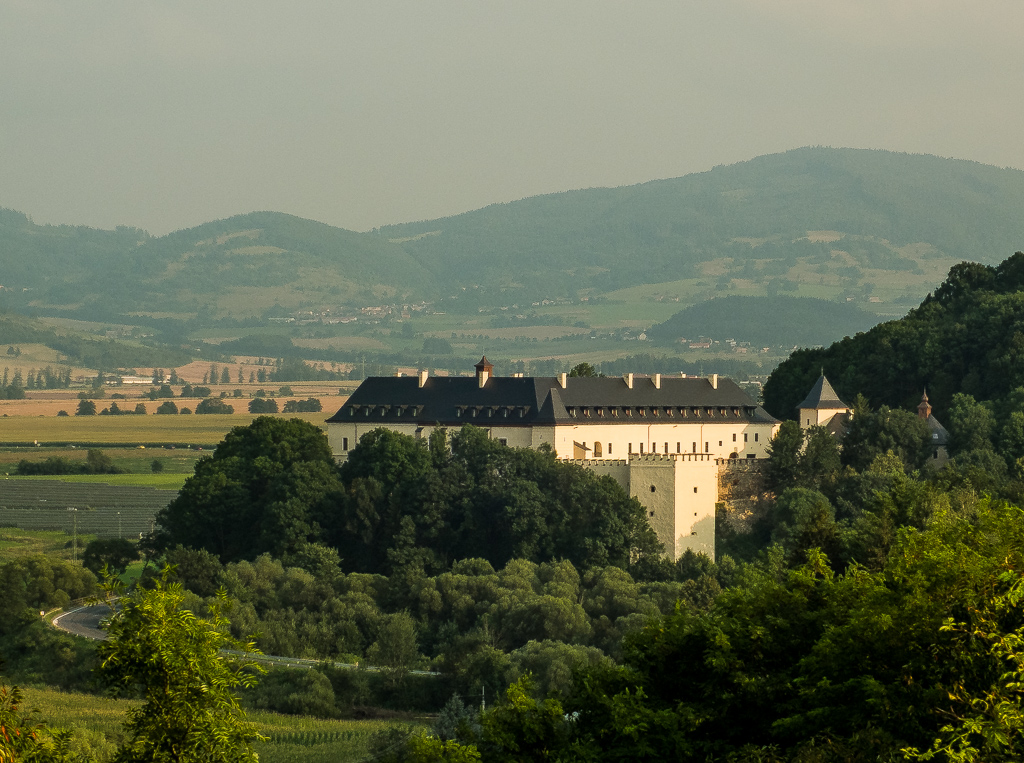
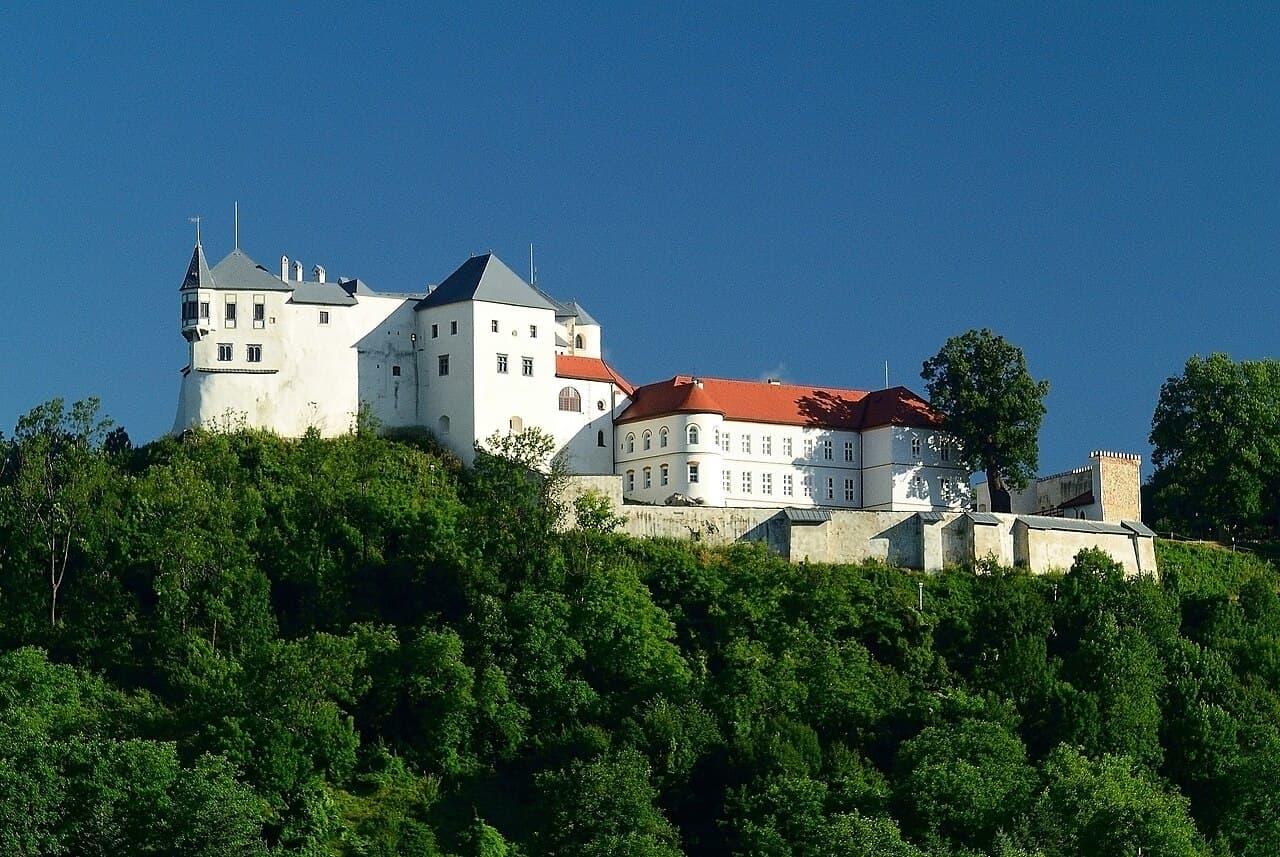
Lupca Castle, located in the municipality of Slovenská Ľupča in central Slovakia, is a prominent example of a high medieval hill castle with a rich history spanning several centuries. Perched on a hill approximately 440 meters above sea level, the castle overlooks the Hron valley and is situated at the edge of the Starohorské Mountains. Its strategic position on an important medieval trade and military route, known as the Via Magna, made it a vital royal fortress and checkpoint from its construction in the mid-13th century.
The origins of Lupca Castle trace back to the aftermath of the devastating Mongol invasion of 1241-42, which exposed the vulnerability of wooden fortifications in the Kingdom of Hungary. In response, King Béla IV initiated a widespread program of castle building using stone to strengthen the kingdom’s defenses. Lupca Castle was among these newly constructed fortresses, first documented in 1255 when Béla IV issued the town charter for Banská Bystrica from the castle. This early association highlights the castle’s importance as a royal administrative center and a hub of political activity in the region.
Medieval origins and royal patronage
The castle’s earliest phase was characterized by its role as a royal residence and hunting retreat. Kings such as Béla IV, Stephen V, Charles I of Hungary (Charles Robert), and Louis I of Hungary frequented Lupca Castle, underscoring its significance in the royal network of fortresses. The castle served not only defensive and administrative functions but also hosted important political events, including the resolution of disputes between Béla IV and his son Stephen V in 1263.
Throughout the 14th century, Lupca Castle remained a favored royal residence. Documents from the reigns of Charles I and Louis I confirm the issuance of charters and privileges from the castle, reinforcing its role in regional governance. Louis I’s residence at Lupca between 1369 and 1382 was particularly notable, as he granted rights and privileges to nearby towns such as Brezno and Ľubietová, fostering their development.
Ownership changes and architectural evolution
Following the extinction of the Árpád dynasty with the death of Andrew III in 1301, Lupca Castle’s ownership became more fluid, passing through the hands of various noble families. The castle was associated with prominent figures such as magister knight Donč, the last district mayor of Zólyom County, who contributed to the construction of a stone monastery adjacent to the castle in the early 14th century.
In the 15th century, the castle endured significant challenges, including damage from a strong earthquake in 1443 and occupation by Hussite forces during their military campaigns. These events necessitated extensive reconstruction and fortification efforts, which introduced new architectural elements reflective of the period’s defensive needs.
The Renaissance period brought further transformation to Lupca Castle. After 1572, under the ownership of Paul Rubigall, the castle underwent renovations that incorporated Renaissance stylistic features, evident in the richly decorated stone portals of the upper courtyard. Later Baroque modifications added artistic details such as painted frescoes in the chapel and an elaborately painted wooden ceiling in the sacristy, dating from the late 17th century.
Role in regional conflicts and later uses
The castle played a role in the turbulent political landscape of the 16th and 17th centuries, including involvement in the kuruc anti-Habsburg uprisings led by figures like Imre Thököly and the occupation by Rákóczi’s forces during the early 18th century. Ownership during this time included the Széchy family and the Hungarian paladin Juraj Wesselényi, who resided in the castle despite its association with rebellion against Habsburg rule.
In the 19th century, Lupca Castle’s strategic importance declined, and its functions shifted. It was repurposed as an orphanage from 1873 and later housed a female religious order. During the Slovak National Uprising in World War II, the castle was converted into a prison for rebels by the Nazi regime, marking a dark chapter in its history.
Architectural features and preservation
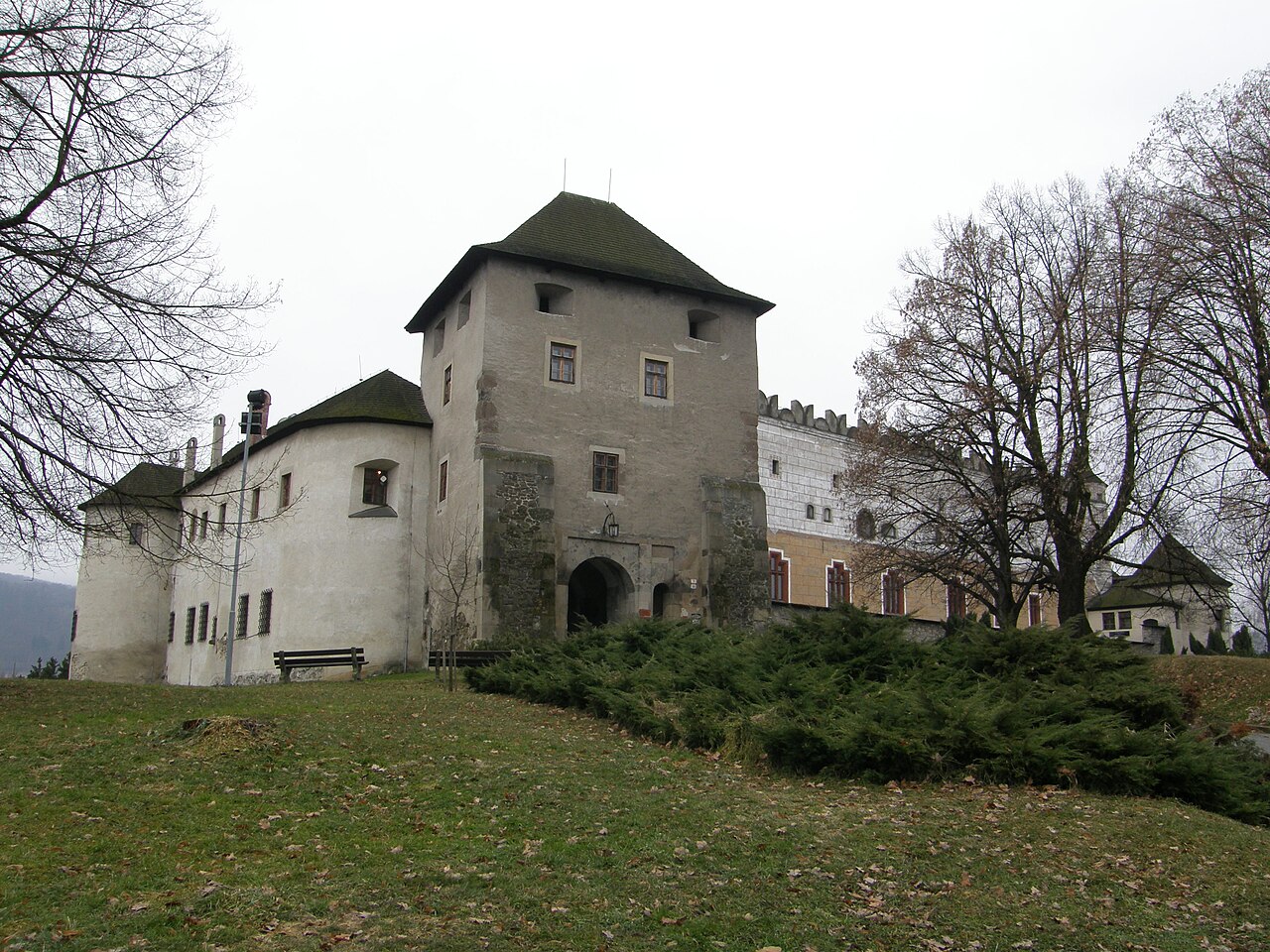
The castle complex is divided into upper and lower courtyards, reflecting its historical layers of construction and adaptation. A remarkable feature of the upper castle is a deep well carved directly into the rock, reaching a depth of approximately 62.5 meters. This well ensured a vital water supply during sieges and includes an escape tunnel leading beyond the castle walls, a testament to medieval defensive ingenuity.
The upper courtyard also features two richly decorated stone portals from the Renaissance period, showcasing the skilled craftsmanship of the era. The chapel on the upper floor contains painted frescoes and a sacristy with an elaborately painted wooden ceiling, reflecting Baroque artistic influences from the late 17th century.
In the lower courtyard stands the Korvínova lipa, a linden tree believed to be over 700 years old, linking the present to the castle’s medieval past. Original statues dating from 1725, once part of a plague column in the town square, have been preserved within the castle grounds, adding cultural and historical depth to the site.
Despite damage from earthquakes, military conflicts, and fire, Lupca Castle has retained much of its historic architecture through successive restorations. These efforts have preserved the castle as a national cultural monument and a symbol of the region’s medieval heritage.
Modern significance and public access
Since 2002, the castle has been owned by the steel company Železiarne Podbrezová, which has undertaken significant restoration work to conserve and revitalize the site. Today, Lupca Castle is open to the public, serving as a social home and cultural monument. Its preservation allows visitors to explore centuries of architectural evolution and historical narratives embedded in its walls.
The castle’s combination of medieval fortifications, Renaissance and Baroque artistic elements, and its role in regional history make it a fascinating destination for those interested in Slovak heritage and castle architecture. Visitors can appreciate the strategic location, the impressive defensive features such as the rock-carved well and escape tunnel, and the artistic details that illustrate the castle’s adaptation through time.
Frequently asked questions (FAQ)
- What are the opening hours of Lupca Castle?
- Lupca Castle is generally open to visitors during regular daytime hours, often from morning until late afternoon. It is advisable to check the official website or local tourist information for the most current visiting hours before planning your visit.
- Can I visit the deep well and escape tunnel at Lupca Castle?
- Yes, visitors to Lupca Castle can view the remarkable deep well carved into the rock as well as the escape tunnel. These features are highlights of the castle tour, showcasing medieval defensive engineering.
- What historical figures are associated with Lupca Castle?
- Lupca Castle is linked to several Hungarian kings including Béla IV, Stephen V, Charles I, and Louis I. It was also associated with noble figures like magister knight Donč and Juraj Wesselényi, reflecting its importance in regional politics and conflicts.
- Is Lupca Castle accessible for people with mobility issues?
- Due to its hilltop location and historical architecture, parts of Lupca Castle may be challenging for visitors with mobility issues. Some areas involve uneven terrain and stairs. It is recommended to contact the site management for specific accessibility information.
- What is the best time of year to visit Lupca Castle?
- The best time to visit Lupca Castle is during the warmer months from late spring to early autumn when the weather is favorable for exploring the hilltop site and its outdoor features comfortably.
Photo gallery

Information
Sources & official resources
Verify the information above using these authoritative references.
Loading map...
Visitor reviews
No reviews yet. Been here? Write the first review and help other travelers!
Write the first reviewVisited this castle? Share your experience
Your review helps other travelers and adds first-hand knowledge to our encyclopedia.