Lublin
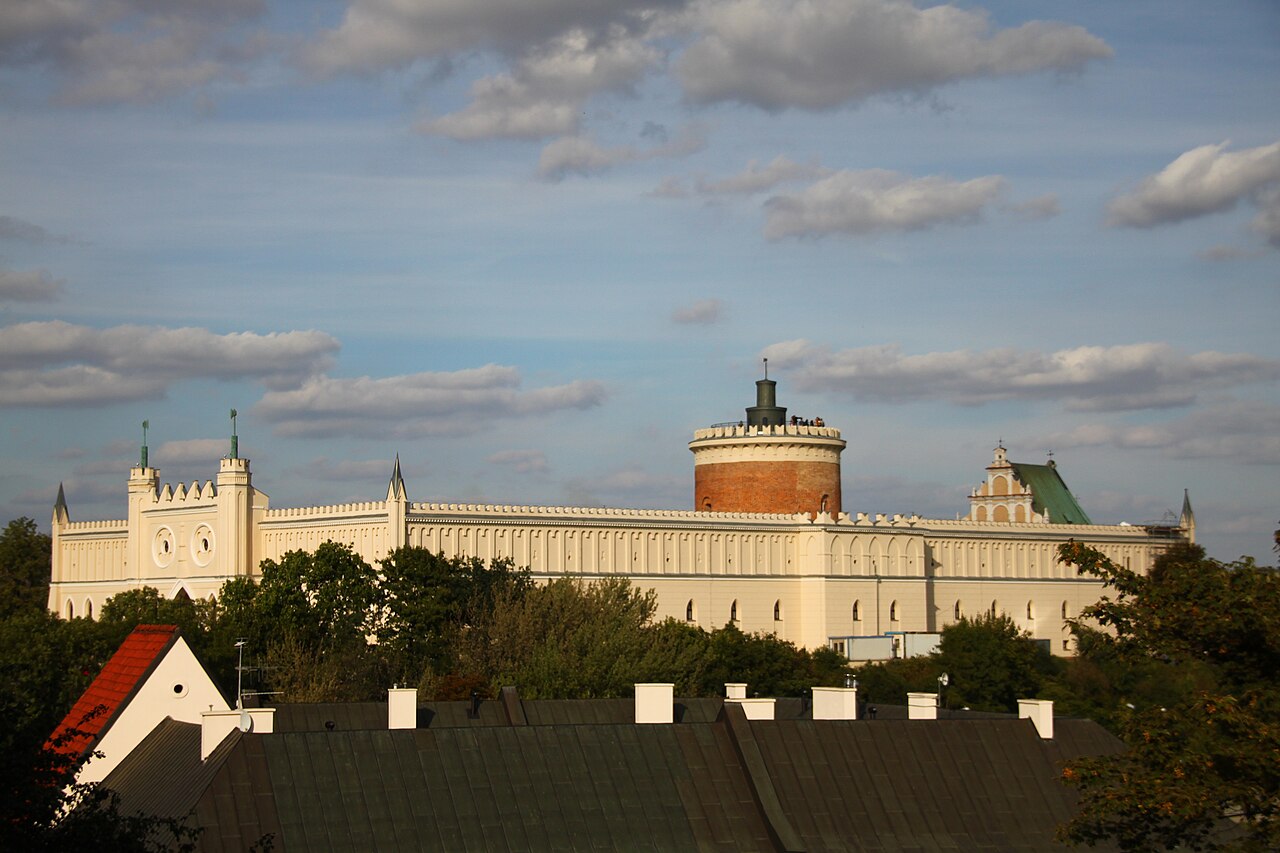
Lublin Castle stands as a monumental bastioned fortress in the heart of Lublin, Poland, embodying centuries of Polish history and architectural evolution. Its origins trace back to the early medieval period, with the first fortifications established in the 12th century to guard Poland's eastern frontiers. The castle's strategic location on a hill adjacent to the Old Town made it a critical defensive and administrative center throughout the Middle Ages and beyond.
Early fortifications and medieval origins
The earliest known fortifications at the site consisted of a wood-reinforced earthen wall erected in the 12th century, forming a protective enclosure for the settlement known as the kasztelania lubelska. By the mid-13th century, a stone keep was constructed within these defenses, marking a significant architectural advancement. This keep, built on a circular plan approximately 15 meters in diameter, remains the oldest standing structure in the city and is a defining feature of the castle complex. Its lower levels were constructed of broken limestone, while the upper parts utilized brick, with walls over 3 meters thick. A hidden staircase within the walls provided access to three vaulted chambers, one on each level, with the entrance positioned above ground level to enhance defense.
The role of duke bolesław wstydliwy
While the exact founder of the stone keep is uncertain, historical consensus suggests it was likely commissioned by Duke Bolesław the Chaste (Bolesław Wstydliwy). This aligns with the period's broader trend of fortifying key strongholds to secure territorial borders.
14th-century expansion under king casimir iii the great
The 14th century was a transformative era for Lublin Castle, particularly under the reign of King Casimir III the Great. Following a destructive raid in 1341 by Tatar forces allied with Ruthenia, the castle underwent significant reconstruction and fortification. The earlier earthen walls were replaced with robust stone curtain walls, and new defensive structures were added, including a rectangular tower known as the "Jewish Tower" on the northern curtain wall. A freestanding square tower was converted into the Chapel of the Holy Trinity, featuring a polygonal presbytery extending beyond the eastern wall. The cylindrical keep was likely heightened and equipped with arrow slits to improve its defensive capabilities.
Residential and defensive architecture
The main residential building within the castle was a massive one-story structure with walls thick enough to support an upper floor added later. It housed a large hall measuring 18 by 15 meters, distinguished by a central stone column. The castle's entrance was fortified with a gatehouse and an outer bailey to the west, enhancing its defensive perimeter.
15th and 16th-century developments: royal chapel and renaissance remodeling
During the reign of King Władysław II Jagiełło around 1407, the castle's chapel was rebuilt into a two-story church with a crypt, adorned with steep stepped gables. The interior was richly decorated with Russo-Byzantine style polychromes, painted by the Ruthenian artist Master Andrej in 1418. These frescoes remain a unique cultural treasure, blending Eastern Orthodox and Western Gothic artistic traditions.
Following the Union of Lublin in 1569, which established the Polish–Lithuanian Commonwealth, the castle's significance grew as a royal residence and political hub. Under King Sigismund I the Old, the castle underwent a Renaissance-style renovation. The original Gothic structure was expanded with an additional floor reserved for the king, a new gatehouse, and a southern bastion. The chapel received a Renaissance portal, and the cylindrical tower was crowned with a decorative attic. A two-story stone building known as the "grodzka" was constructed on the northern slope, serving as the residence of the starosta and administrative offices. Ancillary buildings were primarily wooden, reflecting their utilitarian purpose.
The union of lublin and the castle's political role
The castle was the venue for the historic 1569 Union of Lublin parliament, a pivotal event that united Poland and Lithuania into a single commonwealth. This elevated Lublin Castle's status as a symbol of political power and cultural integration within the region.
Decline and transformation from the 17th to 19th centuries
The mid-17th century brought turmoil and decline. Between 1648 and 1657, Lublin was occupied by successive armies including Cossack, Russian, Swedish, and Hungarian forces during the period known as The Deluge. The castle was looted and partially destroyed by fire. Although some minor repairs were undertaken by subsequent starostas, the fortress gradually fell into disrepair.
In the 19th century, after the Congress of Vienna placed Lublin under Russian control, the castle was repurposed as a prison. Between 1823 and 1826, the castle ruins were rebuilt in the English neo-Gothic style as a penitentiary, with most original buildings demolished except for the keep and chapel. This prison operated until 1954 and witnessed significant historical events, including the incarceration of political prisoners during Tsarist, Nazi, and communist regimes.
Architectural highlights and surviving structures
Today, the most prominent surviving elements of Lublin Castle include the cylindrical keep and the Gothic chapel of the Holy Trinity. The chapel, also known as the castle chapel, is a two-story structure with a square nave and a polygonal presbytery. Its upper nave features a star-vaulted ceiling supported by a massive octagonal pillar. The preserved Russo-Byzantine frescoes inside are internationally recognized for their artistic and historical value.
The cylindrical keep
The keep is notable for its thick walls, defensive staircases concealed within the walls, and elevated entrance, which provided a last line of defense. Its combination of limestone and brick construction reflects medieval building techniques and resource availability.
The chapel of the holy trinity
The chapel's dual-level design and rich decoration make it a unique example of medieval religious architecture in Poland. The frescoes by Master Andrej are among the few surviving examples of Eastern Orthodox art in the country, illustrating biblical scenes with a distinctive iconographic style.
Modern use and cultural significance
Since 1957, following the closure of the prison, Lublin Castle has served as the main site of the National Museum in Lublin. It houses extensive collections of art, historical artifacts, and exhibitions that celebrate the region's heritage. The castle's blend of medieval, Renaissance, and neo-Gothic elements attracts scholars, tourists, and cultural enthusiasts alike.
The castle's layered history—from a medieval fortress guarding Poland's eastern borders, through royal residence and political center, to a site of imprisonment and cultural preservation—makes it a profound symbol of Polish resilience and identity.
Visitor information
- Location: Lublin, Poland, near the Old Town district
- Type: Bastioned fortress
- Period: Late medieval origins with Renaissance and 19th-century neo-Gothic modifications
- Condition: Partially preserved with significant ruins and restored sections
- Visiting hours: Typically open daily, but visitors should check current schedules due to museum programming
- Ticket price: Varies; generally affordable entrance fees apply for the National Museum
Frequently asked questions (FAQ)
- What are the opening hours for Lublin Castle?
- Lublin Castle is typically open to visitors from 9 AM to 5 PM during the weekdays, and from 10 AM to 6 PM on weekends. However, hours may vary seasonally, so it's advisable to check the official website before your visit.
- Is there an admission fee to enter Lublin Castle?
- Yes, there is an admission fee to enter Lublin Castle. As of the latest information, tickets are generally priced around 15 PLN for adults, with discounts available for students and seniors. Free entry is often provided on certain days, so be sure to verify before planning your visit.
- When was Lublin Castle built?
- Lublin Castle was originally constructed in the 12th century, making it one of the oldest castles in Poland. Its architecture reflects a blend of Gothic and Renaissance styles, showcasing the castle's evolution over the centuries.
- Can I access Lublin Castle with a wheelchair?
- Yes, Lublin Castle is generally accessible for wheelchair users. There are ramps and elevators available to help navigate different levels, ensuring that all visitors can enjoy the historical site.
- What is the historical significance of Lublin Castle?
- Lublin Castle has played a pivotal role in Polish history, serving as a royal residence and a center of justice. It was a crucial location during the Union of Lublin in 1569, which united Poland and Lithuania, reflecting its importance in the region's political landscape.
- What is the best time to visit Lublin Castle?
- The best time to visit Lublin Castle is during the spring and early autumn when the weather is mild and pleasant. This allows for a comfortable outdoor experience while exploring the castle grounds and enjoying nearby gardens.
- Are there any nearby attractions to Lublin Castle?
- Yes, there are several attractions near Lublin Castle, including the Old Town with its charming streets and historic buildings. Additionally, the Majdanek concentration camp memorial and museum is a short drive away, offering a poignant insight into the region's history.
Information
Loading map...
Visitor reviews
No reviews yet. Been here? Write the first review and help other travelers!
Write the first reviewVisited this castle? Share your experience
Your review helps other travelers and adds first-hand knowledge to our encyclopedia.