Litoměřice Castle
Litoměřice Castle stands as a remarkable example of a 14th-century Gothic royal fortress located in the historic town of Litoměřice, Czechia. Constructed in the first half of the 14th century, this castle was originally built as a defensive stronghold on the northwestern edge of the town’s historic center. Its strategic position outside the original city walls, combined with its integration into the town’s fortifications, highlights its military and administrative significance during the High Medieval period.
The earliest written record of the castle dates to 1359, when Emperor Charles IV issued a charter concerning vineyards on nearby Radobýl hill, indicating the castle’s role as a center for regional governance and economic control. Under Charles IV’s reign, the castle was incorporated into the expanding city defenses, emphasizing its importance in protecting Litoměřice during the latter half of the 14th century.
Architectural design and fortifications
The castle’s layout is characterized by an irregular trapezoid plan measuring approximately 60 by 75 meters, reflecting a blend of French and Central European fortification styles. Its defensive system included curtain walls surrounded by a moat, with substantial towers positioned at key corners to enhance protection.
Defensive towers and walls
At the northwest and northeast corners, the castle features two cylindrical towers approximately 9 meters in diameter, with walls about 3 meters thick. These towers exemplify the robust medieval masonry techniques designed to withstand sieges and artillery attacks. The southwest corner hosts a rectangular tower with vaulted interiors, adding architectural diversity to the fortifications. While a fourth corner tower has been speculated, archaeological investigations have yet to confirm its existence.
The western curtain wall remains largely intact along its original length and likely adjoined a residential building, underscoring the castle’s dual defensive and domestic functions. Portions of the northern curtain wall survive as part of the southern enclosure of the castle’s large palace courtyard.
The gothic palace and its features
During the late 14th century, under King Wenceslaus IV, the castle underwent significant expansion with the construction of a large Gothic palace by Kunát Kaplíř of Sulejovice. This palace, measuring 42.5 by 18.5 meters, extended beyond the original curtain wall and filled the moat on the northern side, reflecting a shift toward residential and administrative functions.
The palace included a small chapel with an unknown dedication, vaulted basements, and originally three floors, although the vertical divisions have not survived. Access was through a pointed arch portal from the courtyard, and the southern wall incorporated older castle masonry, blending new and old construction phases.
Historical significance and transformations
Throughout its history, Litoměřice Castle played a vital role in regional politics and military affairs. During the early 15th-century Hussite wars, it served as a residence for King Sigismund of Luxembourg and later for the Hussite captain Hynek Kolštejnský of Valdek after the city adopted Hussitism. These events marked the castle’s transition from a royal fortress to a semi-public and civic structure.
By the end of the 15th century, the castle was granted to the town authorities by King Vladislaus II, signaling its decline as a military installation. It was repurposed for practical uses such as a granary, wine storage, and housing for officials. However, a significant fire in 1655 caused extensive damage, further impacting the castle’s condition.
Conversion into a brewery
In 1767, the castle underwent a major transformation when it was converted into the Litoměřice brewery. This conversion entailed extensive rebuilding, including the addition of new floors and roofs that altered the original Gothic interiors. The palace was given a gabled roof, and many medieval architectural elements were lost or obscured during this period.
Modern conservation and current state
Interest in Litoměřice Castle’s historical and architectural value was limited until the 20th century. A pivotal survey in 1971 by architect Jan Muk revealed the significance of the surviving structures, prompting efforts to stabilize and restore the castle remains starting in the 1980s.
Restoration work included roofing the palace with a neo-Gothic hipped roof designed by Muk, although these efforts were not fully completed by the end of the decade. Today, the castle remains are partially preserved, featuring sections of the large palace, the full western curtain wall, and three corner towers—two round and one square.
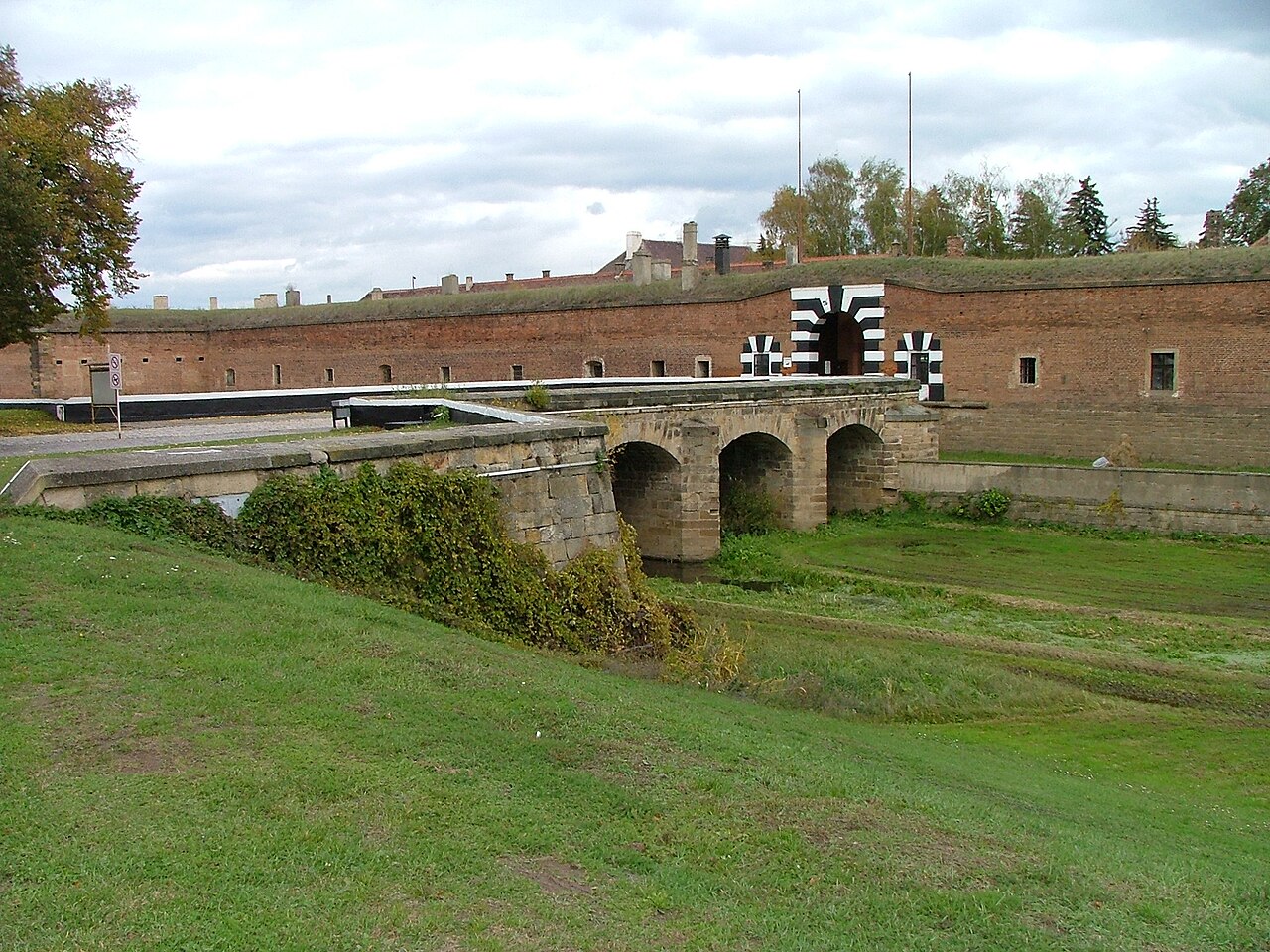
The castle’s moat and curtain walls still evoke its original defensive purpose, while the palace ruins reflect its evolution into a residence and administrative center. These remains offer valuable insights into medieval fortification design and the adaptive reuse of historic structures over centuries.
Visitor information and cultural importance
Litoměřice Castle is an important cultural landmark in Czechia, illustrating the region’s medieval heritage and architectural evolution. While not fully restored, the site is accessible for educational and community events, providing a tangible connection to the town’s history.
Visitors can explore the castle’s surviving fortifications and palace ruins, appreciating the blend of military architecture and residential design. The castle’s history as a royal fortress, Hussite stronghold, and brewery enriches its narrative, making it a compelling destination for those interested in medieval and early modern Central European history.
Frequently asked questions (FAQ)
- When was Litoměřice Castle originally built?
- Litoměřice Castle was originally constructed in the first half of the 14th century, during the High Medieval period.
- What architectural style characterizes Litoměřice Castle?
- The castle is primarily built in the Gothic style, featuring typical medieval defensive and residential elements.
- Can visitors explore the castle today?
- Yes, visitors can explore the partially preserved remains of Litoměřice Castle, including its curtain walls, towers, and palace ruins.
- What was the castle’s role during the Hussite wars?
- During the Hussite wars, the castle served as a residence for King Sigismund of Luxembourg and later for the Hussite captain Hynek Kolštejnský of Valdek.
- How was the castle transformed in the 18th century?
- In 1767, Litoměřice Castle was converted into a brewery, which involved extensive rebuilding and altered much of the original Gothic interiors.
Information
Sources & official resources
Verify the information above using these authoritative references.
Loading map...
Visitor reviews
No reviews yet. Been here? Write the first review and help other travelers!
Write the first reviewVisited this castle? Share your experience
Your review helps other travelers and adds first-hand knowledge to our encyclopedia.