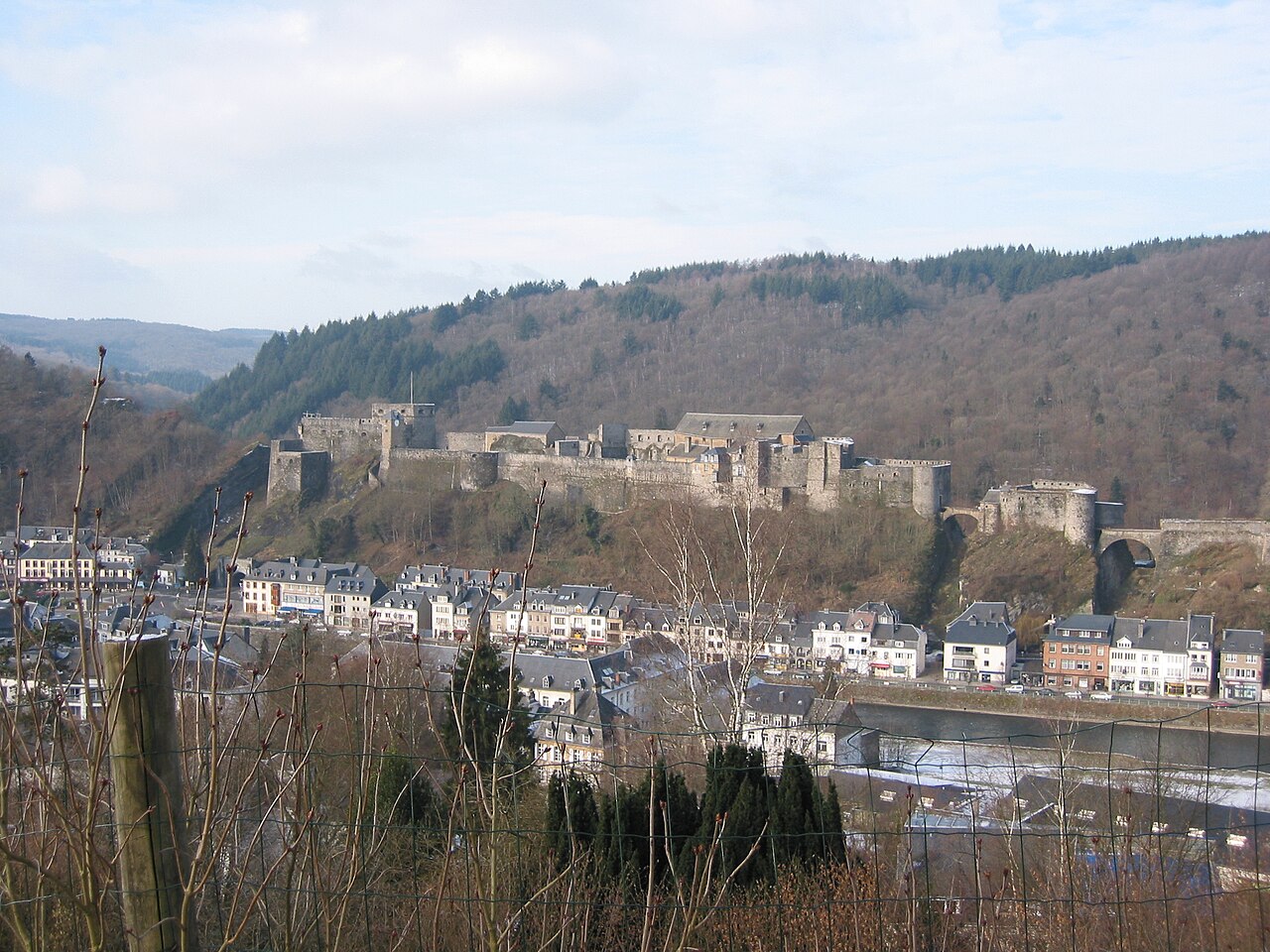
Liresse Castle
Liresse Castle, also known locally as Château de Liresse, is a medieval fortification located in the dense woods between the villages of Rochehaut and Mogimont in the province of Luxembourg, within Belgium's Wallonia region. Positioned strategically on a naturally protected rocky outcrop, the castle overlooks the surrounding landscape and was historically significant for controlling the passage along the route from Vivy to Bouillon. Though now mostly in ruins, the site retains a mysterious atmosphere enhanced by its secluded forest setting and the remnants of its medieval defensive structures.
Historical context and significance
The earliest known mention of Liresse Castle dates back to the 11th century, specifically referenced in the archives of the Saint-Hubert Abbey. It was described as a fortification serving to protect an important route in the region, highlighting its role in medieval military and trade networks. Despite this early record, detailed historical documentation about the castle's ownership, construction phases, or notable events remains scarce.
In the early 18th century, the castle's strategic position was again utilized during the reign of Louis XIV of France. In 1706, part of the castle was used as a redoubt—a defensive outpost—during military operations, underscoring its continued military relevance even centuries after its initial construction.
Legend and folklore
Liresse Castle is surrounded by intriguing local legends that add to its allure. A prominent tale recounts that the castle's original inhabitants were pagans who worshipped a Golden Calf. According to the legend, when the squire converted to Christianity, he destroyed the idol by casting it into a deep well located within the castle's keep. This well, measuring approximately 11 meters deep, remains a notable feature of the site.
In the early 19th century, motivated by this legend, the then-owner of the ruins attempted to locate the golden idol by clearing the well. The search yielded only fragments of antlers and a human skeleton, fueling further mystery rather than providing closure. Even a dowser was employed to find the idol, but the search was ultimately abandoned.
Architectural features and site layout
The castle is classified as a hill castle, built to take advantage of the natural rocky terrain for defense. The ruins include several straight and curved stone walls that enclose what was once a courtyard. The central elevated area is believed to have housed the keep, the castle's main fortified tower, now marked by the deep well.
Access to the castle is from the north via a gravel path that runs alongside the eastern wall. The original entrance was a wooden gate, later replaced by a corridor wall constructed from shale stone and featuring an arched wooden door. Although the door's frame locations were visible until recently, the walls are now deteriorating, reflecting the site's gradual decline.
On the southern side of the courtyard, a small 19th-century chapel stands atop a smaller rocky outcrop, adding a religious element to the site. Additionally, an abandoned 20th-century building is present within the courtyard, indicating some later use or occupation of the site beyond the medieval period.
Current condition and visitor information
Today, Liresse Castle is in a state of ruins with partially standing walls and structural remnants. The site is private property but remains freely accessible to visitors. Its quiet, secluded location and the mysterious aura surrounding its history make it a compelling destination for those interested in medieval fortifications and local folklore.
While the castle does not offer extensive architectural details or large preserved structures, its natural setting and the evocative ruins provide a unique experience. Visitors can explore the remains of the walls, the deep well in the keep, and the chapel, all set within the peaceful forested landscape of southern Belgium.
Nearby castles and regional context
Liresse Castle is part of a group of approximately 28 historical sites along the Semois River, including notable castles such as Montragut Castle and Fées Castle. This cluster of fortifications reflects the region's strategic importance throughout the medieval period and offers visitors opportunities to explore multiple heritage sites within a relatively small area.
Frequently asked questions (FAQ)
- How do I access Liresse Castle?
- Liresse Castle is accessible via a gravel path from the north that runs alongside the eastern wall. The site is on private property but is freely accessible to visitors.
- What is the historical significance of Liresse Castle?
- Liresse Castle was first mentioned in the 11th century as a fortification protecting a key route from Vivy to Bouillon. It was also used as a redoubt by Louis XIV in 1706, indicating its military importance over several centuries.
- What remains can I see at Liresse Castle?
- Visitors can explore the ruins of stone walls forming a courtyard, a deep well believed to be part of the original keep, a small 19th-century chapel, and an abandoned 20th-century building within the courtyard.
- Is there any legend associated with Liresse Castle?
- Yes, local legend tells of pagan inhabitants worshipping a Golden Calf idol, which was thrown into a well when the squire converted to Christianity. Attempts to find the idol in the 19th century uncovered only antler fragments and a skeleton.
- Are there other castles near Liresse Castle worth visiting?
- Liresse Castle is among about 28 castles along the Semois River, including Montragut Castle and Fées Castle, offering visitors a rich selection of medieval sites in the region.
Information
Current owner
Private owner
Address
Chemin de Liresse, Belgium
Loading map...
Visitor reviews
No reviews yet. Been here? Write the first review and help other travelers!
Write the first reviewVisited this castle? Share your experience
Your review helps other travelers and adds first-hand knowledge to our encyclopedia.