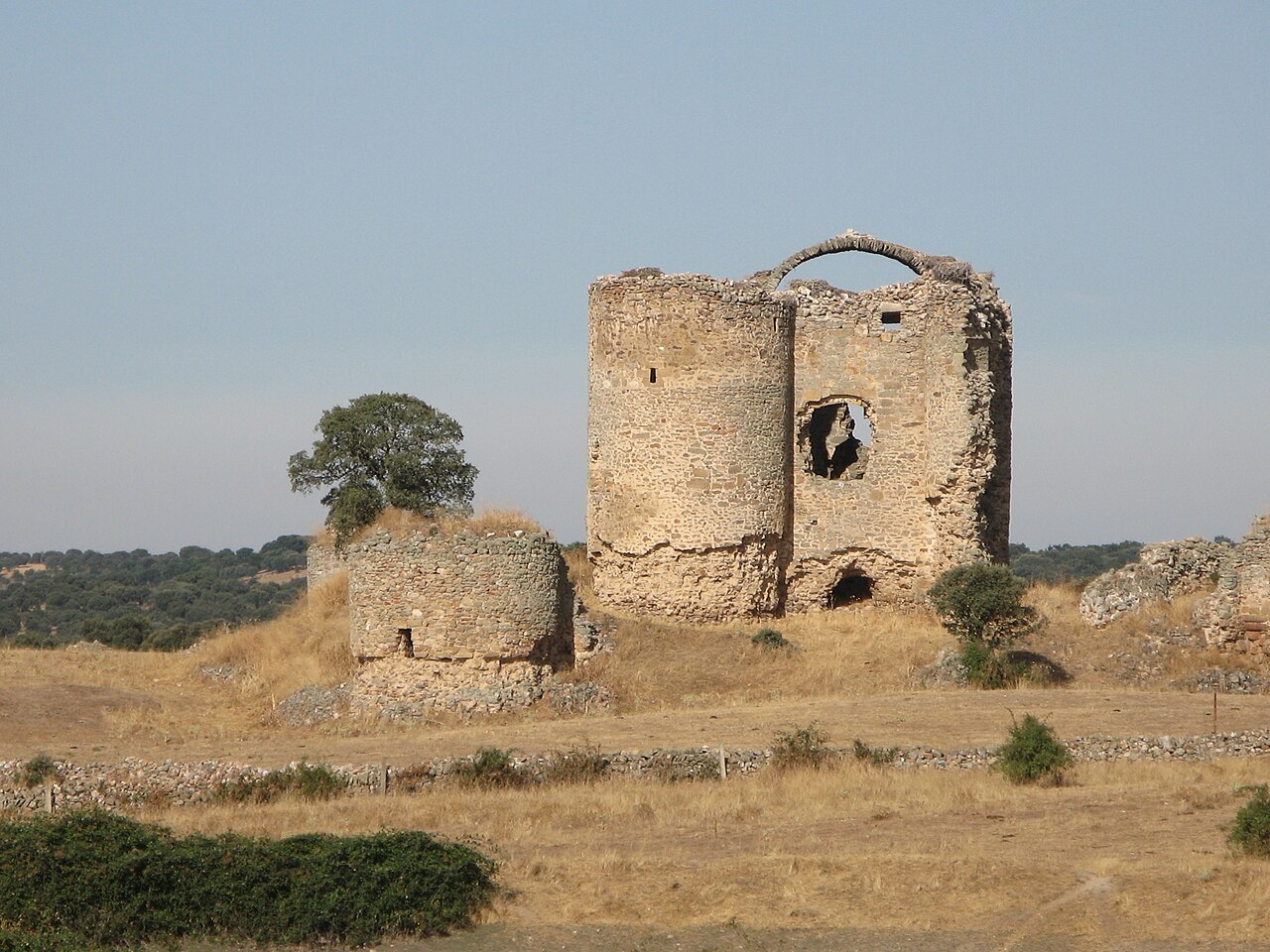
Ledesma Castle
Ledesma Castle stands as a prominent example of medieval military architecture in the province of León, Spain. Constructed primarily in the 12th century during the reign of Fernando II of León, this fortress was integral to the defense and control of the town of Ledesma. The castle is notable for its extensive granite walls that historically enclosed the town, reflecting the strategic importance of fortifications in the High Medieval period.
The fortified walls and gates of ledesma
The town of Ledesma was once surrounded by formidable granite walls, much of which still survives today. These walls were constructed to withstand sieges and protect inhabitants from invaders. Originally, the fortifications included eight gates, but only one gate remains intact: the Puerta de los Mártires, also known as the San Nicolás or Caldereros door. This gate is architecturally significant, featuring two camber arches and flanked by a pair of cylindrical towers, which provided defensive vantage points and enhanced the gate's security.
Masonry and stonework details
During the 15th century, several sections of the walls were reconstructed using well-carved masonry. This later work is distinguished by the presence of numerous stone mason marks visible on the blocks, offering insight into the medieval craftsmanship and the organization of labor during the castle's maintenance and enhancement phases.
The castle-fortress and bailey
The castle-fortress itself is situated on the south-west end of the walled town, occupying an irregular trapezoidal plan. The bailey was constructed between the 13th and 14th centuries, serving as a fortified courtyard essential for military operations and residential purposes within the fortress.
Entrances and defensive towers
The bailey features two main entrances: one on the north side which prominently displays the town’s coat of arms, symbolizing civic pride and authority. The other entrance is located on the south side, guarded by two large towers that reinforced the defensive capabilities of the fortress. These towers would have been critical for surveillance and for mounting defensive measures against attackers.
Architectural significance and historical context
Ledesma Castle exemplifies the evolution of medieval fortifications in Spain, combining elements from different centuries that reflect changing military technologies and architectural styles. The original 12th-century construction under Fernando II aligns with the period's emphasis on stronghold castles designed to secure territories during the Reconquista. The later 15th-century masonry improvements illustrate the ongoing strategic importance of the site and the adaptation of fortifications to new defensive needs.
Materials and construction techniques
The use of granite as the primary building material provided exceptional durability to the walls and towers. The visible mason marks on the stones are valuable for archaeologists and historians as they reveal the methods and organization of medieval stonemasons, indicating a high level of skill and coordination in the castle's construction and maintenance.
Preservation and current condition
Today, Ledesma Castle is well preserved, with much of the granite walls and key defensive structures still standing. The survival of the Puerta de los Mártires gate and the bailey's towers provides visitors with a tangible connection to the medieval past and an opportunity to explore the layout and defensive features of a High Medieval fortress. The castle remains a significant cultural and historical landmark in the region.
Visiting Ledesma Castle
Visitors to Ledesma can appreciate the castle's robust fortifications and the craftsmanship evident in its stonework. The castle's location within the town walls offers a unique perspective on medieval urban defense systems, allowing exploration of both the fortress and the surrounding town's historic fabric.
Legacy and cultural importance
Ledesma Castle not only served a military function but also played a role in the social and administrative life of the town throughout the Middle Ages. Its enduring presence contributes to the understanding of medieval Spanish history and architecture, making it an essential subject of study for historians and enthusiasts alike.
Frequently asked questions (FAQ)
- How do I get to Ledesma Castle?
- Ledesma Castle is located in the town of Ledesma, in the Castile and León region of Spain. It is accessible by car and local roads connecting to nearby cities such as Salamanca. Visitors can reach the castle by walking through the historic town center.
- What is the historical significance of Ledesma Castle?
- Ledesma Castle was built in the 12th century during the reign of Fernando II of León and served as a defensive fortress protecting the town. It reflects the military architecture of the High Medieval period and the strategic importance of the region during the Reconquista.
- Can I visit the Puerta de los Mártires gate?
- Yes, the Puerta de los Mártires gate is the only surviving gate of the original eight and is accessible to visitors. It features two camber arches and is flanked by two cylindrical towers, showcasing medieval defensive design.
- What architectural features are notable at Ledesma Castle?
- Notable features include the granite walls, the bailey with its irregular trapezoidal plan, the Puerta de los Mártires gate with its camber arches and cylindrical towers, and the large towers flanking the southern entrance of the bailey.
- Is Ledesma Castle well preserved?
- Yes, Ledesma Castle is well preserved, with much of the granite walls and defensive structures still intact, allowing visitors to experience its medieval fortifications firsthand.
Information
Loading map...
Visitor reviews
No reviews yet. Been here? Write the first review and help other travelers!
Write the first reviewVisited this castle? Share your experience
Your review helps other travelers and adds first-hand knowledge to our encyclopedia.