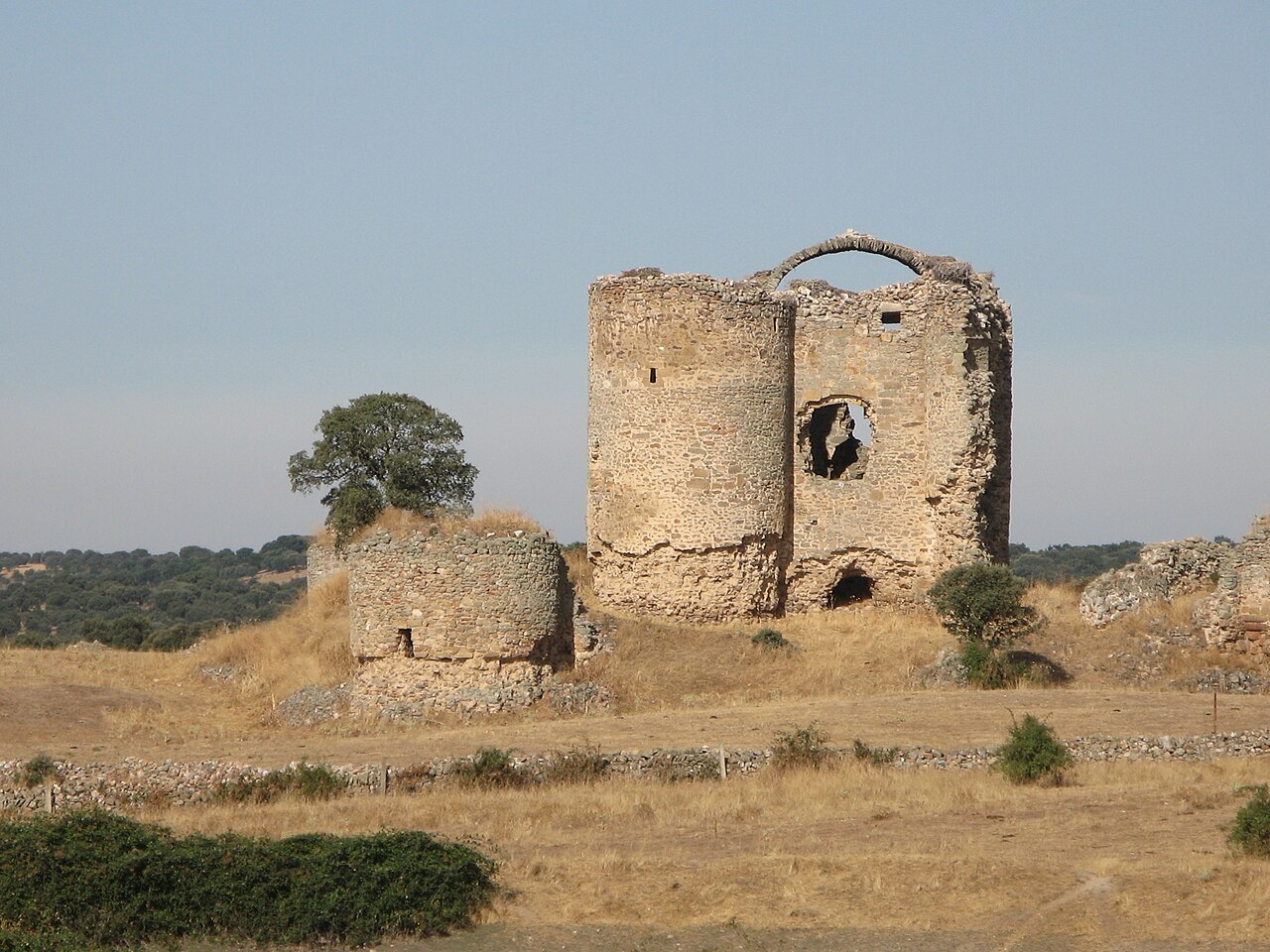
Castle of Peñausende
The Castle of Peñausende stands as a significant medieval fortress located in the municipality of Peñausende, within the province of Zamora, Spain. Established by the Christian military Order of Santiago during the Middle Ages, this castle played a vital role in the defense and control of frontier territories during a turbulent period marked by conflicts between Christian and Islamic powers on the Iberian Peninsula.
Strategically perched atop a prominent and isolated rock formation at an elevation of 909 meters above sea level, the castle's location was carefully chosen to maximize natural defensive advantages. This commanding position allowed for extensive surveillance over the surrounding landscape, including the Sayago region, the nearby Sierra de la Culebra mountain range, the city of Zamora, and even across the border into Portugal near the Arribes del Duero natural park. Such a vantage point was crucial for monitoring movements and securing the frontier during the High and Late Medieval periods.
Founding and historical significance
The castle was constructed under the auspices of the Order of Santiago, a prominent Christian military and religious order charged with defending the Iberian Christian kingdoms and advancing the Reconquista. The fortress formed part of an encomienda or territorial commandery, which was a network of castles and lands administered by the Order. This system allowed the Order to maintain military and administrative control over key border areas.
During the Middle Ages, the castle was part of a larger group of fortifications known as the "castillos de peñabrava, castillos reales y castillos de frontera"—a collection of rugged castles that marked shifting military frontiers between Christian and Islamic territories. These castles were built to withstand sieges and raids, reflecting the volatile nature of border warfare during the Reconquista.
By the early 16th century, the castle's military importance had diminished as political frontiers stabilized. Documentation from 1528 by inspectors of the Order of Santiago attests to the castle's condition and ongoing recognition within the Order's network, though it was gradually abandoned in the following decades.
Architectural features and layout
The Castle of Peñausende was designed as a hill castle utilizing the natural topography of its rocky outcrop for defense. The fortress's surviving remains include sections of the original defensive walls (murallas), which once enclosed the castle's perimeter. These thick stone walls formed the primary barrier against attackers and are still visible as fragmentary ruins today.
Archaeological evidence reveals the foundations of several defensive towers (cubos) positioned along the walls. These towers provided elevated platforms for lookouts and archers, enabling defenders to cover the approaches to the castle effectively. Although only the bases remain, their placement helps reconstruct the castle's defensive scheme.
Within the castle ruins, a notable cavity has been identified that likely served as a cistern (aljibe) to collect and store rainwater, an essential feature for sustaining the garrison during sieges. Alternatively, this hollow may have functioned as a dungeon (mazmorra) for detaining prisoners, demonstrating the multifunctional nature of medieval castle spaces.
On the summit of the rock outcrop, traces of a secondary defensive wall are still discernible. This additional fortification would have provided an extra layer of protection, though its original form is now obscured. Modern dry stone walls, known locally as cortinas and cortinos, mark property boundaries but partially conceal some medieval structural elements.
The castle and its surrounding settlement
The southern slope beneath the castle eventually became the site of the village of Peñausende. The village's earliest prominent structure is the Church of San Martín de Tours, which historically served the local community and castle inhabitants. The proximity of the village to the castle reflects the typical medieval pattern of settlement growth around fortified sites, combining military and civilian functions.
The castle's location near the border with Portugal and overlooking key natural and urban landmarks underscores its historical role in regional defense and control. Its commanding views allowed for early warning of approaching forces and facilitated communication across frontier zones.
Current condition and archaeological significance
Today, the Castle of Peñausende remains in a ruined state, with visible remnants of its walls and towers providing valuable insights into medieval military architecture in this part of Spain. The site's hilltop position and remaining structural elements illustrate the strategic considerations of the Order of Santiago and their approach to fortification design.
Archaeological studies at the site contribute to understanding the castle's construction techniques and its adaptation to the rugged terrain. The combination of natural rock formations and man-made defenses exemplifies the medieval practice of integrating fortifications with the landscape to maximize defensive capabilities.
Preservation efforts focus on maintaining the visible ruins and preventing further degradation, allowing visitors and scholars to explore the castle's historical footprint. The castle is an important cultural heritage site that reflects the complex history of medieval frontier warfare and the role of military orders in shaping the Iberian Peninsula's political landscape.
Frequently asked questions (FAQ)
- How do I get to the Castle of Peñausende?
- The Castle of Peñausende is located in the heart of Peñausende, Spain. You can reach it by car or public transport, with ample parking available nearby. If you are using public transportation, check local bus schedules for the best routes.
- What is the historical significance of the Castle of Peñausende?
- The Castle of Peñausende dates back to the medieval period and is a testament to the region's rich history. It served as a defensive structure and a residence for nobility, playing a significant role in local governance and military strategy. Today, it stands as a symbol of cultural heritage in the area.
- When was the Castle of Peñausende built?
- The exact date of construction of the Castle of Peñausende is not definitively known, but it is believed to have been built in the 12th century. Over the centuries, it has undergone various renovations and restorations, preserving its historical essence while adapting to modern needs.
- Can I take guided tours of the Castle of Peñausende?
- Yes, guided tours are available at the Castle of Peñausende, offering visitors insights into its history and architecture. These tours typically run during the peak tourist season and can be booked in advance. It's a great way to enhance your visit and learn more about the castle's past.
- Why is the architecture of the Castle of Peñausende notable?
- The architecture of the Castle of Peñausende reflects a blend of medieval styles, showcasing features like robust stone walls and strategic towers. Its design is not only functional for defense but also aesthetically pleasing, making it an interesting subject for architecture enthusiasts. The castle's well-preserved state allows visitors to appreciate its historical craftsmanship.
- Is it possible to hold events at the Castle of Peñausende?
- Yes, the Castle of Peñausende offers facilities for hosting various events, including weddings and cultural gatherings. The picturesque backdrop of the castle enhances the ambiance for any occasion. Be sure to contact the castle management for specific details regarding bookings and available services.
- What are the opening hours for the Castle of Peñausende?
- The Castle of Peñausende is generally open to visitors from 10 AM to 6 PM, but hours may vary seasonally. It is advisable to check the official website or contact the castle directly for the most current information before your visit. Special hours may apply on holidays or during events.
- What are the ticket prices for visiting the Castle of Peñausende?
- Ticket prices for the Castle of Peñausende are typically affordable, with discounts available for children, students, and seniors. Group rates may also be offered, making it an excellent option for school trips or family outings. Always check the official site for current pricing and any promotional offers.
- When is the best time to visit the Castle of Peñausende?
- The best time to visit the Castle of Peñausende is during the spring and fall when the weather is mild and pleasant. These seasons provide an ideal backdrop for exploring the castle grounds and enjoying the surrounding scenery. Summer can be busy, while winter may have limited accessibility due to weather conditions.
- Are there any nearby attractions to the Castle of Peñausende?
- Yes, there are several nearby attractions to explore while visiting the Castle of Peñausende. The surrounding area features beautiful parks, local museums, and charming towns that offer a glimpse into the region's culture and history. Consider spending a day in the area to fully enjoy what it has to offer.
Information
Website
Visit websiteSources & official resources
Verify the information above using these authoritative references.
Loading map...
Visitor reviews
No reviews yet. Been here? Write the first review and help other travelers!
Write the first reviewVisited this castle? Share your experience
Your review helps other travelers and adds first-hand knowledge to our encyclopedia.