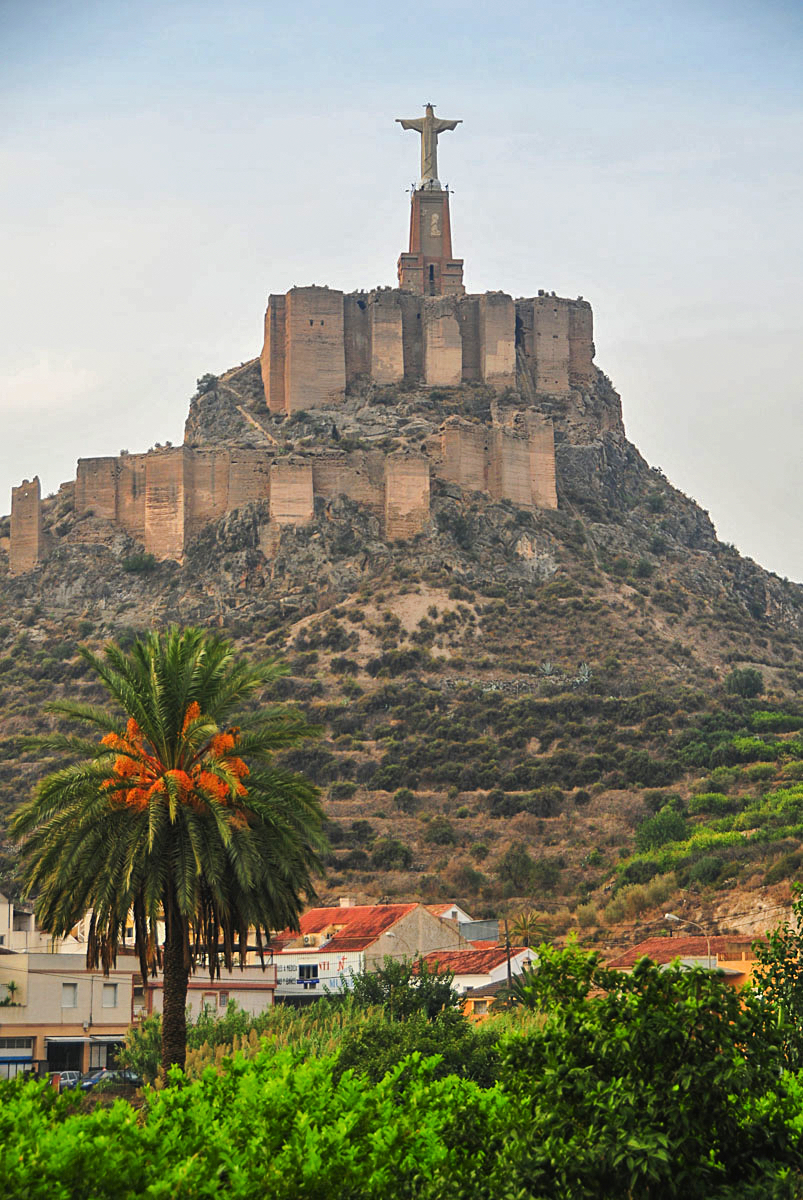
Larache Castle
Larache Castle, or Castillo de Larache, is a historic fortress situated on a low hill northwest of Castillejo Castle in the Region of Murcia, Spain. This castle is an important relic from the 12th century, representing the military and residential architecture of the Taifa period in the Iberian Peninsula.
Historical background and origins
The castle was most likely constructed under the reign of Abu ʿAbd Allāh Muḥammad ibn Mardanis, known as the "Wolf King", who ruled the Taifa of Murcia from 1147 to 1172. Ibn Mardanis was a prominent Muslim ruler who resisted the Almohad expansion in the region. Larache Castle was built as a fortified palace or farmstead, serving both defensive and residential purposes.
It is believed that the castle was originally known as Hisn al-Faray. Alongside nearby fortifications such as Monteagudo Castle and Castillejo Castle, Larache played a strategic role in protecting the city of Murcia from external threats during a turbulent period marked by frequent conflicts between Muslim taifas and Christian kingdoms, as well as internal Muslim rivalries.
Architectural features and layout
While much of the original structure has not survived, Larache Castle was typical of fortified palaces of the period, combining military and domestic architecture. The castle likely featured defensive walls adapted to the low hilltop location, with battlements and possibly a keep or central tower serving as the stronghold.
The castle's design would have included residential quarters, storage areas, and agricultural facilities, reflecting its role as a fortified farm. Its proximity to other castles in the region suggests it formed part of a defensive network controlling access routes to Murcia.
Decline and current condition
Larache Castle was probably destroyed or severely damaged following the conquest of the Taifa of Murcia by the Almohads in 1172. The Almohad expansion led to the fall of many independent Muslim principalities, and fortifications like Larache were often dismantled or abandoned.
Today, Larache Castle remains in a state of ruin. It is not open to the public, and there are very limited visible architectural remains. The site offers little in terms of structural detail or visitor facilities, which limits its appeal for tourism and architectural study.
Significance in regional history
Despite its ruined state, Larache Castle holds historical significance as part of the network of fortifications that shaped the medieval history of Murcia. It reflects the period of Muslim rule in southeastern Spain and the complex military and political landscape of the 12th century.
The castle's association with the Wolf King ties it to a notable figure who resisted Almohad domination and whose reign marked a final phase of Taifa independence in Murcia.
Frequently asked questions (FAQ)
- What is the historical significance of Larache Castle?
- Larache Castle was built in the 12th century by the Wolf King to protect Murcia and its surroundings during the Taifa period. It was part of a defensive network with nearby castles and reflects the military architecture of that era.
- Can I visit Larache Castle today?
- No, Larache Castle is currently in ruins and not open to the public. There are very limited architectural remains visible on site.
- When was Larache Castle built and by whom?
- The castle was most likely constructed in the 12th century by Abu ʿAbd Allāh Muḥammad ibn Mardanis, known as the Wolf King, who ruled Murcia from 1147 to 1172.
- Why was Larache Castle destroyed?
- Larache Castle was probably destroyed when the Almohads conquered the Taifa of Murcia in 1172, leading to the fall of many independent Muslim fortifications in the region.
Information
Address
Camino Castillo de Larache, Spain
Loading map...
Visitor reviews
No reviews yet. Been here? Write the first review and help other travelers!
Write the first reviewVisited this castle? Share your experience
Your review helps other travelers and adds first-hand knowledge to our encyclopedia.