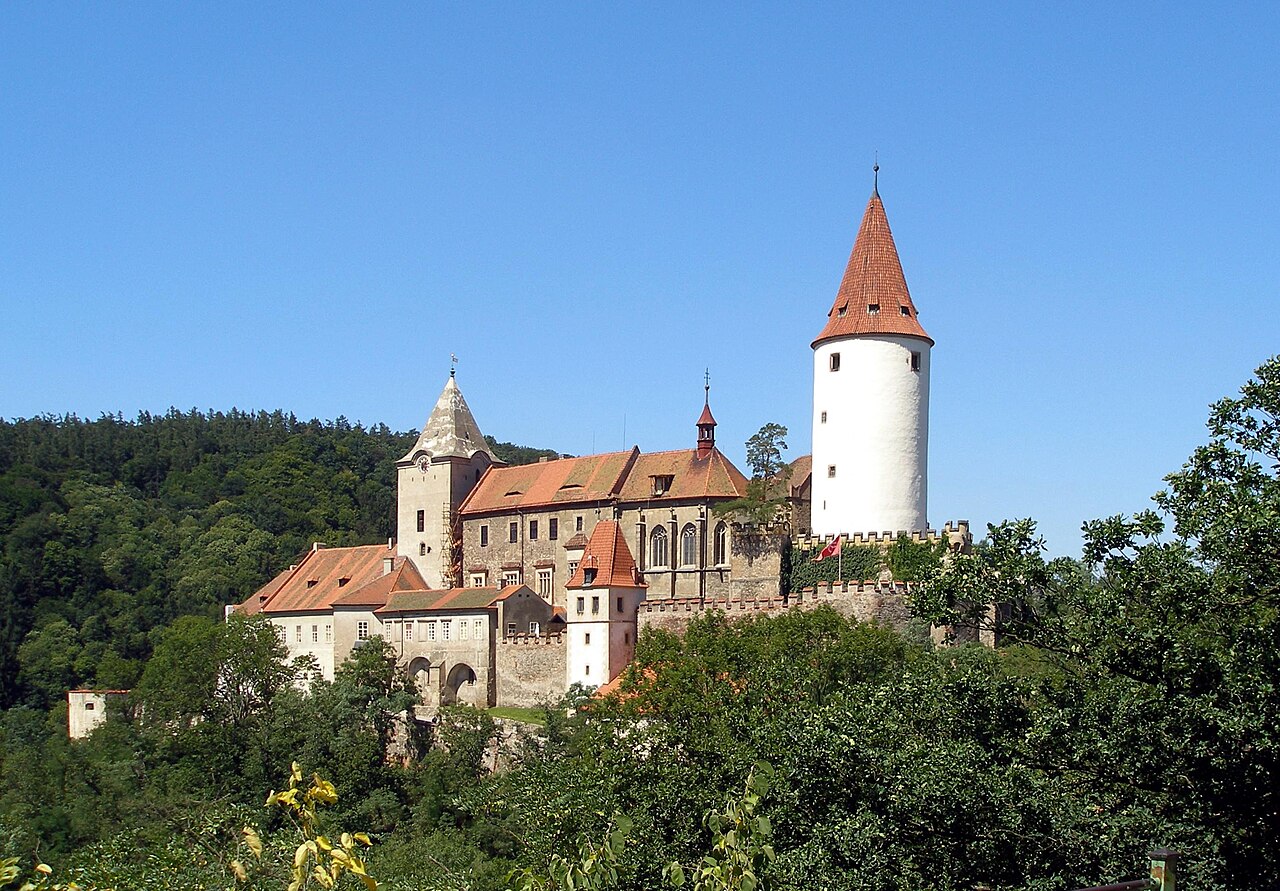
Lány Castle

Lány Castle: historic residence of Czech presidents
Renaissance (15th–17th c.)
Well Preserved

Lány Castle is a significant historical and architectural monument located in Lány, Czechia. Known primarily as the official residence of the Czech and Czechoslovak presidents, the castle's origins date back to the late 14th century, with the earliest records mentioning the site in 1392. Initially, the location featured a wooden keep, which was typical for medieval fortifications in the region.

Early history and renaissance transformation

At the end of the 16th century, the castle underwent a major transformation when Emperor Rudolf II acquired the village of Lány. He replaced the original medieval citadel with a simple hunting lodge designed in the Renaissance architectural style. This change reflected the broader European trend of transitioning from purely defensive structures to more comfortable and stylistically refined residences during the Renaissance period. Over the course of the 17th century, the lodge evolved to incorporate Baroque elements, marking a significant stylistic shift that aligned with the tastes of the aristocracy at the time.

Ownership and architectural modifications

In the late 17th century, the estate was purchased by the influential Wallenstein family. Count Jan Josef Wallenstein added another floor to the small chateau in 1730, enhancing its stature and usability. The Wallensteins were notable patrons of architecture and landscaping, contributing to the estate's development.

By the early 18th century, the property passed into the hands of the Fürstenberg family, who maintained ownership until 1921. During this period, the estate saw numerous renovations and expansions, reflecting the changing needs and tastes of its noble owners.

20th-century renovations and presidential significance

In 1921, the Czechoslovak state acquired Lány Castle to serve as a prestigious country residence for the Head of State. This marked a new chapter in the castle's history, linking it closely with the political life of the nation. The castle underwent extensive renovations between 1902 and 1903, which shaped much of its present-day appearance.

Between 1921 and 1924, the renowned architect Josip Plečnik undertook a significant reconstruction of the chateau and its surroundings. Plečnik's work emphasized harmony between the castle and the expansive parklands, creating an integrated architectural and landscape ensemble. The castle is prominently situated on the axis of the Chateau Park, serving as its dominant feature.

The chateau park and game park

The extensive Chateau Park was originally established in 1770 and has been modified over the centuries, including by Plečnik in the early 20th century. The park includes a lake and greenhouses, enhancing its aesthetic and functional qualities.

Beyond the formal park lies the Lány Game Park, established by the Wallensteins in 1713. Covering approximately 3,000 hectares, this fenced game reserve is part of the environmentally protected Křivoklát region. It is dedicated to the conservation of pure-bred game species such as deer, fallow deer, mouflons, and sika deer. The game park is not open to the public but holds historical significance, including the presence of the "Agreement Oak", where the Little Entente was signed in 1922.

About 2 km from the castle is a villa called Amelia, which is used for government meetings, highlighting the estate's ongoing political importance.

Tomas garrigue masaryk and presidential legacy

Tomas Garrigue Masaryk, the first President of Czechoslovakia, developed a strong attachment to Lány Castle. After his abdication in 1935, he was allowed to reside there permanently with his family. The castle became his final resting place and that of his family, whose graves have since symbolized the ideals of Czechoslovak democracy, especially during periods of totalitarian rule.

During World War II, the castle was sporadically used and served as the residence of State President Dr. Emil Hácha. It was not until the presidency of Václav Havel that Lány Castle resumed regular use as a presidential residence, reinforcing its role in the modern Czech Republic.

Location and accessibility

Lány Castle is located approximately 35 km west of Prague, accessible via the road towards Karlovy Vary. Its proximity to the capital city makes it an important cultural and historical site within the Czech Republic.

The nearby Lány cemetery is the burial site of the Masaryk family, further cementing the castle's association with Czech national history.

Frequently asked questions (FAQ)

What is the historical significance of Lány Castle?
Lány Castle is an important historical site in Czechia, primarily serving as a presidential summer residence since the 1920s. The castle has witnessed numerous significant events in Czech history and reflects the architectural style of the early 20th century, making it a symbol of Czech national identity.
When was Lány Castle built?
Lány Castle was originally constructed in the 14th century but underwent significant renovations in the 19th century. The castle's current neo-Renaissance style was largely established during these renovations, enhancing its grandeur and historical value.
Can I visit Lány Castle?
Yes, Lány Castle is open to the public during specific times of the year. Visitors can explore the beautiful grounds and gardens, and guided tours are available to give insights into its rich history and architectural features.
What are the opening hours for Lány Castle?
The opening hours for Lány Castle may vary depending on the season, so it is recommended to check the official website for the most current information. Typically, the castle is open from late spring to early autumn, with specific hours for guided tours.
Is it possible to access Lány Castle by public transport?
Yes, Lány Castle is accessible by public transport, with regular bus services connecting it to nearby towns and cities. Visitors can also enjoy a scenic walk from the nearest train station, making it a convenient destination for day trips.
What is the best time to visit Lány Castle?
The best time to visit Lány Castle is during the spring and early autumn when the gardens are in full bloom and the weather is pleasant. This allows for a more enjoyable experience of the outdoor areas and the picturesque surroundings.
Are there any nearby attractions to Lány Castle?
Yes, several attractions are located near Lány Castle, including the beautiful forests and nature trails suitable for hiking and exploring. Additionally, visitors can discover other historical sites and charming villages in the region, enriching their overall experience.
What are the ticket prices for visiting Lány Castle?
Ticket prices for Lány Castle vary based on the type of tour and age of the visitor, with discounts often available for children and seniors. It is advisable to check the official website for the latest pricing information before planning your visit.

Information

Palace Castle

Loading map...

Visitor reviews

No reviews yet. Been here? Write the first review and help other travelers!

Write the first review

Visited this castle? Share your experience

Your review helps other travelers and adds first-hand knowledge to our encyclopedia.

Write a review

(5/5)

0/2000 characters

Your review will be visible after admin approval

Nearby castles

9.2 km

Smečno Castle

Smečno, Czech Republic

Smečno Castle stands as a remarkable testament to the architectural and historical evolution of fortifications in the Czech Republic. Originating as a medieval fortress first mentioned in 1252, the castle underwent significant transformations across centuries, reflecting changing styles and functions from a defensive stronghold to an elegant noble residence. Its location in the town of Smečno, within the Kladno District, situates it in a region rich with Bohemian history and cultural heritage. The castle's earliest documented phase was as a Gothic fortress established by the noble family of Boleslav of Smečno. This fortress was strategically positioned on a hill, embodying the typical characteristics of hill castles designed for defense and surveillance. The fortress's defensive role was crucial during the turbulent medieval period, particularly in the 13th and 14th centuries. Historical development and ownership The estate passed through several prominent noble families, each contributing to its architectural and social significance. In 1322, the Kamenický family of Smečno took control, followed by the Martinic family from 1416 to 1418, who held the property for nearly 500 years. The Martinic family's stewardship marked a period of substantial development, especially under Bořita II of Martinic, a court marshal to Kings Ladislaus the Posthumous and George of Poděbrady. Around 1460, he initiated the transformation of the medieval fortress into a late Gothic castle, introducing architectural elements that enhanced both defense and residential comfort. During the early 16th century, the surrounding settlement grew in importance, achieving market town status in 1510 and full town rights by 1515. This growth paralleled the castle's own evolution, as it became a center of regional administration and judicial authority, particularly under Hynek Bořita of Martinic, who became the highest regional judge in 1522. Renaissance transformation and architectural features The most significant architectural overhaul occurred around 1586 under Jiří Bořita of Martinic, who remodeled the fortress into a Renaissance chateau with arcaded wings and preserved Gothic elements such as the tower. This transformation reflected a broader European trend of converting medieval fortresses into more comfortable and representative noble residences. The castle's layout comprises four one-story wings arranged around a rectangular courtyard, originally surrounded by a moat filled with water, a typical defensive feature adapted for aesthetic purposes in later periods. The castle chapel and towers The castle chapel, dating from the Gothic period, features a polygonal apse and is an architectural highlight. The Chapel of St. Anne, built around 1460, is housed within a polygonal tower supported by external buttresses. Its interior is notable for a net vault ceiling adorned with stone keystones bearing the coats of arms of Bořita of Martinic and Anna of Kunvald. The late Gothic altarpiece with relief carvings and painted saints further enriches this sacred space. The northern wing boasts a massive square entrance tower with Renaissance arcades and a decorated portal, accessed via a bridge crossing the moat. This tower serves as the main entrance and a focal point of the castle's defensive and ceremonial architecture. The southwestern corner retains parts of the original medieval tower, linking the Renaissance chateau to its fortress origins. Baroque additions and landscape design Following the Thirty Years’ War, the castle saw further modifications starting in 1630, including the addition of a Baroque sala terrena in the 18th century. This garden pavilion, attributed to architect Kilian Ignaz Dientzenhofer, features a mansard roof and a richly decorated three-bay risalit with a gable. The interior barrel vault is adorned with a fresco painted by Jan Karel Kovář around 1745, adding artistic and cultural value to the structure. The castle park, designed in the English garden style, complements the architectural ensemble with 18th-century sculptures of mythological figures such as Pomona, Flora, Samson, and Hercules. Two obelisks flank the park entrance, marking the transition from the natural landscape to the formal garden setting. The monumental entrance to the complex is framed by these obelisks and accessed by a double-armed balustraded staircase, guarded by a metal gate and sandstone statues, reinforcing the castle's grandeur. 20th-century uses and preservation In the 20th century, from 1950 to 1955, Smečno Castle served as quarters for the 57th Auxiliary Technical Battalion, whose members were forced laborers working in nearby mines. This period reflects the castle's adaptation to modern historical circumstances, contrasting with its noble past. Today, the castle functions as a retirement home and the Institute of Social Care, integrating historical preservation with contemporary social use. The castle complex, including its park and sculptural elements, is protected as a national cultural monument of the Czech Republic, ensuring the conservation of its rich historical and architectural legacy for future generations. Architectural details and interior decoration The interior of Smečno Castle showcases a variety of decorative styles reflecting its long history. A large hall on the upper floor features a stucco ceiling, while the southern wing corridor displays Renaissance painted ceilings. The eastern wing contains a painted beam ceiling, illustrating the blend of Gothic, Renaissance, and Baroque influences throughout the castle. The castle's moat, originally filled with water, encircles the courtyard and adds to the site's defensive and aesthetic qualities. The combination of medieval fortification elements with Renaissance and Baroque residential features makes Smečno Castle a unique example of architectural evolution in Central Europe.

Late Medieval (14th–15th c.)
Details
10 km

Jenčov Castle

Bratronice, Czech Republic

Jenčov Castle is a fascinating example of a small medieval royal hunting lodge located in the municipality of Bratronice, within the scenic Křivoklátsko region of Czechia. Built in the late 13th or early 14th century, likely under the reign of King Ottokar II of Bohemia, it stands apart from the grander military fortresses of the period due to its specialized function as a secluded retreat for aristocratic hunting expeditions. Its remote woodland setting amidst dense forests and rocky outcrops reflects its purpose as a place of leisure and repose rather than a center of administration or warfare. Historical context and significance The castle’s origins trace back to the High medieval period, a time when hunting was not only a favored pastime of the nobility but also a symbol of status and power. Jenčov was constructed primarily as a hill castle with modest defensive features, emphasizing comfort and seclusion. Unlike major fortifications such as Křivoklát Castle, which served as administrative and military hubs, Jenčov’s role was more specialized and limited. Its governance was likely linked to the nearby town of Nižbor or subordinated to the authority of Křivoklát Castle, which was the dominant fortress in the region. This subordinate relationship explains the castle’s relatively simple construction and the absence of extensive fortifications. Over time, the castle’s remote location contributed to its gradual abandonment as political and military priorities shifted elsewhere. Remarkably, Jenčov was not systematically dismantled for building materials, a common fate for many medieval castles, which has allowed its ruins to survive relatively intact. Today, it is recognized as a protected cultural monument within a national nature reserve, underscoring its dual importance as both a historical site and a natural landmark. Architectural features and layout Site and fortifications Jenčov Castle is situated on a rocky promontory overlooking the Vůznice stream, providing natural defensive advantages typical of hill castles. The castle’s fortifications were primarily wooden palisades that guarded the sole access path, reflecting its limited military role. This choice of materials suited the forested environment and the castle’s function as a hunting lodge rather than a fortress designed to withstand prolonged sieges. Main buildings The castle complex consists of two main stone structures. The larger building served as the palace, featuring at least one upper floor supported by a wooden ceiling, as indicated by beam sockets embedded in the stone walls. The ground floor contained two rooms, accessible through separate doorways, with at least one room illuminated by a small window, highlighting the modest scale and domestic nature of the residence. On the highest point of the rocky outcrop stands a second building, interpreted as a tower. This tower was likely used as a lookout or refuge rather than a full defensive keep. The surviving ruins include partial walls and foundation stones firmly anchored in the natural rock, offering insight into the castle’s compact and functional design. Preservation and cultural importance Unlike many medieval castles that were extensively altered or dismantled, Jenčov’s ruins have remained largely untouched, preserving the original layout and construction techniques. Its preservation provides valuable insight into the lifestyle of medieval Bohemian nobility, particularly their leisure activities such as hunting, which played an important role in social and political life. Today, the castle is protected as a cultural monument and is part of a national nature reserve, attracting visitors interested in history, architecture, and nature. The site offers a unique glimpse into the quieter, less militarized aspects of medieval aristocratic life, contrasting with the grand castles and fortresses more commonly studied. Visiting Jenčov Castle Visitors to Jenčov Castle can explore the ruins set in a tranquil forested landscape, ideal for hiking and nature walks. The site’s modest remains invite reflection on the castle’s original function and the medieval hunting culture of Bohemia. While the castle does not feature extensive visitor facilities, its protected status ensures that its historical and environmental values are maintained for future generations. Access to the site is typically via marked trails within the national nature reserve, and visitors are encouraged to respect the natural surroundings and the fragile ruins. The castle’s location offers opportunities to combine cultural heritage exploration with outdoor recreation in one of Czechia’s most picturesque regions.

High Medieval (11th–13th c.)
Details
11.3 km
Křivoklát Castle — Czech Republic castle

Křivoklát Castle

Křivoklát, Czech Republic

Křivoklát Castle stands as one of the most significant medieval royal fortresses in the Czech Republic, nestled amid the dense woodlands of the Central Bohemian Region. Founded in the 12th century, this hill castle served as a strategic stronghold, royal residence, and hunting lodge for the Přemyslid dynasty and subsequent Bohemian kings. Its commanding position on a rocky promontory surrounded by the Rakovnický potok stream provided natural defense, while its extensive fortifications made it a formidable seat of power. The castle's rich history spans several centuries, marked by architectural evolution, political intrigue, and cultural significance. It was originally constructed as a royal hunting castle and administrative center, later evolving into a monumental Gothic residence under the reigns of kings such as Přemysl Otakar II and Vladislav II Jagellonský. Over time, it also functioned as a state prison, famously incarcerating notable figures like the English alchemist Edward Kelley during the late 16th century. Historical development and royal significance The origins of Křivoklát Castle trace back to around 1230, built as part of the Přemyslid dynasty’s network of fortifications and hunting estates. It gained prominence as a royal residence under King Přemysl Otakar II, who expanded and fortified the castle extensively. Subsequent rulers, including King Václav IV and King Vladislav II Jagellonský, further transformed the castle, especially during the late 15th century when it was rebuilt in the Gothic style by master builders Benedikt Rejt and Hans Spiess. The castle was a favored retreat for Bohemian kings, prized for its location amid rich hunting grounds. It hosted important political meetings, royal banquets, and diplomatic negotiations, reflecting its dual role as both a fortress and a royal palace. However, Křivoklát's history was also marred by repeated fires in 1422, 1597, 1643, and 1826, each causing significant damage and necessitating reconstruction efforts. Architectural features and fortifications Layout and defensive structures Křivoklát Castle occupies an irregular triangular rocky promontory naturally defended by the Rakovnický potok stream on three sides. The castle complex is divided into an upper castle and a lower courtyard, originally separated by a transverse wall. The upper castle features a triangular courtyard bordered by three main wings, each serving distinct functions. The chapel and halls The southern wing houses the Chapel of the Coronation of the Virgin Mary, a masterpiece of late Gothic architecture distinguished by its polygonal apse and intricate net vault ceiling. The chapel contains richly carved sedilia and an altar dating from around 1490, showcasing exquisite Gothic woodcarving. The western wing contains a large hall with a four-field six-part vault and eight tall pointed windows with elaborate stone tracery. This hall was remodeled during the late 15th century to remove older arcades and walls, creating a spacious and impressive interior for royal functions. The queen’s wing and donjon tower The northern wing, known as the Queen’s wing, contains smaller private chambers once used by royal family members. Dominating the castle's silhouette is the massive round donjon tower, standing 42 meters tall with walls up to 10 meters thick on the exterior for defense. The tower was remodeled in the late 15th century to include a new entrance on the first floor and internal staircases. Outer defenses and bastions The castle’s outer defenses include a curtain wall called the parkán, strengthened during the Gothic period with covered galleries, bastions, and a battery tower adapted for artillery use. The southwestern corner is anchored by the Golden Bastion, a large circular fortification. The main gate is protected by a moat and the Prochoditá Tower, reinforced with casemates for gunners. Historical uses and notable prisoners Beyond its role as a royal residence, Křivoklát Castle served as a state prison during the Habsburg period. It housed several notable prisoners, including Ota II Olomoucký in the early 12th century, Jan Augusta from 1547 to 1563, and the English alchemist Edward Kelley, who was imprisoned for three years for his involvement in a fatal duel. The prison cells still bear witness to the castle’s darker history, with preserved instruments of torture displayed to visitors. The Huderka Tower is famously known as Kelley’s prison cell, adding a layer of intrigue to the castle’s narrative. Restoration, collections, and cultural importance After suffering significant damage from multiple fires, the castle underwent extensive restoration, particularly in the 19th century under the ownership of the Fürstenberg family. The 1826 fire prompted a major reconstruction that helped preserve the castle’s historic character. Today, Křivoklát Castle is a well-preserved cultural monument managed by the National Heritage Institute. It functions as a museum showcasing collections of Gothic paintings, hunting weapons, and a vast library of approximately 53,000 volumes. The castle hosts theatrical exhibitions and cultural events, attracting visitors interested in medieval history and architecture. The castle’s interiors feature original elements such as the Gothic chapel’s carved altar and the Stříbrnice treasury room with its 15th-century oak doors. The King’s Hall impresses with its 28-meter length and intricate star vault ceiling, reflecting the grandeur of Bohemian royal life. Archaeological findings and surrounding landscape Archaeological excavations at Křivoklát have revealed traces of human settlement dating back to prehistoric times, including Bronze Age pottery and fortifications from the 9th to 12th centuries. These findings underscore the site’s long-standing strategic importance in the region. The castle is constructed primarily from local Paleozoic stone and clay shale, blending Romanesque, Gothic, and Renaissance architectural elements. The surrounding landscape, rich in wildlife, complements the castle’s historical function as a royal hunting ground. Additional features include the old brewery repurposed for administrative use, the Hejtman’s House, and the Purkrabství (burgrave’s residence). The approach to the castle is marked by a series of Baroque statues of saints and a chapel dedicated to the Holy Trinity, dating from the late 17th or early 18th century, adding spiritual significance to the site.

High Medieval (11th–13th c.)
Details