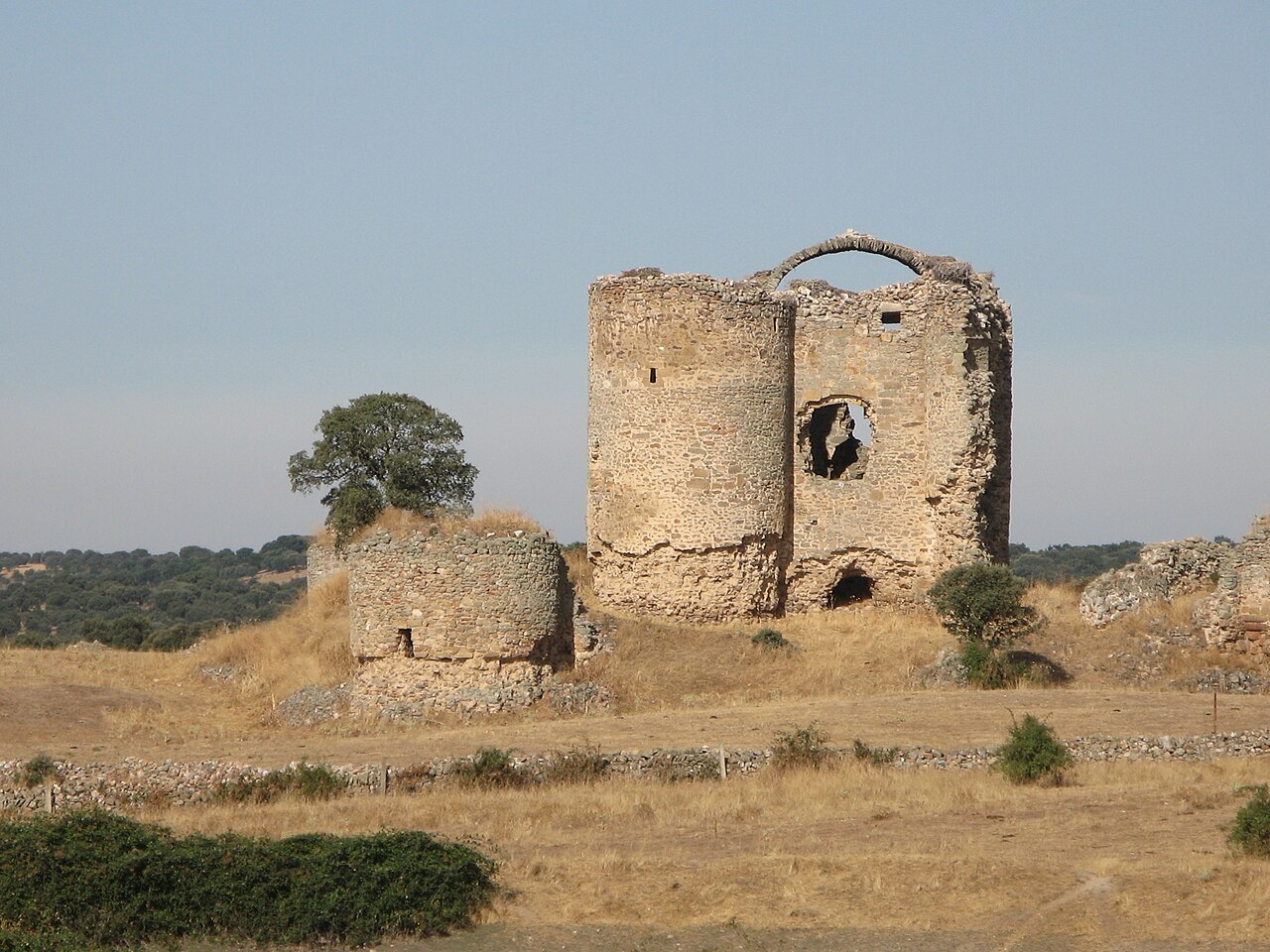
Lagunas Rubias Castle
Lagunas Rubias Castle, also known as El Palomar, is a medieval fortress located near the former village of Lagunas Rubias within the municipality of Aldeanueva de Figueroa, Spain. Constructed primarily during the 12th and 13th centuries, this castle was a critical component of the Kingdom of León's defensive network amid the turbulent period of dynastic struggles and territorial disputes in the Iberian Peninsula.
The castle's construction began in the mid-12th century as part of a strategic military initiative by León to fortify its borders against the expanding Kingdom of Castilla. This initiative was essential in the context of ongoing conflicts involving not only Castilla but also the Kingdom of Portugal and Muslim forces, particularly the Almohads. Lagunas Rubias Castle formed a vital link in an extensive system of fortifications stretching from the highlands near the Esla River in León to territories beyond the Central System mountains, including northern Cáceres.
Strategic role in medieval border defense
The castle's primary function was to serve as a frontline defense installation, protecting the Kingdom of León's territories from incursions and raids. Its location on a hill provided a commanding view of the surrounding landscape, allowing early detection of enemy movements. The castle was part of what historians now refer to as the Territorial System of Fortifications, a coordinated network of military structures built with shared architectural features and constructed within a defined timeframe to respond to the period's military needs.
Military and political context
During the 12th and 13th centuries, the Iberian Peninsula was marked by frequent conflicts between Christian kingdoms and Muslim states, as well as internal disputes among Christian rulers. The Kingdom of León and the Kingdom of Castilla were often at odds, with shifting alliances and battles shaping the region's political landscape. The presence of the Almohads, a powerful Muslim dynasty, added another layer of threat, necessitating robust fortifications like Lagunas Rubias.
Architectural characteristics and construction techniques
Lagunas Rubias Castle exhibits architectural traits typical of the Territorial System of Fortifications. Its layout is roughly oval or castral, designed to conform to the natural contours of the hill on which it stands. This shape was practical for defense, allowing defenders to cover all approaches effectively.
The castle's walls were primarily constructed using rammed earth, a method known locally as tapia, combined with lime and stone in a technique called calicanto. In some sections, framed masonry was also employed. These materials and methods balanced the need for durable fortifications with the availability of local resources and construction speed.
Although detailed architectural features such as gates, staircases, or decorative elements are not well documented, the surviving ruins indicate a focus on military functionality rather than residential comfort or ceremonial grandeur. The robust walls and strategic positioning highlight the castle's role as a defensive stronghold.
Structural remains and preservation
Today, the ruins of Lagunas Rubias Castle are located just west of the modern Lagunas Rubias estate. The remains, though fragmentary, allow for the identification of the original plan and construction style. The site preserves enough of the walls and layout to provide valuable insight into the military architecture of the León-Castilla conflicts during the medieval period.
After the union of León and Castilla under King Fernando III in 1230, many castles in this defensive network, including Lagunas Rubias, were intentionally abandoned or partially dismantled to prevent their use in future conflicts. Some fortifications experienced brief reuse during the early reigns of Fernando IV and Alfonso XI but eventually fell out of regular military service as political stability increased and frontiers shifted.
Historical significance and legacy
The castle stands as a testament to the complex political and military dynamics of medieval Spain. It reflects the Kingdom of León's efforts to secure its borders during a period marked by frequent warfare and shifting alliances. The construction and use of Lagunas Rubias Castle illustrate the broader strategy of territorial defense that shaped the region's medieval history.
Its ruins today provide historians and archaeologists with tangible evidence of the Territorial System of Fortifications and the architectural techniques employed in frontier castles of the 12th and 13th centuries. While no significant modifications beyond its brief 14th-century reuse have been recorded, the site remains an important cultural and historical landmark within the province of Salamanca.
Visiting and cultural context
Although the castle is in a state of ruin, its location offers visitors a glimpse into medieval military architecture and the historical landscape of the Kingdom of León. The site is accessible near the Lagunas Rubias estate, providing an opportunity for those interested in medieval history and castle architecture to explore the remains of this frontier fortress.
The castle's construction techniques, strategic placement, and historical context make it a valuable subject for study in understanding the military and political history of medieval Spain. It also contributes to the broader narrative of Christian-Muslim interactions and the territorial conflicts that shaped the Iberian Peninsula during the Middle Ages.
Frequently asked questions (FAQ)
- How do I get to Lagunas Rubias Castle?
- Lagunas Rubias Castle is located near the village of Aldeanueva de Figueroa in the Castile and León region of Spain. Visitors can reach the site by car or local transport, though the castle itself is in a rural area requiring some walking from the nearest roads.
- What is the historical significance of Lagunas Rubias Castle?
- Lagunas Rubias Castle was built in the 12th century by the Kingdom of León as part of a defensive network against the Kingdom of Castilla and other threats. It played a key role in border defense during medieval dynastic struggles.
- Can I visit the ruins of Lagunas Rubias Castle?
- Yes, the ruins of Lagunas Rubias Castle are accessible to the public. While the site is in ruins and lacks visitor facilities, it offers a valuable glimpse into medieval military architecture and the historical landscape of the Kingdom of León.
- When was Lagunas Rubias Castle built?
- Construction of Lagunas Rubias Castle began in the mid-12th century and continued into the 13th century, reflecting the evolving military needs of the Kingdom of León during that period.
- Why was Lagunas Rubias Castle abandoned?
- After the union of León and Castilla in 1230 under King Fernando III, many castles including Lagunas Rubias were deliberately abandoned or dismantled to prevent their use in future conflicts, as political stability reduced the need for frontier fortifications.
Information
Website
Visit websiteSources & official resources
Verify the information above using these authoritative references.
Loading map...
Visitor reviews
No reviews yet. Been here? Write the first review and help other travelers!
Write the first reviewVisited this castle? Share your experience
Your review helps other travelers and adds first-hand knowledge to our encyclopedia.