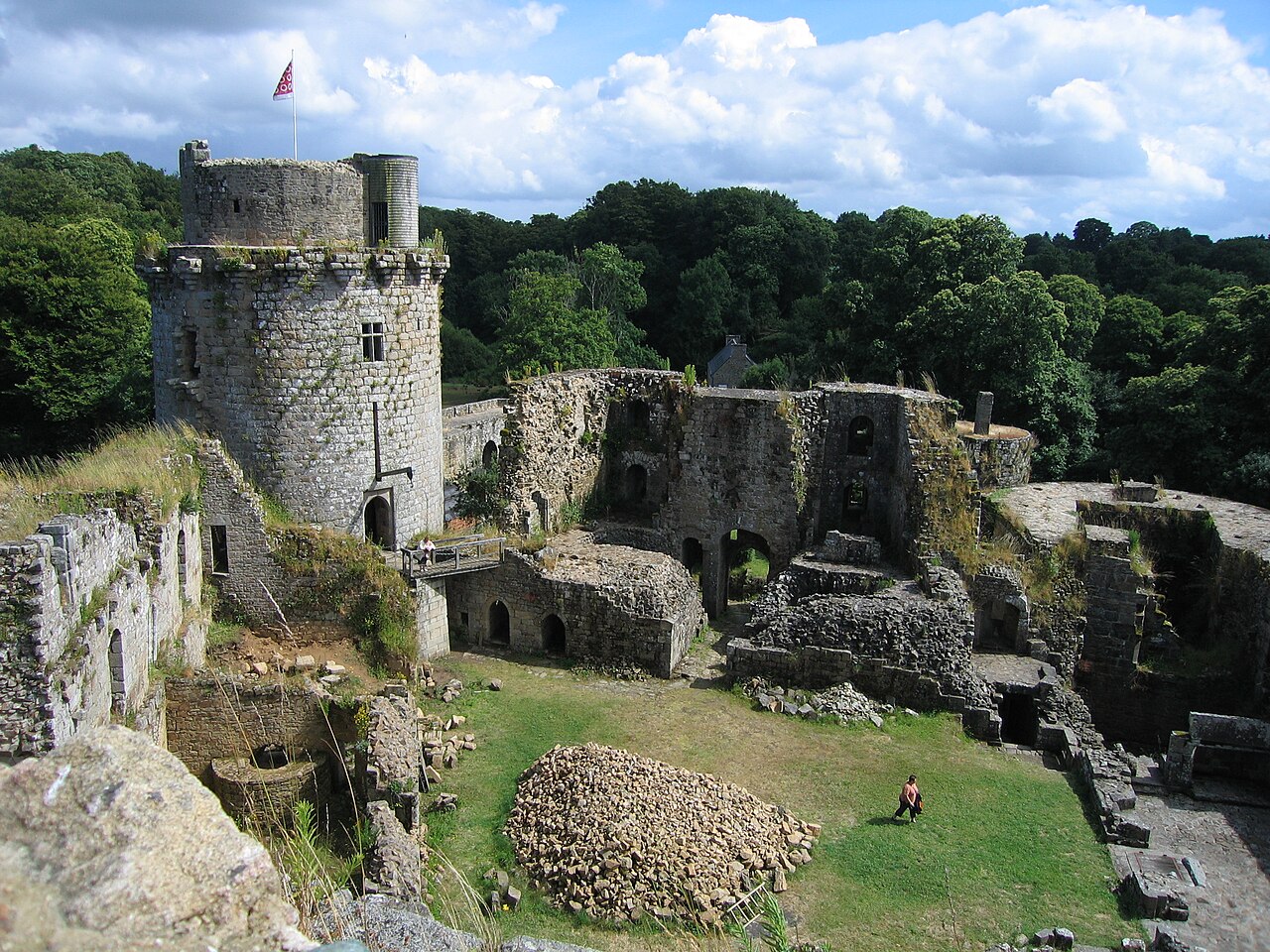
La Roche-Jagu Castle
La Roche-Jagu Castle, also known as Château de La Roche-Jagu, is a striking example of a fortified medieval residence perched on a steep promontory overlooking the estuary of the Trieux River in the Côtes-d'Armor department of Brittany, northwestern France. Its strategic location allowed control over maritime traffic and riverine commerce during the High Medieval and Late Medieval periods. The castle's origins trace back to a castral motte built in the 11th or 12th century, which was later replaced by the current structure in the 15th century.
The present château was constructed following a permission granted in 1405 by John V, Duke of Brittany, to Catherine de Troguindy, widow of Maurice du Parc, to rebuild the fortress after its destruction during the War of the Breton Succession. This reconstruction incorporated parts of the earlier medieval fortifications, resulting in a Gothic-style fortified house featuring defensive elements typical of the period, such as thick stone walls, few river-facing openings, and a chemin de ronde (defensive walkway) overlooking the river. The castle's imposing silhouette is accentuated by a remarkable row of 19 chimneys crowning the roofline, which adds a decorative flourish uncommon in military architecture.
Historical significance and ownership
Throughout its history, La Roche-Jagu Castle passed through the hands of several prominent families, including the Péan and d’Acigné families, who shaped its legacy during the late Middle Ages. The Péan family established their dominion here in the 15th century, with notable figures such as Roland Péan and his son Pierre Péan, who died in the Battle of Saint-Aubin-du-Cormier in 1488, a pivotal conflict in Brittany's resistance against French royal authority.
In the 18th century, ownership transferred to Armand de Vignerot du Plessis, Duke of Richelieu and Marshal of France, who sold the estate in 1773 to Madame Le Gonidec de Tressan. The castle remained in private hands until the 20th century, when it was acquired by the French State in 1958, following a bequest from the Alès family. Recognized for its cultural and historical value, La Roche-Jagu was classified as a historic monument in 1930, with further protections extended to its walls, gates, and pavilions in 1969.
Architectural features and layout
The château is characterized by its elongated single-wing structure, built primarily in the 15th century using traditional medieval masonry techniques. The river-facing façade is notably austere, with minimal openings to enhance defense, while the opposite side features a lighter, more elegant façade punctuated by numerous windows and an eccentric tower perched high above.
The ground floor houses a well-preserved medieval kitchen, indicative of the castle’s residential function. Above, the first floor contains a large great hall with a substantial fireplace dating from the early 1400s, adorned with intricately carved colonnettes on the jambs. Original stone mullioned windows remain visible, while the second floor is set back slightly and retains traces of a wooden gallery or corbelled walkway that once connected a series of enfilade rooms, illustrating the castle’s blend of defensive and domestic architecture.
The château is enclosed by a fortified wall with a gate and flanking pavilions, all constructed in matching stonework, reinforcing its defensive perimeter. The defensive chemin de ronde along the river side allowed occupants to monitor and protect river traffic effectively.
Gardens and landscape design
The castle grounds encompass between 30 and 64 hectares of parkland, featuring gardens that reflect medieval horticultural traditions. These include vegetable plots, medicinal herb gardens, and a bouquetier dedicated to flower cultivation. The historic oak tree, which stood for centuries before falling in 2009, once served as a focal point in the garden layout.
The gardens have been extensively restored after severe storm damage in 1987 and now feature a rich collection of over 350 camellia varieties, an oak grove, rose garden, and ornamental plants such as honeysuckle, jasmine, wisteria, and vines. Artistic elements enhance the landscape, including wrought iron sculptures by Marc Didou and the installation "Voyage Intérieur" by Béatrice Coron, which blend historical landscaping with contemporary art.
The gardens were awarded the prestigious Remarkable Garden status in 2005 and received the Écojardin label in 2017, recognizing their ecological management and commitment to biodiversity.
Modern use and cultural importance
Today, La Roche-Jagu Castle serves as a cultural venue managed by the Côtes d’Armor county council. Following major restoration efforts beginning in 1968, the château hosts exhibitions and events that celebrate the heritage and maritime history of the region. The grand hall on the ground floor, once the site of medieval functions, now displays exhibitions focusing on local treasures and the maritime riches of Brittany.
The castle is open to visitors for a fee, offering access to the ground floor, the gardens, and terraces that provide dramatic views over the wooded banks of the Trieux River. The site combines historical architecture, landscape beauty, and cultural programming, making it a significant destination for those interested in medieval history, architecture, and Breton heritage.
Frequently asked questions (FAQ)
- How do I get to La Roche-Jagu Castle?
- La Roche-Jagu Castle is conveniently located east of the D757 road in France. Visitors can reach the castle by car, and there is ample parking available on-site. Public transportation options may be limited, so checking local bus services is advisable.
- What are the opening hours of La Roche-Jagu Castle?
- La Roche-Jagu Castle typically opens to visitors from 10 AM to 6 PM during the peak season, with reduced hours in the off-peak months. It's recommended to check the castle's official website or contact them directly for the most current information regarding seasonal changes and special events.
- Can I take guided tours of La Roche-Jagu Castle?
- Yes, guided tours are available at La Roche-Jagu Castle, offering visitors in-depth insights into its rich history and architectural features. These tours are usually led by knowledgeable guides who can answer questions and share fascinating stories about the castle's past.
- When was La Roche-Jagu Castle built?
- La Roche-Jagu Castle was originally constructed in the 15th century, showcasing a blend of medieval and Renaissance architectural styles. Over the years, it has undergone various restorations, allowing visitors to appreciate its historical significance and beauty.
- Why is La Roche-Jagu Castle historically significant?
- La Roche-Jagu Castle is significant not only for its architectural beauty but also for its role in the region's history, serving as a prominent noble residence. The castle played a vital role in the local power dynamics and is a testament to the feudal system in Brittany.
- Is it possible to host events at La Roche-Jagu Castle?
- Yes, La Roche-Jagu Castle offers facilities for hosting various events, including weddings and private gatherings. Interested parties should contact the castle management to discuss availability, catering options, and other arrangements.
- What are the ticket prices for visiting La Roche-Jagu Castle?
- Ticket prices for La Roche-Jagu Castle vary depending on age and group size, with discounts often available for children, students, and seniors. It’s advisable to check the official website for current pricing and any special promotions or family packages.
- What is the best time to visit La Roche-Jagu Castle?
- The best time to visit La Roche-Jagu Castle is during the spring and early autumn when the weather is pleasant, and the gardens are in full bloom. Additionally, visiting during weekdays can help avoid larger crowds, providing a more enjoyable experience.
- Are there any nearby attractions to La Roche-Jagu Castle?
- Yes, nearby attractions include the beautiful gardens of the castle, as well as other historical sites and natural parks in the region. Visitors can explore the scenic surroundings, making it an ideal destination for a day trip filled with culture and nature.
Information
Website
Visit websiteSources & official resources
Verify the information above using these authoritative references.
Loading map...
Visitor reviews
No reviews yet. Been here? Write the first review and help other travelers!
Write the first reviewVisited this castle? Share your experience
Your review helps other travelers and adds first-hand knowledge to our encyclopedia.