Książ Castle
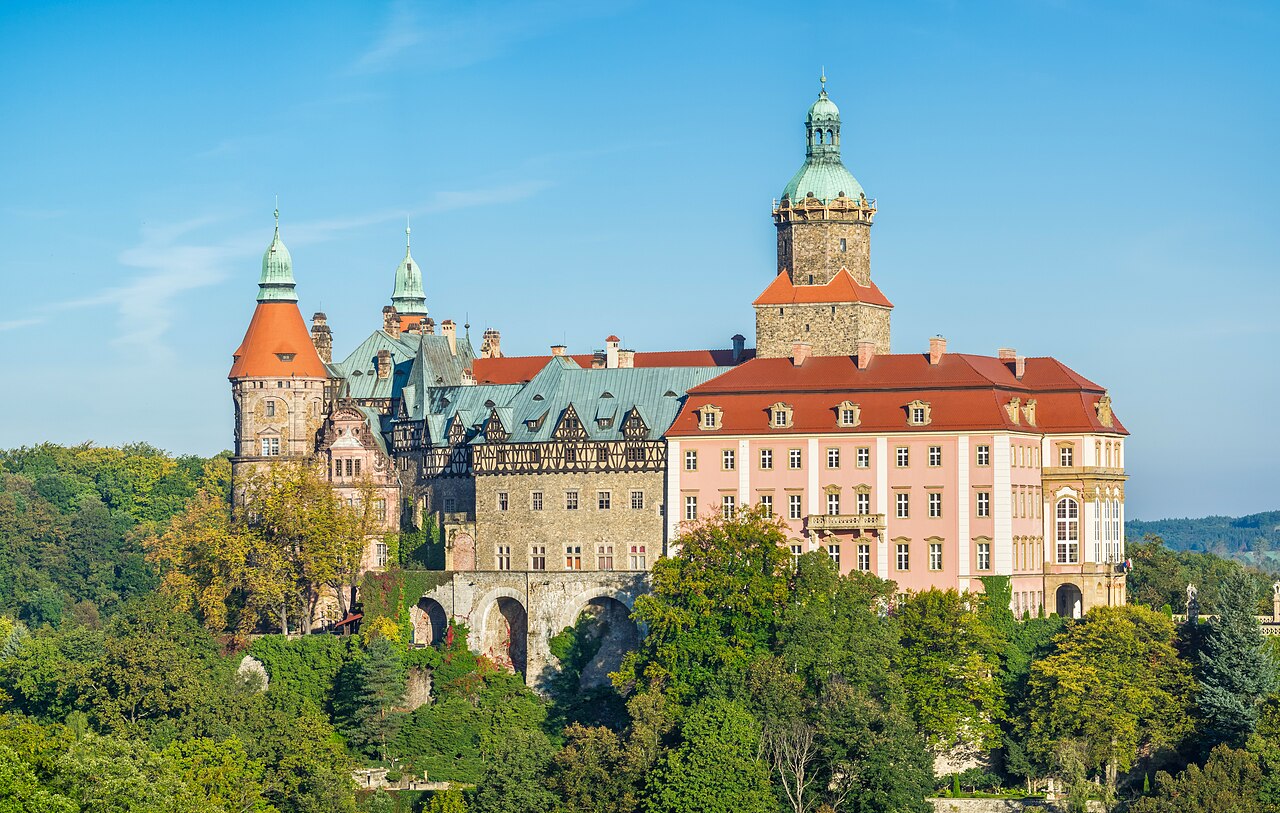
Książ Castle, situated in Wałbrzych, Poland, is a monumental hilltop fortress with a rich history spanning over seven centuries. Known as the "Pearl of Lower Silesia," this castle stands on a rocky cliff 395 meters above sea level, commanding views over the Pełcznica River valley and surrounded by dense forests within a protected nature reserve. Its strategic location and impressive scale have made it a significant cultural and architectural landmark in the region.
The castle's origins date back to the High Medieval period, specifically between 1288 and 1292, when Duke Bolko I of Świdnica ordered the construction of a stone fortress to replace an earlier wooden stronghold destroyed in 1263 by the forces of King Ottokar II of Bohemia. This medieval fortress was a crucial military bastion, often described as the "key to Silesia," guarding the duchy's borders and serving as a defensive stronghold throughout the Middle Ages.
Historical significance and ownership lineage
After the death of Duke Bolko II in 1368 without an heir, Książ Castle was incorporated into the holdings of the Bohemian crown. It was granted as a life estate to Queen Agnes of Habsburg until 1392, after which it was administered by various Bohemian starosts. The castle experienced turbulent times during the 15th century, including occupation by Hussite forces and damage during regional conflicts. Ownership passed through several noble families, such as Janko from Chociemice and Hans von Schellendorf, reflecting the shifting political landscape of Silesia.
In 1509, the castle came under the possession of the Hochberg family, who retained ownership until the 20th century. The Hochbergs played a pivotal role in transforming the fortress into a stately residence. They commissioned extensive Renaissance renovations between 1548 and 1555, followed by Baroque redesigns from 1705 to 1732. Despite suffering damage during the Thirty Years' War, the castle was adapted into a landscaped estate featuring French-style garden terraces by the mid-17th century.
Architectural evolution and distinctive features
Medieval core and fortifications
The castle's medieval core, known as the "upper castle," centers around a quadrangular main tower originally about 30 meters tall. This tower was heightened to 47 meters in the early 20th century and crowned with a distinctive dome and lantern. Surrounding the tower is a defensive curtain wall enclosing a lens-shaped courtyard with a three-story bent rectangular building supported by massive buttresses, likely serving representational functions.
One notable architectural element is the bottle-shaped chimney of the kitchen building, an unusual feature dating back to the medieval period. The castle's fortifications include battlemented walls and cylindrical bastions, some dating from the 16th century and others added in later centuries, reflecting continuous adaptation to evolving military technologies.
Renaissance and baroque transformations
The Renaissance remodeling introduced new wings and residential quarters, enhancing the castle's comfort and aesthetic appeal. The Baroque renovations in the early 18th century added richly decorated façades and elaborate interior embellishments, exemplified in the castle's numerous salons and halls.
The outer bailey, or "przedzamcze," features an oval layout with a gate courtyard protected by a rock-cut moat. The lower castle area is fortified with battlemented walls and cylindrical bastions constructed and modified between the 16th and 20th centuries, demonstrating the castle's layered defensive architecture.
20th-century expansions and gardens
Between 1908 and 1923, Jan Henryk XV Hochberg oversaw significant expansions, including the addition of Neorenaissance wings and the elevation of the main tower. The castle gardens were redesigned into a series of terraced landscapes named the Water, Flora, Chestnut, Middle, Rose, and Horseshoe terraces. These terraces incorporate fountains, sculptures, and winding pathways, blending natural beauty with architectural artistry.
Wartime history and the underground complex
During World War II, the Nazi regime confiscated Książ Castle due to the Hochberg family's political affiliations and citizenship changes. The castle became part of the secretive Project Riese, a vast underground construction project involving forced labor, primarily of Jewish prisoners from Hungary and Poland.
Underneath the castle, approximately two kilometers of tunnels were excavated, featuring 12-meter-high ceilings and a deep 40-meter elevator shaft located near the main entrance. These subterranean chambers were intended for military purposes, possibly including weapons production or command centers, though their exact function remains partly speculative. The underground complex remains one of the castle's most intriguing and historically significant features.
Following the war, Soviet occupation led to extensive plundering and damage to the castle's interiors and collections. Restoration efforts began in 1956 and continued through the 1970s, with ongoing conservation work preserving the castle's structure, historic rooms, and gardens. A roof fire in 2014 prompted further restoration to protect the castle's heritage.
Interior highlights and cultural heritage
Książ Castle contains over 400 rooms, including notable spaces such as the Maximilian Hall with original Baroque decorations, the Hunting Hall, the White Salon in Rococo style, the Game Salon, the Chinese Salon, and the Baroque Green Salon. While wartime damage and postwar plundering affected many interiors, several rooms have been carefully restored to showcase their historical grandeur, while others remain preserved as ruins or whitewashed spaces for educational purposes.
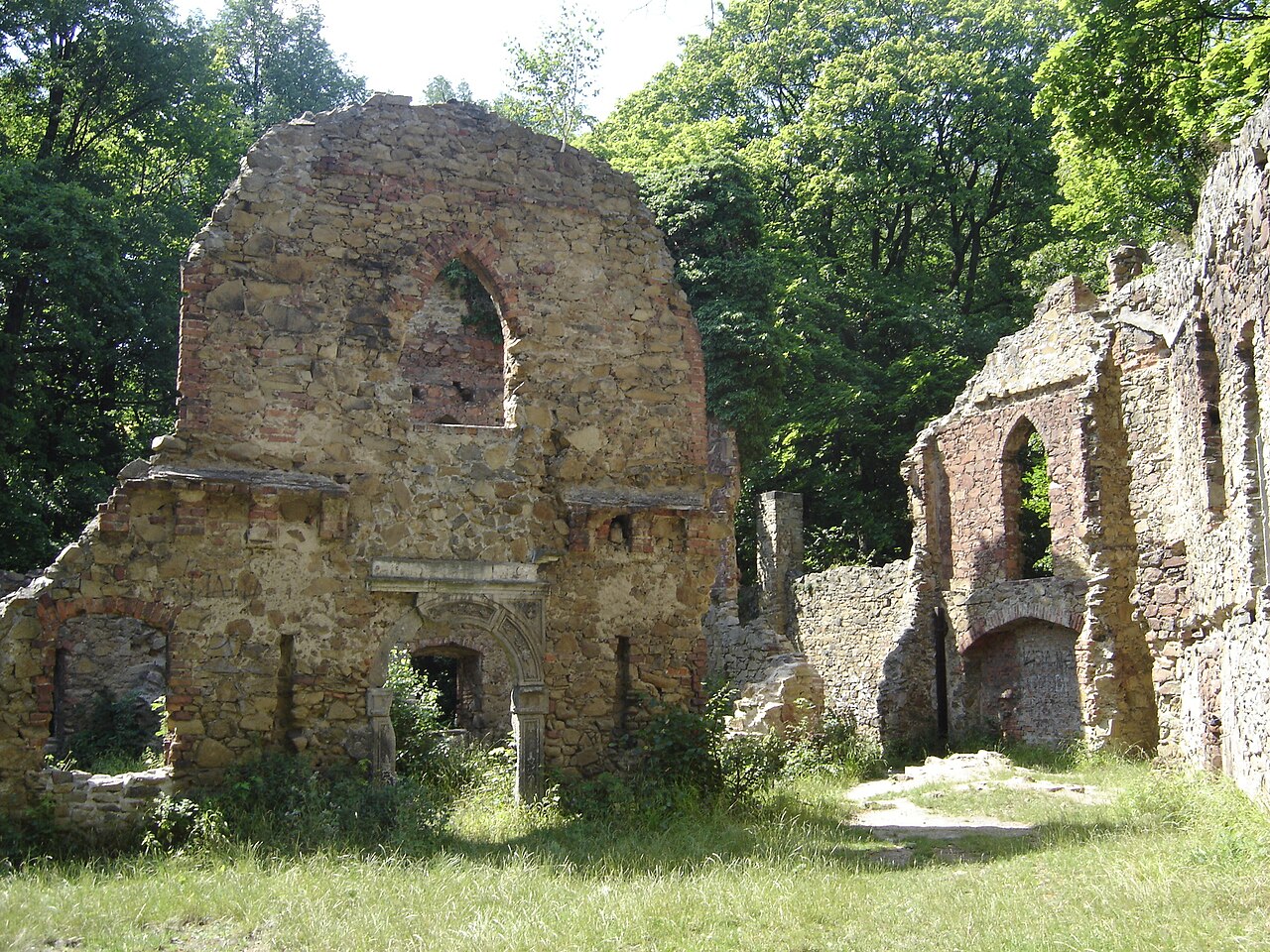
The castle estate also includes a romantic-style ruin of the Old Książ Castle dating from 1794, a 19th-century pavilion mausoleum, and various auxiliary buildings such as stables, a riding hall, carriage house, smithy, and a forester's lodge. These elements contribute to the castle's cultural heritage status and illustrate the complex historical narrative embedded in its architecture and grounds.
Visiting książ castle today
Today, Książ Castle is one of Poland's premier tourist destinations, attracting visitors interested in its architectural grandeur, layered history, and mysterious underground tunnels. Guided tours offer access to the castle's historic rooms, extensive gardens, and the underground complex, providing insight into its medieval origins, Renaissance and Baroque transformations, and wartime significance.
The castle grounds with their terraced gardens provide scenic walking paths and photographic opportunities. Visitors can explore the castle's connection to the Hochberg family and learn about the darker chapters of World War II. The castle's preservation as a cultural monument ensures that its architectural and historical legacy remains accessible for future generations.
Frequently asked questions (FAQ)
- What is the historical significance of Książ Castle?
- Książ Castle, built in the 13th century, is one of the largest castles in Poland and showcases the rich history of the region. It has served various roles throughout the centuries, including as a residence for the noble Hochberg family and a military headquarters during World War II. Today, it stands as a symbol of cultural heritage and attracts visitors interested in its storied past.
- When was Książ Castle constructed?
- The construction of Książ Castle began in 1288 and has undergone numerous renovations and expansions over the centuries. Its architectural styles reflect various periods, including Gothic, Renaissance, and Baroque, making it a fascinating site for architecture enthusiasts. The castle’s long history adds to its allure and significance in Polish heritage.
- What are the opening hours for Książ Castle?
- Książ Castle is open to visitors year-round, with varying hours depending on the season. Typically, the castle opens at 9 AM and closes at 5 PM, but it is advisable to check the official website for any seasonal changes or special events. Planning your visit during weekdays may help avoid larger crowds.
- Can I purchase tickets online for Książ Castle?
- Yes, tickets for Książ Castle can be purchased online through the official website. This option is convenient and allows you to secure your visit without waiting in line. Discounts are often available for students, seniors, and families, so be sure to check for any promotional offers.
- Is it possible to access Książ Castle with a wheelchair?
- Książ Castle is committed to making the site accessible to all visitors, including those with mobility challenges. While some areas may have limitations due to the castle's historic architecture, there are accessible routes and services available to help ensure a comfortable visit. It's recommended to contact the castle staff in advance for specific accessibility inquiries.
- What is the best time to visit Książ Castle?
- The best time to visit Książ Castle is during the spring and early fall when the weather is mild and the gardens are in full bloom. These seasons also offer fewer tourists compared to the summer months, allowing for a more enjoyable experience. Special events and exhibitions often occur during this time, enhancing your visit.
- Are there any nearby attractions to Książ Castle?
- Yes, the area surrounding Książ Castle is rich with attractions, including the picturesque Książ Landscape Park, which offers beautiful hiking trails and serene nature views. Additionally, nearby towns like Wałbrzych provide opportunities to explore local culture and history. Don't miss the chance to visit the Palm House in the nearby city for a unique botanical experience.
- What are the ticket prices for visiting Książ Castle?
- Ticket prices for Książ Castle vary depending on the type of tour and age of the visitor, with discounts typically available for students and children. As of now, standard adult tickets are priced reasonably to encourage tourism, while family tickets offer additional savings. Always check the official website for the most current pricing and any special deals.
Information
Sources & official resources
Verify the information above using these authoritative references.
Loading map...
Visitor reviews
No reviews yet. Been here? Write the first review and help other travelers!
Write the first reviewVisited this castle? Share your experience
Your review helps other travelers and adds first-hand knowledge to our encyclopedia.