Krumau Castle

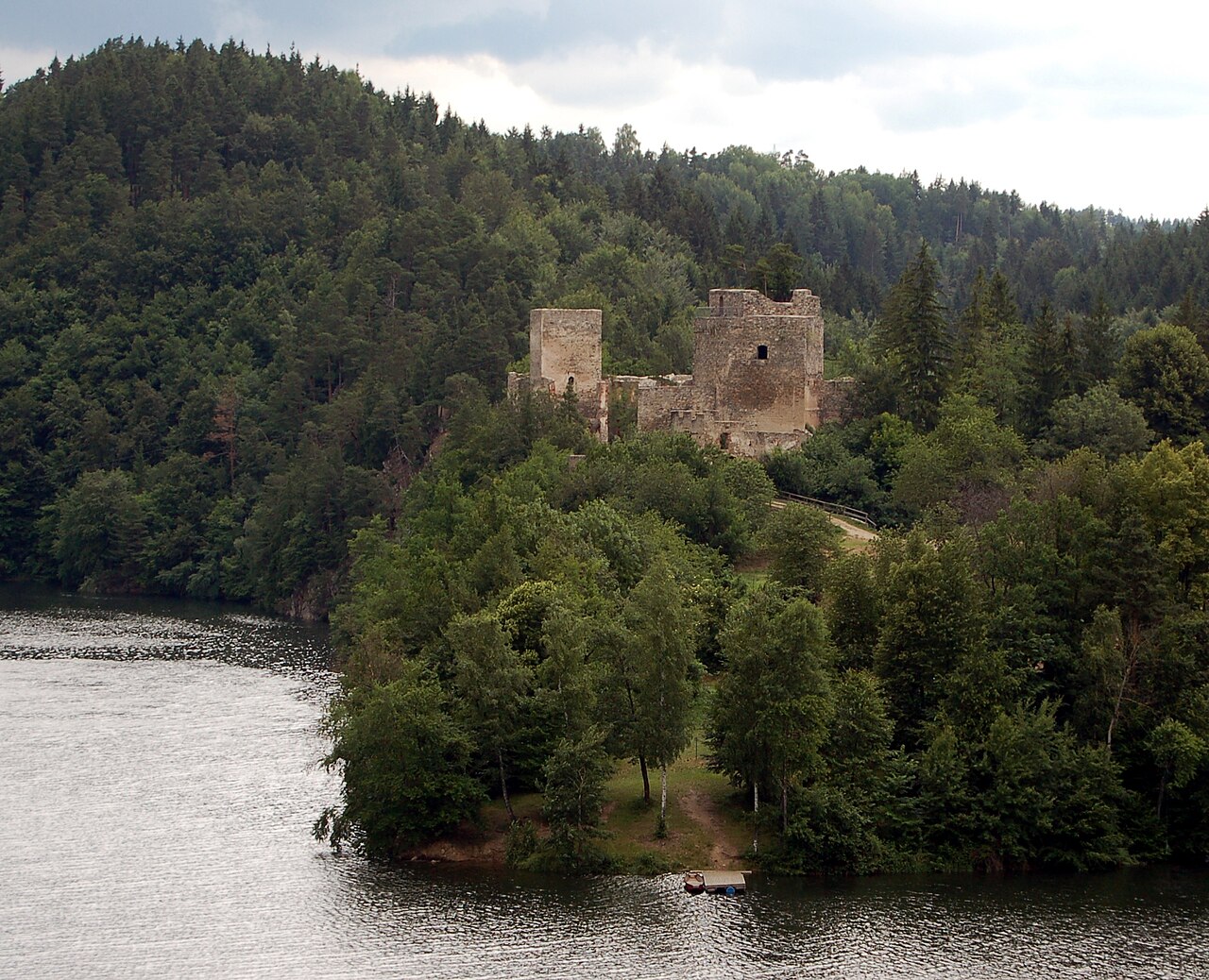
Krumau castle in krumau am kamp, austria
Krumau am Kamp, Austria
Renaissance (15th–17th c.)
Partially Restored

Krumau Castle, locally known as Burg Krumau, is a historic fortress situated in the picturesque village of Krumau am Kamp, in the province of Lower Austria, Austria. Perched on a prominent rock beside the river Kamp, the castle commands a strategic and scenic position near the village center. Its origins date back to the 12th century, with the first documented mention in 1172, marking it as a significant medieval stronghold in the region.

Medieval origins and royal connections

The castle's early history is closely tied to notable figures of Central European medieval nobility. In the mid-13th century, Krumau Castle gained prominence as the summer residence of Queen Margarethe of Austria. She was exiled to the castle in 1261 following her banishment by her husband, King Přemysl Ottokar II of Bohemia, a key ruler during the period. Queen Margarethe spent her final years at the castle, passing away there in 1267. This royal association underscores the castle's importance as both a defensive structure and a noble residence during the High Middle Ages.

Sieges and reconstruction in the early modern period

Throughout its history, Krumau Castle endured multiple military conflicts, reflecting the turbulent political landscape of the region. The castle suffered significant damage during a notable siege in 1619, a period marked by the early conflicts of the Thirty Years' War. This damage necessitated extensive rebuilding efforts, which were undertaken in 1667-1668. The reconstruction during this period imbued the castle with architectural features characteristic of the Renaissance style, blending medieval fortifications with early modern design elements.

Architectural features and layout

The castle's position on a rocky outcrop provided natural defensive advantages, complemented by man-made fortifications. Its layout includes remnants of medieval walls, towers, and a gatehouse, though much of the original structure was altered or rebuilt during the 17th century restoration. The Renaissance rebuilding introduced more refined stonework and possibly ornamental elements, reflecting the transition from purely military fortress to a noble residence with aesthetic considerations.

Decline and partial restoration in the modern era

From the 18th century onward, Krumau Castle experienced a period of decline, falling into ruin as its strategic and residential importance waned. The castle remained largely neglected until the mid-20th century, when restoration efforts began. Starting in 1959, partial rebuilding and conservation work were undertaken to stabilize and preserve the remaining structures.

Current status and public access

Today, Krumau Castle is privately owned and partially inhabited. While much of the castle remains closed to the public, visitors can access one of its towers during the summer months, offering a glimpse into its historical architecture and commanding views of the surrounding landscape. The castle's blend of medieval origins and Renaissance reconstruction, along with its scenic location by the river Kamp, make it a noteworthy site in Lower Austria's cultural heritage.

Historical significance in lower austria

Krumau Castle stands as a testament to the region's layered history, from its medieval roots through Renaissance transformations and modern preservation. Its association with royal figures and its endurance through sieges and decline reflect broader historical narratives of power, conflict, and architectural evolution in Central Europe. The castle's location in Krumau am Kamp situates it within a landscape rich in cultural and natural beauty, enhancing its value as a heritage landmark.

Frequently asked questions (FAQ)

What are the opening hours of Krumau Castle?
Krumau Castle is typically open to visitors from 10 AM to 5 PM, but hours may vary depending on the season and special events. It's advisable to check the official website or contact the castle directly before your visit to confirm current hours.
Can I take guided tours of Krumau Castle?
Yes, guided tours are available at Krumau Castle, providing visitors with in-depth insights into its history and architecture. These tours often include access to areas not open to the general public and are a fantastic way to enhance your experience.
What is the historical significance of Krumau Castle?
Krumau Castle dates back to the 12th century and has played a crucial role in the region's history, serving as a stronghold and residence for various noble families. Its rich history is reflected in its architecture and the numerous artifacts displayed within.
Is Krumau Castle accessible for visitors with disabilities?
Krumau Castle strives to be accessible to all visitors, with various pathways and facilities designed to accommodate those with mobility challenges. However, some areas may still pose challenges due to the castle's historical structure, so it’s recommended to inquire in advance.
When is the best time to visit Krumau Castle?
The best time to visit Krumau Castle is during the late spring and early autumn months when the weather is mild and the surrounding landscapes are particularly beautiful. Additionally, visiting during weekdays can help you avoid larger crowds.
Can I buy tickets online for Krumau Castle?
Yes, tickets for Krumau Castle can be purchased online through the official website, which allows you to secure your entry in advance. This is especially recommended during peak tourist seasons to ensure availability.
What nearby attractions can I explore after visiting Krumau Castle?
After visiting Krumau Castle, consider exploring the charming town of Krumau am Kamp, known for its picturesque streets and local shops. Additionally, the scenic Kamp Valley and nearby hiking trails offer beautiful natural landscapes to enjoy.
How do I get to Krumau Castle from Vienna?
Krumau Castle is approximately 100 kilometers from Vienna and can be reached by car in about an hour and a half. Alternatively, public transportation options, including trains and buses, are available, providing a convenient way to reach the castle.

Information

Hill Castle

Loading map...

Visitor reviews

No reviews yet. Been here? Write the first review and help other travelers!

Write the first review

Visited this castle? Share your experience

Your review helps other travelers and adds first-hand knowledge to our encyclopedia.
Write a review

(5/5)

0/2000 characters

Your review will be visible after admin approval

Nearby castles

4 km
Dobra Castle — Austria castle

Dobra Castle

Reichhalms, Austria

Dobra Castle, locally known as Burg Dobra, is a significant historical site located south of the village of Reichhalms and east of Zwettl city in the province of Lower Austria. This castle, now in ruins, offers a glimpse into the region's medieval and Renaissance past, standing on a ridge overlooking the Kamp river valley. The site is notable for its strategic position and its role in regional conflicts during the Middle Ages and early modern period. Early history and ownership The origins of Dobra Castle date back to the 12th century, with the earliest documented mention occurring in 1186. The name "Dobra" is derived from a Slavic word meaning "forest," reflecting the castle's setting amid wooded landscapes. The castle first appears in records in 1278 when it was granted to Otto von Dürnstein. Over the following centuries, ownership changed hands multiple times, illustrating the castle's importance in local noble families' power dynamics. In 1329, Arnold von Dobra sold the castle to his uncle, Simon von Sitzendorf, and by 1342 it was inherited by Johann II von Kuenring. The castle later passed to the influential Liechtenstein family in 1408, who maintained control during a turbulent period marked by military conflicts and sieges. Sieges and military significance Dobra Castle endured several sieges, reflecting its strategic importance. In 1448, the castle was besieged during regional conflicts, highlighting its role as a defensive stronghold. Later, in 1645, it faced another siege by Swedish troops amid the broader context of the Thirty Years' War, a devastating conflict that affected much of Central Europe. These military events underscore the castle's function not only as a noble residence but also as a fortress designed to withstand attacks. Its location on a ridge provided natural defensive advantages, enhanced by its rectangular layout and fortified towers. Architectural features and layout The castle's design reflects typical Renaissance military architecture adapted to the local terrain. It has a rectangular layout with fortified gates at each end, providing controlled access points. Several large towers remain standing, offering insight into the castle's defensive capabilities and the living quarters within. Visitors can explore the surviving cellars and parts of the walls, which convey the scale and complexity of the original structure. The castle was built with durable stone materials, some of which were later repurposed by local residents for building houses and enlarging nearby churches, contributing to the ruinous state observed today. Today, the castle ruins lie adjacent to an artificial lake formed by a dam downstream on the Kamp river, adding a scenic element to the historic site. Later history and decline In 1639, the castle was purchased by Jakob von Kuefstein, marking another chapter in its ownership history. By the early 18th century, the castle belonged to the Von Ehrmanns family. After constructing a new manor in Wetzlas, the family abandoned Dobra Castle in 1725, leading to its gradual decay. Following abandonment, the castle fell into ruin and was used as a quarry by locals, which accelerated the loss of original structures. Despite this, the ruins remain an important cultural and historical landmark in the region. Current use and visitor information Presently, Dobra Castle serves a unique role as a youth camping site during the summer months, known as Camping Ruine Dobra. This use helps maintain the site’s accessibility and engagement with the community. In winter, the castle ruins are freely accessible to visitors, offering an open-air historical experience. The castle sits at an elevation of approximately 475 metres (1,558 feet) above sea level, providing panoramic views of the surrounding landscape. Its partially preserved ruins attract visitors interested in medieval and Renaissance architecture, as well as those drawn to the natural beauty of Lower Austria. Cultural and historical significance Dobra Castle stands as a testament to the region’s feudal history and architectural evolution from the medieval period into the Renaissance. Its multiple sieges reflect the turbulent history of Central Europe, especially during the 15th and 17th centuries. The castle’s ruins offer valuable insights into defensive architecture and noble life over several centuries. As an archaeological site, it contributes to the understanding of castle construction techniques, regional power struggles, and the transformation of noble estates over time. The adaptive reuse of its stones in local buildings also illustrates historical practices of resource utilization in rural Austria.

Renaissance (15th–17th c.)
Details
6.6 km

Schauenstein Castle

Krug, Austria

Schauenstein Castle, locally known as Burg Schauenstein, is a notable late medieval fortress situated south of the village of Krug, east of Zwettl in Austria. The castle occupies a strategic position on one side of the valley of the river Kamp, opposite the now-ruined Runderburg Castle, together guarding the important medieval route from Gars am Kamp to Pölla. This location highlights its historical role in controlling and monitoring valley traffic and trade. Early history and ownership The earliest recorded individual linked to the site is Poppo von Schauenstein, mentioned in 1175, suggesting the presence of a fortification or noble residence at that time. The castle itself was likely constructed in the 13th century, a period marked by the expansion of fortified structures in the region. By 1275, ownership had passed to Hadmar II von Sonnberg, a noble connected to the influential Kuenringer family, indicating the castle's integration into regional power networks. Medieval conflicts and reconstructions In 1411, Matthias von Rohr was granted a lease on two parts of the castle by Duke Albrecht IV, reflecting the feudal arrangements that shaped castle ownership and governance. The castle changed hands in 1430 when it was sold by the Lords von Rohr to Leopold von Krayg. Later, in 1467, it came under the control of Ulrich von Grafenegg, who pledged allegiance to the Hungarian king Matthias Corvinus. This political alignment led to military action, with the castle being besieged and captured by imperial forces loyal to Holy Roman Emperor Frederick III of Habsburg. Following this siege, the castle underwent significant rebuilding in 1477, which is the date commonly associated with its current structural remains. 16th-century modifications During the 16th century, Schauenstein Castle experienced further renovations and rebuilding efforts. These upgrades likely reflected advancements in military architecture and the need to adapt to evolving siege technologies, as well as the castle's continued strategic importance in the region. Decline and ruin By 1622, the castle was owned by Jakob Kuefstein, who appears to have neglected maintenance. This neglect contributed to the castle's deterioration. In 1645, during the turmoil of the Thirty Years' War, the castle was attacked and destroyed by Swedish troops. Unlike previous rebuilds, Schauenstein Castle was not restored after this destruction and subsequently fell into ruin. Architectural features and current state Today, Schauenstein Castle stands as a well-preserved ruin set within a large forested area, offering visitors scenic views over the surrounding valley. The most prominent feature is the 6-storey-high keep, which remains structurally sound enough to be climbed. Access to the keep requires obtaining a key from the village of Krug, with no charge imposed provided the key is returned. The castle's ruins include remnants of defensive walls and other structural elements typical of late medieval fortifications. The site is freely accessible, making it a popular destination for hikers and history enthusiasts alike. Strategic location and defensive role The castle's placement on the valley side opposite Runderburg was a deliberate defensive strategy, controlling movement along the Kamp valley. This positioning allowed for crossfire and mutual defense between the two castles, enhancing security over the medieval road network. The castle's fortifications would have included thick stone walls, battlements, and a gatehouse designed to withstand sieges common in the late medieval period. Cultural significance and preservation Schauenstein Castle is an important cultural landmark within the Lower Austria region. Its ruins provide valuable insights into the architectural styles and feudal history of the area. Preservation efforts focus on maintaining the structural integrity of the keep and ensuring safe access for visitors. The castle's accessibility and scenic location contribute to its appeal as a heritage tourism site. Visitor information The castle is open to the public without an entrance fee. Visitors interested in climbing the keep must secure a key from the nearby village of Krug. The site is best visited during daylight hours to fully appreciate the views and safely explore the ruins. The surrounding forest offers additional opportunities for hiking and nature walks, complementing the historical experience.

Late Medieval (14th–15th c.)
Details
8.2 km

Ottenstein Castle

Rastenfeld, Austria

Ottenstein Castle in Rastenfeld, Austria, is a remarkable example of high medieval fortification architecture dating back to the 12th century. Its distinctive shingle-covered cone and hipped roofs create an imposing silhouette in the landscape, representing a blend of defensive and residential design typical of the period. The castle’s location and structure reflect its strategic importance during the Middle Ages, serving both as a noble residence and a stronghold. Architectural features and layout The castle is notable for its Romanesque chapel, which contains vaulted ceilings richly decorated with monumental frescos dating to around 1170. These frescos are among the most significant artistic elements preserved within the castle, offering insight into the religious and cultural life of the era. The chapel's architecture and decoration are exemplary of Romanesque style, characterized by robust masonry, rounded arches, and symbolic imagery. Ottenstein Castle’s complex includes several key defensive and residential structures. The cone-shaped roofs atop the towers and the hipped roofs over the main buildings provide effective weather protection and contribute to the castle's distinctive profile. The castle’s walls and battlements were designed to withstand sieges, incorporating thick stone construction and narrow windows for archers. Historical ownership and significance The earliest recorded mention of a member of the Ottenstein family dates to 1177, though the castle itself likely predates this reference. The family maintained ownership until the 15th century, establishing the castle as a hereditary seat of local power. In 1516, ownership passed to Paul Stodoligk, whose son Eustach undertook significant expansions and renovations, adapting the castle to evolving defensive needs and residential comforts. Throughout its history, Ottenstein Castle played a role in regional conflicts. During the Thirty Years' War, it endured two sieges in 1622 and 1640. Both attempts to capture the fortress failed, underscoring the effectiveness of its fortifications and the resilience of its defenders. Modern use and cultural importance Today, Ottenstein Castle serves as a cultural venue hosting antique fairs, art exhibitions, and special events. Its historical ambiance provides a unique setting for these activities, attracting visitors interested in both its architecture and its role in Austrian history. The castle also houses a restaurant, enhancing its appeal as a tourist destination. The preservation of the castle’s Romanesque chapel and its frescos remains a priority, as they represent a rare surviving example of 12th-century ecclesiastical art in the region. The castle’s continued use for cultural events helps maintain its relevance and ensures ongoing conservation efforts. Architectural style and condition Ottenstein Castle exemplifies Romanesque architectural style with some later additions reflecting the evolving needs of its occupants. Its well-preserved condition allows visitors to experience the medieval atmosphere authentically. The castle’s robust construction and thoughtful design have contributed to its survival through centuries of conflict and change.

High Medieval (11th–13th c.)
Details

