Krujë Castle — Albania castle

Krujë Castle

Krujë Castle: fortress of Albanian resistance and Skanderbeg's legacy
Krujë, Albania
Early Medieval (5th–10th c.)
Ruins

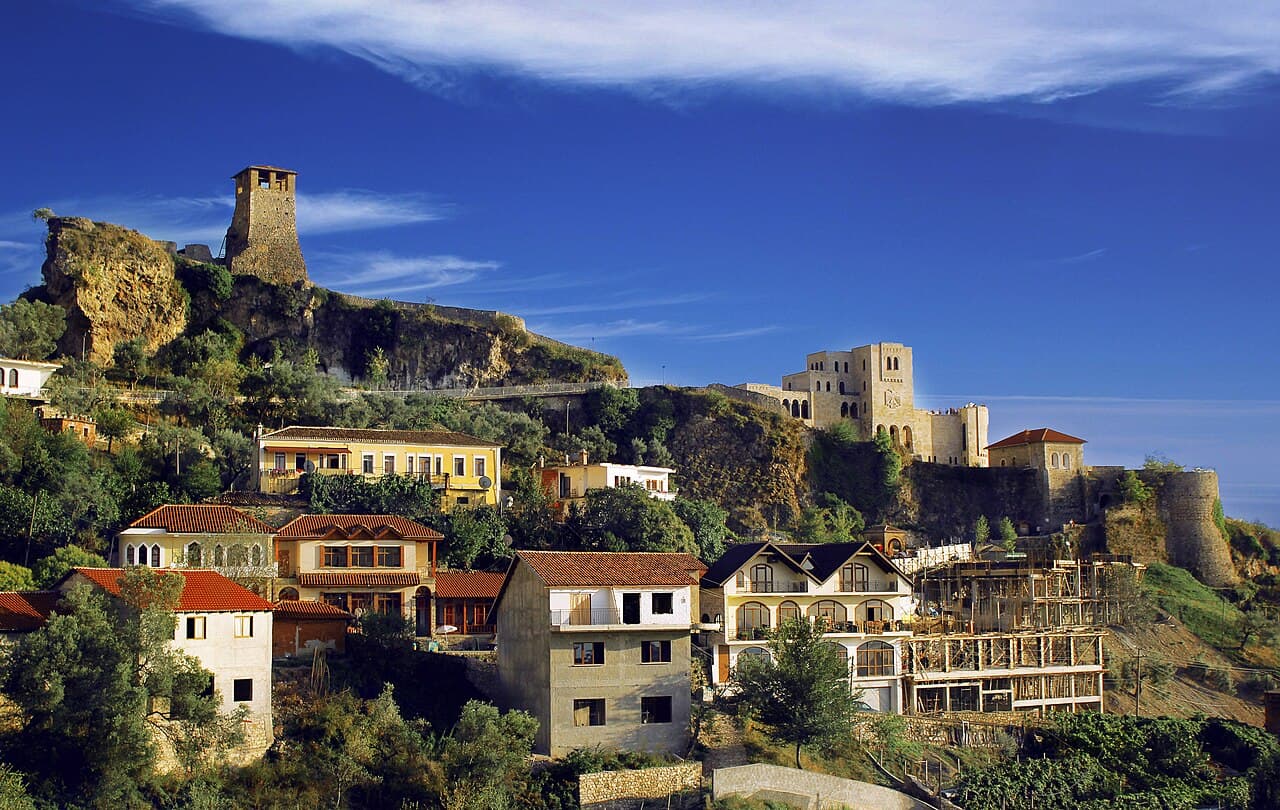
Krujë Castle, locally known as Kalaja e Krujës, is a historic fortress perched on a sloping plateau at an elevation of approximately 600 meters on the slopes of Mount Krujë, overlooking the town of Krujë in Albania. This castle is an iconic symbol of Albanian resistance, most famously associated with Gjergj Kastrioti Skanderbeg, the national hero who led the defense against the Ottoman Empire in the 15th century. The castle's strategic location provided commanding views over the surrounding landscape, making it a formidable defensive site throughout its history.

Constructed during the Early Medieval period, likely in the 5th or 6th century, Krujë Castle was originally built by the Byzantine Empire to serve as a military stronghold in the region. Its elliptical layout and robust fortifications were designed to withstand invasions and sieges, a purpose it fulfilled repeatedly during the turbulent centuries that followed. The castle's walls, towers, and gates were constructed to maximize defensive capabilities, with thick stone walls and strategically placed watchtowers.

Historical significance and skanderbeg's leadership

Krujë Castle holds a central place in Albanian history due to its role during the 15th century, a period marked by intense conflict between Albanian forces and the expanding Ottoman Empire. In 1395, the castle was incorporated into the Ottoman Empire, but it remained a stronghold of resistance for decades. In 1407, the castle was briefly captured by Niketa Thopia, an Albanian noble, before the Ottomans reclaimed it in 1415.

During the Albanian Revolt of 1432-1436, Krujë was unsuccessfully besieged by Andrea Thopia, highlighting the castle's strategic importance and resilience. However, it was under the leadership of Skanderbeg that Krujë Castle became legendary. Skanderbeg, initially an Ottoman vassal and governor of Krujë in 1437-38, defected in 1443 and took control of the fortress. He raised the first Albanian flag at Krujë and united Albanian principalities through the League of Lëzhë in 1444, marking the castle as the epicenter of Albanian resistance.

The sieges of krujë

Krujë Castle endured four major Ottoman sieges during Skanderbeg's rebellion and shortly thereafter. The First Siege of Krujë in 1450 saw the Ottomans, led by Sultan Murad II, attempt to capture the fortress but fail due to the determined defense by Skanderbeg's forces. The Second Siege (1466-67) was similarly unsuccessful, with Venetian allies aiding the Albanian defenders. The Third Siege in 1467 also ended in Ottoman defeat, further cementing Krujë's reputation as an impregnable fortress.

After Skanderbeg's death in 1468, the Ottomans launched the Fourth Siege of Krujë in 1478. This prolonged siege lasted about a year, and despite the defenders' valiant efforts, the castle finally fell. The aftermath was brutal: the Ottomans executed the male defenders and enslaved the women, marking the end of Krujë Castle's role as a bastion of Albanian independence during that era.

Architectural features and surviving structures

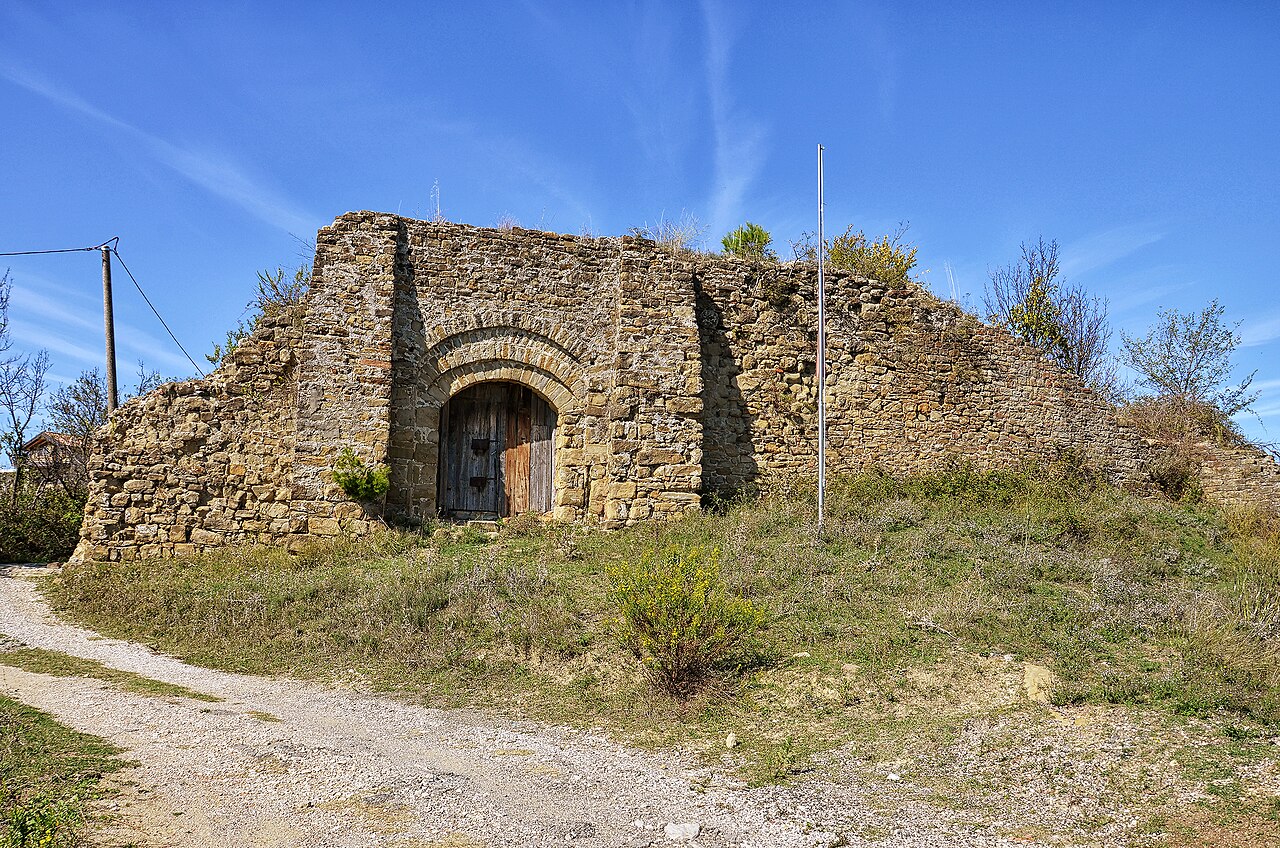
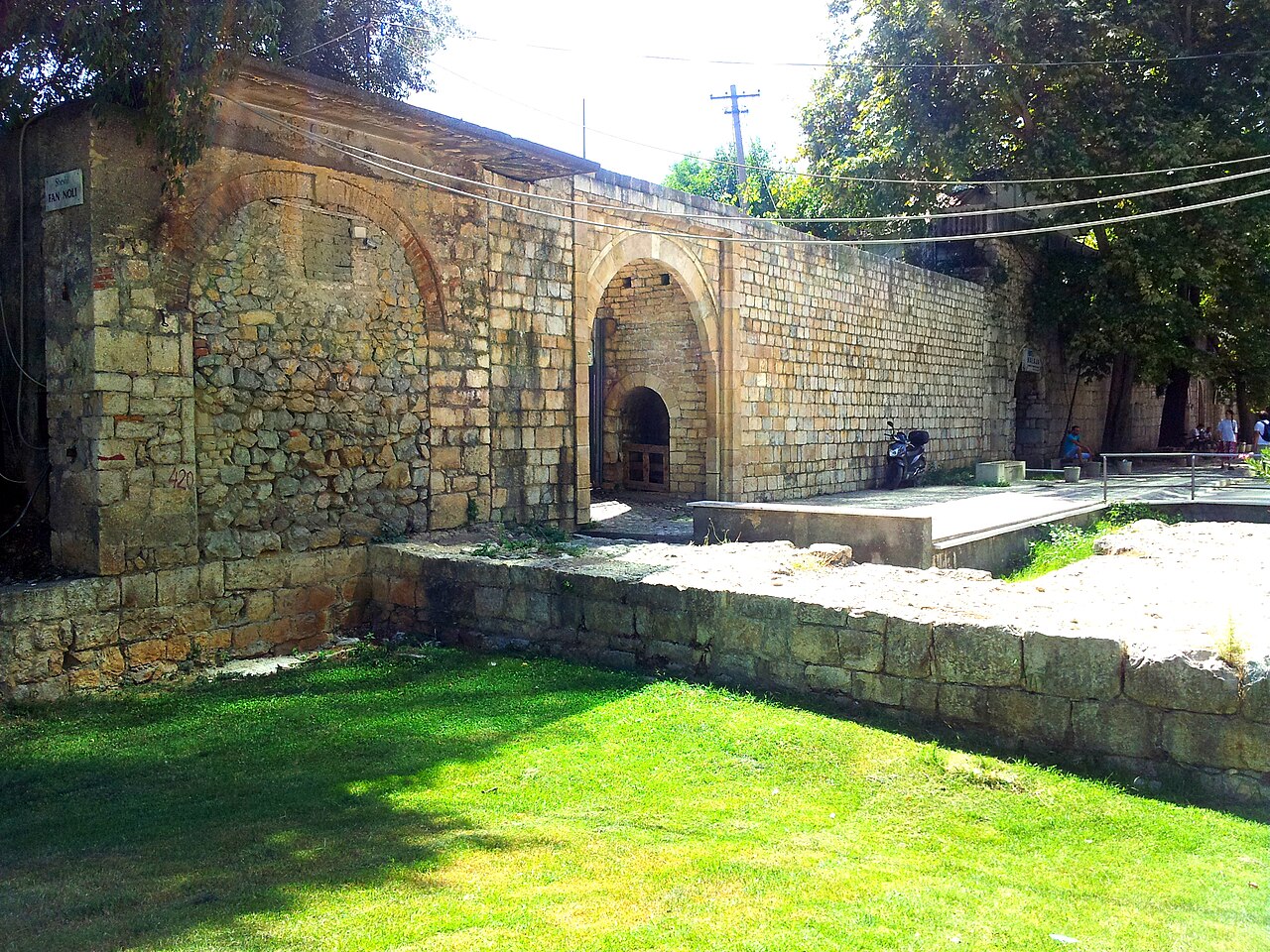
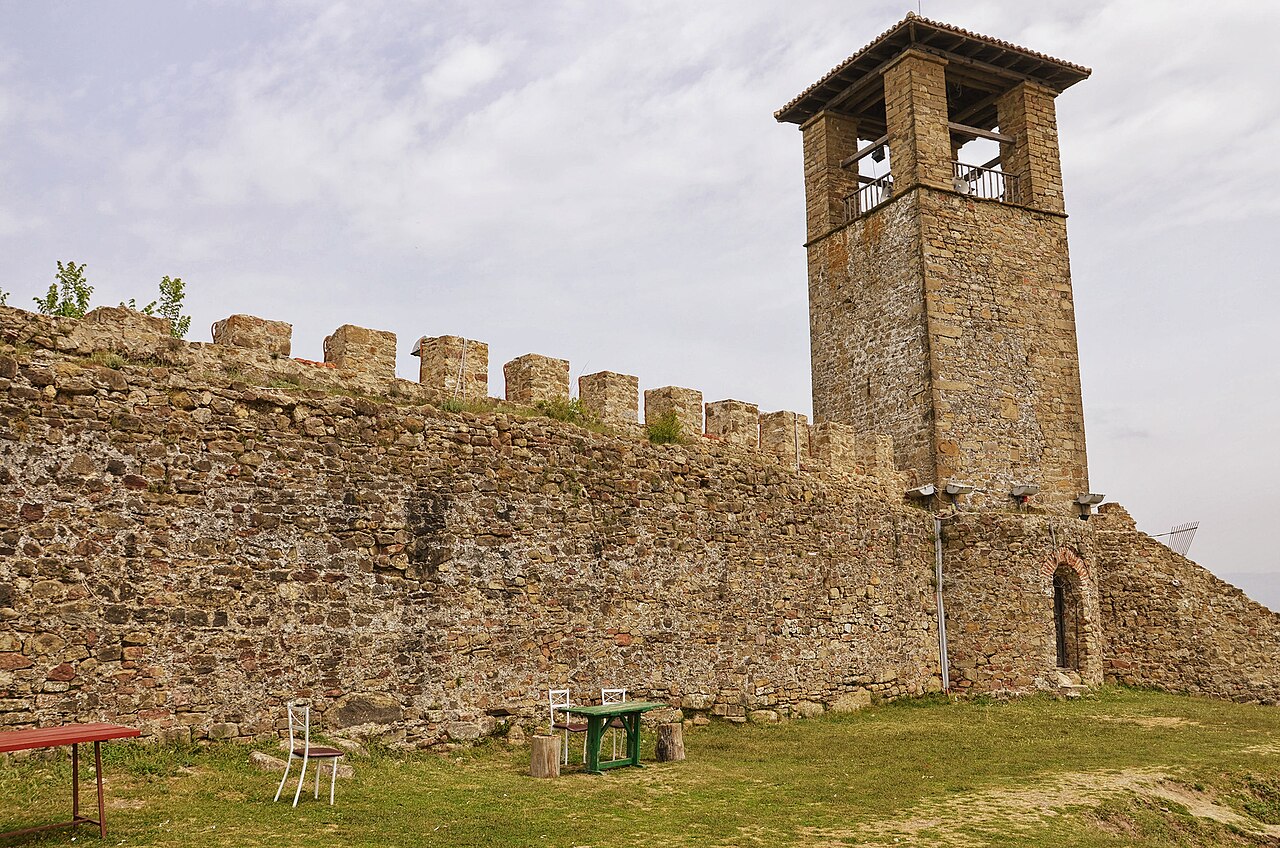
The castle's architecture reflects its military purpose and the various historical influences over centuries. Krujë Castle is characterized by an elliptical shape with defensive walls encompassing the plateau's edge. Key features include a main gate on the western wall, several towers and watchtowers, and remnants of fortified walls on the southern side. The northern side preserves ruins of a watchtower that once provided early warning of approaching enemies.

Within the castle grounds, there are several notable buildings and sites of cultural significance. The Gjergj Kastrioti Skanderbeg National Museum, established in the early 1980s near the main gate, commemorates the life and legacy of Skanderbeg and houses important artifacts related to Albanian history and the castle's military past. The museum's architecture is designed to blend with the historic surroundings, enhancing the visitor experience.

Other surviving structures include the Teqe of Dollme, a religious site for the Bektashi Order, an Islamic Sufi sect, reflecting the castle's diverse cultural heritage. The remains of the Fatih Sultan Mehmed mosque and its minaret also stand as reminders of the Ottoman period. Additionally, the castle precinct contains an ethnographic museum housed in a traditional 19th-century style building, showcasing the lifestyle, tools, and crafts of the local population during that era.

The old ottoman bazaar and cultural tourism

Outside the castle, the old Ottoman bazaar adds to the historic ambiance of Krujë, offering visitors a charming glimpse into traditional Albanian market life. The narrow cobbled streets and artisan shops create a vibrant atmosphere that complements the castle's historical significance.

Today, Krujë Castle is a popular tourist destination, attracting visitors interested in history, architecture, and Albanian culture. The castle precinct includes several restaurants and homestays, allowing guests to experience the area's hospitality. Access to the castle is free, and visitors can enjoy panoramic views of the surrounding mountains and valleys, making it a rewarding destination for both history enthusiasts and casual travelers.

Legacy and cultural importance

Krujë Castle is more than a medieval fortress; it is a powerful symbol of Albanian identity and resistance. Its association with Skanderbeg and the successful defense against the Ottoman Empire has made it a source of national pride. The castle's history is commemorated in Albanian literature, folklore, and national celebrations.

The preservation of Krujë Castle and its museums plays a crucial role in educating both locals and tourists about Albania's medieval history and cultural heritage. It stands as a testament to the resilience of the Albanian people and their enduring spirit through centuries of conflict and change.

Visitors to Krujë Castle can explore its ruins, learn about its storied past, and immerse themselves in the rich cultural tapestry of the region. The castle remains a vital link to Albania's past and continues to inspire future generations.

Frequently asked questions (FAQ)

How do I get to Krujë Castle from Tirana?
Krujë Castle is located about 32 kilometers north of Tirana. You can reach it by car or bus, with regular bus services running from Tirana's main bus station to Krujë town.
What are the opening hours of Krujë Castle and the Skanderbeg Museum?
Krujë Castle is freely accessible year-round, but the Skanderbeg Museum inside the castle typically operates from 9:00 AM to 5:00 PM daily. It's advisable to check ahead for any seasonal changes.
Is Krujë Castle suitable for visitors with limited mobility?
Due to the castle's hillside location and uneven cobbled streets, accessibility may be challenging for visitors with limited mobility. Some areas may not be wheelchair accessible.
What is the historical significance of Krujë Castle?
Krujë Castle was the stronghold of Skanderbeg during his resistance against the Ottoman Empire in the 15th century, successfully withstanding multiple Ottoman sieges and symbolizing Albanian national pride.
Can I visit the old Ottoman bazaar near Krujë Castle?
Yes, the old Ottoman bazaar is located just outside the castle and is open to visitors. It offers a variety of traditional crafts, souvenirs, and local foods, providing an authentic cultural experience.

Photo gallery

Krujë Castle
Click to view

Photo by AgronBeqiriPh•CC BY-SA 4.0

1 photo • Click any image to view in full screen

Information

Hill Castle

Loading map...

Visitor reviews

No reviews yet. Been here? Write the first review and help other travelers!

Write the first review

Visited this castle? Share your experience

Your review helps other travelers and adds first-hand knowledge to our encyclopedia.
Write a review

(5/5)

0/2000 characters

Your review will be visible after admin approval

Nearby castles

13.2 km
Prezë Castle — Albania castle

Prezë Castle

Prezë, Albania

Prezë Castle, locally known as Kalaja e Prezës, is a historic fortress perched on a hilltop overlooking the village of Prezë in the municipality of Tirana, Albania. This hill castle is notable for its rich history spanning from ancient Illyrian times through the medieval period and into the Ottoman era. Its strategic position commanded key routes between the coastal city of Durrës and the inland town of Kruja, making it a crucial defensive and communication point in the region. The origins of Prezë Castle trace back to the Illyrian Parthini tribe, who fortified the site during the 2nd to 3rd century BCE. This early fortification laid the groundwork for the castle's enduring military significance. The fortress was later mentioned by Julius Caesar, who noted that Pompey used it as a camp during the Roman civil war, underscoring its importance in ancient military campaigns. During the medieval period, the castle became an essential stronghold for local feudal families, notably the Thopia family, who completed its construction in the early 15th century. The castle played a significant role during the Albanian resistance against the Ottoman Empire, serving as one of the core fortresses under the leadership of Skanderbeg between 1443 and 1468. Its strategic location allowed it to connect the major fortifications of Kruja, Petrela, and Durrës, forming a defensive network crucial to the resistance efforts. Architectural features and layout Prezë Castle has a roughly pentagonal layout, measuring approximately 80 meters east to west and 50 meters north to south. The fortress is enclosed by defensive walls constructed from roughly hewn sandstone blocks, with rows of bricks along the battlements adding a distinctive visual rhythm. These walls stand about 6.5 meters high and are around 1.4 meters thick, enclosing a central courtyard that remains open and unbuilt. The fortress is punctuated by four round corner towers, each historically equipped to house two to three cannons, reflecting its military importance. In addition to these, a square tower was added on the western side to reinforce the defenses where the terrain is flatter and more vulnerable. Another square tower is located near the fortress's single entrance on the southern wall, which is accessed through a gatehouse. The gatehouse itself has a unique history, as it was converted into a mosque in the 16th century following the Ottoman conquest. This mosque remains functional today, having undergone several restorations, including the reconstruction of its minaret in 2014 after its destruction during the atheist campaign of the mid-20th century under Enver Hoxha's regime. One of the castle's most distinctive features is the clock tower built atop the ruin of the eastern round corner tower. First documented in the mid-19th century, this square tower has undergone multiple renovations, including changes to its roof style from a steep pointed roof to a flatter design typical of local architecture. The clock tower partially collapsed during the 2019 earthquake but was rebuilt in 2021, preserving this iconic element of the fortress. Historical significance and events The castle's history is marked by its continuous adaptation to the changing political and military landscape of Albania. It was first mentioned in 1466 by a Venetian source as being in ruins, suggesting that it may have been abandoned during the reign of Gjon Kastrioti, father of Skanderbeg, who ruled between 1407 and 1437. The castle was never fully rebuilt after this period, but it retained local importance, particularly after the Ottoman conquest. In 1445, the fortress hosted the wedding of Mamica Kastrioti, Skanderbeg's sister, highlighting its role as a noble residence and local center. The Ottomans transformed the gatehouse into a mosque after 1478, integrating religious functions into the fortress's structure. The clock tower's construction in the 19th century further exemplifies the castle's evolving use and significance over time. Throughout the 20th century, Prezë Castle underwent several restoration efforts. In the late 1930s, a café was established within one of the towers, blending modern amenities with the historic fabric. Conservation work in 1966 helped preserve the fortress's structural integrity, while the mosque's restoration and the new minaret installation in 2014 symbolized a revival of cultural and religious heritage. The fortress suffered damage during the 2019 earthquake, particularly the partial collapse of the clock tower, which was subsequently rebuilt in 2021. Today, the castle is freely accessible to visitors and includes a restaurant named Restorant Kalaja E Prezës, offering a unique experience of history and hospitality within the ancient walls. Cultural and regional context Prezë Castle is located near the Tirana plain and is close to the Mother Teresa International Airport, making it an accessible destination for tourists and history enthusiasts. The castle's designation as a "monument of culture" reflects its importance within Albania's national heritage and its role in the collective memory of the Albanian resistance and identity. The fortress's location on a narrow ridge with steep slopes provides natural defense, particularly on the southeastern side, while the western facade required additional fortifications due to flatter terrain. The presence of a stone-domed well house near the entrance, likely connected to a former Bektashi tekke, indicates the site's religious diversity and historical layers. Visitors to Prezë Castle can explore the remains of the walls, towers, mosque, and clock tower, gaining insight into the architectural evolution from Illyrian fortifications through medieval and Ottoman periods. The integration of modern facilities such as the restaurant and café within the historic site enhances its appeal as a cultural landmark. Visitor information and accessibility The castle is freely accessible to the public, allowing visitors to explore its historic structures and enjoy panoramic views of the surrounding Tirana plain. The presence of the restaurant within the castle walls offers refreshments and local cuisine, enhancing the visitor experience. Its proximity to Tirana and the international airport makes it a convenient destination for day trips and cultural tourism. While some parts of the castle are ruins, ongoing preservation efforts ensure that the site remains safe and engaging for visitors. The reconstructed clock tower stands as a symbol of resilience and historical continuity, inviting guests to appreciate the layered history embedded in the fortress's stones. Architectural conservation and future prospects Recent reconstruction efforts, particularly after the 2019 earthquake, demonstrate a commitment to preserving Prezë Castle as a vital cultural and historical monument. The rebuilding of the clock tower and restoration of the mosque highlight the balance between maintaining historical authenticity and adapting to contemporary needs. Future conservation projects may focus on further stabilizing the fortress walls, enhancing visitor facilities, and promoting the castle as a key site within Albania's rich medieval heritage. As a monument that encapsulates centuries of history, Prezë Castle offers valuable insights into the region's past and continues to serve as a symbol of Albanian resilience and cultural identity.

High Medieval (11th–13th c.)
Details
16.9 km
Ishëm Castle — Albania castle

Ishëm Castle

Kërtushaj, Albania

Ishëm Castle, also known locally as Kalaja e Ishmit, is a historic Ottoman fortress located east of the village of Kërtushaj in the county of Durrës, Albania. Constructed between 1572 and 1574, this hill castle was strategically positioned on a prominent ridge overlooking the Ishëm River and the surrounding plains. Its primary purpose was to serve as a military stronghold to suppress local peasant rebellions and secure Ottoman control over the region during the Renaissance period. Strategic location and historical context The castle's placement on a hill was crucial for surveillance and defense. The ridge runs roughly north to south, allowing the fortress to monitor the navigable Ishëm River which was a vital waterway for transportation and trade. A small river port near the castle was also protected by its garrison, highlighting the fortress's role in controlling both land and river routes. The fortress was part of the Ottoman Empire's broader efforts to consolidate power in Albania and prevent smuggling and uprisings, particularly against Venetian interests in the region. Architectural features and layout The fortress exhibits a nearly rectangular plan that conforms to the natural shape of the hill on which it stands. Covering approximately 0.4 hectares, the castle's walls were constructed from stone and originally reached heights of up to seven meters, with thickness varying between 1.2 and 1.5 meters. Defensive bastions were positioned at each of the four corners, providing comprehensive coverage and enhancing the castle's fortification against attacks. Two main entrances allowed controlled access: one located in the south wall and another in the north wall. The primary gate was set into the southeast wall, designed for both defense and ease of access to the surrounding routes. The castle's robust stone walls and bastions reflect typical Ottoman military architecture of the late 16th century, adapted to the local terrain and strategic needs. Garrison and military role Upon completion, Ishëm Castle housed an Ottoman garrison of approximately 410 soldiers. This sizable force was tasked with maintaining order, suppressing peasant rebellions, and guarding the critical river port and nearby road leading to Kruja, an important inland stronghold. The fortress's military significance was underscored by its role in controlling regional trade routes and preventing incursions or smuggling activities. Decline and preservation challenges From the 18th century onward, the fortress gradually lost its military importance as the Ottoman Empire's control in the region weakened. Despite this decline, the surrounding highlands retained strategic value during World War I. However, the castle itself fell into disuse and neglect in subsequent centuries. Until 1990, the site was protected by Albanian state authorities as a cultural monument, but after protection ceased, the fortress suffered significant deterioration. Local residents removed stones from the walls for building materials, and unauthorized residential structures were constructed within the castle's interior courtyard. These developments have severely impacted the site's integrity and accessibility. Recent conservation efforts In recent years, efforts have been made to consolidate the remaining ruins and stabilize the structure to prevent further decay. Although the castle is freely accessible, the presence of illegal residences within its walls limits visitor exploration to the exterior. The foundational layout, corner bastions, and portions of the defensive walls remain visible, offering insight into the fortress's original design and its role in Ottoman military strategy. Cultural significance and notable associations Near the entrance of Ishëm Castle lies the burial site of the renowned Albanian painter Ibrahim Kodra (1918–2006). A monument marks this site, connecting the fortress to Albania's modern cultural heritage. This association adds a layer of historical and artistic importance to the site beyond its military origins. Visiting Ishëm castle today Today, Ishëm Castle stands as a significant historical landmark in Albania, offering visitors a glimpse into the region's Ottoman past and military architecture. While not a spectacular ruin compared to larger fortresses, its hilltop location provides scenic views of the surrounding landscape and the Ishëm River valley. The castle's accessibility and cultural context make it a worthwhile destination for those interested in Albanian history and Ottoman fortifications.

Renaissance (15th–17th c.)
Details
20.3 km
Tirana Castle — Albania castle

Tirana Castle

Tirana, Albania

Tirana Castle, locally known as Kalaja e Tiranës and also called the Fortress of Justinian (Kalaja e Justinianit), is a significant historical monument located in the heart of Tirana, the capital city of Albania. The castle stands as a rare surviving example of a Byzantine-era bastioned fortress within a modern urban setting, reflecting centuries of complex history and architectural evolution. The origins of Tirana Castle date back to the Early Byzantine period, most likely between the 4th and 6th centuries AD. It is believed to have been constructed or significantly rebuilt under the reign of Emperor Justinian I (527–565 AD), who was known for his extensive fortification campaigns across the empire. The fortress was strategically positioned at the crossroads of the main east-west and north-south routes, forming the nucleus around which the modern city of Tirana later developed. Early history and byzantine origins The castle's initial construction reflects the military and administrative priorities of the Byzantine Empire during a period of frequent invasions and internal strife. Its rectangular plan with round corner towers and square wall towers was typical of fortifications designed to withstand sieges and provide strong defensive capabilities. The fortress's location was crucial for controlling the surrounding region and protecting key communication lines. Although much of the original structure has been lost over time, archaeological evidence and historical records confirm the castle's significance during the Early Medieval period. The fortress served as a military stronghold and a center of local governance, marking the early urban footprint of Tirana. Ottoman period transformations and conflicts During the late 18th century, the fortress underwent substantial changes under Ottoman rule. Ahmet Pasha Bargjini is credited with rebuilding the castle on the ruins of the Byzantine predecessor. This reconstruction adapted the fortress to the evolving military technologies and political realities of the Ottoman Empire. The castle became a focal point of regional power struggles, especially between the Bargjini and Toptani families. In 1798, the Toptanis seized the castle, initiating a prolonged feud marked by multiple changes of control. The conflict culminated in a devastating five-month siege in 1817, which severely damaged both the fortress and the surrounding settlement. Following their victory, the Toptani family undertook partial reconstruction efforts and sought to stabilize relations through intermarriage with the Bargjinis. However, in 1832, the Ottoman Grand Vizier Reşid Mehmed Pasha ordered the demolition of the castle, reflecting the empire's shifting military strategies and administrative reforms. Architectural features and current remains The original fortress was characterized by its rectangular layout fortified with round corner towers and square wall towers, designed to provide overlapping fields of fire and robust defensive coverage. The surviving sections include a stretch of the northern curtain wall and the foundations of the northeast corner tower and an additional wall tower. Today, the remains of Tirana Castle are integrated into the urban fabric of the city. The castle precinct serves multiple functions, including residential areas and a bazaar-like shopping center. The most visible remnant above ground is an approximately 6-metre-high Ottoman-era wall covered in vines, symbolizing the layered history of the site. Recent archaeological efforts have uncovered wall foundations incorporated into the pedestrianized Murat Toptani Street, enhancing public access and awareness of the fortress's historical footprint. Nearby, a mosaic commemorating the 100th Anniversary of Albania's Independence was unveiled close to the Albanian Parliament, linking the site to national identity and heritage. Cultural significance and preservation efforts Tirana Castle was officially declared a monument of culture of first category on 10 June 1973, recognizing its importance in Albania's historical narrative. Further protection was granted to the newly discovered wall sections in 2008, emphasizing ongoing efforts to preserve and integrate the fortress remains within the city's development plans. Restoration and conservation initiatives aim to balance the site's historical integrity with its contemporary use. The castle area now hosts various cultural institutions, restaurants, and hotels, making it a vibrant part of Tirana's urban life while maintaining its historical essence. Visiting tirana castle today The remains of Tirana Castle are freely accessible to the public and offer a unique glimpse into the city's ancient and medieval past. While the visible ruins are modest compared to larger European castles, the site provides valuable insight into the Byzantine military architecture and the Ottoman-era transformations that shaped the region. Visitors can explore the surviving walls and foundations, enjoy the surrounding pedestrian areas, and experience the blend of history and modern urban culture. The castle's central location makes it an easy stop for those interested in Albania's heritage and the evolution of Tirana from a fortified settlement to a bustling capital.

Early Medieval (5th–10th c.)
Details