Kremnica Castle
Kremnica Castle stands as a remarkable example of a late medieval hill castle complex in Kremnica, Slovakia, embodying centuries of history tied to the region's prosperous mining industry and defensive architecture. Constructed primarily in the 14th century and expanded through the 15th century, the castle was strategically built on a hill overlooking the town to protect its valuable gold mining operations and to serve as a seat of regional administration.
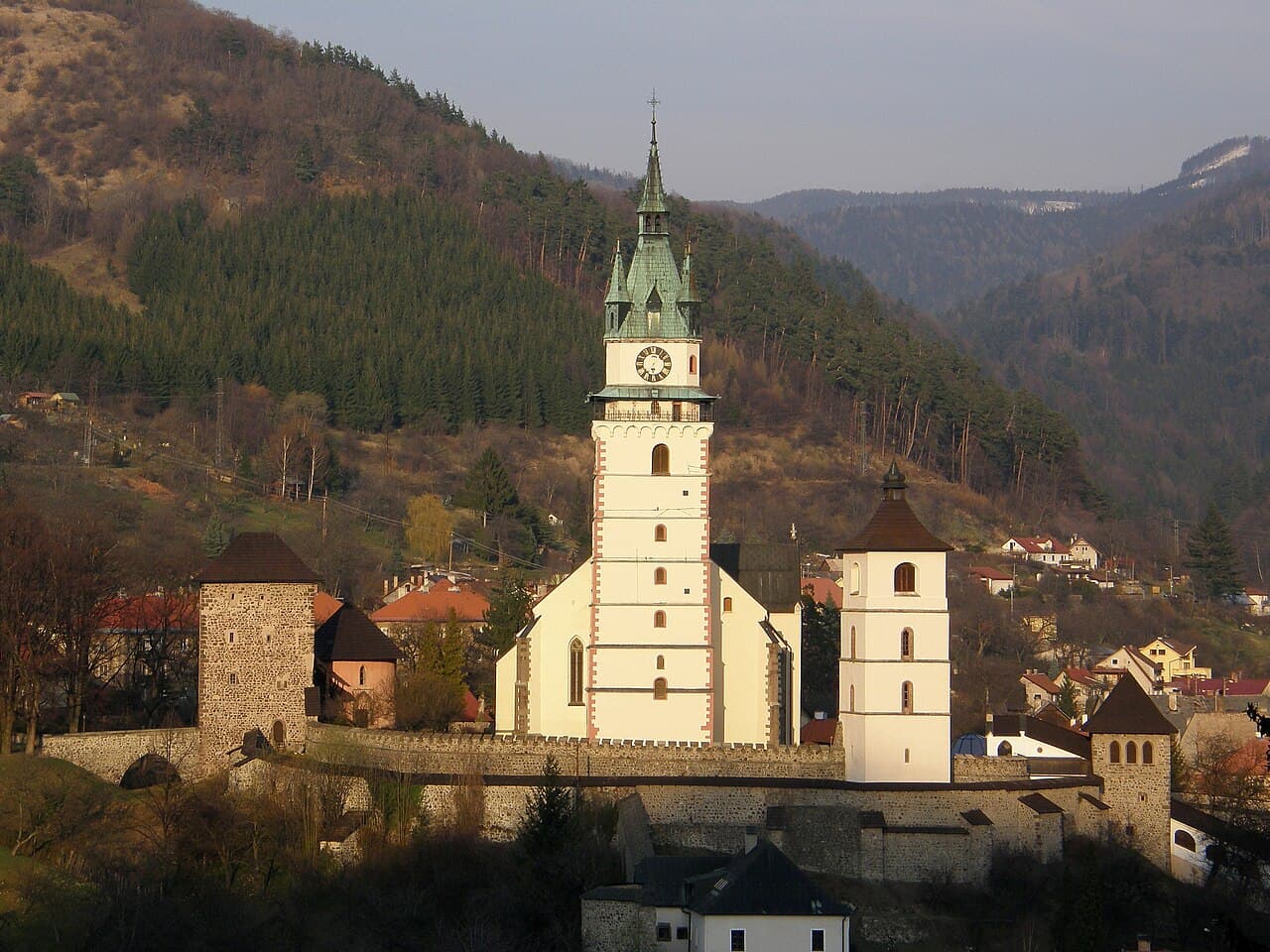
The castle complex is renowned for its double ring of Gothic stone fortifications that connect seamlessly with the town walls, which are among the best-preserved medieval defensive systems in Slovakia. These walls, equipped with towers and bastions, were designed to withstand the evolving military technologies of the time, including the introduction of firearms in the 15th century. The fortifications include the northern gate tower with original loopholes and a tar pouring hole, the Miners' Bastion, and the Staircase Bastion, each reflecting different phases of construction and defensive innovation.
Historical development and significance
The origins of Kremnica Castle trace back to the mid-13th century when the site began as a Romanesque church complex with a cemetery and charnel house. By the late 14th century, the castle's defensive walls enclosed the church, and a palace was constructed to house the chamber count responsible for overseeing the area's lucrative gold mines and the town's mint, which produced coins that were widely circulated across Europe.
During the late medieval period, the castle underwent significant fortification upgrades in two main phases. The first phase, completed by the end of the 14th century, established the robust double walls and multiple towers. The second phase, after the mid-15th century, adapted the defenses to counter the threat of firearms, reshaping the terrain and enhancing bastions.
Religious and civic architecture within the castle
The castle complex houses several notable religious structures, including the Church of Saint Catherine, a late Gothic two-nave church completed in 1488. This church features a massive tower rebuilt in the Renaissance style after a fire in 1560, with inscriptions marking its reconstruction. Inside, visitors can admire five gilded wooden altars crafted in the neo-Gothic style, a Renaissance pulpit, and a large organ with nearly 3,500 pipes, which is still used for annual organ festivals.
The charnel house of Saint Andrew, dating from the second half of the 14th century, is the oldest surviving building in the town. Its unique two-level circular design includes an ossuary with a Romanesque vault and an upper Gothic chapel adorned with frescoes depicting Saint Erasmus and mining symbols.
The Old Town Hall, built around the 15th century and located between the castle walls, served as the seat of the city council and later as city archives. Though partially dismantled in the late 19th century, it preserves Baroque sculptures transferred from nearby churches.
Architectural features and defensive elements
Kremnica Castle's fortifications represent a sophisticated medieval military architecture adapted over centuries. The northern gate tower is a prism-shaped structure with three floors, originally featuring loopholes on all sides for archers and gunners. The surviving loopholes and the tar pouring hole highlight the defensive strategies employed to repel attackers.
The Mining Bastion, initially intended as a chapel presbytery, was converted into a bastion with Gothic windows and polygonal upper floors. This adaptation reflects the castle's response to changing warfare tactics during the 15th century.
The Clock Tower, also known as Furl or the Small Tower, dates back to the 13th century and was expanded in subsequent centuries. It houses the town's largest Renaissance bell, Urban, cast in 1588. The tower now contains an exhibition on bell making, reflecting the town's artisanal heritage.
Restoration and preservation efforts
The castle has undergone several restoration campaigns, notably in the 18th and 19th centuries. After a severe landslide in 1879, restoration began in 1884, including the reconstruction of the church tower spire in the neo-Gothic style and the renewal of battlements with historically inspired crenellations. These efforts aimed to preserve the castle's medieval character while adapting it for modern use.
Today, Kremnica Castle is a well-preserved monument that serves as a cultural hub, housing the Museum of Coins and Medals and hosting exhibitions related to the town's mining and artistic history. It was declared a national cultural monument in 1970, underscoring its importance in Slovakia's heritage.
Cultural and touristic significance
The castle area, including the Church of Saint Catherine, the charnel house, and various bastions, attracts visitors interested in medieval architecture, mining history, and religious art. The church's organ recitals during summer festivals are a unique cultural highlight, drawing audiences to experience the castle's acoustic and historic ambiance.
Visitors can explore exhibition rooms in the guards' quarters, climb the stone spiral staircase of 127 steps for panoramic views of Kremnica and its surroundings, and enjoy detailed displays about the town's historical defenses and bell founding traditions.
Kremnica Castle remains a testament to the town's medieval prosperity and its strategic importance as a mining center, offering a comprehensive glimpse into the architectural, religious, and military developments of Central Europe during the Middle Ages.
Frequently asked questions (FAQ)
- What is the historical significance of Kremnica Castle?
- Kremnica Castle, built in the 13th century, played a crucial role in the defense of the region and served as a royal residence. It is historically significant for its association with the mining town of Kremnica, which was known for its gold and silver production, contributing greatly to the economy of Slovakia.
- When was Kremnica Castle built?
- Kremnica Castle was constructed in the late 1200s, with its foundation believed to have been laid around 1300. Over the centuries, it has undergone several renovations and expansions, reflecting various architectural styles and historical periods.
- What are the opening hours for Kremnica Castle?
- Kremnica Castle is typically open to visitors from 10 AM to 5 PM, but hours may vary seasonally. It is advisable to check the official website or contact local tourism information for the most up-to-date hours before planning your visit.
- Can I visit Kremnica Castle with children?
- Yes, Kremnica Castle is family-friendly and offers a fascinating experience for visitors of all ages. The castle features guided tours that can engage children with its rich history and intriguing stories about medieval life.
- Is it possible to explore the castle grounds without a guided tour?
- While guided tours are recommended to fully appreciate the history and architecture of Kremnica Castle, it is possible to explore some areas on your own. However, certain sections may have restricted access, and a guide can enhance your understanding of the castle's significance.
- What is the best time to visit Kremnica Castle?
- The best time to visit Kremnica Castle is during the spring and early autumn months when the weather is pleasant and the surrounding landscape is beautiful. Summer months can be busier with tourists, while winter visits may offer a unique snowy backdrop.
- Are there any nearby attractions to visit?
- Yes, near Kremnica Castle, you can explore the charming town of Kremnica, known for its historic architecture and mining history. Additionally, the nearby mountains offer hiking opportunities and stunning views of the region.
- How much are the ticket prices for Kremnica Castle?
- Ticket prices for Kremnica Castle are generally affordable, with discounts available for students and seniors. For the latest pricing information, it’s recommended to visit the official website or inquire at the ticket office upon arrival.
- How do I get to Kremnica Castle?
- Kremnica Castle is easily accessible by car or public transport from nearby cities such as Bratislava or Banská Bystrica. Once in Kremnica, the castle is a short walk from the town center, making it convenient for visitors.
Photo gallery

Information
Website
Visit websiteSources & official resources
Verify the information above using these authoritative references.
Loading map...
Visitor reviews
No reviews yet. Been here? Write the first review and help other travelers!
Write the first reviewVisited this castle? Share your experience
Your review helps other travelers and adds first-hand knowledge to our encyclopedia.