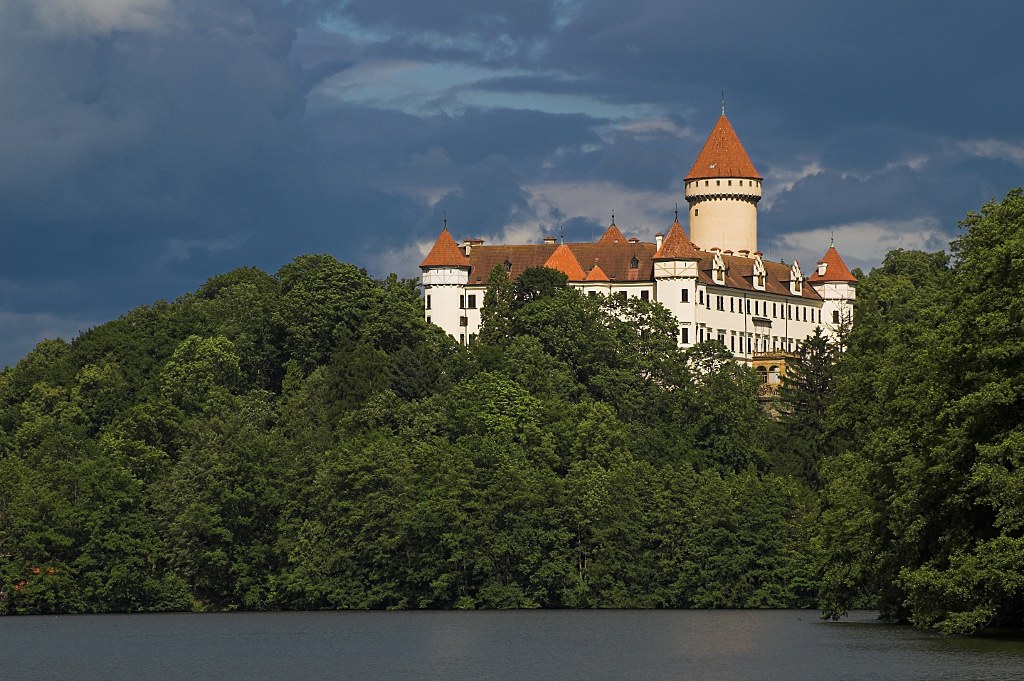
Kožlí Castle
Kožlí Castle stands as a significant medieval hill castle located in the municipality of Tisem-Neveklov in the Czech Republic. The castle's origins trace back to the early 14th century, with the earliest written record dating to 1318, when it was associated with the nobleman Ctibor of Kožlí. This early mention establishes Kožlí as a seat of local Bohemian nobility during the medieval period, reflecting the feudal landscape of the region.
Throughout its history, Kožlí Castle was controlled by various noble families, each contributing to its evolving role and structure. By the mid-14th century, the castle was held by brothers Konrád and Heřman, who had previously owned lands near Chvojno. Their influence extended beyond mere landownership, as they exercised the right to appoint clergy at the Church of St. James in Chvojno, underscoring the castle's integration into both secular and ecclesiastical power networks.
Historical significance and ownership transitions
During the late 14th century, Kožlí Castle remained under the control of lesser noble families, but the castle's reputation became complicated by reports from 1399 describing it as a refuge for bandits. This turbulent period reflects the instability and lawlessness that occasionally characterized medieval Bohemian strongholds.
In the early 15th century, ownership passed to Petr of Pětichvost, an ally of King Václav IV, linking the castle more directly to the royal political sphere. From 1414 onward, the Libún family of Dubá became prominent holders of Kožlí. Notably, Beneš (III.) Libún was an influential figure involved in key historical events such as the Battle of Lipany and the siege of Ostromeč. His son, Beneš (IV.) Libún, along with his wife Buzka of Makov, resided at Kožlí during a period when the castle began to lose its status as a noble residence.
By the early 1490s, the castle came under the ownership of the Sternberg family, who also possessed the nearby Konopiště Castle. By 1495, Kožlí was no longer described as a full castle but rather as a fortified manor within the larger Konopiště estate. This transition marked the beginning of the castle's decline.
Throughout the 16th century, Kožlí gradually fell into disuse and was eventually abandoned. By the century's end, written sources referred to it as a ruined or deserted chateau, a fate common among many medieval castles that lost their strategic or residential importance.
Architectural features and defensive structures
The original layout of Kožlí Castle was notably complex, comprising two main sections: an outer bailey and an inner castle. These were separated by a deep moat carved directly into the rock, a formidable defensive feature designed to impede attackers and protect the castle's core.
The connection between the outer and inner courtyards was controlled by a passage likely featuring a drawbridge over the moat, accessed through a small gate tower projecting from the main curtain wall. This setup allowed for regulated entry and enhanced security against siege tactics.
The inner castle is distinguished by an early example of a two-palace architectural layout, rare in Bohemia. The design centers on a rectangular courtyard with an entrance gate leading into the first palace building. Beyond this courtyard lay a second palace on the southeast side, connected by an inner curtain wall that enclosed the space and defined the castle's heart.
Surrounding the entire complex was an outer defensive parkán wall, creating a continuous enclosure that added a further layer of protection. Today, the best-preserved elements include the southeastern section of the parkán wall and part of the inner curtain wall on the same side, while other areas remain as uneven terrain with traces of former fortifications.
Archaeological research and preservation efforts
Recent archaeological clearing has removed overgrown vegetation, revealing the fundamental layout of Kožlí Castle and allowing for detailed study of its construction techniques. These efforts have highlighted the castle's role as a fortified noble residence throughout the medieval period until its decline in the late 16th century.
Although the castle now exists primarily as ruins, the remaining walls and earthworks provide valuable insights into medieval defensive architecture and noble lifestyle in Bohemia. The site serves as an important cultural heritage landmark, attracting historians and visitors interested in medieval fortifications and Bohemian history.
Cultural legacy and historical context
In the 19th century, the site of Kožlí Castle attracted the attention of the renowned Czech poet Karel Hynek Mácha, who visited during his travels in the Posázaví region in 1835. Although no visual records from his visit survive, the castle was documented under the name "Kožly," reflecting historical variations in the place name.
Kožlí Castle's story encapsulates the broader narrative of medieval castles in Central Europe: from noble stronghold to decline and ruin, shaped by political shifts, military conflicts, and changing social structures. Its architectural innovations, such as the two-palace layout and rock-cut moat, mark it as a noteworthy example of Bohemian castle design.
Today, Kožlí Castle remains a testament to the region's rich medieval heritage, offering a tangible connection to the past and a subject of ongoing archaeological and historical interest.
Frequently asked questions (FAQ)
- How do I get to Kožlí Castle?
- Kožlí Castle is located in Tisem-Neveklov, Czechia, and is accessible by car or public transport. If traveling by car, you can follow the local roads that connect to the main highways. Public transport options include buses that operate from nearby towns, making it convenient for visitors.
- What is the historical significance of Kožlí Castle?
- Kožlí Castle was built in the 14th century and is an important example of medieval architecture in the Czech Republic. It has served various purposes throughout its history, including as a defensive fortress and a noble residence. The castle reflects the rich cultural heritage of the region and has been a witness to many historical events.
- When was Kožlí Castle constructed?
- Construction of Kožlí Castle began in the late 14th century, with significant alterations and expansions occurring in the following centuries. The castle showcases various architectural styles due to these renovations, giving visitors a glimpse into different historical periods. Today, it stands as a well-preserved example of medieval fortifications.
- Can I take guided tours of Kožlí Castle?
- Yes, guided tours are available for visitors interested in learning more about the history and architecture of Kožlí Castle. These tours provide insights into the castle's past and highlight its unique features. It is recommended to check the castle's official website for tour schedules and availability.
- Why is Kožlí Castle an excellent place to visit?
- Kožlí Castle offers a unique blend of history, architecture, and beautiful surroundings, making it an ideal destination for history enthusiasts and casual visitors alike. The picturesque setting provides ample opportunities for photography and exploration. Additionally, the castle often hosts cultural events that enhance the visitor experience.
- Is it possible to visit Kožlí Castle with children?
- Absolutely! Kožlí Castle is family-friendly and welcomes visitors of all ages. Children will enjoy exploring the castle grounds and learning about its history, and there are often interactive exhibits and activities tailored for younger audiences.
- What are the opening hours for Kožlí Castle?
- Kožlí Castle is typically open to visitors from April to October, with specific opening hours varying by season. It is advisable to check the official website or contact the castle directly for the most up-to-date information on opening times. During peak tourist season, extended hours may be available.
- Are there any nearby attractions to Kožlí Castle?
- Yes, the area surrounding Kožlí Castle features several attractions that visitors can enjoy. Nearby, you can find beautiful parks for hiking and picnicking, as well as charming villages that offer local cuisine and culture. Exploring the region enhances the overall experience of your visit to the castle.
- What are the ticket prices for visiting Kožlí Castle?
- Ticket prices for Kožlí Castle are generally affordable, with discounts available for students and seniors. Admission fees help maintain the castle and support preservation efforts. It is recommended to check the official website for the latest pricing and any special offers that may be available during your visit.
Information
Website
Visit websiteSources & official resources
Verify the information above using these authoritative references.
Loading map...
Visitor reviews
No reviews yet. Been here? Write the first review and help other travelers!
Write the first reviewVisited this castle? Share your experience
Your review helps other travelers and adds first-hand knowledge to our encyclopedia.