Koźle Castle stands on the left bank of the Oder River in the northwestern part of Kędzierzyn-Koźle, Poland. The castle's site has a rich history dating back to the early 12th century, with records from 1104-1115 mentioning a castellany stronghold likely located near the area known as Stare Koźle. The settlement around the castle grew over the centuries, and by 1293, the town of Koźle had been granted city rights. Until 1355, Koźle served as the capital of a small duchy, governed by the Piast dynasty of Silesian dukes.
Medieval origins and early construction
Between 1316 and 1355, the Piast dukes of Opole commissioned the construction of a brick castle on a raised artificial mound reaching up to 4 meters in height to protect it from the surrounding floodplain. The castle was built on stone foundations and featured a quadrangular layout with three corners rounded by curved wall segments, a design that softened the angles and enhanced defense. The fourth corner, located at the southeast, was marked by a square tower projecting beyond the curtain walls towards the town, serving both defensive and symbolic functions. The eastern wall contained the main gate, providing access from the outer bailey. At the center of the inner courtyard stood a residential tower, or donjon, which was the heart of the castle's living quarters.
Renaissance modifications and bastion fortifications
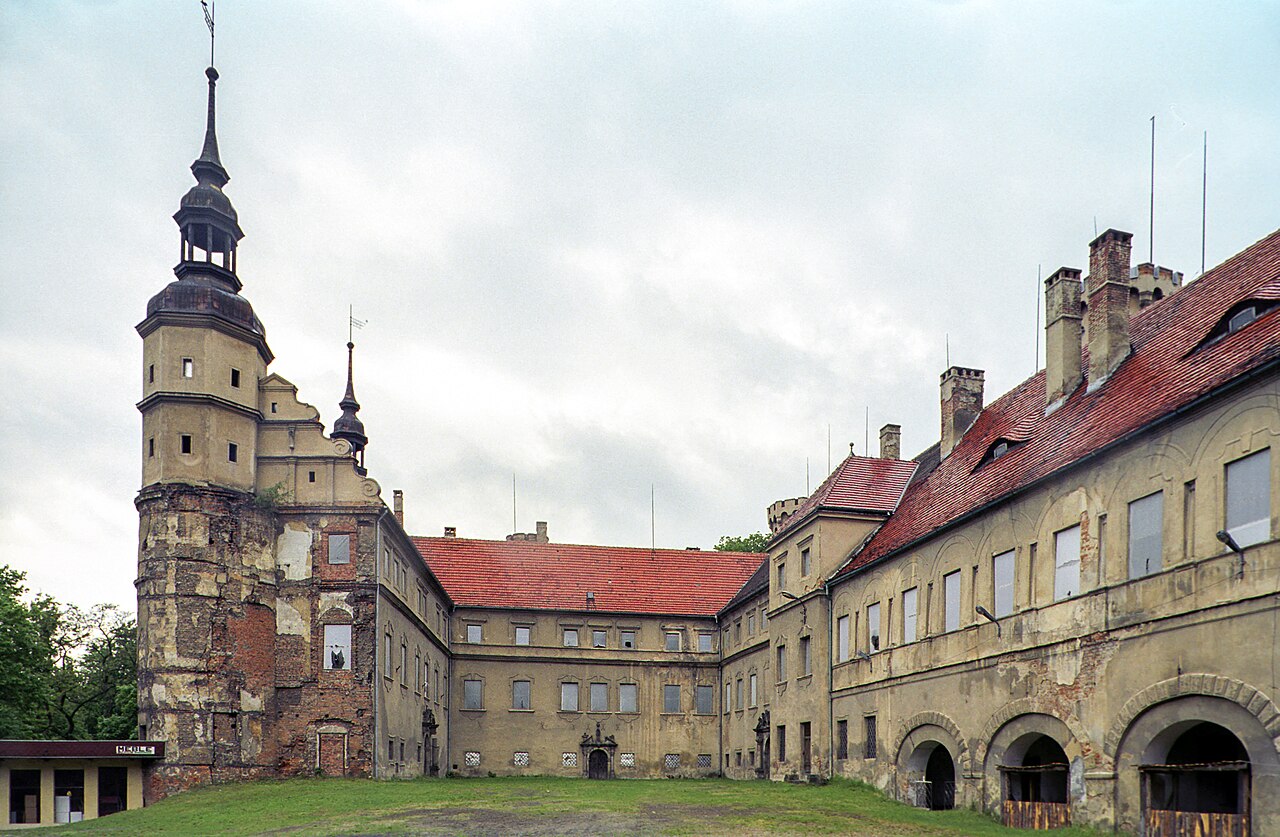
From 1563 to 1584, the castle underwent significant renovations to adapt to the evolving military technology of the period. A single-wing residential building was added along the eastern wall, improving the living conditions within the castle. A prominent feature from this period is the tall bastion constructed at the southwest corner, reflecting the influence of bastioned fortress design principles that were becoming widespread in Europe. This bastion had firing slits arranged to allow defenders to cover the adjacent walls with gunfire, a clear adaptation to the use of firearms and artillery. These enhancements marked a transition from medieval defensive architecture to early modern fortification techniques.
Later expansions and prussian fortress integration
In the 17th century, a new wing was added along the southern wall, expanding the castle's footprint and accommodating additional functions. The 18th century brought the most dramatic transformation when Koźle became part of a large Prussian fortress complex. The castle and the town were incorporated into a comprehensive fortification system designed to defend the region. In 1807, the outer bailey was rebuilt for military purposes, including the construction of a military hospital (lazaret). By the 19th century, a new gate was pierced in the southern wall to improve access to the inner courtyard. Around 1915, further construction within the castle grounds significantly altered its original medieval and renaissance layout, reflecting changing military and administrative needs.
Current condition and cultural significance
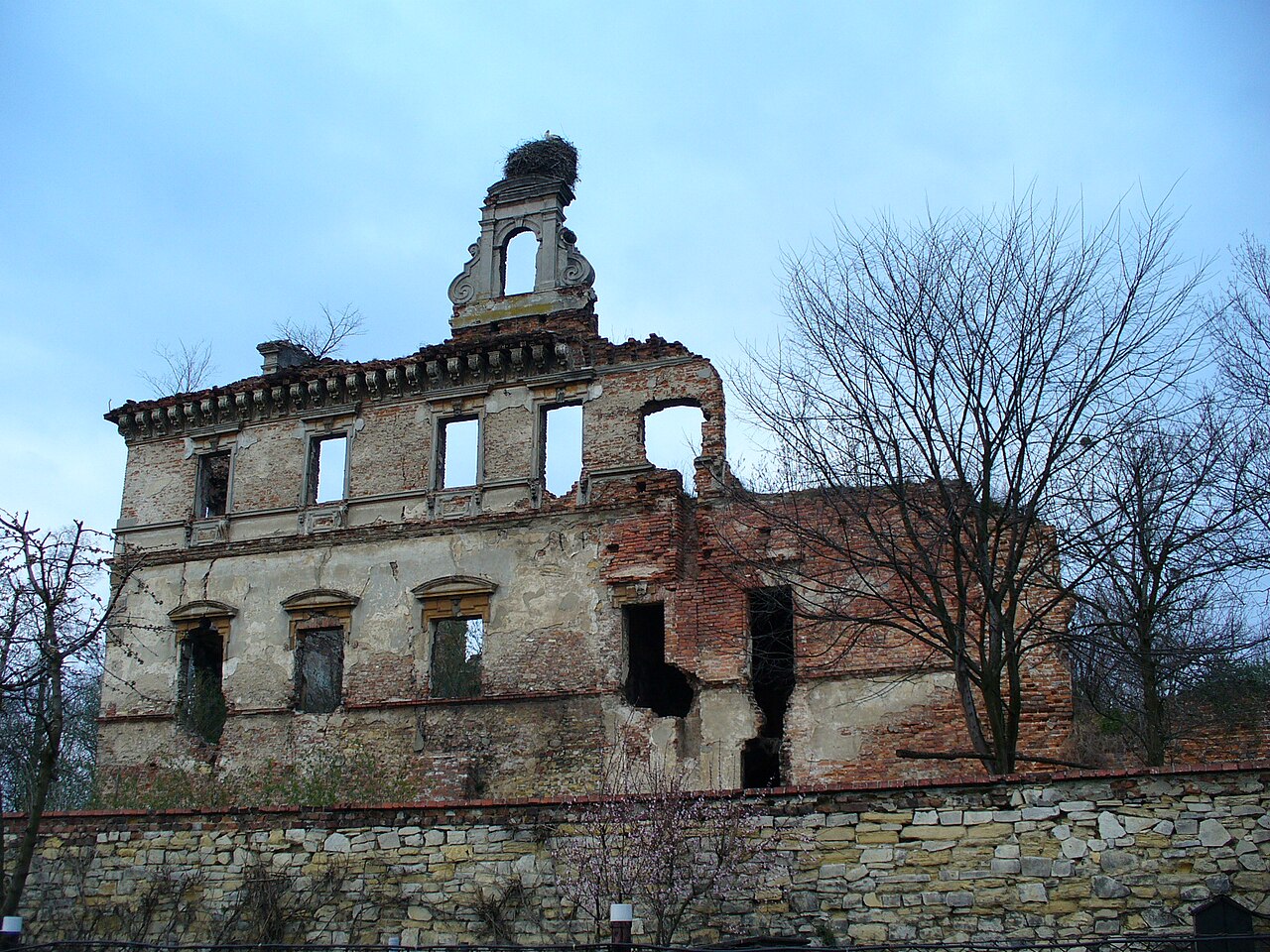
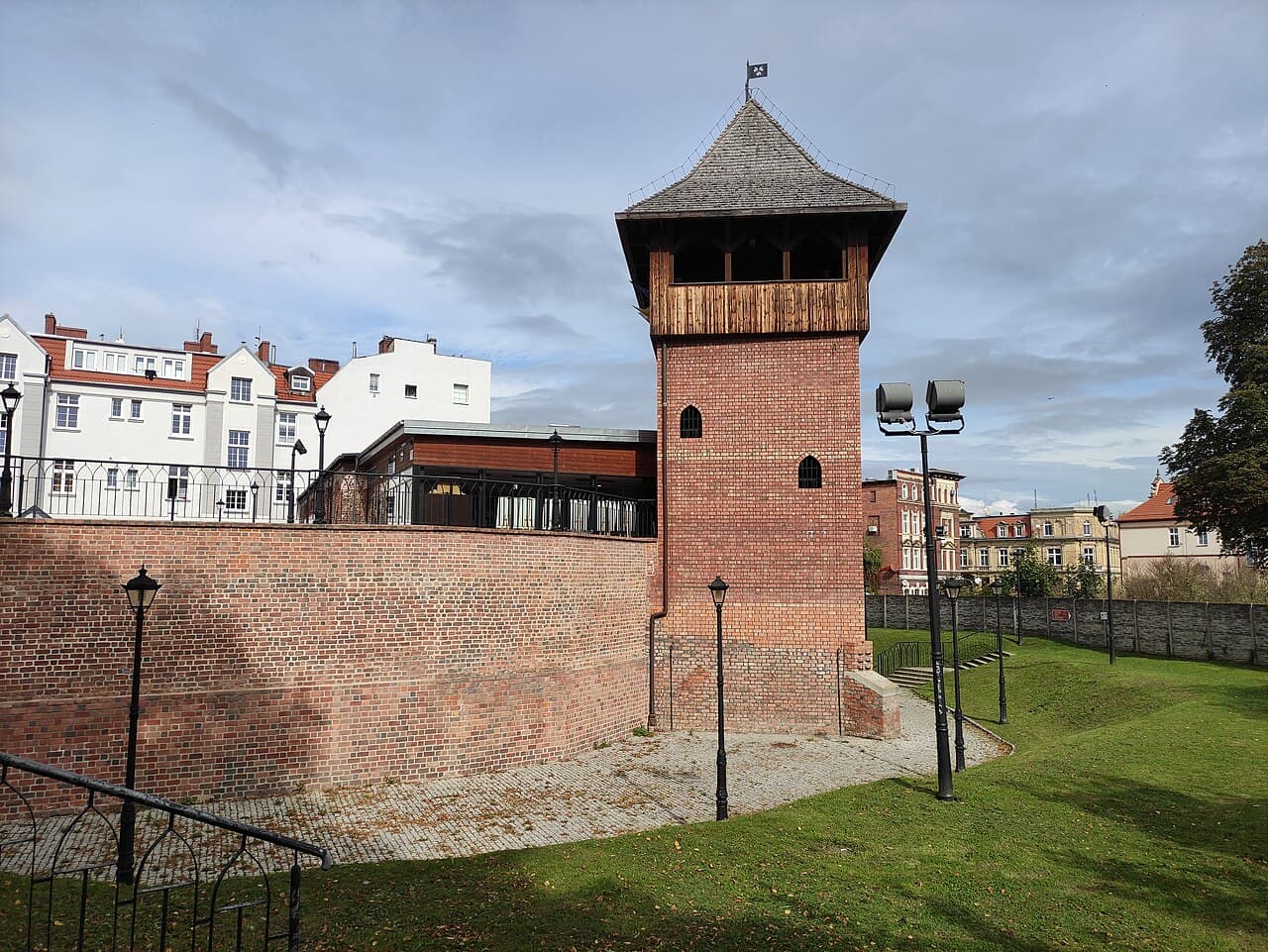
Today, the remnants of Koźle Castle present a somewhat somber appearance, with broken windows and rusted plaques recalling its past as a princely residence. For many years, the inner courtyard served as a bustling municipal marketplace, which unfortunately contributed to the loss of much of the castle's original character. Restoration efforts have been limited but notable; two towers have been refurbished, with one housing a small museum and the other serving as a vantage point offering panoramic views of the surrounding area. These preserved elements provide valuable insights into the castle's architectural evolution and its role in regional history.
Architectural features
- The castle's quadrangular layout with rounded corners is a distinctive feature blending medieval and renaissance defensive concepts.
- The square southeastern tower projecting beyond the walls was crucial for defense and surveillance.
- The bastion at the southwest corner exemplifies early modern military architecture adapted for firearms.
- The castle's brick construction on stone foundations reflects typical Silesian building techniques of the 14th century.
- Later additions include residential wings and military structures integrated into the fortress complex.
Historical context
Koźle Castle's history mirrors the broader political and military changes in Silesia over several centuries. From its origins as a Piast duchy seat, through renaissance military modernization, to its incorporation into the Prussian fortress system, the castle has been a focal point of regional power and defense. Its adaptations to new military technologies, especially the transition to bastioned fortifications, highlight the evolution of European castle architecture from medieval stronghold to modern fortress.
Visiting information
While the castle is not fully restored, visitors can explore the two restored towers, including a museum and a viewing platform. The site offers a glimpse into the layered history of Koźle and its strategic importance. The surrounding town of Kędzierzyn-Koźle provides additional cultural and historical attractions, making the castle a worthwhile destination for those interested in Silesian heritage and military architecture.
Frequently asked questions (FAQ)
- When was Koźle Castle originally built?
- Koźle Castle was originally constructed between 1316 and 1355 by the Piast dukes of Opole on an artificial mound to protect it from floods.
- What architectural style characterizes Koźle Castle?
- The castle features a blend of medieval brick construction with later renaissance additions, including a bastion reflecting early modern military architecture.
- Is Koźle Castle open to visitors?
- Yes, visitors can access two restored towers, one housing a small museum and the other offering a viewing platform with panoramic views.
- What historical periods influenced the castle's development?
- The castle was shaped by medieval origins, renaissance military modernization, and integration into the Prussian fortress system in the 18th and 19th centuries.
- How has Koźle Castle's condition changed over time?
- While much of the castle has deteriorated, restoration has preserved two towers, and the site retains significant historical and architectural value.
Photo gallery

Information
Current owner
Municipality
Loading map...
Visitor reviews
No reviews yet. Been here? Write the first review and help other travelers!
Write the first reviewVisited this castle? Share your experience
Your review helps other travelers and adds first-hand knowledge to our encyclopedia.