Kot Diji Fort
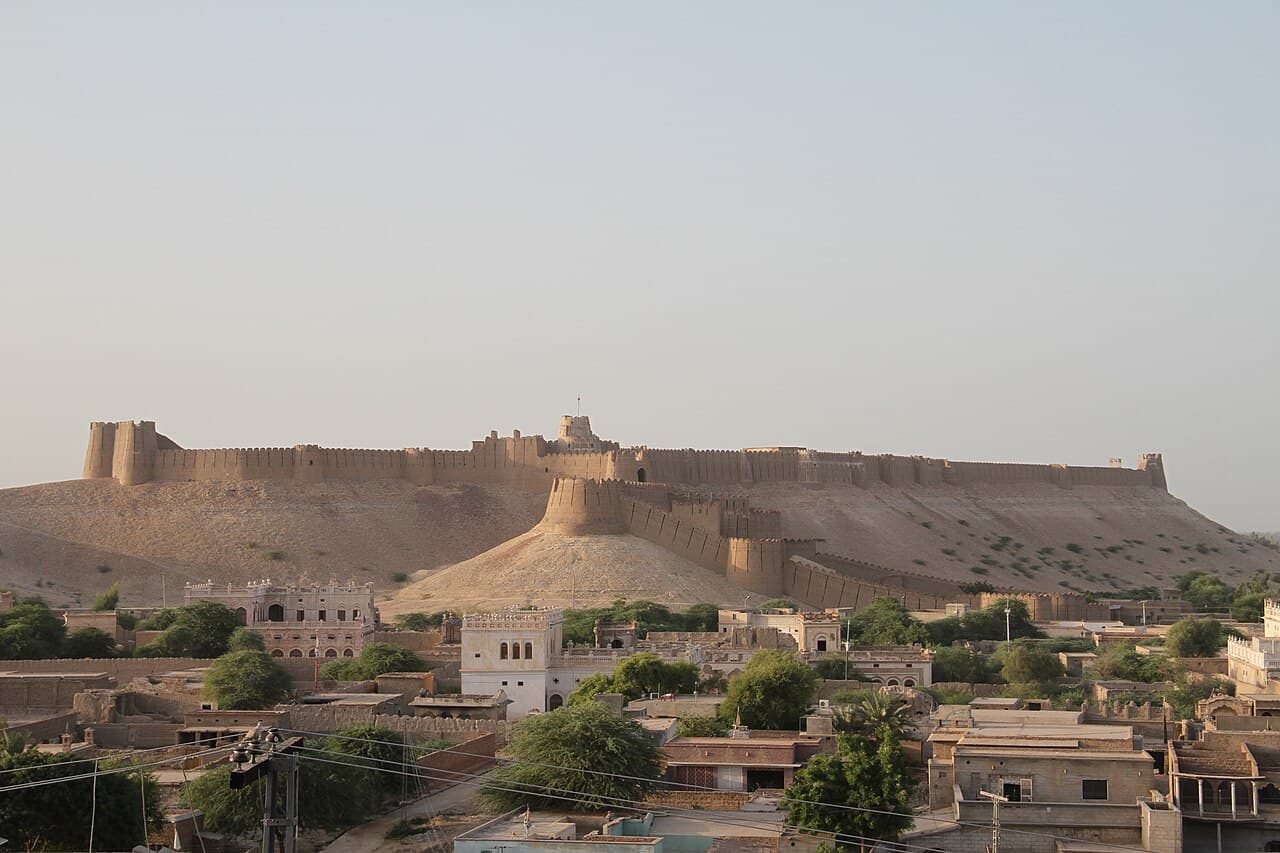
Kot Diji Fort, also known as Fort Ahmadabad, is a prominent example of an 18th-century bastioned fortress constructed during the Talpur Dynasty in what is now the Khairpur District of Sindh, Pakistan. Located approximately 25 miles east of the Indus River at the edge of the Thar Desert, this fortification was built between 1785 and 1795 under the reign of Mir Sohrab Khan. The name Kot Diji translates to "Fort of the Daughter" in local languages, reflecting the cultural heritage of the region.
Historical context and strategic importance
The construction of Kot Diji Fort was a response to the political and military challenges faced by the Talpur rulers during the late post-Renaissance period. The Talpurs, a Baloch dynasty, established their rule in Sindh after the decline of the Kalhora dynasty. The fort's location near the Indus River and close to the desert frontier made it a critical defensive stronghold against invasions and regional conflicts.
As a bastioned fortress, Kot Diji was designed to withstand artillery attacks and to provide a secure refuge for the ruling family and their forces. Its position allowed control over the surrounding plains and trade routes, enhancing the Talpur's influence in the region.
Architectural features and design
Bastioned walls and fortifications
Kot Diji Fort exemplifies the characteristics of a bastioned fortress, featuring thick, high walls reinforced with angular bastions at the corners and along the perimeter. These bastions were designed to provide overlapping fields of fire for muskets and cannons, enabling defenders to cover all approaches effectively.
The walls are constructed from locally sourced stone and brick, bonded with traditional mortar. The fort's layout is roughly rectangular, with bastions placed strategically to maximize defensive capabilities. The height and thickness of the walls reflect the need to resist artillery bombardment, a common threat in the 18th century.
Entrances and gates
The main entrance of Kot Diji Fort is a massive gatehouse fortified with heavy wooden doors and iron reinforcements. The gate is accessed via a narrow passage designed to slow down attackers and expose them to defensive fire. Smaller postern gates allowed for discreet movement of troops and supplies.
Interior structures and courtyards
Inside the fort, there are multiple courtyards surrounded by residential quarters, administrative buildings, and storage facilities. The architecture reflects a blend of functional military design and traditional Sindhi residential styles. The fort housed the Talpur rulers and their entourage, including soldiers, servants, and officials.
Key interior features include watchtowers, armories, and water reservoirs essential for sustaining the fort during sieges. The design also incorporates ventilation and natural cooling elements suitable for the arid climate near the Thar Desert.
Role in regional history
Kot Diji Fort played a significant role in the defense of Sindh against external threats, including incursions by neighboring powers and later British colonial forces. Although it was eventually overtaken during the British conquest of Sindh in the mid-19th century, the fort remains a symbol of Talpur resilience and architectural ingenuity.
Its strategic location and formidable defenses made it a key military asset, and it witnessed several skirmishes and sieges. The fort's history is intertwined with the broader political shifts in the region during the 18th and 19th centuries.
Preservation and current status
Today, Kot Diji Fort is well preserved and stands as a major historical monument in Sindh. It attracts scholars, tourists, and heritage enthusiasts interested in the military architecture of the post-Renaissance period in South Asia.
Efforts have been made to maintain the structural integrity of the bastioned walls and interior buildings. The fort is accessible to visitors who can explore its ramparts, courtyards, and the surrounding landscape that once held strategic importance.
Architectural significance and legacy
Kot Diji Fort represents a transitional phase in South Asian fort architecture, combining traditional defensive concepts with adaptations to the evolving warfare technologies of the 18th century. Its bastioned design reflects influences from both indigenous and European military architecture, adapted to local materials and climatic conditions.
The fort's enduring presence offers valuable insights into the Talpur Dynasty's governance, military strategy, and cultural priorities. It remains a vital link to understanding the historical landscape of Sindh and the broader region during a period of significant change.
Frequently asked questions (FAQ)
- How do I get to Kot Diji Fort?
- Kot Diji Fort is located near the town of Kot Diji in Khairpur District, Sindh, Pakistan. It is accessible by road from major cities like Karachi and Sukkur. Visitors typically travel by car or bus, with local transport options available from nearby towns.
- What is the best time to visit Kot Diji Fort?
- The best time to visit Kot Diji Fort is during the cooler months from October to March. During this period, the weather is more comfortable for exploring the fort and its surroundings, avoiding the extreme heat of the summer months.
- Can I explore the interior of Kot Diji Fort?
- Yes, visitors can explore the interior of Kot Diji Fort, including its courtyards, bastions, and residential quarters. Guided tours may be available to provide historical context and architectural insights.
- Is there an entry fee to visit Kot Diji Fort?
- Entry to Kot Diji Fort is generally free or involves a nominal fee, depending on the management policies at the time of visit. It is advisable to check locally for the most current ticket information.
- What architectural style does Kot Diji Fort represent?
- Kot Diji Fort is a bastioned fortress that reflects a blend of traditional Sindhi architecture and adaptations influenced by European military designs of the post-Renaissance period.
Photo gallery

Information
Current owner
Government of Pakistan
Loading map...
Visitor reviews
No reviews yet. Been here? Write the first review and help other travelers!
Write the first reviewVisited this castle? Share your experience
Your review helps other travelers and adds first-hand knowledge to our encyclopedia.