Korykos Castle
Korykos Castle, locally called Korykos Kalesi, stands prominently on the rocky shoreline near the town of Kizkalesi in the Mersin province of Turkey. This coastal fortress, dating from the 12th century, played a vital role in the defense and control of the ancient harbor city of Korykos (also known as Corycus) and the strategic maritime routes along the Mediterranean coast of Cilicia. Its history is deeply intertwined with that of the nearby Kizkalesi Castle, a supplementary fortification on a small island just offshore, together forming a formidable defensive system protecting the port and the coastal road between Silifke and Tarsus.
The site of Korykos was of great strategic importance since antiquity, serving as a harbor city with fortifications that may have existed before the Arab invasions, although no definitive archaeological evidence confirms pre-Byzantine fortifications. The current castle structures are primarily attributed to the Byzantine Empire under the reign of Emperor Alexios I Komnenos in the early 12th century. The Byzantine historian and princess Anna Komnene, in her work Alexiad, recounts that the royal eunuch Eustathius was dispatched as admiral to fortify Korykos and Silifke to defend against the ambitions of the Crusader leader Bohemund I de Guiscard. A significant garrison was stationed here under the command of Strategus Strabo, highlighting the military importance of the fortress during this period.
Historical significance and ownership through the medieval period
Following Byzantine control, the castle passed into the hands of the Armenian Kingdom of Cilicia in the late 12th century. By 1198/99, Leo I, King of Armenian Cilicia, had asserted authority over the site, with Simon, the Baron of Korykos, attending his coronation. The castle remained a key stronghold for the Armenians, with notable figures such as Vahram and the Hethumid barons Oshin holding lordship over the castle during the 13th century. The Armenian historian Hethum served as master of the port before dying in battle against the Mamluks. His son, also named Oshin, notably led a garrison force in 1318 to repel Turkish incursions, demonstrating the castle's ongoing military role in the region.
In the mid-14th century, control of Korykos shifted to the Kingdom of Cyprus under Peter I, as the Mamluks advanced into Cilicia. The Cypriots, led by Robert of Lusignan, administered the port and successfully defended it against the Karamanid Turks in 1367. Korykos functioned as a prosperous toll station until its eventual capture by the Karamanids in 1448, marking the end of its medieval military significance.
Architectural features and fortification design
Korykos Castle is distinguished by its bastioned fortress design, built on relatively flat rocky ground adjacent to the sea. The fortress has an almost square layout characterized by a tight double circuit of walls with square towers at intervals, forming the only fully concentric castle plan known in Cilicia. This design allowed for layered defense, with defenders able to fall back to inner walls if outer defenses were breached.
The southern corner of the castle features a sea gate, providing access to the harbor and facilitating supply and communication by water. The northeast side is protected by a deep ditch cut from the rock, enhancing the castle's defensibility against land-based attacks. The walls and towers, primarily dating from the early 12th century Byzantine construction, were extensively repaired and modified during the Armenian period, although the sea castle (Kizkalesi Castle) underwent more significant reconstruction.
Relation to Kizkalesi Castle
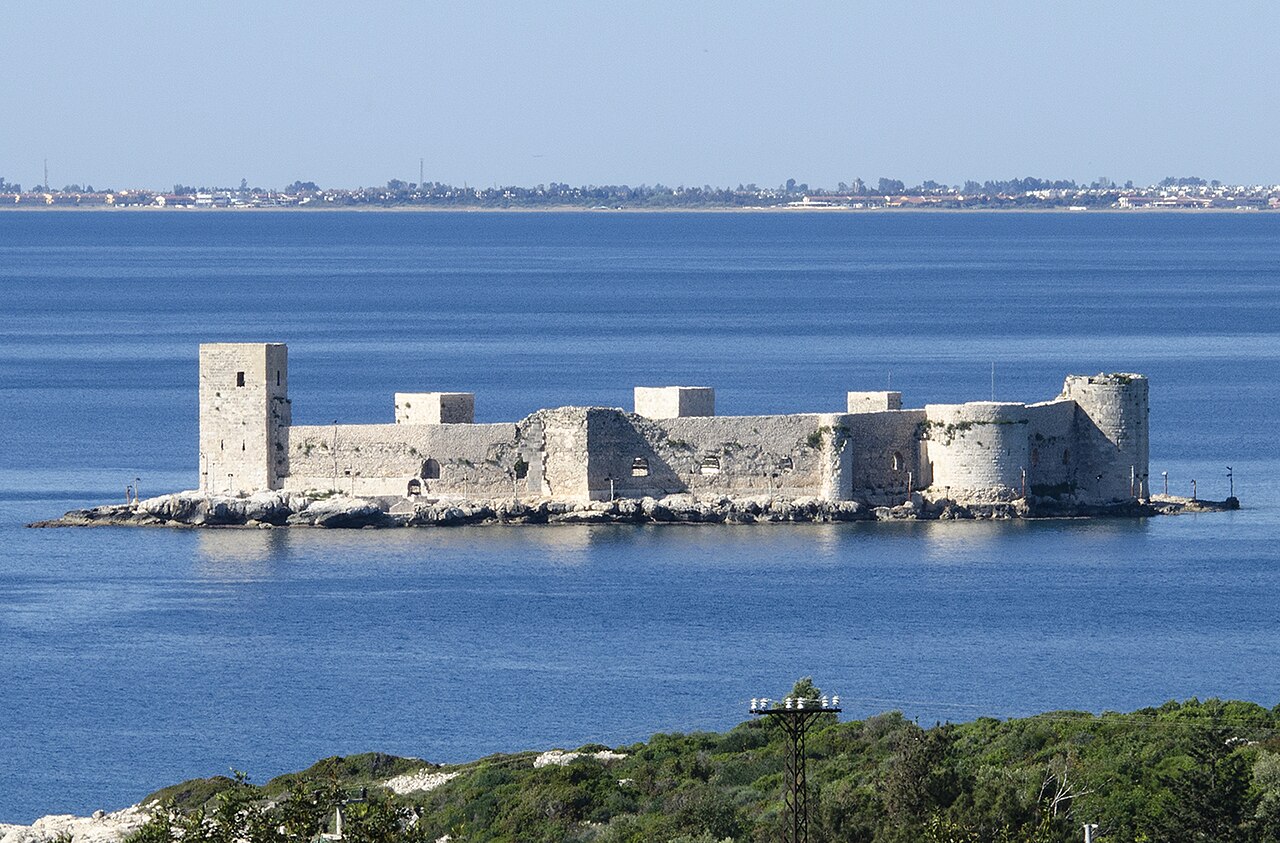
Korykos Castle's history and function are closely linked with Kizkalesi Castle, also known as the Maiden's Castle, situated on a small island just offshore. Together, these fortifications controlled the harbor entrance and protected the coastal road. While Korykos Castle guarded the mainland side, Kizkalesi Castle served as an additional maritime defense point.
Legend surrounds Kizkalesi Castle, telling of a sultan who built the fortress to protect his daughter from a prophesied death by snakebite. Tragically, a snake hidden in a fruit basket entered the castle, fulfilling the prophecy despite the fortress's formidable walls. Historically, Kizkalesi Castle was once connected to the mainland and Korykos Castle by a causeway, which was submerged following flooding caused by a dam break, rendering it an island fortress.
Present condition and visitor experience
Today, Korykos Castle stands as a well-preserved example of medieval military architecture on the Cilician coast. Its robust bastioned walls, towers, and defensive ditches remain largely intact, offering visitors a tangible connection to the region's turbulent history. The castle is accessible to the public for a modest fee, inviting exploration of its ramparts, gates, and internal spaces.
Visitors can appreciate the castle's strategic location overlooking the Mediterranean Sea and gain insight into the complex historical layers of Byzantine, Armenian, and Cypriot control. The nearby town of Kizkalesi and the iconic sea castle provide complementary attractions that enrich the cultural and historical context of the area.
Architectural and historical significance
Korykos Castle is notable for its unique concentric fortification layout, a rarity in the Cilician region, reflecting advanced military architectural principles of the High Medieval period. The castle embodies the strategic importance of Cilicia as a crossroads of empires and cultures, witnessing Byzantine resilience, Armenian sovereignty, and Cypriot defense against regional powers such as the Mamluks and Karamanids.
The castle's enduring presence testifies to the skill of its builders and the historical significance of its location. Its layered history offers valuable insights into medieval fortification techniques, political dynamics, and maritime defense strategies along the eastern Mediterranean coast.
Frequently asked questions (FAQ)
- What is Korykos Castle known for?
- Korykos Castle is known for its impressive medieval architecture and strategic location overlooking the Mediterranean coast. It served as a critical defensive fortification during the Byzantine and Crusader periods, showcasing a blend of various architectural styles from different eras.
- When was Korykos Castle built?
- Korykos Castle was originally constructed in the 11th century, with significant additions made in the 12th century. Its long history reflects the various cultural influences that have shaped the region over the centuries.
- How do I get to Korykos Castle?
- Korykos Castle is located near the D400 highway in Turkey, making it easily accessible by car. Public transportation options may be limited, so driving or taking a taxi from nearby towns is recommended for convenience.
- Is it possible to explore the castle grounds?
- Yes, visitors are welcome to explore the castle grounds and its ruins. While some areas may require careful navigation, the site offers a fascinating glimpse into its historical significance and stunning views of the surrounding landscape.
- What are the opening hours for Korykos Castle?
- Korykos Castle is typically open to visitors from sunrise to sunset, allowing ample time for exploration. However, it is advisable to check for any seasonal variations or special closure days before planning your visit.
- Can I take pictures inside Korykos Castle?
- Yes, photography is generally allowed inside Korykos Castle, so visitors can capture the stunning architecture and panoramic views. However, it’s always good to be mindful of any specific rules or restrictions that may be in place.
- What is the best time to visit Korykos Castle?
- The best time to visit Korykos Castle is during the spring and fall when the weather is mild and pleasant for outdoor exploration. Summer can be hot, while winter may bring rain, so plan your visit accordingly to enjoy the site fully.
- Are there any nearby attractions to Korykos Castle?
- Yes, there are several nearby attractions, including the charming coastal town of Anamur and beautiful beaches along the Mediterranean coast. Visitors can also explore ancient ruins and natural parks in the vicinity for a well-rounded experience.
- What are the ticket prices for Korykos Castle?
- Entry to Korykos Castle is often free or has a nominal fee, making it an affordable destination for visitors. Always check for the latest information regarding ticket prices or any guided tour options available at the site.
Information
Website
Visit websiteSources & official resources
Verify the information above using these authoritative references.
Loading map...
Visitor reviews
No reviews yet. Been here? Write the first review and help other travelers!
Write the first reviewVisited this castle? Share your experience
Your review helps other travelers and adds first-hand knowledge to our encyclopedia.