Konjice Castle Ruins

Konjice Castle ruins in Slovenske Konjice
Slovenske Konjice, Slovenia
High Medieval (11th–13th c.)
Ruins

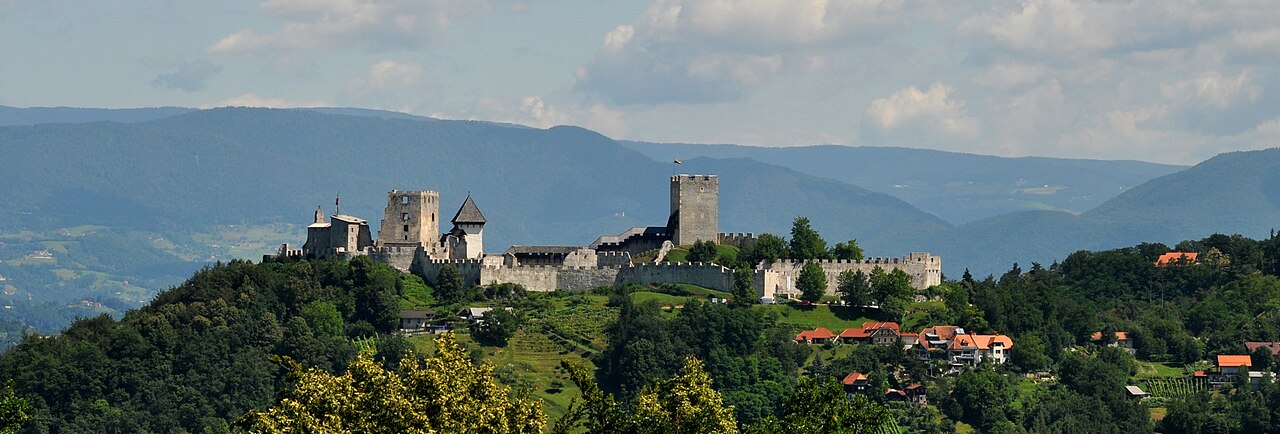
Konjice Castle ruins are located on the forested slopes of Mount Konjice near the town of Slovenske Konjice in northeastern Slovenia. This high medieval fortress was originally constructed in the 12th century, serving as a significant defensive and administrative center in the region during the Middle Ages.

Historical background and significance

The castle was built during a period when fortifications were essential for controlling trade routes and asserting feudal power. Konjice Castle was strategically positioned to oversee the surrounding valleys and roads connecting important settlements. Throughout its history, it was owned and modified by various noble families, reflecting the changing political landscape of the region.

By the 18th century, the castle was gradually abandoned as military technology and political circumstances evolved, rendering such hilltop fortresses less critical. Its decline continued until it fell into ruin, leaving behind the remnants visible today.

Architectural features and layout

Konjice Castle was an extensive hill castle complex that utilized the natural topography of Mount Konjice. Its defensive structures included thick stone walls, towers, and a fortified gatehouse designed to withstand sieges common in the medieval period.

The castle's layout likely featured a central courtyard surrounded by residential buildings, storage facilities, and defensive battlements. The use of local stone and medieval masonry techniques is evident in the surviving walls and foundations.

Defensive elements

The castle's position on a steep slope provided natural defense, supplemented by man-made fortifications. Remnants of curtain walls and towers suggest a multi-layered defense system. The gatehouse would have controlled access, possibly incorporating a drawbridge or portcullis, standard features in high medieval castles.

Residential and utility structures

Within the castle, there would have been living quarters for the lord and his retinue, as well as kitchens, storerooms, and possibly a chapel. These structures were essential for sustaining the castle's inhabitants during times of peace and siege.

Current condition and preservation

Today, Konjice Castle is classified as ruins. The site is accessible to visitors who can explore the remaining walls and foundations amidst the natural surroundings. Efforts have been made to preserve the ruins and provide informational signage to educate visitors about the castle's history and architecture.

The castle ruins are an important cultural heritage site in Slovenia, offering insight into medieval fortification techniques and regional history.

Visiting Konjice Castle ruins

The ruins are open to the public year-round and can be reached by hiking trails from the town of Slovenske Konjice. Visitors should wear appropriate footwear due to uneven terrain. The site offers panoramic views of the surrounding landscape, making it a popular destination for history enthusiasts and hikers alike.

Nearby attractions include the historic town center of Slovenske Konjice, known for its medieval architecture and cultural events.

Frequently asked questions

  • What is the best time to visit Konjice Castle ruins? The castle ruins are accessible year-round, but spring through autumn offers the best weather and trail conditions for hiking and exploration.
  • How do I reach Konjice Castle ruins from Slovenske Konjice? Visitors can follow marked hiking trails leading up Mount Konjice, starting from the town center. The hike is moderate and takes about 30-45 minutes.
  • Is there an entrance fee to visit the ruins? Access to the castle ruins is free of charge, making it an affordable cultural outing.
  • Are the ruins safe for children and elderly visitors? While the site is generally safe, the uneven terrain and lack of modern safety barriers mean caution is advised, especially for children and elderly visitors.
  • Can I learn about the castle's history on-site? Informational boards are installed at the site, providing historical context and details about the castle's architecture and significance.

Frequently asked questions (FAQ)

How do I get to Konjice Castle Ruins?
Konjice Castle Ruins are located in Slovenske Konjice, Slovenia, easily accessible by car or public transport. If you are driving, take the main road leading to Slovenske Konjice, and follow the signs to the castle. There are also local bus services that connect to the town.
What is the historical significance of Konjice Castle Ruins?
Konjice Castle Ruins date back to the 13th century and played a crucial role in the defense of the region during its time. The castle was strategically positioned on a hill, allowing it to oversee the surrounding landscape and protect against invasions. Today, it serves as a reminder of Slovenia's rich medieval history.
When was Konjice Castle built?
Konjice Castle was constructed in the early 13th century, although exact dates are difficult to pinpoint. The castle has undergone several renovations and restorations throughout its history, reflecting the architectural styles and needs of different eras. It was an important stronghold until its decline in the 17th century.
Can I visit Konjice Castle Ruins?
Yes, visitors are welcome to explore the ruins of Konjice Castle. While there are no guided tours, you can wander through the site and enjoy the panoramic views of the surrounding countryside. Make sure to take your camera to capture the stunning scenery.
Why is Konjice Castle Ruins a popular spot for tourists?
Konjice Castle Ruins attract visitors due to their historical significance and picturesque location. The panoramic views from the castle site are breathtaking, making it a favorite for photography and nature enthusiasts. Additionally, the castle's rich history adds an intriguing element to the visit.
What are the opening hours for Konjice Castle Ruins?
Konjice Castle Ruins are open year-round, and there are no specific opening hours as the site is accessible to the public at all times. However, it's recommended to visit during daylight hours for safety and to fully appreciate the views. Always check local conditions before your visit, as weather can affect accessibility.
Are there any nearby attractions to visit?
Yes, there are several attractions near Konjice Castle Ruins, including the charming town of Slovenske Konjice, known for its historical architecture and local shops. The nearby Pohorje Mountains offer outdoor activities such as hiking and skiing, depending on the season. You can also explore local wineries to taste some of Slovenia’s finest wines.
What are the ticket prices for visiting Konjice Castle Ruins?
There is no ticket price to visit Konjice Castle Ruins, as the site is free to the public. This makes it an affordable option for those looking to explore Slovenia's history and natural beauty. However, donations for the preservation of the site are always appreciated.

Information

Hill Castle

Loading map...

Visitor reviews

No reviews yet. Been here? Write the first review and help other travelers!

Write the first review

Visited this castle? Share your experience

Your review helps other travelers and adds first-hand knowledge to our encyclopedia.

Write a review

(5/5)

0/2000 characters

Your review will be visible after admin approval

Nearby castles

14 km

Slovenska Bistrica Castle

Slovenska Bistrica, Slovenia

Slovenska Bistrica Castle stands as a notable example of a renaissance mansion built upon medieval foundations in the town of Slovenska Bistrica, Slovenia. The site’s history dates back to at least 1265, when the predecessor fortress was first recorded. Originally a fortified stronghold, it evolved through centuries of ownership by significant noble families and rulers, reflecting the turbulent political and social changes of the region. The medieval origins and early ownership The earliest known mention of the castle’s predecessor occurred in 1265, when Emperor Rudolf granted the castle and adjoining town in fief to Count Meinhard of Gorizia, who became Duke of Carinthia in 1286. This initial fortification served as a strategic stronghold in the region. In 1313, ownership transferred to the Habsburg dynasty, a dominant force in Central Europe. The Habsburgs leased the castle and town to the noble House of Walsee, who managed the estate for several decades. After 1368, the lordship was acquired by the powerful Counts of Celje, an influential noble family in Slovenian and Croatian lands. They maintained control until their extinction in 1456, after which the castle reverted to the ducal lands, reflecting the shifting political landscape of the time. Transition to private ownership and renaissance transformation In 1587, the town and castle were purchased by Hans Vetter, marking a shift from feudal lordship to private ownership. The castle underwent significant transformation in the 17th century, when it was rebuilt into a renaissance mansion. This reconstruction incorporated the foundations of the earlier fortified structure, including one of the original defensive towers, preserving a tangible link to its medieval past. The castle’s layout is trapezoidal, featuring a turret at each corner which provided vantage points for defense. The inner courtyard is arcaded, a typical feature of renaissance architecture, allowing for sheltered walkways around the courtyard. The entire complex was originally surrounded by a moat, now dry, which would have served as an additional defensive measure. Architectural features and estate grounds The castle’s exterior retains its renaissance character, with the turrets and trapezoidal form clearly visible. The arcaded inner courtyard remains a central architectural highlight, providing a harmonious and elegant space within the fortress walls. The surrounding estate was once planted with rare trees and a distinctive hornbeam tree row, although these plantings have fallen into neglect over time. Interior decoration by the counts Attems In 1717, the castle was sold to the Counts Attems, who retained ownership until the end of World War II. The Attems family undertook significant interior decoration in the early 18th century, enhancing the castle’s grandeur. Notable features include a painted staircase that showcases baroque artistic influences, a chapel dedicated to the Virgin Mary, and a great hall richly appointed with period furnishings and decorations. Historical significance and preservation The castle’s history reflects the broader political and social changes in the region, from medieval feudalism through renaissance nobility to modern nationalization. Following World War II, the castle was nationalized, marking a new chapter in its stewardship. Today, Slovenska Bistrica Castle is recognized for its architectural blend of medieval foundations and renaissance elegance, as well as its connection to prominent noble families such as the Habsburgs, Celje counts, and Attems. Although the moat is now dry and the estate’s botanical features are neglected, the castle structure itself remains a significant cultural monument. Its trapezoidal plan with corner turrets and arcaded courtyard exemplify renaissance architectural principles adapted to a former defensive fortress. The interior decorations by the Attems family add valuable artistic and historical layers, making the castle a noteworthy site for visitors interested in Slovenian heritage and renaissance architecture. Visiting slovenska bistrica castle Visitors to Slovenska Bistrica Castle can explore its unique combination of medieval and renaissance architectural elements. The castle’s arcaded courtyard and painted staircase offer insights into the stylistic transitions over centuries. The chapel dedicated to the Virgin Mary provides a glimpse into the religious and cultural life of the castle’s noble inhabitants. Although the surrounding parkland is less maintained, it still offers a scenic setting for the historic mansion.

Renaissance (15th–17th c.)
Details
16.7 km
Celje — Slovenia castle

Celje

Celje, Slovenia

Celje Castle is a monumental medieval fortress perched on three steep hills overlooking the town of Celje, Slovenia. Its strategic location above the Savinja River allowed it to dominate the surrounding landscape and control vital trade routes. The castle's origins trace back to the early 13th century, when the Counts of Heunburg from Carinthia constructed the initial Romanesque palatium on the western end of the ridge. This original structure featured a multi-storied residential building surrounded by an irregular curtain wall adapted to the natural topography, with a water cistern in the inner courtyard and a heavily fortified eastern wall nearly three meters thick. By the 14th century, the castle had become the seat of the powerful Lords of Sanneck, who later became the Counts of Celje. Their rise to prominence marked a significant turning point, as they expanded and transformed the fortress into a comfortable noble residence as well as a military stronghold. In 1341, Frederick I was granted the title of Count of Celje by Emperor Louis IV of Bavaria, initiating a period of ambitious architectural development. A four-story Gothic residential building replaced the eastern curtain wall, featuring heated chambers on the upper floors and storage spaces below. The entrance was relocated and fortified with a new gatehouse and a drawbridge spanning a dry moat formed by deepening a natural ditch between the hills. Architectural evolution and fortifications Roman and early medieval foundations The castle's earliest phase included a five-sided Romanesque palace with a robust curtain wall and defensive features typical of ministerialis castles. The thick eastern wall with battlements and a defensive gallery exemplified the military architecture of the time, designed to withstand sieges and assaults. Gothic expansions and defensive towers In the late 14th and early 15th centuries, the Counts of Celje enhanced the fortress with the construction of a massive 23-meter-high tower on an artificially raised mound to the east, with walls three meters thick. This tower contained a dungeon on its lowest level, armory rooms above, and a defensive gallery at the top. The outer bailey was extended eastward and reinforced with a pentagonal bastion, reflecting evolving military needs. The Andrej Tower, named after its chapel dedicated to Saint Andrew, was added as a three-story residential and defensive structure in the northern section. Renaissance modernization and later modifications The castle underwent significant renovations in the second half of the 16th century, likely prompted by an earthquake that damaged the oldest Romanesque sections. Renaissance-style embrasures were incorporated into the walls of the inner and outer wards, and new buildings were erected around the courtyard to serve as service and storage facilities. At its peak, Celje Castle covered approximately 5500 square meters, making it the largest castle complex in Slovenia. Historical significance and noble lineage The counts of celje and their rise to power The Lords of Sanneck, elevated to Counts of Celje, became one of the most influential noble families in Central Europe during the 14th and 15th centuries. Their strategic marriages and political alliances extended their influence across Slovenian, Croatian, and Hungarian territories. Notably, Barbara of Celje married Emperor Sigismund of Luxembourg, linking the family to the Holy Roman Empire's imperial house. Military exploits and political rivalries The Counts of Celje were renowned for their military prowess, with Herman II earning distinction for saving Emperor Sigismund at the Battle of Nikopol in 1396 and for his victory in a prestigious tournament at Constance. Their rivalry with the Habsburgs culminated in the Celje-Habsburg Wars, which ended with a treaty affirming the Counts' princely status. However, the assassination of the last Count, Ulrich III, in 1456 by Hungarian magnates marked the end of their dynasty. Decline, ruin, and preservation efforts Post-medieval decline Following the extinction of the Counts of Celje, the castle became an imperial administrative center but gradually lost its military importance. It suffered damage during the peasant uprising of 1515 and was repaired in the late 16th century. By the 17th century, the fortress was largely abandoned, and its materials were repurposed for nearby constructions, including the Novo Celje Mansion. 19th and 20th-century restoration In the 19th century, the castle was used as a quarry until the Styrian regional authorities acquired it to prevent further destruction. The Celje Museum Society, founded in 1882, initiated restoration efforts that have continued into the present day. Modern conservation work has stabilized the ruins and made the site accessible to visitors, with the Frederick Tower serving as a popular viewpoint over Celje. Architectural highlights and visitor experience The frederick tower The best-preserved part of the castle is the Frederick Tower, named after Frederick II, son of Herman II. The tower's history is steeped in legend, including tales of imprisonment and secret tunnels used to supply food during captivity. Today, visitors can climb the tower for panoramic views of the town and surrounding countryside. Castle layout and defensive features Celje Castle's layout reflects its adaptation to the rugged terrain, with multiple defensive walls, towers, and a dry moat enhancing its fortifications. The combination of Romanesque, Gothic, and Renaissance architectural elements showcases the castle's long history and the evolving military technologies over centuries. Cultural and historical importance As the largest castle complex in Slovenia, Celje Castle is a symbol of the region's medieval heritage and the political power once wielded by its noble families. It hosts cultural events and concerts, contributing to the vibrant cultural life of Celje and attracting tourists interested in history and architecture.

Late Medieval (14th–15th c.)
Details
23.1 km
Velenje Castle — Slovenia castle

Velenje Castle

Velenje, Slovenia

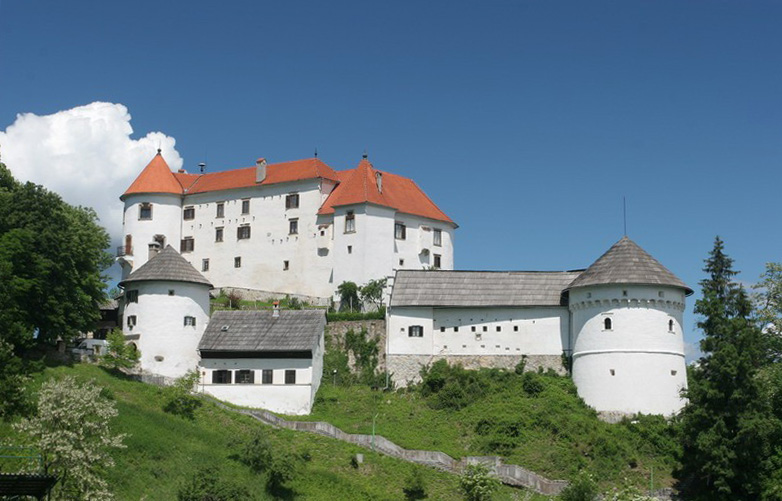
Velenje Castle (Slovene: Velenjski grad) stands as a prominent example of a high medieval hill castle in the town of Velenje, Slovenia. Constructed in the 13th century, it has undergone various phases of ownership and architectural changes while maintaining its essential medieval character. The castle is strategically perched on a hill overlooking the town, a typical defensive position for castles of its era, designed to control the surrounding territory and provide protection against invasions. Historical background and ownership The castle was originally owned by the Kunšperk family, an influential noble lineage in the region during the Middle Ages. Subsequently, ownership passed to their relatives from Ptuj and later to the Lichtenberg family. Throughout its history, the castle played a significant role in local governance and defense. Its noble owners contributed to the development of the surrounding area and used the castle as a seat of power. Architectural features and construction Velenje Castle exemplifies the architectural characteristics of high medieval hill castles. The castle complex includes a fortified keep, defensive walls, and a gatehouse designed to withstand sieges. The stone construction and strategic positioning on elevated terrain enhanced its defensive capabilities. Over the centuries, the castle saw modifications and expansions, adapting to changing military technologies and residential needs. Defensive structures The castle's curtain walls encircle the main courtyard, providing a formidable barrier against attackers. The gatehouse features a portcullis and arrow slits, allowing defenders to repel assaults effectively. The keep served as the last refuge during attacks and housed the lord's living quarters. Residential and functional spaces Inside the castle, various chambers and halls were used for administration, living, and storage. The design reflects the dual purpose of the castle as both a fortress and a noble residence. The interior spaces include a great hall for gatherings and feasts, private chambers, and service rooms. Cultural significance and museum Today, Velenje Castle functions as a museum dedicated to art and culture, preserving the heritage of the region. The museum exhibits collections that highlight the castle's history, local traditions, and artistic achievements. Visitors can explore the castle's rooms and learn about the noble families who once lived there. Museum collections The museum's exhibits include historical artifacts, artworks, and cultural objects that illustrate the lifestyle and history of the area. These collections provide insight into the medieval period and the castle's role within it. Preservation and visitor experience Velenje Castle is well preserved, allowing visitors to experience an authentic medieval atmosphere. The castle's location on a hill offers panoramic views of the town and surrounding landscape. It is accessible to the public and hosts various cultural events throughout the year, enhancing its role as a center for heritage and education.

High Medieval (11th–13th c.)
Details