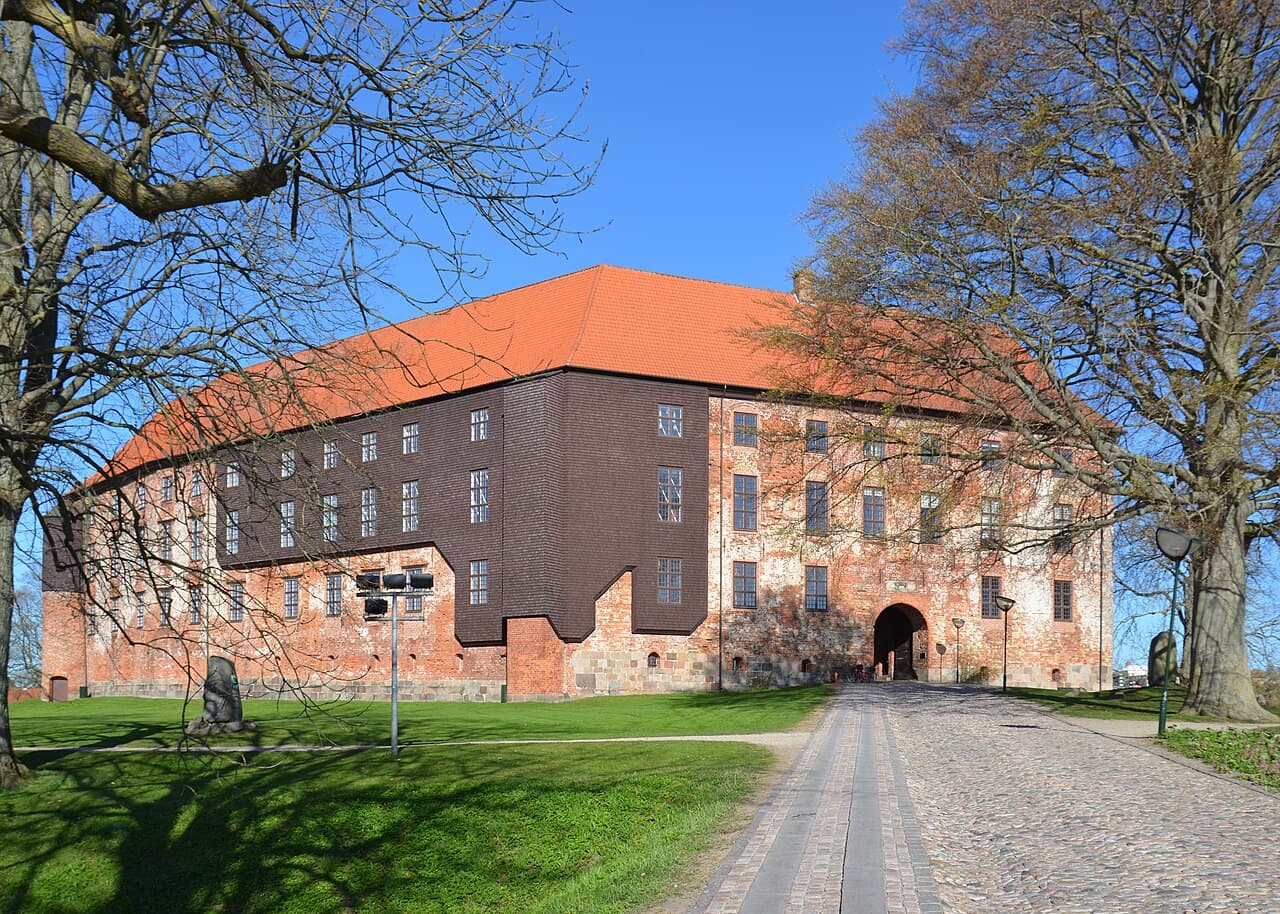
Koldinghus Castle
Koldinghus Castle is a significant historic fortress located in the town of Kolding on the southern part of the Jutland peninsula in Denmark. Founded originally in the 13th century by King Christoffer I in 1268, the castle has undergone numerous expansions and transformations reflecting changes in military technology, royal preferences, and political circumstances over several centuries.
The castle's earliest surviving structures date from the mid-15th century, built during the reign of King Christoffer III (1441–1448), who constructed the north side facing the castle lake. This was followed by additions on the western side by King Christian I (1448–1481). Later, King Christian III contributed by building the south side and the small towers within the courtyard, marking a period when the castle began to transition from a purely military fortress to a royal residence.
Architectural evolution and defensive features
Koldinghus was originally conceived as a hill castle, strategically positioned to control the surrounding area and protect the Danish realm's southern borders. The castle's design incorporated thick defensive walls, towers, and a moat fed by the nearby lake, typical of late medieval fortress architecture. However, the introduction of gunpowder and cannon warfare in the 16th century diminished the defensive effectiveness of traditional thick-walled castles like Koldinghus.
In response to these military advancements, King Christian III undertook significant expansions to adapt the castle for new functions. He added several buildings and enhanced living quarters, gradually converting Koldinghus from a fortress into a royal residence. This shift reflected broader European trends where castles were increasingly used as symbols of royal power and comfort rather than purely military strongholds.
The giant tower and its symbolic statues
One of the castle's most notable architectural features is the "Giant tower", constructed under King Christian IV after he ascended the throne in 1588. This tower was named for the four statues of mythological giants from Greek and Roman mythology that adorned its exterior: Hannibal, Hector, Scipio, and Hercules. These statues symbolized strength and heroism, aligning with the Renaissance ideals popular at the time. Today, only the statue of Hercules remains intact; the others were destroyed or lost due to fire and storms in the 19th century.
Historical significance and royal connections
Koldinghus played an important role in Danish royal history. It was a favored residence for the royal family, including Prince Frederick, who grew up there. King Christian III sometimes held court at Koldinghus and notably died there on 1 January 1559. The castle was a site of numerous wartime negotiations and political events, reflecting its strategic and symbolic importance.
Over time, as Copenhagen became the political center of Denmark, the use of outlying royal residences like Koldinghus declined. King Frederik IV removed much of the castle's surrounding walls, leaving the structure closer to its current appearance.
The 1808 fire and aftermath
During the Napoleonic Wars, Denmark allied with France and Spain against Sweden and England. In the winter of 1808, Spanish soldiers were quartered at Koldinghus under the command of Jean-Baptiste Bernadotte, who later became king of Sweden and Norway. The cold Scandinavian climate and overcrowding reportedly caused increased use of furnaces and stoves, contributing to a devastating fire that broke out in the early hours of a winter night.
The fire destroyed most of the castle except for the Giant tower. Despite fire guards being posted, lapses in vigilance allowed the blaze to spread unchecked. The castle remained a ruin for decades due to financial constraints and the political situation during and after the Napoleonic Wars.
Restoration and modern use as a museum
In the 19th and 20th centuries, Koldinghus became a popular romantic ruin, attracting visitors including the famous Danish author Hans Christian Andersen. Eventually, a comprehensive restoration project was undertaken, culminating in the castle's reopening as a museum in 1991.
Today, Koldinghus serves as a cultural institution managed by the Museum at Koldinghus, established in 1890. The museum's collections include furniture from the 16th century to the present, artifacts related to Roman and Gothic church culture, Danish paintings, and crafts such as ceramics and silverwork. The castle also hosts rotating thematic exhibitions, making it a vibrant center for history, art, and culture in the region.
Visitor experience and architectural highlights
Visitors to Koldinghus can explore the restored halls, towers, and courtyards, gaining insight into the castle's varied roles over centuries. The preservation of the Giant tower provides a unique glimpse into Renaissance symbolism and royal ambitions. The castle's location by the lake and its remaining defensive structures offer a tangible connection to its medieval origins.
Koldinghus stands as a testament to Danish history, reflecting the evolution from medieval fortress to royal residence, to ruin, and finally to a modern museum celebrating Denmark's cultural heritage.
Frequently asked questions (FAQ)
- What is the historical significance of Koldinghus Castle?
- Koldinghus Castle is one of the most important historical sites in Denmark, dating back to the 13th century. It served as a royal residence and a strategic fortress, playing a crucial role in the unification of Denmark and the power struggles of the Danish monarchy.
- When was Koldinghus Castle built?
- Koldinghus was originally constructed around 1260, making it over 750 years old. It has undergone various renovations and expansions over the centuries, reflecting different architectural styles and historical periods.
- What are the opening hours for Koldinghus Castle?
- Koldinghus Castle is typically open to visitors from 10 AM to 5 PM during the summer months, and from 10 AM to 4 PM in the winter. However, it's advisable to check the official website for any seasonal changes or special holiday hours before your visit.
- Can I buy tickets online for Koldinghus Castle?
- Yes, you can purchase tickets online through the official Koldinghus website. Buying tickets in advance is recommended, especially during peak tourist season, to avoid long queues and ensure your entry.
- Is Koldinghus Castle accessible for visitors with disabilities?
- Yes, Koldinghus Castle is committed to providing accessibility for all visitors. There are ramps and elevators available to facilitate movement within the castle, ensuring that everyone can enjoy its historical and architectural beauty.
- When is the best time to visit Koldinghus Castle?
- The best time to visit Koldinghus Castle is during the late spring and early summer months, from May to June, when the weather is pleasant and the gardens are in full bloom. Additionally, visiting during weekdays can help you avoid larger crowds.
- What nearby attractions can I visit when at Koldinghus Castle?
- While visiting Koldinghus Castle, you can also explore the beautiful Kolding Fjord and the charming town of Kolding, which offers a variety of shops, cafes, and parks. The Trapholt Museum, showcasing modern art and design, is another nearby attraction worth visiting.
- How do I get to Koldinghus Castle?
- Koldinghus Castle is easily accessible by public transport, with regular train and bus services to Kolding. If you're driving, there is parking available nearby, making it convenient for those traveling by car.
- What are the ticket prices for Koldinghus Castle?
- Ticket prices for Koldinghus Castle are generally around 90 DKK for adults, with reduced rates for children and students. Family tickets are also available, providing a cost-effective way for groups to explore the castle together.
Photo gallery

Information
Website
Visit websiteSources & official resources
Verify the information above using these authoritative references.
Loading map...
Visitor reviews
No reviews yet. Been here? Write the first review and help other travelers!
Write the first reviewVisited this castle? Share your experience
Your review helps other travelers and adds first-hand knowledge to our encyclopedia.


