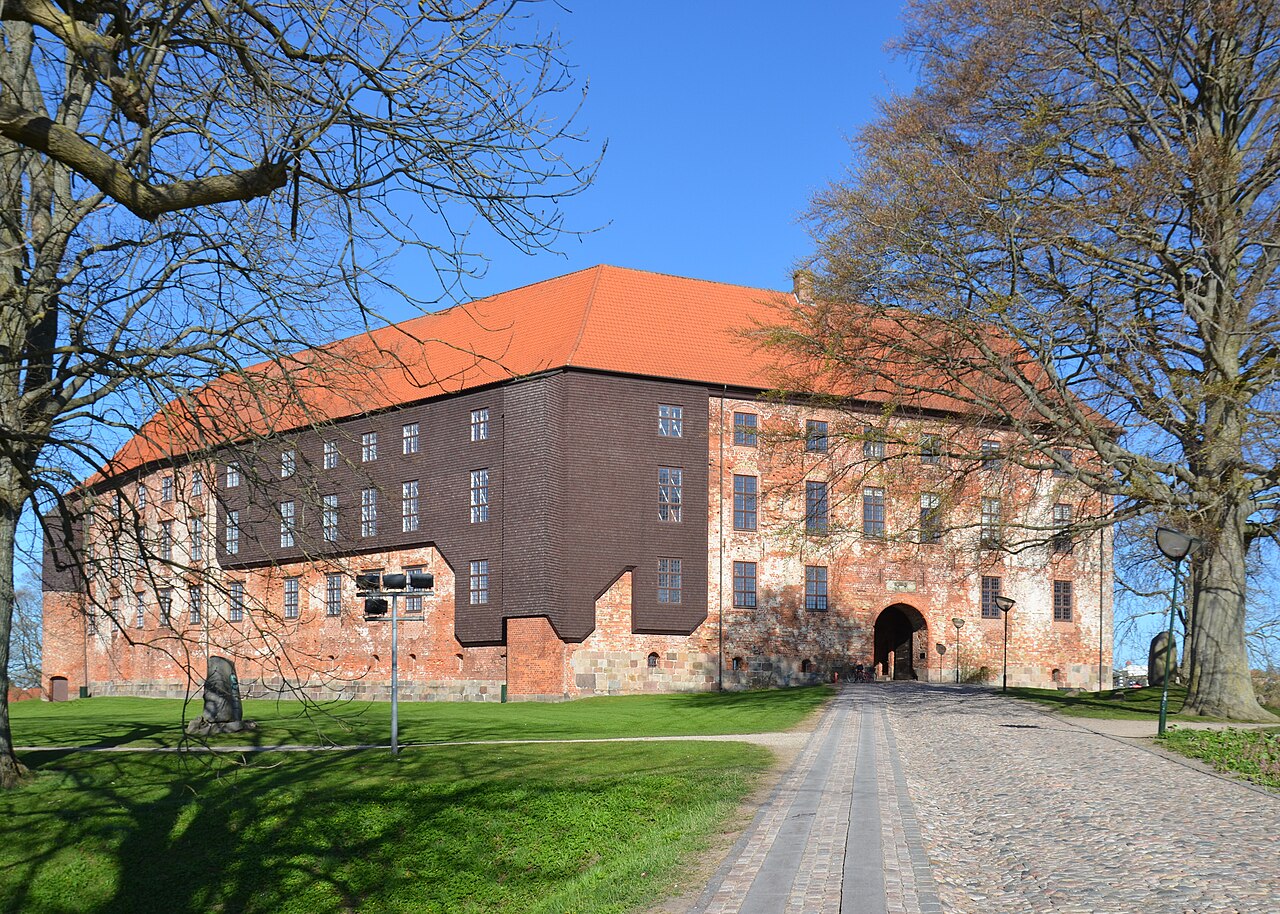
Fredericia Fortress
Fredericia Fortress was founded in 1650 as a planned fortress town in Denmark, designed specifically for military defense during the Renaissance period. Its unique layout reflects the military engineering principles of the time, with a circular plan fortified by nine large moated bastions on the land side. These bastions were strategically placed to provide overlapping fields of fire, a hallmark of Renaissance fortification design, aimed at resisting artillery assaults and siege warfare.
Architectural design and fortifications
The town's streets were laid out in a strict grid pattern, with all streets running perpendicular to each other, emphasizing the deliberate planning behind the fortress town. This regularity was uncommon for medieval towns and reflected the Renaissance ideals of order and symmetry. The fortifications on the waterfront were less formidable compared to the landward defenses but included a strong citadel that served as the final defensive position in case of an attack from the sea or harbor side.
The moated bastions were surrounded by water-filled ditches, which added an extra layer of protection against enemy forces. These bastions were connected by curtain walls and ramparts, creating a continuous defensive perimeter. The design of Fredericia's fortifications was influenced by the developments in military architecture during the 17th century, particularly the trace italienne style, which emphasized angled bastions and low, thick walls to better withstand cannon fire.
Historical significance and military engagements
Fredericia holds a significant place in Danish history, not only for its military role but also for its social and religious policies. It was the only town in Denmark at the time to grant freedom of religion and the right of asylum, attracting a diverse population and contributing to its unique character.
The fortress saw action during several key conflicts. In 1657, during the Northern Wars, it was captured by Swedish troops, highlighting its strategic importance in the region. Fredericia was again a focal point during the Schleswig Wars of 1849 and 1864, where it endured sieges and military engagements as Denmark defended its territories against Prussian and Austrian forces.
Later developments and current state
By the early 20th century, advances in military technology rendered traditional fortifications like those at Fredericia obsolete. Consequently, the fortifications were dismantled in 1909. The site was transformed into a large public park, preserving the green ramparts as a reminder of the town's fortified past. Today, visitors can explore the remains of the bastions and the layout of the fortress town, which remains a notable example of Renaissance military architecture in Denmark.
Fredericia Fortress stands as a testament to the military and urban planning innovations of the 17th century, reflecting the intersection of defense, religion, and community in Danish history.
Frequently asked questions (FAQ)
- What is Fredericia Fortress?
- Fredericia Fortress is a historic defensive structure located in Fredericia, Denmark, built in the 17th century. It played a crucial role in protecting Denmark's southern borders and is renowned for its impressive star-shaped design and well-preserved ramparts.
- When was Fredericia Fortress constructed?
- The construction of Fredericia Fortress began in 1650 and was completed in 1680. It was strategically built to control access to the Little Belt strait and to serve as a stronghold during various conflicts in Danish history.
- Can I visit Fredericia Fortress?
- Yes, Fredericia Fortress is open to the public, and visitors can explore its historical grounds, ramparts, and buildings. Guided tours are also available, providing in-depth information about the fortress's history and architecture.
- What are the opening hours for Fredericia Fortress?
- Fredericia Fortress is typically open to visitors from 10 AM to 4 PM during the summer months, while winter hours may vary. It is recommended to check the official website for the most current information on opening hours before planning your visit.
- Is Fredericia Fortress accessible for visitors with disabilities?
- Yes, Fredericia Fortress has made efforts to ensure accessibility for all visitors. There are pathways and ramps available for easier navigation, although some areas with historical architecture may present challenges.
- What is the best time to visit Fredericia Fortress?
- The best time to visit Fredericia Fortress is during the summer months, from June to August, when the weather is pleasant and many events and activities take place. Spring and early autumn can also be lovely, offering fewer crowds and mild temperatures.
- Are there any nearby attractions to explore after visiting Fredericia Fortress?
- Yes, after exploring Fredericia Fortress, visitors can enjoy nearby attractions such as the Fredericia City Museum, the scenic beaches along the Little Belt, and the charming town center filled with shops and restaurants. These spots offer a delightful continuation of your cultural experience.
- How much does it cost to enter Fredericia Fortress?
- Entry to Fredericia Fortress is typically free, but there may be fees for guided tours or special events. It’s advisable to check the official website for any updates on ticket prices and promotional offers.
Information
Loading map...
Visitor reviews
No reviews yet. Been here? Write the first review and help other travelers!
Write the first reviewVisited this castle? Share your experience
Your review helps other travelers and adds first-hand knowledge to our encyclopedia.