Kluže
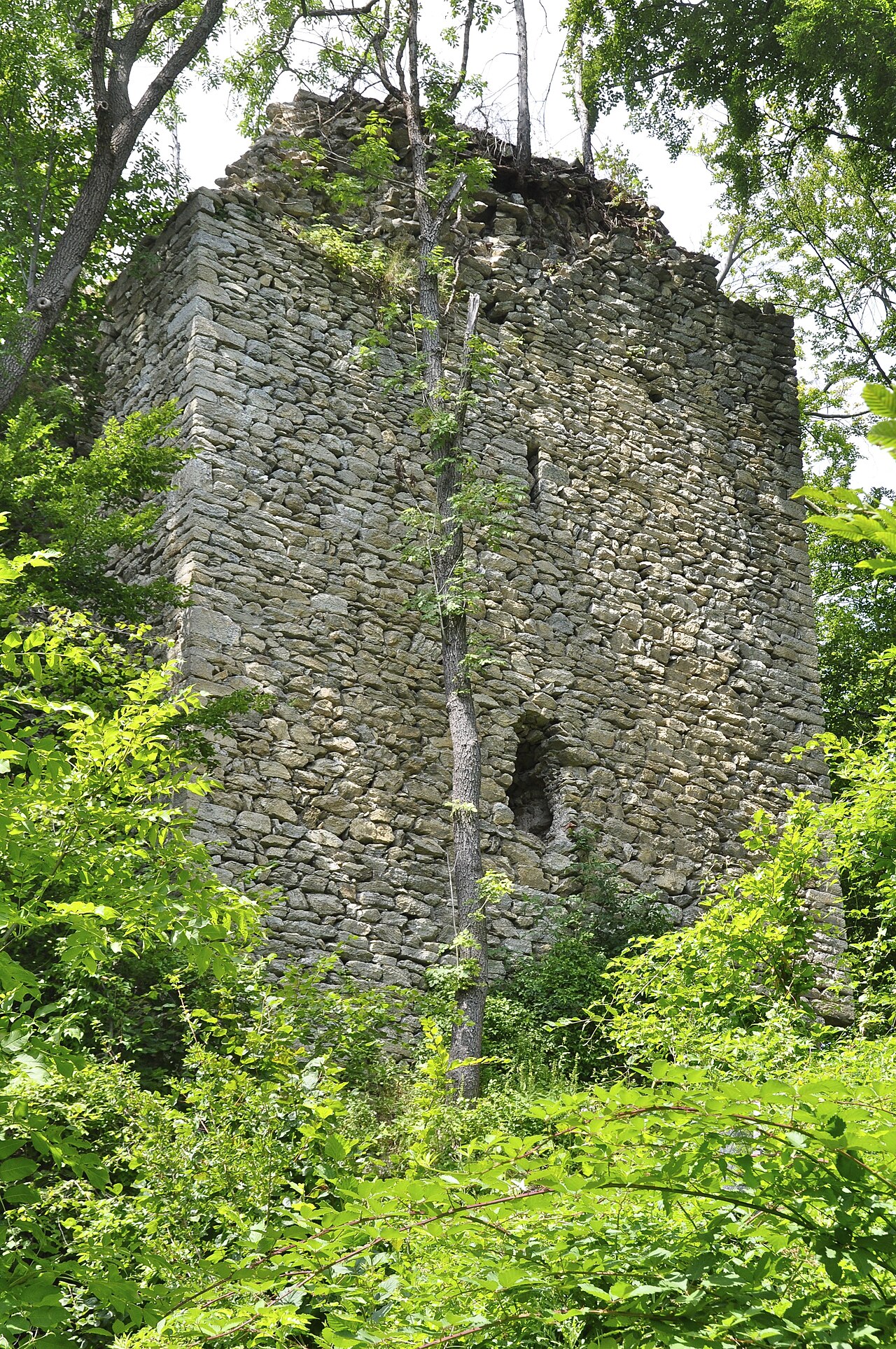
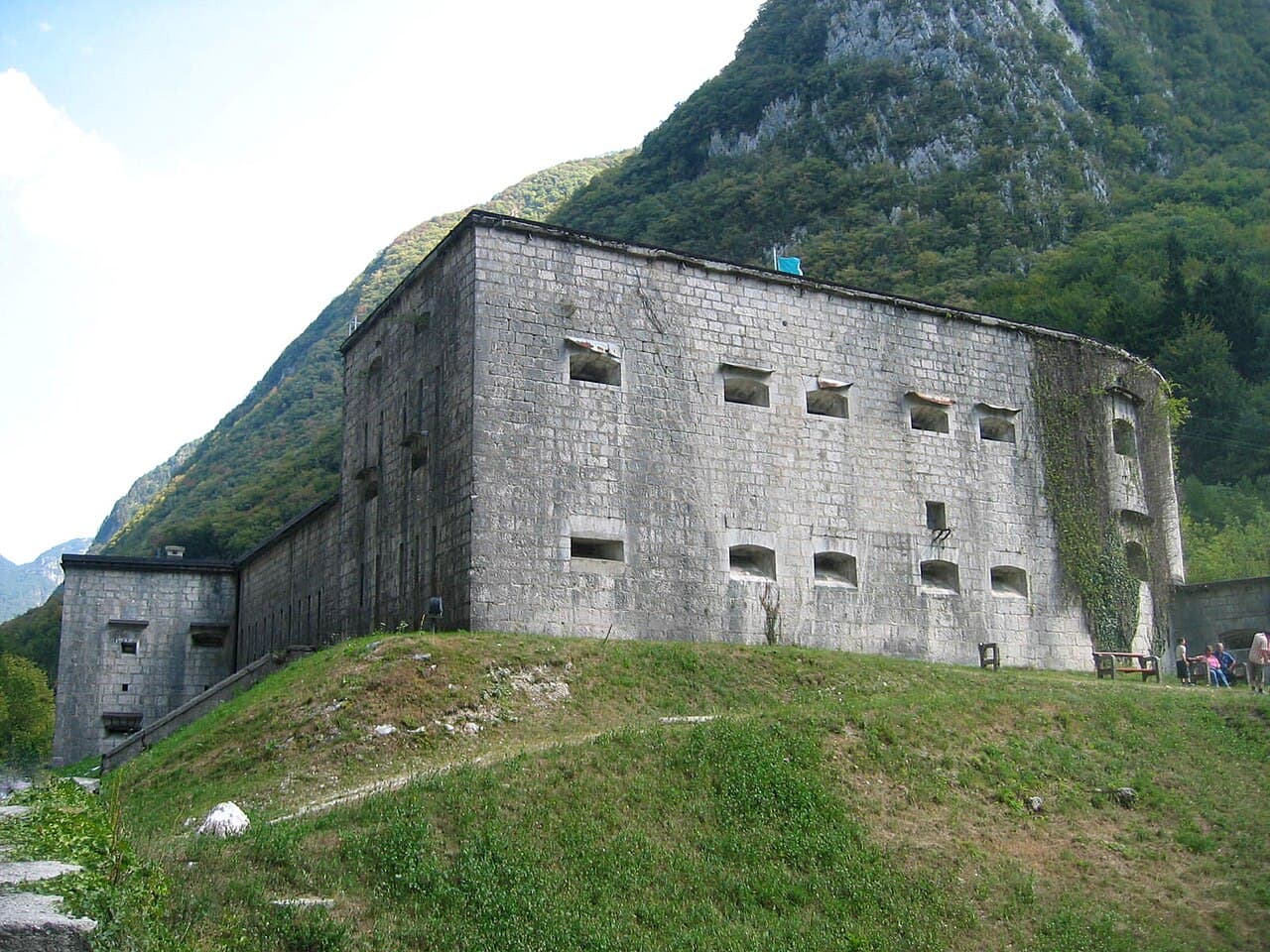
The Kluže Fortress is a historically significant 15th-century bastioned fortress located near the town of Bovec in northwestern Slovenia. Strategically positioned on the road connecting Cave del Predil and Carinthia, its original construction in 1472 was primarily aimed at defending the region of Friuli against incursions, notably from the Ottoman Turks. This fortress is an important example of late medieval military architecture in the area, reflecting the turbulent geopolitical landscape of the time.
Historical context and early significance
During the 16th century, the region around Bovec, including the Kluže Fortress, came under the control of the Austrian Habsburgs following conflicts with the Republic of Venice. Despite this political shift, the area remained an ecclesiastical dependency of Cividale and Aquileia for some time. By the late 18th century, Austrian administration was firmly established, and the fortress served as a key defensive point for the Habsburg Monarchy until the end of World War I in 1918.
Architectural features and military role
The original fortress was designed as a bastioned fortress, a style that became prominent in the late medieval period to counter advances in artillery technology. Its robust stone walls, angled bastions, and fortified gates were constructed to withstand sieges and provide overlapping fields of fire. The fortress's location in the narrow Koritnica gorge allowed it to control the vital mountain pass, making it a strategic choke point.
Destruction and reconstruction
In 1796 and 1797, the fortress was the site of intense fighting during the campaigns of Napoleon Bonaparte. Napoleon's forces managed to capture the fortress in 1797 by positioning artillery at a higher elevation, specifically from the site where Fort Hermann would later be constructed. This tactical advantage led to the fortress's destruction during the conflict.
The current structure of Kluže Fortress was rebuilt by the Austrians in the late 19th century on the original site. This reconstruction incorporated modern military architectural concepts of the time, maintaining the fortress's defensive purpose. Simultaneously, Fort Hermann was built on the adjacent higher ground to reinforce the defense of the area. The two forts are connected by a trail and a tunnel, allowing coordinated defense and troop movement.
Role in world war i and aftermath
During World War I, the Kluže Fortress and Fort Hermann were part of the frontline between Austro-Hungarian and Italian forces in the Battles of the Isonzo. Fort Hermann suffered heavy damage from Italian artillery bombardment in 1915, rendering it unusable. The fortress and the surrounding town of Bovec endured significant destruction during this period, compounded by a devastating fire in 1903 that had already damaged part of the town.
The valley where the fortress stands was a crucial battleground, with the front cutting through from north to south. The remains of the fortress today stand as a testament to the intense military history of the region and its strategic importance over several centuries.
Current condition and cultural importance
Today, the Kluže Fortress is partially preserved and serves as a historical monument reflecting the military architecture and turbulent history of the region. It attracts visitors interested in the military history of the Slovenian Alps and the broader Austro-Hungarian frontier. The fortress's location offers dramatic views of the surrounding mountains and the Koritnica gorge, enhancing its appeal as a cultural and historical site.
The connection between Kluže Fortress and Fort Hermann, along with their shared history, provides insight into late 19th-century military engineering and the strategic defense systems employed in mountainous terrain.
Photo gallery

Photo by No machine-readable author provided. Žiga assumed (based on copyright claims).•Public domain
Information
Loading map...
Visitor reviews
No reviews yet. Been here? Write the first review and help other travelers!
Write the first reviewVisited this castle? Share your experience
Your review helps other travelers and adds first-hand knowledge to our encyclopedia.