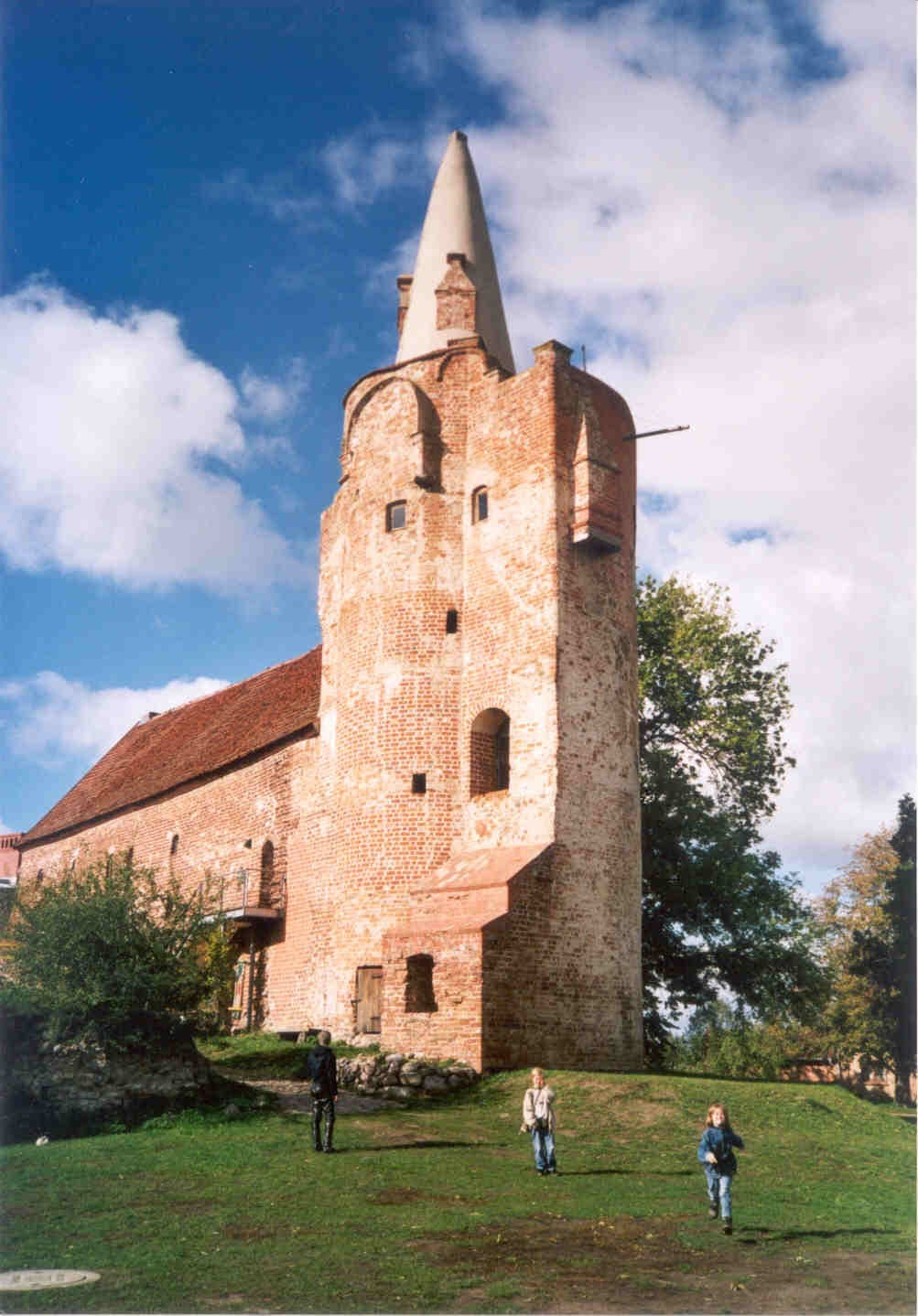
Klempenow Castle
Klempenow Castle stands as a remarkable example of medieval hill castle architecture in the historic region of Pomerania, Germany. Constructed in the 13th century during the period of German eastward settlement, it played a strategic role in the border defense system against Mecklenburg. The castle's location near the Tollense River was carefully chosen to control important river crossings and assert territorial authority. Its original fortifications included two towers and a formidable three-metre-thick defensive wall, characteristic of High Medieval military architecture.
The castle's construction began around 1231, likely under the auspices of Duke Wartislaw III of Pomerania. This period marked significant efforts by the Pomeranian dukes to consolidate power and facilitate the settlement and Christianization of the region's Slavic inhabitants. German-speaking settlers from Westphalia, Flanders, and Friesland contributed to the castle's construction and the cultural transformation of the surrounding lands.
Historical evolution and ownership
Throughout its history, Klempenow Castle witnessed multiple changes in ownership and function, reflecting the complex political landscape of Pomerania. By the mid-14th century, the castle came under the control of the noble von Heydebreck family, who maintained it until about 1520. Subsequently, the Pomeranian dukes reclaimed the castle, repurposing it as a regional administrative center.
The Thirty Years' War (1618–1648) brought turmoil to Klempenow, with the fortress changing hands between Imperial and Swedish forces. Notably, it was granted as a fief to the distinguished Swedish commander Dodo zu Innhausen und Knyphausen. The castle briefly fell under Brandenburg control in 1675 during regional conflicts but reverted to Swedish governance until the Treaty of Stockholm in 1721 transferred Pomerania to Prussian rule.
Under Prussian administration, Klempenow's military significance declined, and the castle transitioned to a role centered on civil administration and agricultural management. It served as a local justice seat and farming estate, reflecting broader shifts in castle functions during the early modern period.
Architectural features and structural details
Klempenow Castle occupies a roughly rectangular area measuring approximately 57 by 36 meters on low-lying terrain near the Tollense River. It is encircled by a water-filled moat forming a complete defensive ring, emphasizing its role as a fortified stronghold.
The outer curtain walls stand about 8.8 meters high and reach nearly three meters in thickness. These walls were constructed using a double-shell technique, comprising two layers of brick enclosing a core of broken bricks and fieldstones bound with lime mortar—a typical method in medieval northern Germany.
Among the oldest extant elements is the cylindrical bergfried tower, dating from the mid to late 13th century. This tower features a distinctive conical vaulted roof shaped like an inverted sugarloaf, built entirely of masonry without timber supports or tiles. In the 17th century, the bergfried was adapted for residential use, containing a dungeon accessed through a hole in the vaulted ceiling and upper floors equipped with a fireplace and a projecting latrine.
Significant expansions occurred in the 15th century, including the addition of a large granary and one of the earliest timber-framed gatehouses in northern Germany, originally about nine meters tall. Due to structural concerns, the gatehouse was rebuilt in the late 15th century, incorporating Renaissance architectural elements that began influencing regional designs.
The northern side of the main enclosure houses a spacious granary attic above a functioning bakehouse, whose original oven remains intact on the ground floor. Adjacent vaulted rooms have been repurposed as a café within the restored complex, while the western wing contains cellar remains from a former southwest tower, currently used for exhibitions alongside the granary.
Within the central courtyard lies a fieldstone well dating back to the castle's earliest construction phase. Beyond the main enclosure, the northern defensive structures included a bailey surrounded by water and the Tollense River. Excavations in 1997 uncovered foundations of a chapel first documented in 1494. The existing timber-framed chapel was erected in 1692 and restored between 1997 and 2000, preserving its historical and religious significance.
Post-medieval transformations and modern restoration
Following the Thirty Years' War and subsequent political changes, Klempenow Castle's military importance diminished. During the 17th century, the castle acquired much of its present-day appearance, reflecting adaptations for residential and administrative use.
In the 18th century, the castle came under direct ownership of the Swedish Crown from 1762, before transitioning to Prussian control. The castle's role shifted toward civil governance and agricultural management, including serving as a local court and farm estate.
After World War II, the castle was expropriated and repurposed to house refugees expelled from former German territories. At one point, as many as fourteen families lived within its walls, leading to significant interior modifications, including the demolition of one southwest tower to create additional living space.
Since 1991, the Kultur-Transit-96 e.V. association has spearheaded preservation and restoration efforts. The castle now functions as a cultural venue hosting exhibitions and events. Its chapel, with origins dating back to the late 15th century and reconstructed in the 17th century, continues to serve as a place of worship following meticulous restoration around the turn of the 21st century.
Cultural significance and visitor experience
Klempenow Castle represents an important heritage site that encapsulates centuries of Pomeranian history, architecture, and cultural transformation. Its blend of medieval defensive structures, Renaissance architectural influences, and later adaptations offers visitors insight into the evolving functions of castles in northern Germany.
The castle's well-preserved bergfried tower, extensive curtain walls, and historic chapel provide tangible connections to the medieval past. The restoration of the chapel and adaptive reuse of vaulted spaces as a café and exhibition areas enhance the visitor experience, making Klempenow a vibrant cultural destination.
Surrounded by scenic landscapes along the Tollense River, the castle's moat and water defenses remain prominent features, underscoring its original military purpose. Visitors can explore the castle grounds, learn about its history through exhibitions, and attend cultural events that celebrate regional heritage.
Frequently asked questions (FAQ)
- How do I get to Klempenow Castle?
- Klempenow Castle is located in the municipality of Breest, Mecklenburg-Vorpommern, Germany. It is accessible by car via local roads, and nearby towns offer public transportation options. Visitors should check local transit schedules for the best routes.
- What is the best time to visit Klempenow Castle?
- The castle is best visited during the warmer months from late spring to early autumn when the grounds and moat are most picturesque. Seasonal cultural events often take place in summer, enhancing the visitor experience.
- Can I tour the interior of Klempenow Castle?
- Yes, visitors can explore parts of the castle interior, including the restored chapel, exhibition spaces, and vaulted rooms now used as a café. Guided tours may be available during special events.
- Is Klempenow Castle suitable for families?
- Klempenow Castle offers a family-friendly environment with open grounds, historical exhibits, and cultural events. However, some areas may have limited accessibility due to the medieval architecture.
- What are the opening hours and ticket prices?
- Opening hours and ticket prices vary seasonally and for special events. Visitors should consult the official website or contact Kultur-Transit-96 e.V. for current information.
Photo gallery

Information
Sources & official resources
Verify the information above using these authoritative references.
Loading map...
Visitor reviews
No reviews yet. Been here? Write the first review and help other travelers!
Write the first reviewVisited this castle? Share your experience
Your review helps other travelers and adds first-hand knowledge to our encyclopedia.


