Klamorna
Klamorna is a remarkable hillfort located near Mnichovo Hradiště in the modern Czech Republic. The site boasts a long and complex history, beginning in the Middle Eneolithic period approximately 5,000 years ago. Early communities intermittently settled on the sandstone promontory, taking advantage of its naturally defensible position. This prehistoric occupation continued until around the 3rd century BCE, when the settlement suffered a violent and abrupt end, marking a significant transition in the site's use.
Centuries later, during the early medieval period in the 9th century, the nearby Hrady hillfort was fortified as part of a wider defensive network. Klamorna itself was strategically important as its narrow connecting neck was fortified with a rampart to control access, enhancing the security of the region. This early medieval fortification reflects the site's ongoing military and strategic significance in the landscape.
Medieval fortress system and strategic importance
From the second half of the 13th century, Klamorna became integrated into a larger fortress system that included other prominent strongholds such as Drábské světničky, Staré Hrady, and Hynšta. These castles and hillforts were positioned around the edges of Mužský hill, forming a defensive perimeter that played a critical role in regional security during the high and late medieval periods. This network of fortifications helped control important routes and provided refuge during times of conflict.
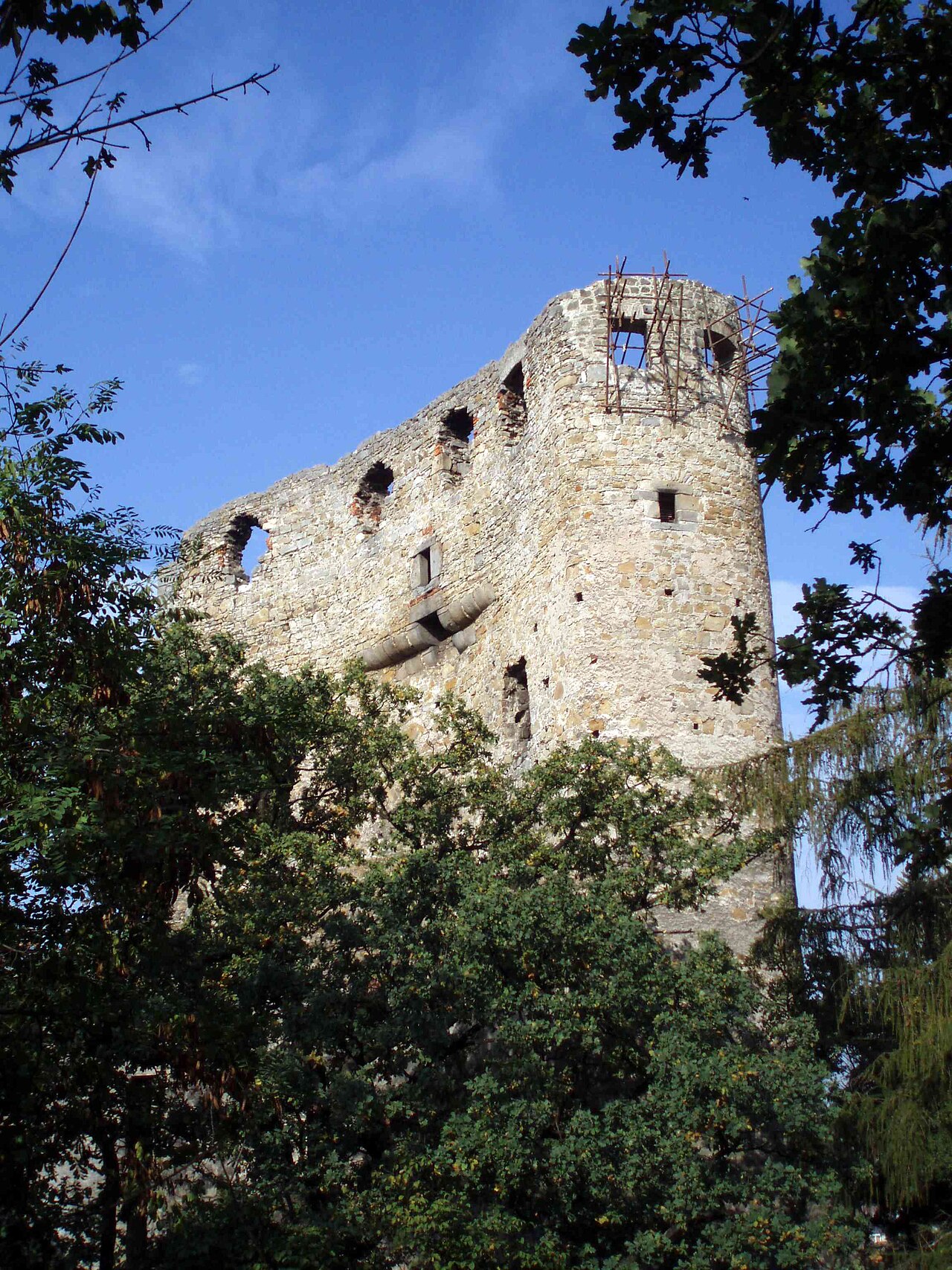
Despite its strategic value, Klamorna eventually fell into ruin. However, it experienced a brief resurgence during the Hussite Wars in the early 15th century. Commanded by the notable military leaders Bernart and Bartoš of Valečov, the fortress was occupied and used as a defensive position during this tumultuous period of religious and military conflict in Bohemia.
Architectural features and remains
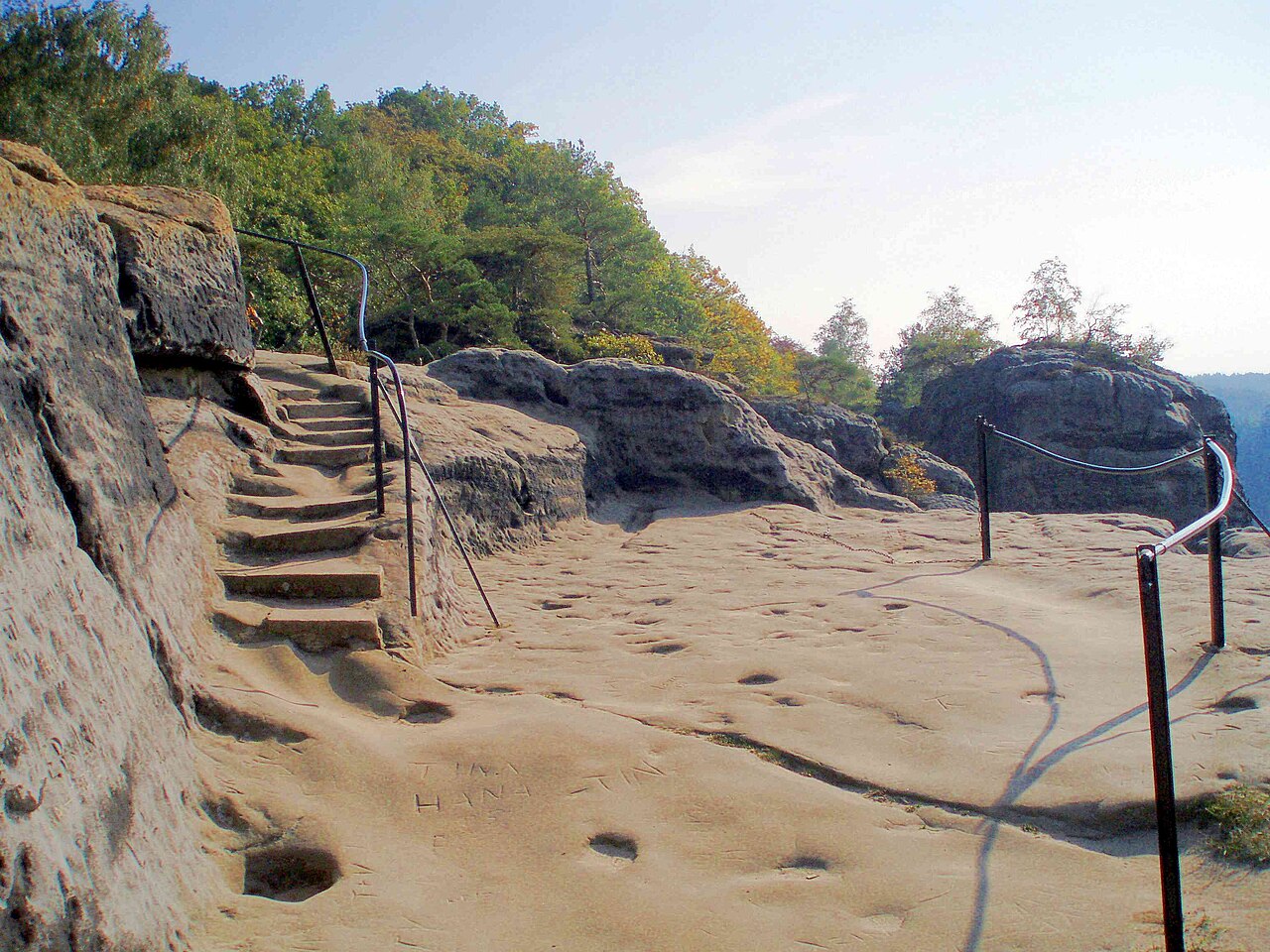
The site of Klamorna is situated on a sandstone outcrop with steep, nearly vertical sides, providing a naturally defensible location. The promontory is separated from the surrounding plateau by a narrow neck, historically closed off by a prehistoric rampart that formed part of an early hillfort defensive system. This rampart was designed to control access and protect the inhabitants from potential attackers.
Interestingly, the upper rock platforms of Klamorna do not show evidence of permanent stone-built structures, which is unusual for medieval fortifications. However, on the southern edge of the summit, a cistern carved directly into the sandstone remains visible. This rock-cut water reservoir would have been essential for collecting and storing rainwater, ensuring a reliable supply during dry periods or sieges.
Towards the rear of the site, a natural rock crevice contains four chambers carved into the sandstone. Two of these chambers still preserve stone tables, indicating they likely served specific functional or communal purposes, possibly as meeting rooms or storage areas. One chamber features the remains of a delicately carved window, an architectural detail that has allowed historians to date this part of the site to the 15th century. This suggests continued use or refurbishment during the Hussite Wars.
Phases of construction and historical layers
The combination of the prehistoric rampart, the cistern, and the rock-cut chambers reveals multiple phases of construction and reuse at Klamorna. These layers reflect the evolving tactical needs and cultural influences over millennia. The site stands as a testament to the adaptability of its occupants, who modified the natural landscape to suit their defensive and domestic requirements.
Nearby, the ruins of the 16th-century Píč farmstead further attest to the long history of human activity in the area surrounding Klamorna. This continuity of settlement highlights the enduring importance of this location through various historical periods.
Cultural significance and preservation
Since 1967, Klamorna has been formally recognized for its cultural and historical importance, receiving protected status alongside other notable sites such as Drábské světničky and Hrada hillfort. This protection helps preserve the unique archaeological and architectural features of the site, ensuring that its rich history remains accessible for future generations.
Today, Klamorna offers visitors a fascinating glimpse into prehistoric settlement patterns, medieval military architecture, and the complex history of Bohemia. Its combination of natural defenses and human-made modifications make it a valuable site for understanding the region's past.
Frequently asked questions (FAQ)
- How do I get to Klamorna hillfort near Mnichovo Hradiště?
- Klamorna is accessible by hiking trails from Mnichovo Hradiště, located in the Central Bohemia region of the Czech Republic. Visitors should prepare for a walk through natural terrain to reach the sandstone promontory.
- What historical periods does Klamorna represent?
- Klamorna spans multiple historical periods, including prehistoric Middle Eneolithic settlement, early medieval fortifications from the 9th century, and medieval fortress use in the 13th and 15th centuries during the Hussite Wars.
- Are there any visible architectural features at Klamorna?
- Visitors can observe the prehistoric rampart, a sandstone cistern, and rock-carved chambers with stone tables and a carved window dating to the 15th century. These features highlight the site's long-term strategic use.
- Is Klamorna suitable for family visits and educational trips?
- Yes, Klamorna is an excellent site for educational visits due to its rich archaeological layers and visible medieval features. However, the terrain may be challenging for very young children or those with limited mobility.
- When is the best time to visit Klamorna?
- The best time to visit Klamorna is during late spring to early autumn when weather conditions are favorable for hiking and outdoor exploration of the hillfort and surrounding natural landscape.
Information
Sources & official resources
Verify the information above using these authoritative references.
Loading map...
Visitor reviews
No reviews yet. Been here? Write the first review and help other travelers!
Write the first reviewVisited this castle? Share your experience
Your review helps other travelers and adds first-hand knowledge to our encyclopedia.