Hynšta
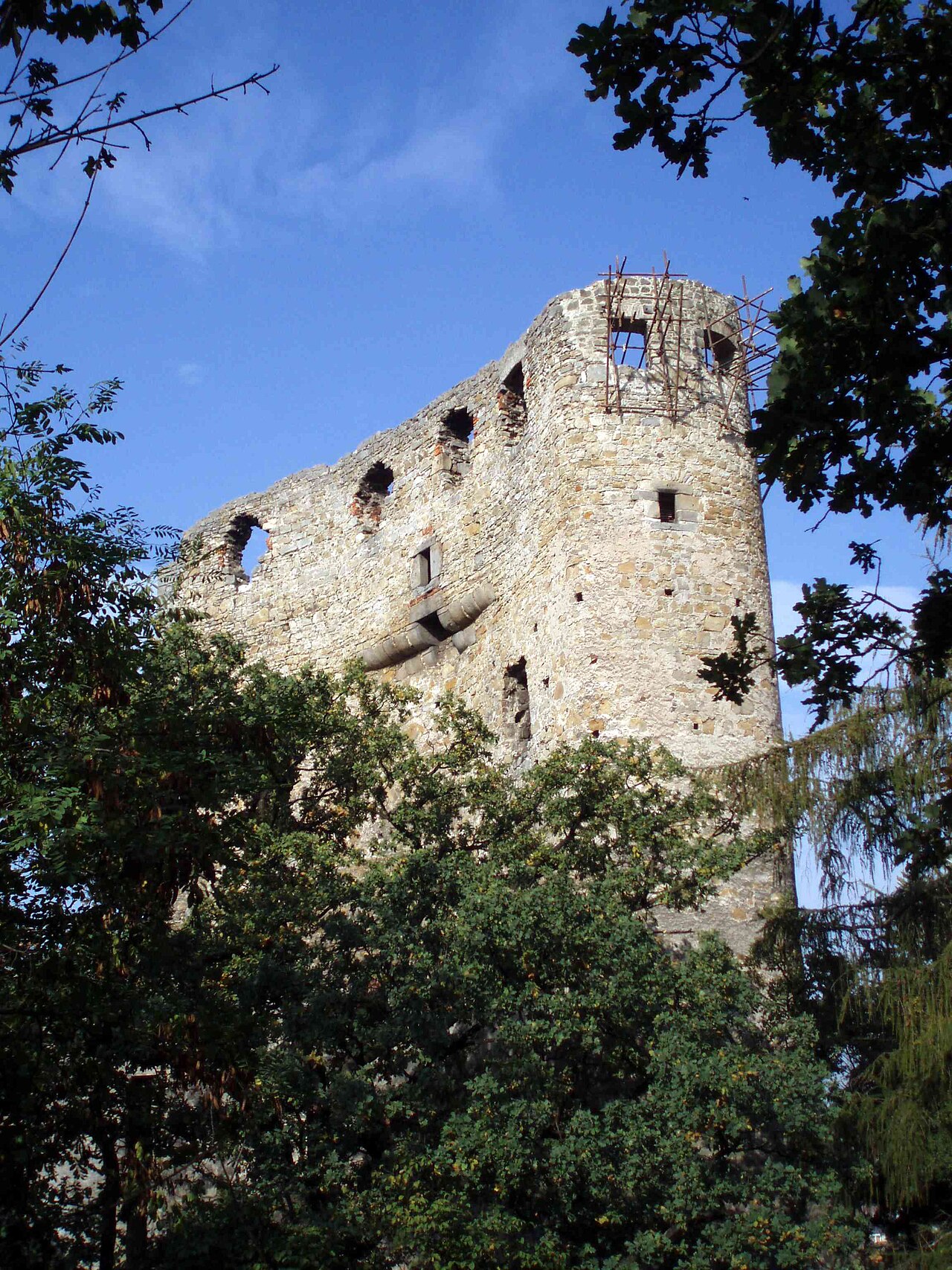
Hynšta castle stands as a remarkable example of a 13th-century rock castle nestled in the Czech landscape near the village of Branžež. This hill castle is uniquely integrated with its natural sandstone surroundings, showcasing a rare architectural approach where the castle's core is carved directly from a single sandstone block. Despite the absence of extensive historical documentation, Hynšta's physical remains and local traditions offer valuable insights into its past functions and significance.
Architectural features and layout
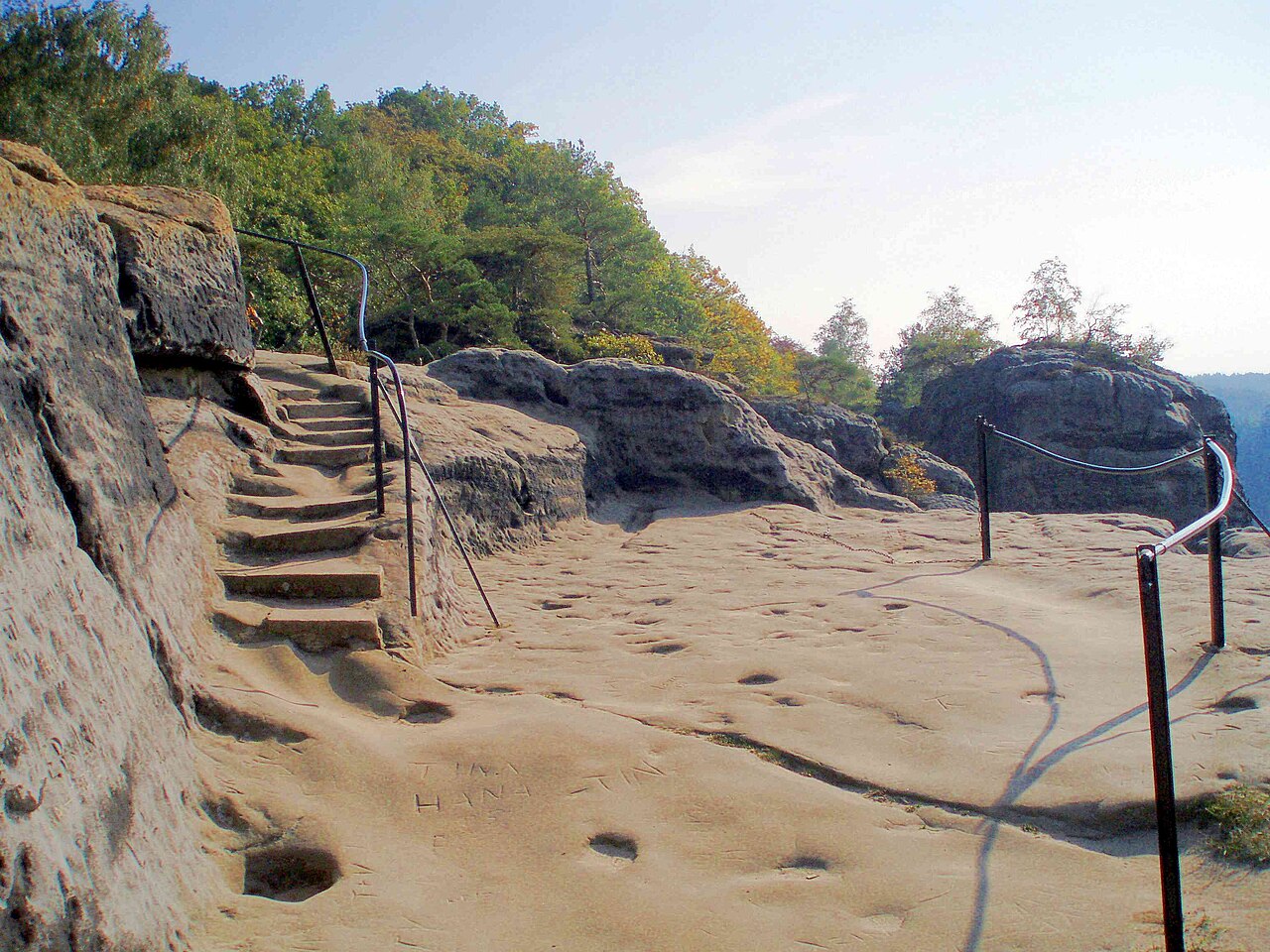
The castle's most defining characteristic is its construction atop a distinctive sandstone formation, which forms the central core of the site. Unlike many medieval castles, Hynšta did not rely on massive stone walls or elaborate external fortifications. Instead, it utilized the natural rock as a defensive element, supplemented by a wide outer courtyard that was separated from the rock core by a moat. This moat served as a defensive ditch, marking a clear boundary between the main rock block and the outer bailey, enhancing the site's defensibility despite its modest scale.
At the base of the rock, an underground water cistern was ingeniously constructed to collect and store water. This feature was crucial for sustaining inhabitants during sieges or periods of isolation, demonstrating thoughtful planning in the castle's design. Within the rock itself, a chamber known as a světnička (a small room) was hewn directly into the sandstone. This chamber was expanded in the 17th century to serve as a chapel or prayer room, reflecting a significant adaptation of the castle's use over time.
Historical context and significance
Although no contemporary documents mention Hynšta by name, and its original designation remains unknown, the castle's construction in the 13th century places it within the broader context of medieval fortifications in the region. It likely functioned as a small fortified refuge, providing shelter and defense for local inhabitants or minor nobility.
In later centuries, local tradition associated Hynšta with the Czech Brethren, a Protestant group emerging from the Hussite movement. According to these traditions, the castle's rock chambers were adapted for religious purposes during the 17th century, serving as a clandestine prayer site. A legend persists regarding an inscription bearing the name of J. A. Komenský (John Amos Comenius), a renowned Czech educator and theologian of the same era, on the eastern rock face. However, this inscription and the castle's use by the Czech Brethren remain unverified by archaeological or documentary evidence.
Preservation and current state
Today, Hynšta exists primarily as a partially preserved rock castle, with its most notable features being the carved chambers, the moat, and the water cistern. The absence of traditional stone walls and external fortifications makes it a rare example of a castle that relied heavily on natural geological formations for defense. Preservation efforts focus on maintaining the integrity of the rock-cut structures and the surrounding landscape, allowing visitors to appreciate the castle's unique architectural and historical character.
Cultural heritage and visitor experience
Hynšta's enigmatic history and distinctive rock architecture attract visitors interested in medieval fortifications and Czech history. The castle offers a tangible connection to the medieval period and the religious transformations of the 17th century. Visitors can explore the rock chambers and moat area, gaining insight into the adaptive reuse of medieval sites and the interplay between natural landscape and human construction.
While the castle lacks extensive facilities due to its small size and preservation status, its setting near Branžež provides a picturesque backdrop for hiking and exploration of the Czech countryside. The site stands as a testament to the ingenuity of medieval builders who utilized natural formations to create defensible refuges.
Frequently asked questions (FAQ)
- What is the historical significance of Hynšta castle?
- Hynšta castle is a rare example of a 13th-century rock castle that utilized natural sandstone formations for defense. It reflects medieval fortification strategies and later religious adaptations linked to the Czech Brethren in the 17th century.
- Can visitors explore the rock chambers at Hynšta?
- Yes, visitors can explore the carved rock chambers, including the svetnička chamber that was expanded into a chapel. These features showcase the castle's unique integration with its natural environment.
- How was water supplied to Hynšta castle during sieges?
- An underground water cistern was built at the base of the central rock to collect and store water, ensuring a reliable supply during periods of isolation or siege.
- Is there any evidence of the Czech Brethren using Hynšta castle?
- While local tradition associates the castle with the Czech Brethren and a prayer room carved in the rock, there is no definitive archaeological or documentary evidence confirming this use.
- Where is Hynšta castle located?
- Hynšta castle is located near the village of Branžež in the Central Bohemia region of Czechia, set on a sandstone hill formation.
Information
Loading map...
Visitor reviews
No reviews yet. Been here? Write the first review and help other travelers!
Write the first reviewVisited this castle? Share your experience
Your review helps other travelers and adds first-hand knowledge to our encyclopedia.