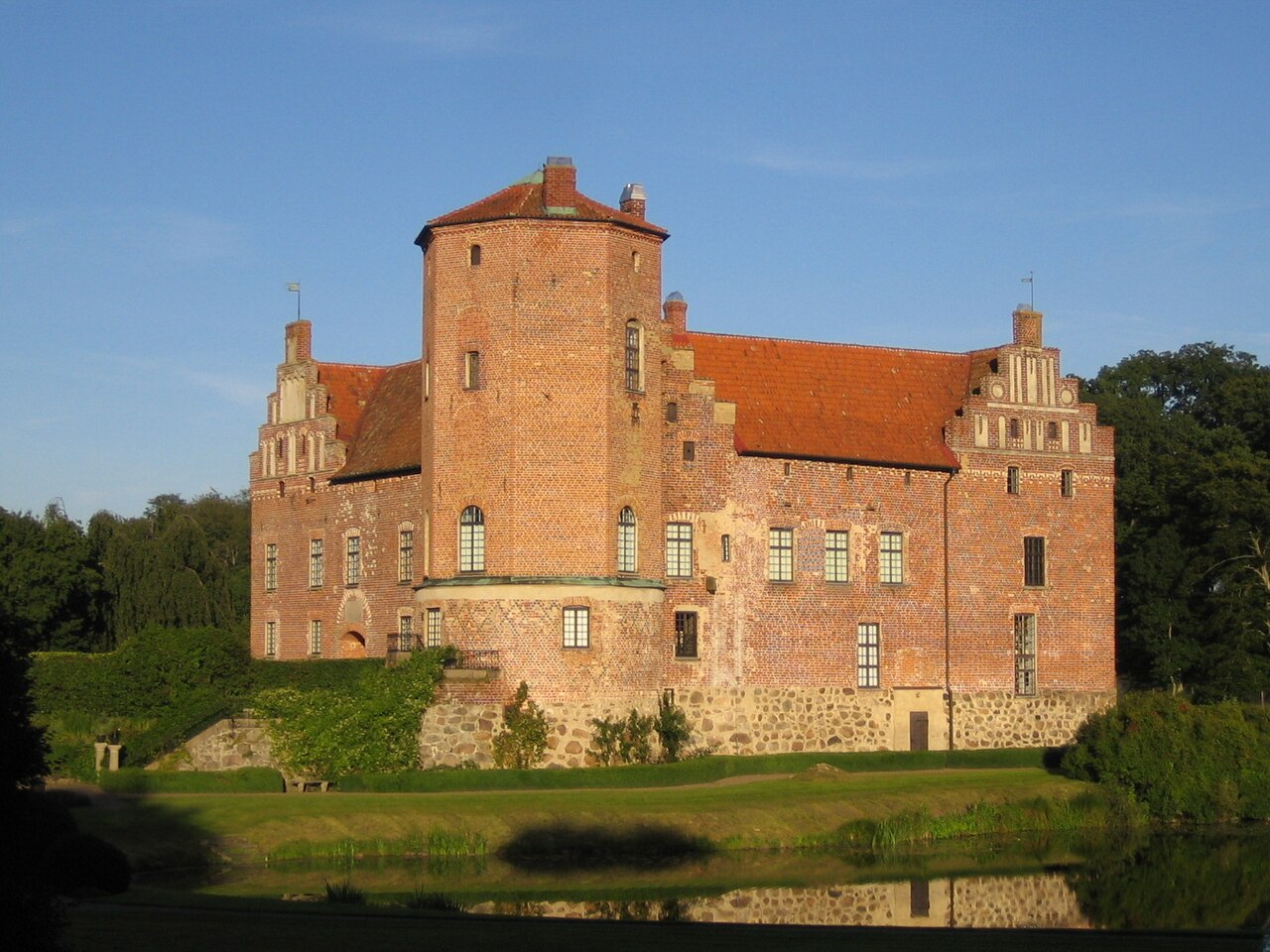
Klågerup Castle
Klågerup Castle, located in Klågerup, Sweden, is a historic estate with origins tracing back to the early 15th century. Initially owned by Peter Spoldener and his son, the estate has witnessed centuries of architectural evolution and local historical events. The castle's history reflects the changing styles and social dynamics of the region, culminating in a significant 19th-century reconstruction that defines its current appearance.
Early history and ownership
The estate of Klågerup was first recorded in the early 1400s, marking it as a site of importance in the region for over six centuries. The initial ownership by Peter Spoldener and his son established the estate as a notable property in the area. Over the following centuries, the estate changed hands and underwent various modifications, reflective of the architectural and functional needs of its owners.
18th-century restoration and challenges
By the 18th century, the buildings on the estate had fallen into considerable disrepair. In 1737, Fredrik Trolle initiated an extensive restoration project aimed at revitalizing the estate's structures. This restoration was crucial in preserving the estate through a period when many similar properties faced neglect or demolition. The efforts undertaken by Trolle ensured that Klågerup remained a significant local landmark.
19th-century reconstruction and architectural style
The present main building of Klågerup Castle owes its distinctive appearance to a major reconstruction completed in 1858. This rebuilding was executed in the French Renaissance style, a choice that reflected contemporary tastes and the desire to convey prestige and elegance. The architect responsible for this transformation was Helgo Zettervall, a prominent figure known for his work on numerous Swedish historical buildings. Zettervall's design introduced characteristic elements of the French Renaissance, including symmetrical façades, ornate detailing, and steeply pitched roofs, which remain defining features of the castle today.
Helgo zettervall's influence
Helgo Zettervall was a leading architect in Sweden during the 19th century, renowned for his restoration and redesign of medieval and Renaissance structures. His work at Klågerup Castle exemplifies his skill in blending historical styles with modern construction techniques of the time. The castle's elegant proportions and decorative features showcase Zettervall's architectural vision and his contribution to Swedish cultural heritage.
Historical events: the 1811 peasant riots
Klågerup Castle was notably a center of local unrest during the 1811 peasant riots. These riots were part of broader social tensions in Sweden, where rural populations expressed grievances against authorities. The rebellion at Klågerup was quickly suppressed within a few days, but it remains a significant episode in the estate's history, illustrating the social challenges of the period and the castle's role as a focal point in local affairs.
Modern use and cultural significance
Today, Klågerup Castle serves not only as a historical monument but also as a cultural venue. One of its wings houses a small doll museum, which is open to visitors by appointment only. This museum adds a unique dimension to the castle's public appeal, attracting visitors interested in both history and specialized collections. The castle's preservation and adaptive reuse demonstrate ongoing efforts to maintain its relevance and accessibility.
Visitor information and accessibility
While the castle itself is a private estate, the doll museum provides a rare opportunity for public engagement. Visitors interested in exploring this collection should arrange visits in advance. The castle's location in Klågerup makes it accessible for day trips from nearby cities, contributing to its role in regional tourism.
Architectural features and estate layout
Klågerup Castle's architecture is characterized by its French Renaissance style elements, including steep roofs, decorative gables, and symmetrical windows. The estate layout typically includes the main building, several outbuildings, and landscaped grounds. Although detailed descriptions of the interior are limited, the castle's exterior reflects the 19th-century revivalist trends favored by Swedish nobility and architects like Zettervall.
Preservation status
The castle is currently in a well-preserved condition, maintaining much of its 19th-century architectural integrity. Preservation efforts have ensured that the castle remains a prominent example of French Renaissance revival architecture in Sweden, contributing to the country's cultural and architectural heritage.
Frequently asked questions (FAQ)
- When was Klågerup Castle originally built and who were its first owners?
- Klågerup Castle dates back to the early 15th century and was initially owned by Peter Spoldener and his son.
- What architectural style characterizes Klågerup Castle's main building?
- The main building was rebuilt in 1858 in the French Renaissance style by architect Helgo Zettervall.
- Can visitors tour Klågerup Castle and its museum?
- The castle is privately owned, but the doll museum in one wing is open to visitors by appointment only.
- What historical event took place at Klågerup Castle in 1811?
- Klågerup Castle was the center of local peasant riots in 1811, which were suppressed within a few days.
- What is the current condition of Klågerup Castle?
- Klågerup Castle is well preserved, maintaining much of its 19th-century architectural features.
Information
Architect
Helgo Zettervall
Loading map...
Visitor reviews
No reviews yet. Been here? Write the first review and help other travelers!
Write the first reviewVisited this castle? Share your experience
Your review helps other travelers and adds first-hand knowledge to our encyclopedia.