Kisimul Castle
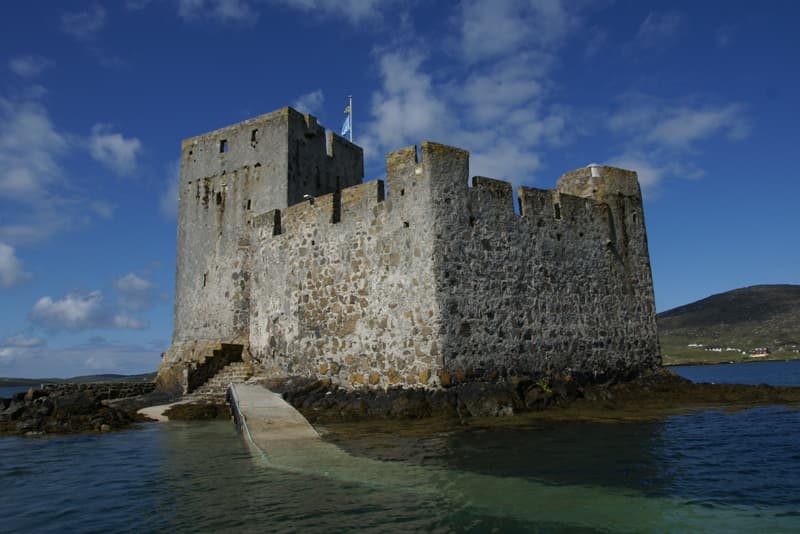
Kisimul Castle stands as a remarkable example of a medieval tower house fortress located on a small rocky islet just off the coast of Barra Island in the Outer Hebrides, Scotland. Its name derives from the Gaelic word "ciosamul," meaning "castle island," aptly describing its unique setting surrounded entirely by the sea. This strategic maritime position rendered Kisimul virtually impregnable and accessible only by boat, emphasizing its defensive importance throughout history.
The castle's origins trace back to the 15th century, making it the only significant surviving medieval castle in the Outer Hebrides. It served as the ancestral seat of the MacNeil clan chiefs of Barra, who proudly claimed descent from the legendary Niall of the Nine Hostages. Though tradition suggests the MacNeils settled in Barra during the 11th century, documented history begins with Gilleonan MacNeil in 1427, who is believed to have constructed the original castle structure that dominates the islet today.
Architectural features and layout
Kisimul Castle is primarily a three-storey tower house, a common form of fortified residence among Scottish clans during the late medieval period. This tower served as the living quarters for the clan chief and was designed for both defense and habitation. Surrounding the tower is a curtain wall that encloses a small courtyard, creating a compact fortified complex on the limited rocky terrain.
Within the courtyard, several ancillary buildings once stood, including a feasting hall for clan gatherings, a chapel reflecting the clan's religious devotion, a tanist’s house (the residence of the heir apparent), and a watchman’s house for security duties. Many of these structures were restored during the 20th century, with the tanist’s house notably serving as the MacNeil family home for a period.
A distinctive feature of Kisimul is its own freshwater wells, fed by an underground seam, located near the postern gate. This natural resource was crucial for sustaining the castle's inhabitants, especially during sieges or maritime isolation.
Historical significance and clan heritage
The MacNeils of Barra, whose lineage is intimately tied to Kisimul Castle, were a seafaring and martial clan with a storied history. The clan's maritime prowess is evidenced by the nearby foundations of a crew house, situated outside the curtain wall beside the original landing place. This building housed the sailors who manned the clan chief's galley, underscoring the clan's naval capabilities and the importance of sea power in their dominance of the region.
One notable figure in the clan's history was Ruari ‘the Turbulent’ MacNeil, who was arrested for piracy against an English ship during the reign of King James VI in the late 16th century. This episode highlights the clan's sometimes contentious relationship with the crown and their active role in regional power struggles during the Renaissance period.
Despite their long-standing control over Barra, the MacNeil chiefs faced financial difficulties in the 19th century, leading to the sale of the island in 1838. However, the clan's connection to Kisimul was revived in the 20th century when Robert Lister MacNeil, the 45th chief, repurchased the estate in 1937 and initiated restoration efforts to preserve the ancestral stronghold.
Restoration and modern stewardship
Throughout the 20th century, significant restoration work was undertaken to conserve Kisimul Castle and its associated structures. These efforts aimed to stabilize the medieval fabric and revive the castle's historical character, allowing it to stand as a tangible link to Scotland's clan heritage and maritime history.
In 2000, stewardship of Kisimul Castle passed to Historic Scotland, ensuring its protection and management as a cultural heritage site. Today, the castle is recognized not only for its architectural significance as a rare surviving medieval fortress in the Outer Hebrides but also as a symbol of the enduring legacy of the MacNeils and their deep connection to the sea and land of Barra.
Visiting Kisimul Castle
Visitors to Barra can reach Kisimul Castle by boat, experiencing firsthand the castle's dramatic island setting and maritime heritage. The castle's remote location and well-preserved structures offer a unique glimpse into Scotland's medieval past and the life of a powerful clan chief. The combination of natural beauty and historical depth makes Kisimul a compelling destination for those interested in castle architecture, Scottish history, and clan culture.
Frequently asked questions (FAQ)
- How do I get to Kisimul Castle?
- Kisimul Castle is located on Barra Island in Scotland, accessible by a short boat ride from the main ferry terminal in Barra. Visitors can take the ferry from Oban or other islands, and once on Barra, local boats can take you directly to the castle.
- What is the historical significance of Kisimul Castle?
- Kisimul Castle is a unique medieval structure that dates back to the 15th century and served as the stronghold of the Macneil clan. It is renowned for its picturesque setting and rich history, which reflects the turbulent past of the Hebrides.
- When was Kisimul Castle built?
- Construction of Kisimul Castle began in the mid-1400s, making it one of the oldest surviving castles in Scotland. It was completed in stages, with various modifications made over the centuries to adapt to changing needs and circumstances.
- Can I visit Kisimul Castle?
- Yes, Kisimul Castle is open to visitors during the summer months, typically from April to September. Access is usually via guided tours, which provide insights into the castle’s history and architecture.
- Why is Kisimul Castle considered an architectural gem?
- Kisimul Castle is celebrated for its well-preserved medieval architecture, featuring defensive structures such as thick walls and a central tower. The castle's unique location on a rock in the sea adds to its charm and strategic significance.
- Is it possible to tour Kisimul Castle?
- Yes, guided tours are available, providing visitors with a comprehensive understanding of the castle's history and architectural features. These tours often include access to the interiors and stunning views of the surrounding landscape.
- What are the opening hours for Kisimul Castle?
- Kisimul Castle typically opens from 10 AM to 5 PM during the tourist season, but it's advisable to check the official website for the most current hours before your visit. Opening hours may vary based on weather conditions and special events.
- What is the best time to visit Kisimul Castle?
- The best time to visit Kisimul Castle is during the summer months, particularly from late April to early September, when the weather is generally milder and the castle is open to the public. This period also offers more frequent boat services to the castle.
- Are there any nearby attractions to visit?
- Yes, Barra Island has several attractions nearby, including the beautiful beaches of Vatersay and the scenic landscapes of the island. Additionally, visitors can explore local wildlife, hiking trails, and the charming village of Castlebay.
- What are the ticket prices for Kisimul Castle?
- Ticket prices for Kisimul Castle are generally reasonable, with discounts available for children and families. It's best to check the official site for the latest pricing information, as rates may vary depending on the season and special events.
Photo gallery

Information
Website
Visit websiteSources & official resources
Verify the information above using these authoritative references.
Loading map...
Visitor reviews
No reviews yet. Been here? Write the first review and help other travelers!
Write the first reviewVisited this castle? Share your experience
Your review helps other travelers and adds first-hand knowledge to our encyclopedia.