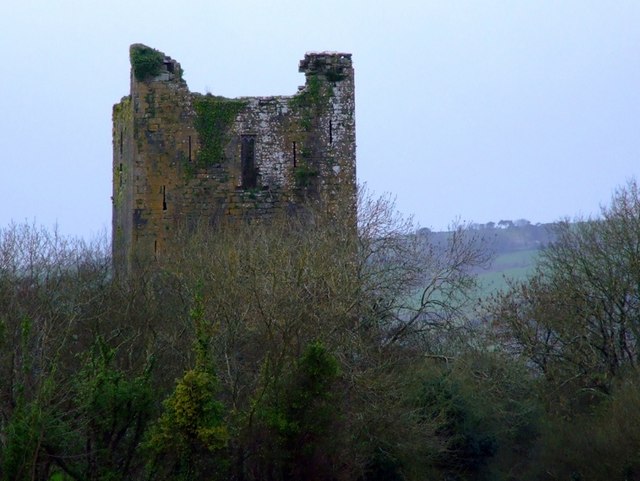
Kilcrea Castle
Kilcrea Castle stands as a remarkable example of a late medieval Irish tower house, located in the townland of Kilcrea, just south of the village of Farran in County Cork, Ireland. Constructed in the 15th century, this castle was commissioned by Cormac Laidir MacCarthy, 9th Lord of Muskerry, a prominent figure in Gaelic Irish nobility. The castle's strategic placement near the River Bride and its proximity to the Kilcrea Friary—also founded by MacCarthy—reflect the dual military and religious influence wielded by its builder.
Historical significance and origins
The site of Kilcrea Castle has a long history of occupation, with archaeological indications suggesting the presence of a Bronze Age fortification on a small mound in the marshy terrain south of the river. Although no physical remains of this earliest fortification survive, it highlights the longstanding strategic importance of the location.
The castle itself was completed around 1465 during a period of significant Gaelic resurgence in Ireland. Cormac Laidir MacCarthy, who also built the nearby Blarney Castle and Carrignamuck Castle, played a crucial role in consolidating MacCarthy power in the region through these fortifications. His death in battle in 1494 and subsequent burial in the adjacent friary underscore the intertwined nature of martial and ecclesiastical authority at Kilcrea.
During the turbulent years at the end of the 16th century, Kilcrea Castle was subject to English military interest. In 1599, English troops garrisoned the castle amid increasing raids and conflicts, though they withdrew by 1603, reflecting the shifting political landscape of Ireland during the Elizabethan conquest.
Architectural features and layout
Kilcrea Castle is a classic example of a five-storey rectangular tower house, a common form of fortified residence among the Gaelic and Anglo-Irish nobility in the late medieval period. The tower is positioned on the western edge of the site and oriented northward, offering commanding views over the surrounding landscape and the nearby river.
Attached to the tower's eastern side is a rectangular bawn, an enclosed courtyard surrounded by defensive walls. Historical records from the 19th century note that the bawn originally featured two square corner towers, of which only one remains today. This surviving tower, a three-storey structure, stands at the southeast corner of the enclosure and exemplifies the defensive architecture typical of the period.
The castle's defensive features also included a moat on its northern side, which was partially destroyed in the 19th century when the Cork and Macroom Railway cut through the area. This intrusion altered the original defensive landscape but also serves as a historical marker of changing land use in the region.
Construction materials and techniques
The tower house and bawn walls are constructed primarily of local stone, typical of Irish medieval masonry. The thick walls, narrow windows, and battlements were designed to withstand sieges and provide protection against attackers. The castle's layout reflects both residential and defensive needs, with living quarters, storage, and defensive positions integrated within the tower's vertical arrangement.
Later history and preservation
Unlike the adjacent Kilcrea Friary, which became state property, Kilcrea Castle has remained in private ownership throughout its history. It is currently situated on private farmland but is accessible to visitors via a footpath from the friary car park. This accessibility allows visitors to explore the ruins and appreciate the castle's historical context within the Irish medieval landscape.
Today, Kilcrea Castle is in a ruined and overgrown condition, with much of the structure obscured by vegetation. The surviving elements, including the tower house, bawn walls, and the remaining corner tower, continue to offer valuable insights into 15th-century Irish fortification architecture. The site also includes the ruins of the 18th-century Kilcrea House, located in a field south of the castle, which adds another layer to the site's historical narrative.
Visiting Kilcrea Castle and surroundings
Visitors to Kilcrea Castle can combine their exploration of the castle ruins with a visit to the nearby Kilcrea Friary, a significant religious site founded by the same patron. The castle's location in a scenic rural setting offers a peaceful environment for understanding medieval Irish history and architecture.
The castle is freely accessible, though visitors should be prepared for uneven terrain and overgrown paths. The proximity to the River Bride and the surrounding natural landscape enhances the experience, providing context for the castle's strategic placement and historical role.
Nearby historical sites
- Kilcrea Friary: Founded by Cormac Laidir MacCarthy, this Franciscan friary is a well-preserved medieval religious site located just 500 meters east of the castle.
- Blarney Castle: Another famous MacCarthy stronghold, renowned for the Blarney Stone, located approximately 20 kilometers northeast of Kilcrea.
- Carrignamuck Castle: A nearby MacCarthy fortress, adding to the network of defensive sites in the region.
Architectural and cultural legacy
Kilcrea Castle exemplifies the typical characteristics of late medieval Irish tower houses, reflecting the social and political dynamics of Gaelic Ireland during the 15th century. Its construction by a powerful Gaelic lord demonstrates the continued importance of fortified residences as symbols of authority and control.
The castle's relationship with the adjacent friary illustrates the close ties between secular and religious power in medieval Ireland. Together, they form a cultural landscape that offers insight into the lifestyle, defense strategies, and spiritual life of the Irish nobility.
Despite its ruinous state, Kilcrea Castle remains a significant heritage site, protected under local conservation laws, and continues to attract visitors interested in Ireland's rich medieval past.
Frequently asked questions (FAQ)
- How do I visit Kilcrea Castle?
- Kilcrea Castle is located on private farmland but is freely accessible to visitors via a footpath starting from the car park at Kilcrea Friary. Visitors should be prepared for uneven terrain and overgrown paths.
- What is the historical significance of Kilcrea Castle?
- Kilcrea Castle was built in the 15th century by Cormac Laidir MacCarthy, a prominent Gaelic lord, and reflects the military and religious influence of the MacCarthy family in County Cork.
- Can I visit Kilcrea Friary when I visit the castle?
- Yes, Kilcrea Friary is located just 500 meters east of Kilcrea Castle and is a well-preserved medieval religious site, making it a complementary visit to the castle ruins.
- What architectural features does Kilcrea Castle have?
- The castle features a five-storey rectangular tower house with an attached rectangular bawn that originally had two square corner towers, although only one survives today.
- Is Kilcrea Castle suitable for family visits?
- Kilcrea Castle can be visited by families, but visitors should be aware of uneven and overgrown paths. Supervision of children is advised due to the ruinous condition of the site.
Information
Sources & official resources
Verify the information above using these authoritative references.
Loading map...
Visitor reviews
No reviews yet. Been here? Write the first review and help other travelers!
Write the first reviewVisited this castle? Share your experience
Your review helps other travelers and adds first-hand knowledge to our encyclopedia.