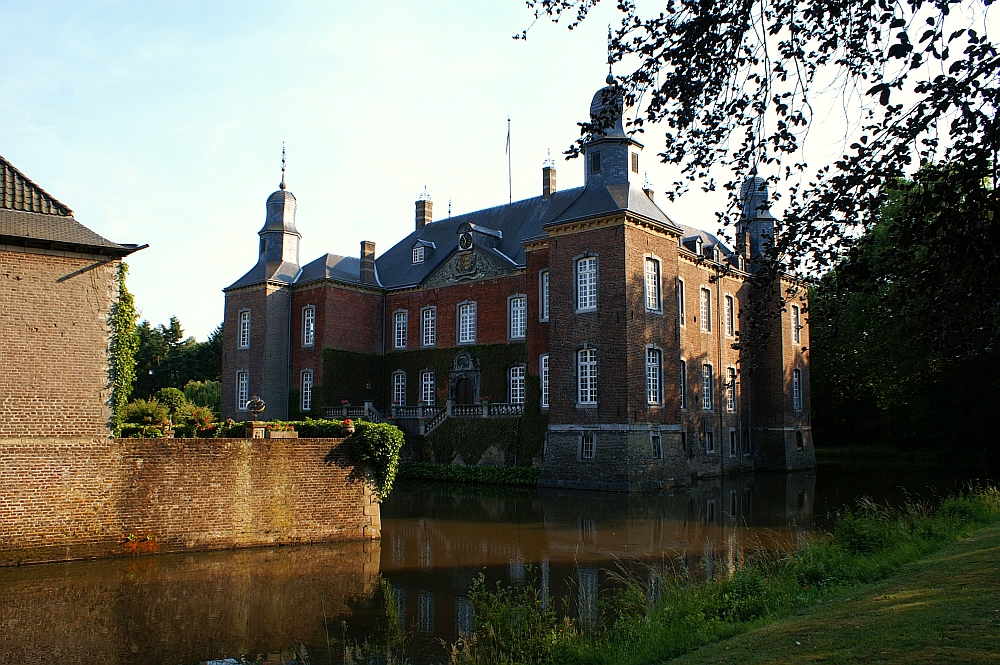
Kessel Castle
Kessel Castle, also known as Keverberg Castle or Kasteel Keverberg, is a remarkable medieval fortress located in the village of Kessel in the province of Limburg, Netherlands. This castle stands as one of the oldest surviving castles in the country and is a prime example of a motte-and-bailey and shell-keep castle design, reflecting centuries of architectural evolution and historical significance along the strategic Maas River.
The origins of Kessel Castle date back to the 9th century, initially constructed as a wooden fortification on a raised earthwork or motte. This early structure served a critical role in controlling river traffic and collecting tolls along the Maas, underscoring its strategic and economic importance. By around 1100 AD, the wooden fort was replaced by a stone castle, marking the transition to more durable defensive architecture. The castle was originally the seat of the Counts of Kessel, a noble family that held sway over the surrounding region.
Architectural evolution and defensive features
The castle's most distinctive architectural feature is its oval-shaped enclosure measuring approximately 28 by 24 meters, built between 1150 and 1200 under the direction of Count Hendrik II. This enclosure wall, constructed of marlstone and brick, was equipped with a wall walk supported by arches and topped with battlements, providing defenders with a vantage point and protection. The original entrance was located on the north side, flanked by two small projecting towers, typical of medieval fortifications designed to control access and improve defense.
In the mid-13th century, a significant modification occurred with the construction of a residential building inside the enclosure on the north side. This addition necessitated relocating the castle's entrance to a new gatehouse on the east side. The residential wing included a barrel-vaulted cellar, demonstrating advanced medieval masonry techniques and providing secure storage.
A major enhancement to the castle's defenses was the addition of a massive rectangular keep around 1320, located on the northeast corner of the enclosure. This keep, measuring 7.3 by 4.6 meters, featured thick walls of about 1.5 meters made of brick and faced with marlstone from the second floor upwards. The keep served as a last refuge during sieges and symbolized the lord's power and prestige.
Historical significance and ownership
Kessel Castle's history is closely intertwined with the political and military developments of the region. The castle was initially controlled by the Counts of Kessel until 1279, when the last count, Hendrik V, sold it to the Count of Guelders. Subsequently, the castle was managed by various noble families, including the Van Berck and Van Merwijck families, who maintained its strategic importance.
During the turbulent period of the 80 Years War in the late 16th and early 17th centuries, Kessel Castle suffered damage from fires and military actions. It was repaired and rebuilt in the early 17th century, evolving into a residence with four residential quarters within the oval enclosure. In 1597, the castle was set on fire by soldiers from the Dutch Republic, leading to its partial destruction and subsequent restoration.
In 1798, the castle passed to the Keverberg family, from whom it derives one of its names. The castle remained in noble hands until the late 19th century. In 1875, it was acquired by the Congregation of the Sisters of Divine Providence, who transformed it into a convent and girls' boarding school, known as St. Aloysius. They undertook renovations in 1927 to adapt the building for its new functions.
Destruction and preservation efforts
During World War II, German troops deliberately destroyed Kessel Castle in 1944 by blowing it up and setting it on fire, leaving it a ruin. Since then, the castle has remained largely in ruins, with only parts of the outer walls, the gate tower, and some internal structures surviving. The vaulted cellar beneath the great hall has been preserved and restored, offering insight into the castle's medieval past.
Since 1954, the ruins have been owned by the local municipality, which has undertaken several consolidation and excavation projects. Notably, the Dutch professor J.G.N. Renaud conducted significant archaeological work to preserve the site and study its history. A major restoration and partial rebuilding project began in 2014, including modern architectural additions that respect the castle's historical character while introducing contemporary design elements such as glass facades and slate roofing.
Architectural details and notable features
The castle's motte, approximately nine meters high, was artificially enlarged and reshaped to provide a commanding position overlooking the Maas River. The original defensive walls were constructed using natural stones and rounded cobbles sourced from the river, showcasing medieval construction methods. The ring wall features niches and battlements, with a protected walkway supported by arches.
The interior of the castle once included a large hall and a gate tower dating from the 13th century, as well as the 14th-century donjon keep. The 15th-century Maastoren gate tower added further defensive capabilities. The castle's proximity to the Church of the Nativity of Our Lady (Onze-Lieve-Vrouw-Geboortekerk) highlights the historical relationship between the fortress and local religious institutions.
Recent restoration efforts have combined historic masonry with modern materials, such as concrete floors supported by slender columns and large glass windows that replace traditional dormer windows. The new roof, designed in an 18th-century style and covered with slate tiles, preserves the castle's silhouette while allowing natural light to flood the interior spaces.
Cultural significance and current use
Kessel Castle remains a significant cultural landmark in Limburg, attracting visitors interested in medieval history, architecture, and Dutch heritage. The ruins serve as a venue for events, concerts, and weddings, blending historical ambiance with contemporary use. The discovery of a lead coffin during recent excavations, believed to contain the remains of the last baron, Frederik Hendrik Karel de Keverberg, adds to the castle's mystique and historical narrative.
As one of the oldest castles in the Netherlands, Kessel Castle offers a unique glimpse into the region's medieval past, its strategic importance along the Maas River, and the architectural evolution from wooden fortifications to stone keeps and residential quarters. Ongoing preservation efforts ensure that this heritage site remains accessible and meaningful for future generations.
Frequently asked questions (FAQ)
- How do I get to Kessel Castle?
- Kessel Castle is located in Kessel, Netherlands, easily accessible by car and public transport. If you're driving, there are parking facilities nearby. For public transport, check local bus and train schedules that service the Kessel area.
- What is the historical significance of Kessel Castle?
- Kessel Castle dates back to the 15th century and is a prime example of medieval architecture in the Netherlands. It played a crucial role in the region's defense during various conflicts throughout history. Today, it stands as a symbol of local heritage and is a popular site for visitors interested in history.
- When was Kessel Castle built?
- Kessel Castle was originally constructed in the late 1400s, showcasing the architectural styles of that era. Over the centuries, it has undergone several renovations and restorations to preserve its grandeur. The castle continues to reflect its rich historical past.
- Can I take guided tours of Kessel Castle?
- Yes, guided tours are available at Kessel Castle, providing visitors with in-depth knowledge about its history and architecture. Tours often include access to the castle's various rooms and grounds. It is advisable to book in advance, especially during peak tourist seasons.
- Why is Kessel Castle a popular tourist attraction?
- Kessel Castle attracts visitors for its stunning architecture, historical significance, and picturesque surroundings. The castle's well-preserved grounds and gardens offer a serene atmosphere ideal for exploration. Additionally, it hosts various cultural events throughout the year, enhancing its appeal.
- Is it possible to host events at Kessel Castle?
- Yes, Kessel Castle offers facilities for hosting events such as weddings, corporate meetings, and private gatherings. The unique setting and historical ambiance provide a memorable backdrop for any occasion. It's best to contact the castle management for specific details and availability.
- What are the opening hours for Kessel Castle?
- Kessel Castle is typically open to visitors from Tuesday to Sunday, with specific hours varying by season. It's recommended to check the official website or contact the castle directly for the most current information on opening hours. Note that the castle may close on certain public holidays.
- What are the ticket prices for visiting Kessel Castle?
- Ticket prices for Kessel Castle vary depending on age and whether you opt for a guided tour. Discounts may be available for children, students, and seniors. Check the castle's official website for detailed pricing and any special offers that may be available during your visit.
- What are some nearby attractions to visit after Kessel Castle?
- After visiting Kessel Castle, you can explore the charming village of Kessel, which offers quaint shops and local dining options. Additionally, the nearby Maas river provides beautiful walking paths and scenic views. Don't miss the opportunity to visit other historical sites in the region, enriching your cultural experience.
Information
Sources & official resources
Verify the information above using these authoritative references.
Loading map...
Visitor reviews
No reviews yet. Been here? Write the first review and help other travelers!
Write the first reviewVisited this castle? Share your experience
Your review helps other travelers and adds first-hand knowledge to our encyclopedia.