Kazimierz Dolny
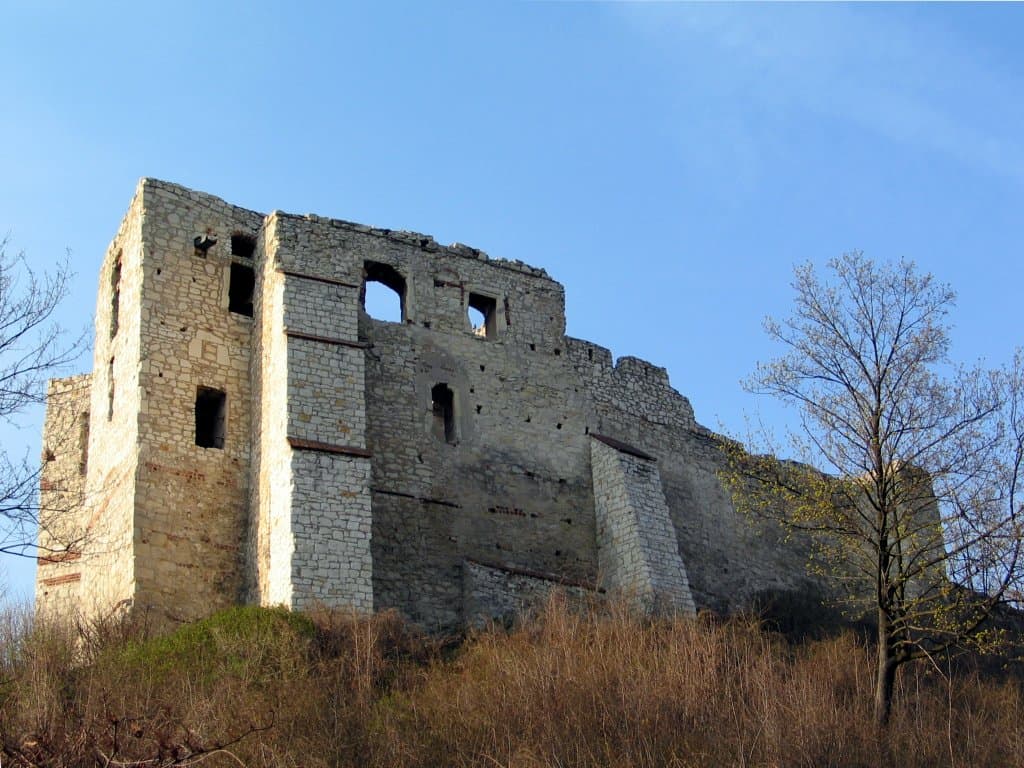
Kazimierz Dolny Castle stands as a significant historical monument located in the town of Kazimierz Dolny, Poland. This Renaissance bastioned fortress has its origins deeply rooted in the medieval period, with construction phases spanning from the late 13th century through the 17th century. The castle's strategic position on a hill overlooking the Wisła River made it a crucial defensive and administrative center for controlling river traffic and collecting tolls.
Early foundations and medieval origins
The beginnings of Kazimierz Dolny are linked to the Norbertine order from Zwierzyniec near Kraków, brought by King Casimir the Just in 1181. The Norbertines established a monastery on Wietrzna Góra, a hill previously known for its pagan sacred oak grove. The monastery’s location near a key crossing on the Wisła was intended to secure a steady income from tolls. The settlement that developed beneath the monastery was named in honor of Casimir the Just, with the first documented mention of the settlement dating to 1249.
During the reign of King Władysław I Łokietek in the early 14th century, the existing wooden-earth fortifications were replaced or supplemented by a stone defensive tower, now known as the Łokietek Tower. This tower, built on a steep hill above the river, served as a royal guard post at a strategic river crossing. Its massive cylindrical form, with walls up to four meters thick at the base and an entrance elevated six meters above ground, exemplifies typical medieval defensive architecture designed for last-resort defense.
Construction of the lower castle and gothic expansion
Approximately 180 meters from the tower, King Casimir III the Great constructed a new Gothic castle in the 1340s. This lower castle was built on an irregular oval plan measuring about 65 by 30 meters, taking advantage of the natural defensive qualities of the riverbank escarpment. It featured a large courtyard (majdan) enclosed by thick stone walls crowned with battlements and a multi-story square tower on the western side.
The castle’s design reflected the military needs of the period, combining defensive strength with administrative functions. The Gothic style manifested in the pointed arches, crenellations, and the overall fortress layout, which was typical of royal fortifications in 14th-century Poland.
15th and 16th century modifications and renaissance transformation
In the 15th century, the castle came under the stewardship of the Grot family from Ostrów, who undertook significant renovations. They added a transverse wall dividing the western courtyard, creating a three-story residential wing, and built a ground-floor residential wing ending in a tower facing the river. The courtyard was terraced and the walls were regularized into a rectangular shape, enhancing the castle’s defensive and residential capabilities. A new square observation-residential tower was also constructed.
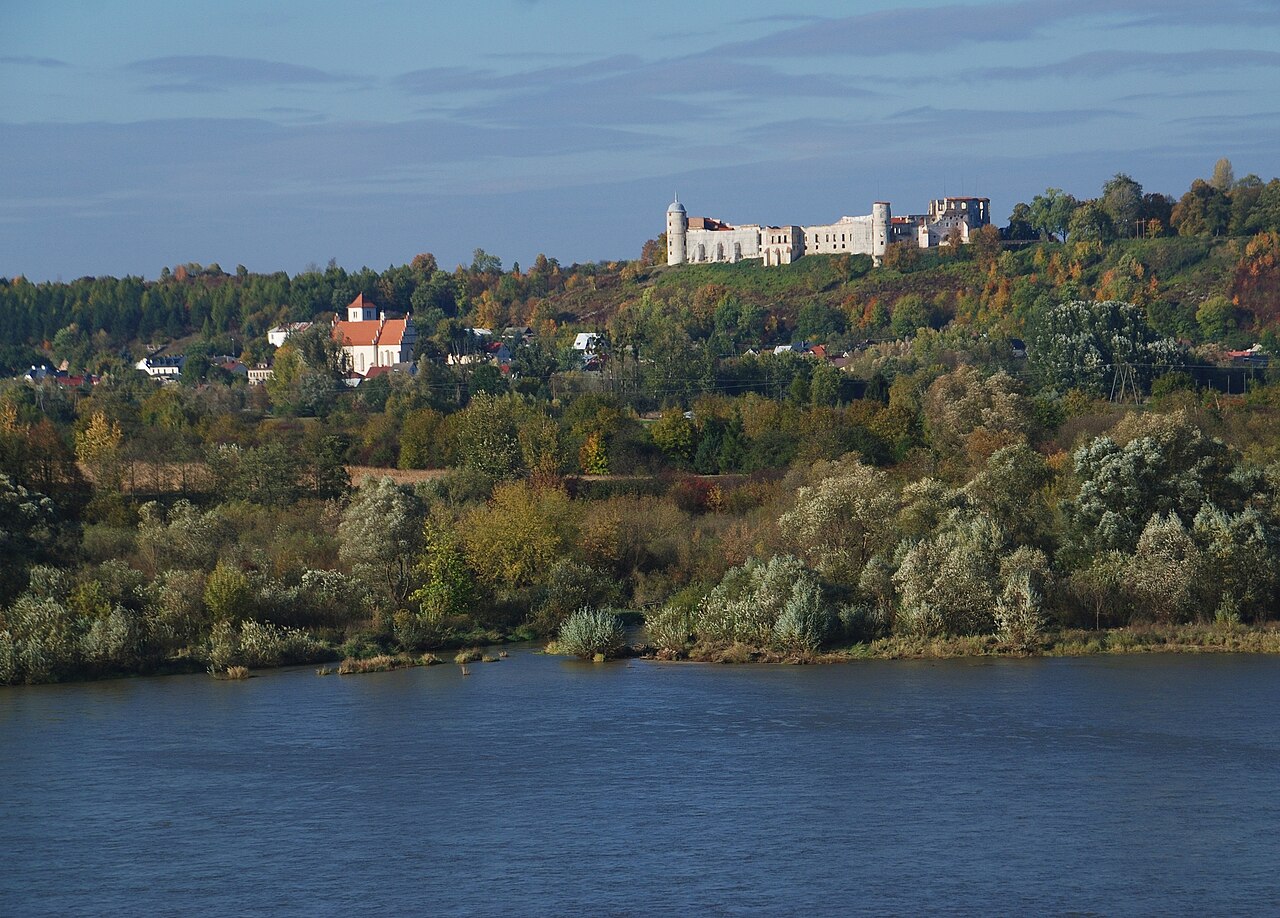
From 1509, the castle was granted to the Firlej family, who initiated a Renaissance-style reconstruction. Under their patronage, the southwestern residential wing was raised and adorned with Renaissance attics, and the river-facing tower was similarly enhanced. These changes introduced Italian Renaissance architectural elements, reflecting the broader cultural influences reaching Poland during the 16th century. The Firlej family also built a new castle in Janowiec across the Wisła, which became their main residence.
Decline and destruction in the 17th century
The castle’s military importance waned due to its location far from Poland’s borders and its outdated fortifications. During the Swedish Deluge (1655-1657), the fortress was captured by Swedish forces, who looted and set it on fire but did not demolish it. Further damage was inflicted during the Transylvanian invasion under Prince George Rákóczi in 1657 and a devastating fire in 1663. The castle gradually fell into ruin, with one tower demolished by Austrian authorities in 1809 due to safety concerns.
Ownership passed through several noble families, including the Radziwiłł, Lubomirski, Sapieha, and Sanguszko families. The castle ceased to function as a residence or military stronghold and became a historic ruin.
Preservation efforts and modern status
In 1906, the Society for the Protection of Historical Monuments initiated the first conservation efforts to preserve the castle ruins. Post-World War II restoration included partial masonry repairs and reconstruction of the semicircular gate. Visitors today can explore the remains of the walls, residential wings, and the iconic cylindrical Łokietek Tower, which stands about 20 meters tall with massive walls and an elevated entrance. The tower’s barrel-like shape was a deliberate defensive design to prevent ladder placement and reduce damage from flaming arrows.
The castle is accessible to the public and serves as an important cultural and historical site, offering insights into medieval and Renaissance military architecture in Poland. Its ruins provide a tangible connection to the region’s turbulent history and evolving architectural styles.
Architectural highlights and defensive features
The łokietek tower
The Łokietek Tower is a standout feature of Kazimierz Dolny Castle. Its cylindrical form, thick walls, and elevated entrance exemplify the stołp type of tower, designed as a last refuge during sieges. The tower’s lower chamber functioned as a dungeon, emphasizing its defensive role. Its later use as a lighthouse for river navigation highlights the adaptive reuse of medieval military structures.
Castle fortifications and layout
The lower castle’s oval stone walls, approximately two meters thick, were built to withstand medieval assaults and featured crenellations for defenders. The addition of a dry moat and terracing of the courtyard improved defensive capabilities. Residential wings incorporated during the Renaissance reflect the transition from purely military fortress to a noble residence.
Historical significance and cultural heritage
Kazimierz Dolny Castle played a vital role in the defense and administration of the region during the Middle Ages and the Renaissance. Its position on the Wisła River crossing made it a key point for controlling trade and collecting tolls, contributing to the town's prosperity. The castle’s architectural evolution from Gothic to Renaissance styles mirrors broader European trends and the influence of Italian architects in Poland.
Today, the castle is recognized as a valuable cultural heritage site, attracting visitors interested in history, architecture, and the scenic beauty of the Kazimierz Dolny region. Its ruins provide a compelling narrative of Poland’s medieval past and the transformations wrought by war, politics, and changing tastes in architecture.
Frequently asked questions (FAQ)
- When was Kazimierz Dolny Castle originally built?
- Kazimierz Dolny Castle originated in the late 13th or early 14th century, with the Łokietek Tower constructed under King Władysław I Łokietek and the lower castle built by King Casimir III the Great in the 1340s.
- What architectural styles are represented in Kazimierz Dolny Castle?
- The castle showcases Gothic architecture from the 14th century and Renaissance modifications from the 16th century, including Italian Renaissance elements introduced by the Firlej family.
- Is Kazimierz Dolny Castle open to visitors?
- Yes, the castle ruins and the Łokietek Tower are accessible to the public. Visitors can explore the preserved walls, towers, and residential wings. Opening times and ticket information are available on the official website.
- What is the historical significance of the Łokietek Tower?
- The Łokietek Tower is a medieval defensive tower built as a royal guard post to protect a strategic river crossing. Its thick walls and elevated entrance made it a stronghold and last refuge during sieges.
- How did the Swedish Deluge affect Kazimierz Dolny Castle?
- During the Swedish Deluge (1655-1657), the castle was captured, looted, and set on fire by Swedish forces, which marked the beginning of its decline into ruin.

Information
Loading map...
Visitor reviews
No reviews yet. Been here? Write the first review and help other travelers!
Write the first reviewVisited this castle? Share your experience
Your review helps other travelers and adds first-hand knowledge to our encyclopedia.