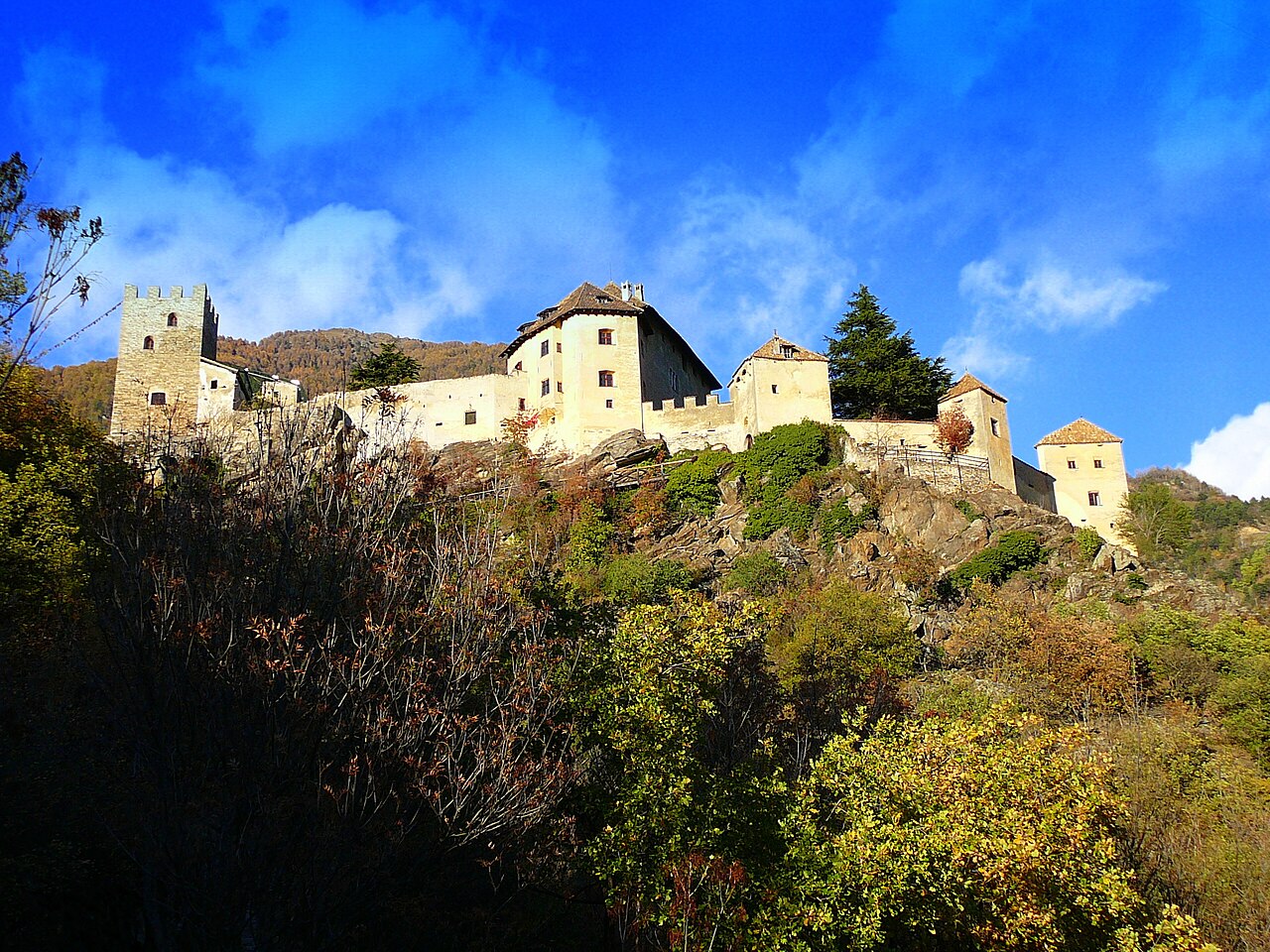
Kastelbell Castle
Kastelbell Castle stands as a significant medieval fortress located in Castelbello, in the South Tyrol region of northern Italy. Constructed in the 12th century by the lords of Montalban, the castle exemplifies the architectural and feudal history of the High Medieval period. Its strategic position atop a hill provided commanding views over the surrounding valley, serving both defensive and administrative functions for its noble owners.
Early history and construction
The earliest documentary evidence of Kastelbell Castle dates to 1238, confirming its existence and importance during the medieval era. The castle's initial construction reflects typical High Medieval fortification techniques, featuring robust stone walls, a central keep, and defensive towers designed to withstand sieges and control local territory. The lords of Montalban, who commissioned the castle, were a prominent noble family responsible for establishing their power base in the region through such fortresses.
Architectural features and expansions
In the 16th century, specifically from 1531, Kastelbell Castle underwent significant expansion under the ownership of the counts of Hendl. These modifications included the enlargement of residential quarters and the addition of Renaissance-style elements, reflecting the evolving architectural tastes and the reduced military function of castles during this period. The castle's layout was adapted to accommodate more comfortable living spaces while retaining its defensive capabilities.
The castle complex comprises a keep, multiple defensive walls, and a courtyard, with surviving elements of the original medieval masonry alongside later Renaissance additions. Its position on a rocky hilltop classifies it as a hill castle, a common type in the Alpine region, designed to exploit natural terrain for defense.
Decline, damage, and restoration
Kastelbell Castle suffered significant damage due to fires in the 19th century, which led to its abandonment and gradual decay. For many decades, the castle remained in a state of ruin, with much of its structure exposed to the elements and losing its former grandeur. However, a dedicated restoration project was undertaken between 1987 and 1995, aiming to preserve the remaining structures and stabilize the castle for future generations.
The restoration efforts focused on repairing damaged walls, reconstructing parts of the residential buildings, and conserving the castle's historical fabric. Today, Kastelbell Castle is recognized as an important cultural monument, attracting visitors interested in medieval architecture and the history of South Tyrol.
Cultural significance and tourism
Kastelbell Castle serves not only as a historical landmark but also as a symbol of the region's medieval heritage. It offers insight into the feudal system, architectural evolution from the High Middle Ages to the Renaissance, and the strategic importance of hilltop fortifications in the Alps. Visitors can explore the castle grounds, enjoy panoramic views of the surrounding landscape, and learn about the noble families who shaped its history.
Access to the castle is facilitated by well-maintained paths, making it a popular destination for tourists interested in history, architecture, and nature. The castle's preservation contributes to the cultural identity of Castelbello and the wider South Tyrol area.
Frequently asked questions (FAQ)
- How do I get to Kastelbell Castle?
- Kastelbell Castle is located in Castelbello, Italy, and can be easily reached by car or public transport. The nearest major city is Bolzano, from where you can take a train or bus to the village of Castelbello.
- What is the historical significance of Kastelbell Castle?
- Kastelbell Castle dates back to the 12th century and played a crucial role in the defense of the region. It served as a residence for noble families and has witnessed significant historical events over the centuries.
- When was Kastelbell Castle built?
- Construction of Kastelbell Castle began in the early 12th century, with subsequent renovations and expansions occurring over the following centuries. Its architecture reflects the medieval styles of the time, showcasing the castle's long history.
- Can I visit Kastelbell Castle year-round?
- Yes, Kastelbell Castle is open to visitors throughout the year, although hours may vary by season. It is advisable to check the official website for specific opening hours before planning your visit.
- Why is Kastelbell Castle popular among tourists?
- Kastelbell Castle is popular for its stunning views of the surrounding valleys and mountains, as well as its well-preserved architecture. Visitors are also drawn to its rich history and the various cultural events held throughout the year.
- Is it possible to take guided tours of Kastelbell Castle?
- Yes, guided tours are available and provide an insightful overview of the castle's history and architecture. These tours are offered in multiple languages and are highly recommended for a more enriching experience.
- What are the ticket prices for visiting Kastelbell Castle?
- Ticket prices for Kastelbell Castle are generally affordable, with discounts available for students and seniors. Children under a certain age may enter for free, but it is best to check the latest pricing information on the official website.
- What is the best time to visit Kastelbell Castle?
- The best time to visit Kastelbell Castle is during the spring and early autumn when the weather is mild and the surrounding landscape is particularly beautiful. These seasons also tend to have fewer tourists, providing a more peaceful experience.
- Are there any nearby attractions to visit along with Kastelbell Castle?
- Yes, nearby attractions include the picturesque village of Castelbello and the stunning natural scenery of the Venosta Valley. Additionally, visitors can explore other historical sites and enjoy local cuisine in the region.
Information
Website
Visit websiteSources & official resources
Verify the information above using these authoritative references.
Loading map...
Visitor reviews
No reviews yet. Been here? Write the first review and help other travelers!
Write the first reviewVisited this castle? Share your experience
Your review helps other travelers and adds first-hand knowledge to our encyclopedia.