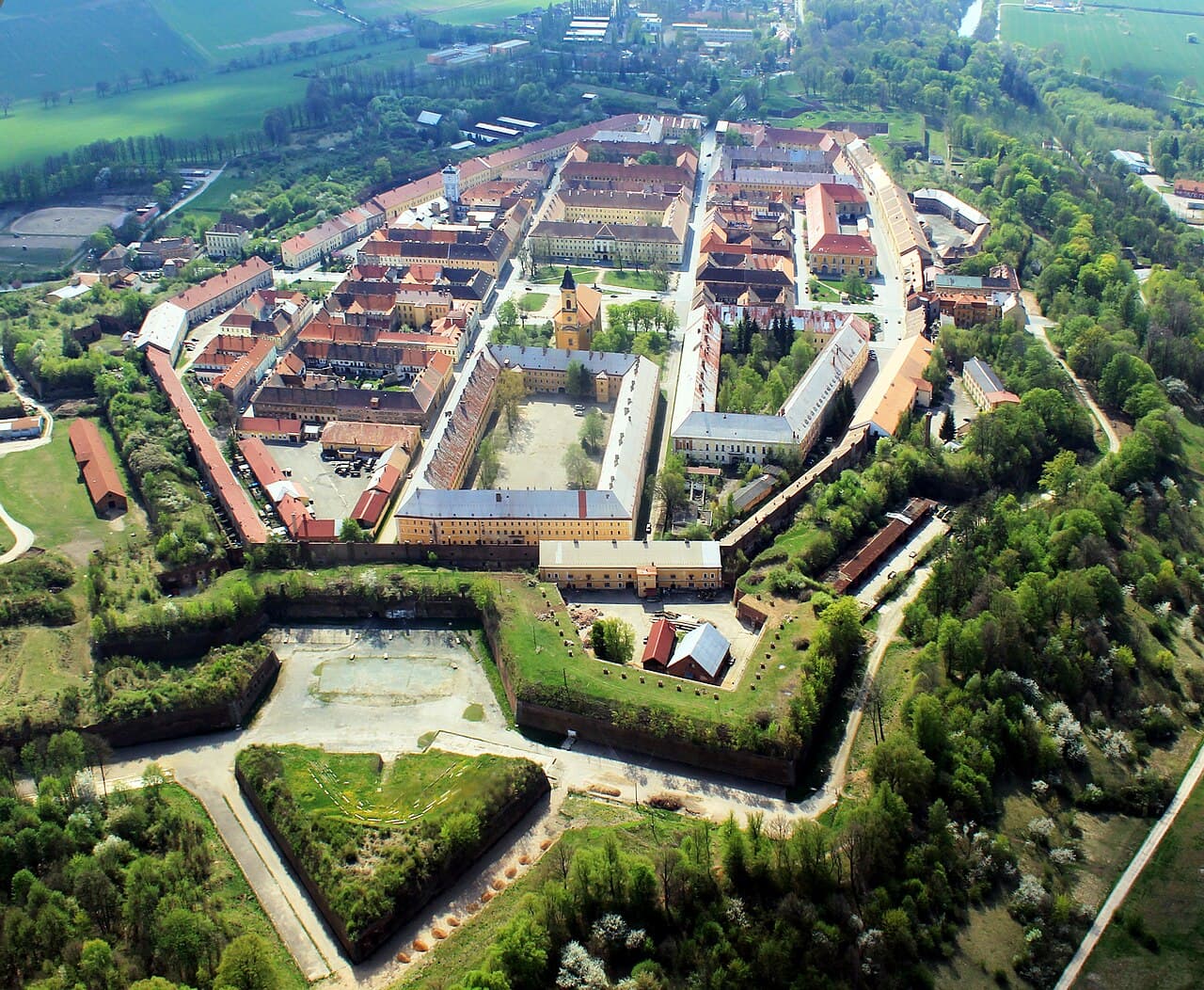
Josefov Fortress
Josefov Fortress is a significant example of 18th-century bastioned fortress architecture located in Jaroměř, in the Hradec Králové Region of the Czech Republic. Constructed between 1780 and 1787, this fortress was part of a broader Habsburg defensive strategy aimed at protecting the empire's borders from Prussian incursions during a period of intense military rivalry in Central Europe. Although its military role was limited due to the shifting nature of warfare and the fact that decisive battles often occurred elsewhere, Josefov Fortress remains an outstanding example of post-Renaissance military engineering and urban planning.
Historical background and strategic purpose
The fortress was originally named Ples but was renamed Josefov in 1793 in honor of Emperor Joseph II. It was constructed alongside the nearby Terezín fortress as part of a defensive network designed to secure the northeastern borders of the Habsburg Monarchy against potential Prussian attacks. Despite the strategic intent, the fortress never saw significant combat, reflecting a common trend among many European fortifications of the era whose military importance diminished as warfare evolved.
In 1948, the fortress town was incorporated into the municipality of Jaroměř, transitioning from a military installation to a civilian urban area while preserving its historical and architectural heritage.
Architectural design and structural features
Fortification layout
Josefov Fortress was designed by the French military architect Claude Benoît Duhamel de Querlonde, who implemented a sophisticated bastioned system characteristic of the late 18th century. The fortress covers an extensive area of approximately 289 hectares, enclosed by octagonal-shaped bastion walls built primarily of brick. These walls form an amphitheatrical layout that integrates natural terrain features to enhance defensive capabilities.
Underground corridors and defensive works
One of the fortress's most remarkable features is its extensive network of three-storey deep underground corridors carved into the cretaceous rock. This labyrinth extends over 45 kilometers, making it one of the most extensive subterranean military passage systems in Europe. These tunnels allowed for the discreet movement of troops, storage of supplies, and protection against artillery bombardment.
Fortress sections and gates
The complex was divided into three main parts: the main fortress which contained residential and public buildings; the lower Crown fortress featuring a fortified island; and the forward redoubt known as the Brdce fortress. The town was accessed through four main gates, each strategically positioned and fortified to control entry and exit.
Notable buildings and cultural landmarks
The dominant architectural landmark within Josefov Fortress is the Empire Church, constructed between 1805 and 1810. Designed by architects Heinrich Hatzinger, Julius D’Andreis, and Franz Joseph Fohmann, the church exemplifies Empire style architecture, which is a form of Neoclassicism prevalent in the early 19th century. The church stands on the site of a former fountain created by the Czech artist J. Malinský in 1817, marking the evolution of the site's urban function from purely military to civic and religious use.
Modern transformation and cultural significance
After its military use declined, Josefov Fortress was gradually converted into a residential district. Its well-preserved bastioned walls and underground corridors have made it an important cultural and historical monument. Today, the fortress is protected as an urban monument reservation, showcasing 18th-century military building techniques and classicist urbanism.
The fortress has also become a vibrant cultural venue, hosting the annual Brutal Assault festival, the largest extreme metal music festival in Central Europe. This event attracts thousands of visitors who gather within the fortress walls each August, highlighting the adaptive reuse of historic military architecture for contemporary cultural activities.
Visiting josefov fortress
Visitors to Josefov Fortress can explore the extensive fortifications, including the underground corridors, bastions, and the Empire Church. The site offers a unique glimpse into late 18th-century military architecture and urban design. Its preservation allows for educational tours and cultural events that celebrate both its historical importance and its ongoing role in the community.
The fortress's integration into the town of Jaroměř makes it accessible for tourists interested in military history, architecture, and cultural festivals. Its combination of historical authenticity and modern cultural use makes Josefov Fortress a distinctive destination in Czechia.
Frequently asked questions (FAQ)
- What is the historical significance of Josefov Fortress?
- Josefov Fortress, built in the 18th century, played a crucial role in the defense of the Habsburg Empire. It served as a military stronghold and is an excellent example of Vauban-style fortifications, reflecting the military architecture of its time.
- When was Josefov Fortress constructed?
- Construction of Josefov Fortress began in 1780 and was completed in 1787. The fortress was designed to protect the strategic town of Jaroměř and was part of a larger military defense system.
- What are the opening hours for Josefov Fortress?
- Josefov Fortress is typically open to visitors from April to October, with operating hours from 9 AM to 5 PM. It is advisable to check the official website for any seasonal variations or holiday hours before planning your visit.
- Can I take guided tours of Josefov Fortress?
- Yes, guided tours are available for visitors wanting to learn more about the fortress's history and architecture. These tours often provide in-depth information and are conducted by knowledgeable guides who can answer your questions.
- Is it possible to access Josefov Fortress with public transportation?
- Yes, Josefov Fortress is accessible via public transportation, with regular bus services connecting Jaroměř to major cities in the region. Once in Jaroměř, the fortress is within walking distance from the bus station.
- What is the best time to visit Josefov Fortress?
- The best time to visit Josefov Fortress is during the spring and early autumn months when the weather is mild and pleasant. This period also allows visitors to enjoy the surrounding natural beauty and participate in various cultural events held at the fortress.
- Are there any nearby attractions to visit along with Josefov Fortress?
- Yes, nearby attractions include the historic town of Jaroměř, the Church of St. Jacob the Greater, and the scenic Elbe River. These sites provide additional insight into the region's rich history and natural beauty.
- What are the ticket prices for visiting Josefov Fortress?
- Ticket prices for Josefov Fortress are generally affordable, with discounts available for students and seniors. Family tickets are also offered, making it a great destination for visitors of all ages.
- How do I prepare for a visit to Josefov Fortress?
- To prepare for your visit, consider wearing comfortable walking shoes, as the fortress grounds can involve some walking. Additionally, check the weather forecast and bring appropriate clothing, as parts of the fortress are outdoors.

Information
Website
Visit websiteSources & official resources
Verify the information above using these authoritative references.
Loading map...
Visitor reviews
No reviews yet. Been here? Write the first review and help other travelers!
Write the first reviewVisited this castle? Share your experience
Your review helps other travelers and adds first-hand knowledge to our encyclopedia.



