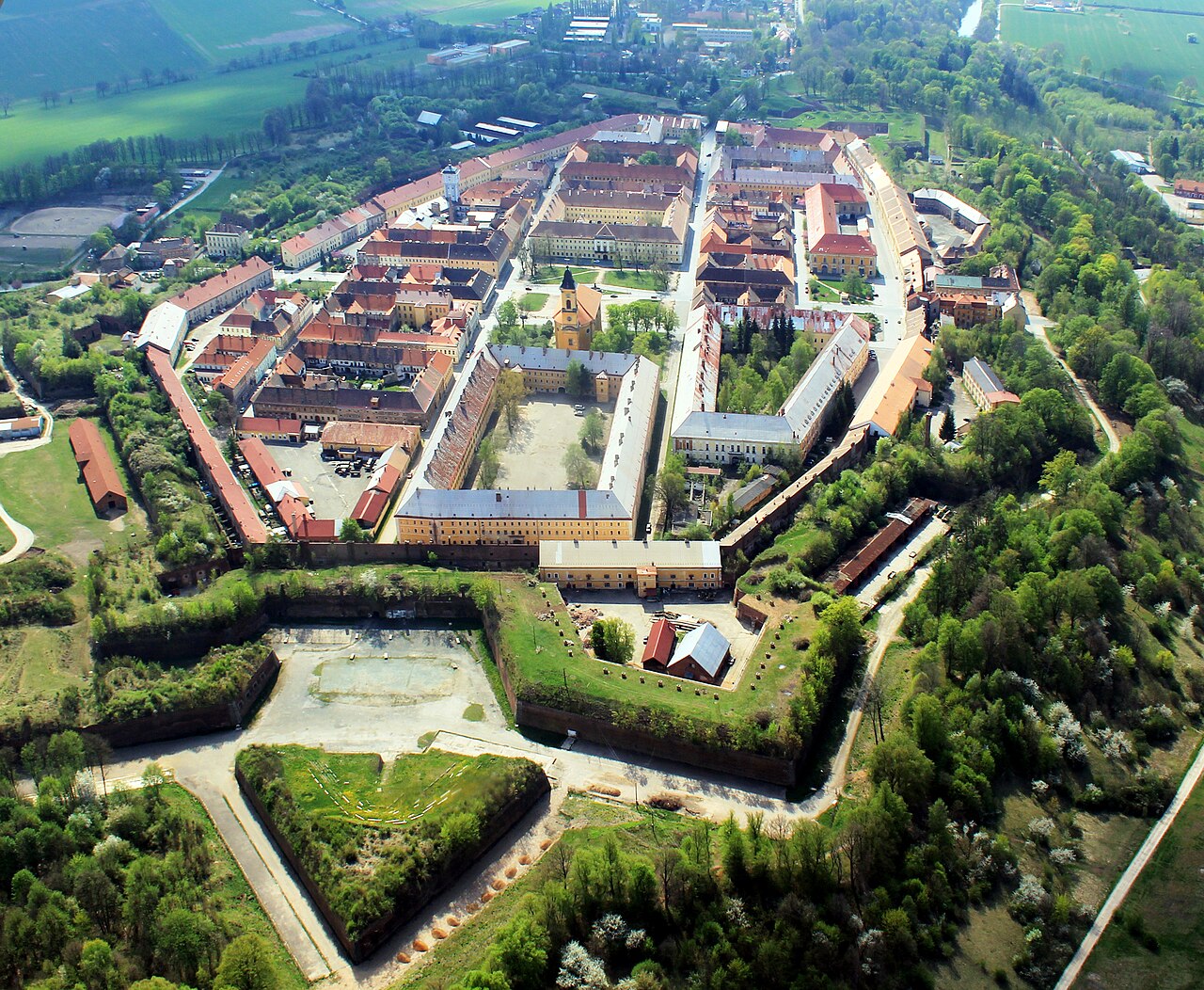
Choustníkovo Hradiště castle is a significant medieval fortress located in the municipality of Choustníkovo Hradiště in the Czech Republic. Constructed in the early 1300s, it stands as a historical example of hill castle fortifications typical of Bohemia during the High medieval period. The castle's earliest recorded mention dates to 1316, linked to King John of Luxembourg and the neighboring town of Dvůr Králové, highlighting its early strategic importance in regional politics and land ownership.
Medieval origins and ownership transitions
The castle was initially established as a defensive stronghold during a period of extensive castle building in Bohemia. Throughout the 14th and 15th centuries, ownership of Choustníkovo Hradiště changed hands multiple times, reflecting the dynamic political landscape of the region. By 1382, the Krušina brothers from Lichtenburk controlled the castle, soon followed by Heřman of Choustník, who expanded the fortress. The Heřman family held it until 1410, after which the property passed through various noble families amid the fluctuating power struggles of medieval Bohemia.
Impact of the thirty years' war and later ownership
During the Thirty Years’ War (1618–1648), the castle came under the ownership of Danish Count František of Ulfeld between 1636 and 1651. In 1645, it suffered significant damage when Swedish troops led by General Torstenson captured and destroyed the fortress during their military campaigns in Bohemia. Following the war, the ruined castle was inherited by František's brother Korfic of Ulfeld and subsequently passed through several other owners, marking a period of decline.
Restoration and religious conversion in the 17th and 18th centuries
A major restoration effort began after 1664 when Count Jan Špork acquired the castle. He initiated repairs that stabilized the structure, preventing further decay. Later, Jan Špork’s son, František Antonín Špork, transformed the site into a monastery for the Celestine religious order after 1705. This conversion included adapting the castle buildings for monastic use, with leadership initially under Špork’s daughter and later the Countess of Rutland. The monastery remained active until 1739 when the nuns relocated to Prague, after which the castle grounds were briefly used for agricultural purposes.
Architectural features and castle layout
The castle was built as a defensive complex on a prominent hill, divided into three main sections. The eastern side, the most accessible approach, was protected by a moat, a common medieval defensive feature designed to deter attackers. The outer bailey was an elongated rectangular enclosure serving as the first line of defense, reinforced by moats and earthen ramparts, including a notable rampart extending southwest from the bailey’s corner.
Inside the outer bailey lay a second rectangular bailey, also fortified by moats and ramparts. Buildings along each side of this inner enclosure are of uncertain date, possibly spanning medieval and later construction phases. Their precise functions remain unclear but likely supported the castle’s operational needs.
The castle core, beyond the third moat, was a bergfried-type structure centered around a tall, heavily fortified tower used primarily for refuge and defense rather than residence. Today, most core structures survive only as earthworks, with stone and mortar largely lost. The western corner of the core housed the palace, notable for its barrel-vaulted cellar, a vaulted underground chamber providing secure storage. The bergfried tower stood in the northeast corner, emphasizing the defensive focus of the design. Additional buildings lined the fortified perimeter walls, creating a defensive circuit around the core.
Current condition and cultural significance
Today, Choustníkovo Hradiště exists primarily as ruins consisting of foundation outlines, earth mounds, and partial wall fragments. These remains are preserved in situ on the original hilltop site and are accessible to visitors, though no official marked paths lead directly to the ruins. The surrounding area is connected by regional cycling routes, situating the castle within a broader cultural and natural landscape.
The site has been protected as a cultural monument since 1964, acknowledging its historical importance and the insights it offers into medieval and early modern fortification architecture in the Czech lands. The preservation of its earthworks and ruins contributes valuable knowledge about the layered history of castle construction, military strategy, and religious transformation in the region.
Historical context and architectural significance
Choustníkovo Hradiště exemplifies the evolution of Bohemian castle architecture from the High medieval period through the early modern era. Its bergfried tower typifies the defensive priorities of medieval castles, emphasizing refuge and stronghold capabilities. The layered bailey system, moats, and ramparts reflect common fortification techniques aimed at maximizing defense on a hilltop location.
The castle's transition from a noble fortress to a religious monastery illustrates broader social and cultural shifts in the region during the 17th and 18th centuries. Adaptations for monastic use involved modifying the original military architecture to accommodate religious functions, a transformation that adds to the site's historical complexity.
Architectural details of the bergfried and palace
The bergfried tower, a hallmark of the castle's defensive design, was strategically positioned in the northeast corner of the core. This tower was primarily a stronghold rather than a residence, characterized by thick walls and limited openings to withstand siege warfare. The adjacent palace featured a barrel-vaulted cellar, an architectural element providing robust underground storage, likely used for food, weapons, or valuables.
Defensive features of the baileys and ramparts
The two baileys formed successive defensive enclosures. The outer bailey's moat and ramparts created a formidable barrier, while the inner bailey's fortified walls and buildings added layers of protection for the castle's inhabitants and resources. The rampart extending southwest from the outer bailey's corner enhanced defense coverage, demonstrating thoughtful integration of natural terrain and constructed fortifications.
The castle in the landscape and visitor experience
Situated on a hill, the castle commanded views over the surrounding countryside, a strategic advantage for surveillance and defense. Visitors today can explore the ruins and earthworks, gaining a tangible sense of the castle's original scale and layout. Although the site lacks formal visitor infrastructure, its accessibility via regional cycling routes makes it a point of interest for cultural tourism and historical exploration in Czechia.
Frequently asked questions (FAQ)
- How do I get to Choustníkovo Hradiště?
- Choustníkovo Hradiště is easily accessible by car and public transportation. If you are driving, you can find parking nearby. For public transport, check local bus and train schedules that connect to nearby towns.
- What is the historical significance of Choustníkovo Hradiště?
- Choustníkovo Hradiště is an important historical site that dates back to the 13th century, serving as a royal castle. It played a key role in the defense of the region and reflects the architectural styles of its time. The castle has seen various renovations that highlight its historical evolution.
- When was Choustníkovo Hradiště built?
- The original construction of Choustníkovo Hradiště began in the early 13th century, around 1230. Over the centuries, it underwent several modifications and expansions, adapting to the changing needs of its occupants. Today, it stands as a testament to medieval architecture in Czechia.
- Can I take guided tours of the castle?
- Yes, guided tours are available at Choustníkovo Hradiště, offering visitors a comprehensive overview of its history and architecture. These tours are led by knowledgeable guides who share fascinating stories and insights about the castle. It is advisable to check the schedule and book in advance during peak seasons.
- Why is Choustníkovo Hradiště popular among visitors?
- Choustníkovo Hradiště attracts visitors due to its rich history, stunning views, and well-preserved architecture. The castle's scenic location provides a picturesque backdrop for photography and exploration. Additionally, it offers a glimpse into the historical lifestyle of the Czech nobility.
- Is it possible to visit Choustníkovo Hradiště with children?
- Yes, Choustníkovo Hradiště is a family-friendly destination, with various activities and exhibits that engage children. The spacious grounds allow for exploration and play, while the guided tours are suitable for all ages. Make sure to check for any special family events during your visit.
- What are the opening hours for Choustníkovo Hradiště?
- Choustníkovo Hradiště is typically open from April to October, with specific hours varying by season. During the peak summer months, the castle is open daily, while in the off-peak season, it may have limited hours. It's recommended to check the official website for the latest opening times before your visit.
- What are the ticket prices for Choustníkovo Hradiště?
- Ticket prices for Choustníkovo Hradiště vary depending on age and the type of tour chosen. Generally, adults pay a standard entry fee, while discounted rates are available for students and seniors. Children under a certain age may enter for free, so be sure to check the latest pricing details on the official website.
- What are some nearby attractions to visit?
- Nearby attractions include the charming town of Jičín, known for its historic architecture and beautiful parks. Additionally, the picturesque Bohemian Paradise offers hiking and nature experiences. Visitors can also explore other castles and ruins in the region, making it a great area for a day trip.
Information
Loading map...
Visitor reviews
No reviews yet. Been here? Write the first review and help other travelers!
Write the first reviewVisited this castle? Share your experience
Your review helps other travelers and adds first-hand knowledge to our encyclopedia.