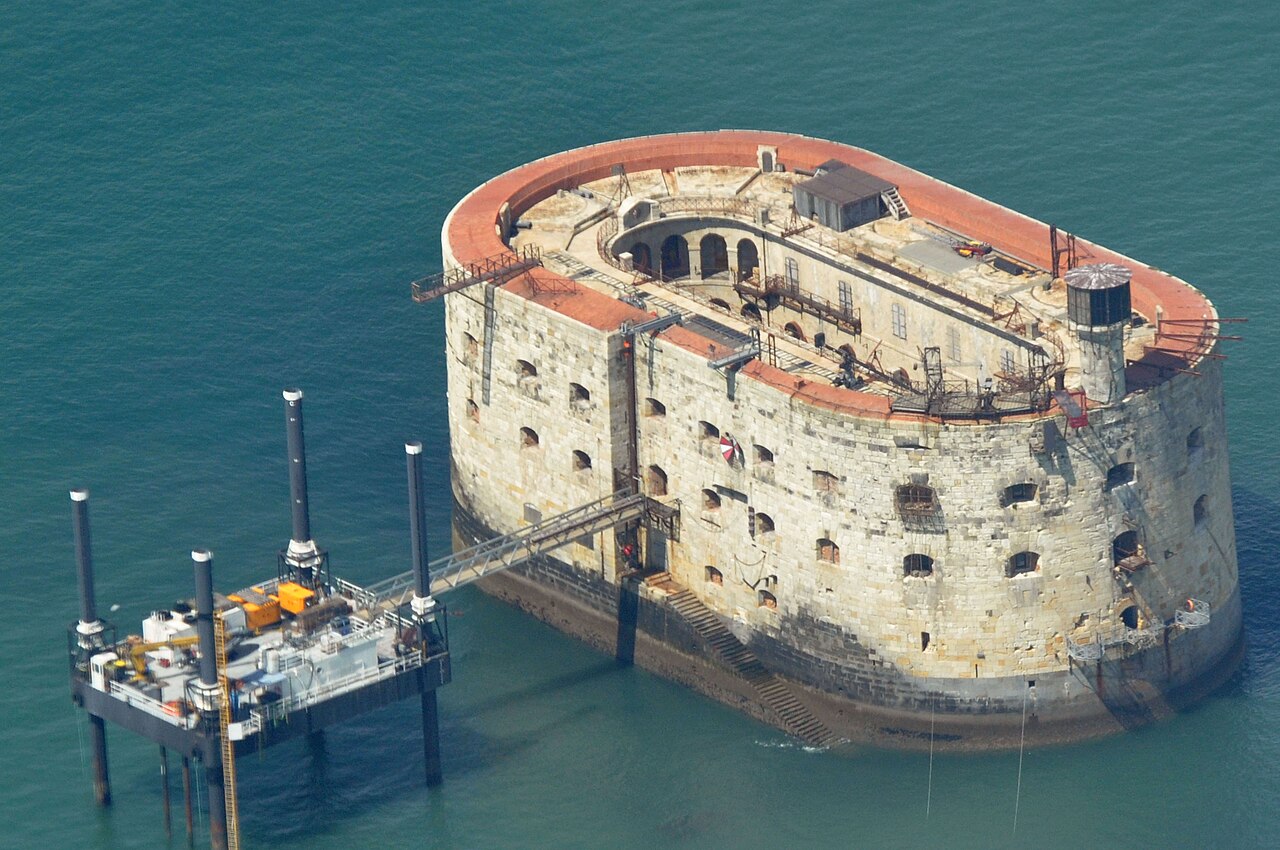
Île-d'Aix Fortifications
Île-d'Aix is a small island located off the west coast of France in the Atlantic Ocean. It is renowned for its historic fortifications dating primarily from the early 19th century, constructed under the orders of Napoleon Bonaparte as part of coastal defenses against British naval threats. The island remains a popular destination for tourists, especially during the summer months, due to its rich history and well-preserved military architecture.
Napoleon's influence and fortification efforts
In 1808, Napoleon visited Île-d'Aix and directed significant enhancements to its defenses. Recognizing the strategic importance of the island in controlling access to the nearby naval base of Rochefort, he ordered the construction of several military structures. Among these was a residence for the commander of the stronghold, which today serves as the Musée Napoléon. This building provides insight into the military administration of the era and Napoleon's personal involvement in fortification planning.
Napoleon also commissioned the building of Fort Liedot, named in honor of Colonel Liedot, who died during the Russian campaign. This fortification was designed to strengthen the island's defenses against naval attacks and featured robust walls, artillery placements, and barracks for troops. The fort's construction reflects the modern military engineering principles of the Napoleonic era, emphasizing both offensive and defensive capabilities.
Strategic naval battles near Île-d'Aix
The waters surrounding Île-d'Aix were the scene of significant naval engagements during the Napoleonic Wars. Most notably, the Battle of the Basque Roads in 1809 took place just off the island. This battle involved the British Royal Navy launching a daring fireship attack led by Captain Thomas Cochrane against the French Atlantic Fleet anchored in the Basque Roads.
The attack occurred on the night of April 11, 1809, and resulted in most of the French ships being driven ashore. Although the subsequent three-day engagement did not completely destroy the French fleet, it severely weakened French naval power in the region. This battle underscored the strategic importance of Île-d'Aix and its fortifications in protecting French maritime interests.
Napoleon's final days in France on Île-d'Aix
Following his defeat at the Battle of Waterloo in June 1815, Napoleon Bonaparte spent his last days in France on Île-d'Aix from July 12 to 15. During this time, he attempted to evade capture by the British Royal Navy blockade with plans to escape to North America.
Realizing that escape was impossible, Napoleon ultimately surrendered to the British aboard HMS Bellerophon. He was subsequently transported to Torbay and Plymouth before his exile to Saint Helena. The island thus holds a significant place in Napoleonic history as the site of his final moments on French soil.
Architectural features of the fortifications
The fortifications on Île-d'Aix exhibit characteristics typical of early 19th-century military architecture. Fort Liedot includes thick stone walls designed to withstand artillery bombardment, bastions for mounting cannons, and strategically placed embrasures for firing upon enemy ships.
The island's defensive system also incorporated natural features, using the surrounding waters as a moat-like barrier. The compact layout of the fortifications allowed for efficient troop movement and communication between defensive positions. The commander’s house, now the Musée Napoléon, features period military architectural elements and serves as a cultural monument preserving the island's history.
Current status and tourism
Today, the Île-d'Aix fortifications are well preserved and accessible to visitors. The Musée Napoléon offers exhibitions on the island's military history and Napoleon's time there. Visitors can explore the remains of Fort Liedot and other defensive structures, gaining insight into the strategic importance of the island during the Napoleonic Wars.
The island is reachable by ferry from the mainland and is a favored day-trip destination. Its combination of historical significance, military architecture, and scenic coastal environment makes it a unique site for those interested in French history and early 19th-century fortifications.
Frequently asked questions (FAQ)
- How do I get to Île-d'Aix?
- Île-d'Aix is accessible by ferry from the French mainland, typically departing from nearby ports such as Fouras. Ferries run regularly during the tourist season, especially in summer.
- What historical events took place at Île-d'Aix?
- The island was central during the Napoleonic Wars, notably the 1809 Battle of the Basque Roads and as the location where Napoleon spent his last days in France in 1815 before his exile.
- Can I visit the Musée Napoléon on Île-d'Aix?
- Yes, the Musée Napoléon is open to visitors and showcases artifacts related to Napoleon's time on the island and the military history of the fortifications.
- What architectural style are the fortifications on Île-d'Aix?
- The fortifications reflect early 19th-century military architecture with thick stone walls, bastions, and artillery placements typical of the Napoleonic era.
- Is Île-d'Aix suitable for day trips?
- Yes, Île-d'Aix is a popular day-trip destination, especially in summer, offering a mix of historical sites, walking paths, and scenic views.
Information
Loading map...
Visitor reviews
No reviews yet. Been here? Write the first review and help other travelers!
Write the first reviewVisited this castle? Share your experience
Your review helps other travelers and adds first-hand knowledge to our encyclopedia.