Holstentor
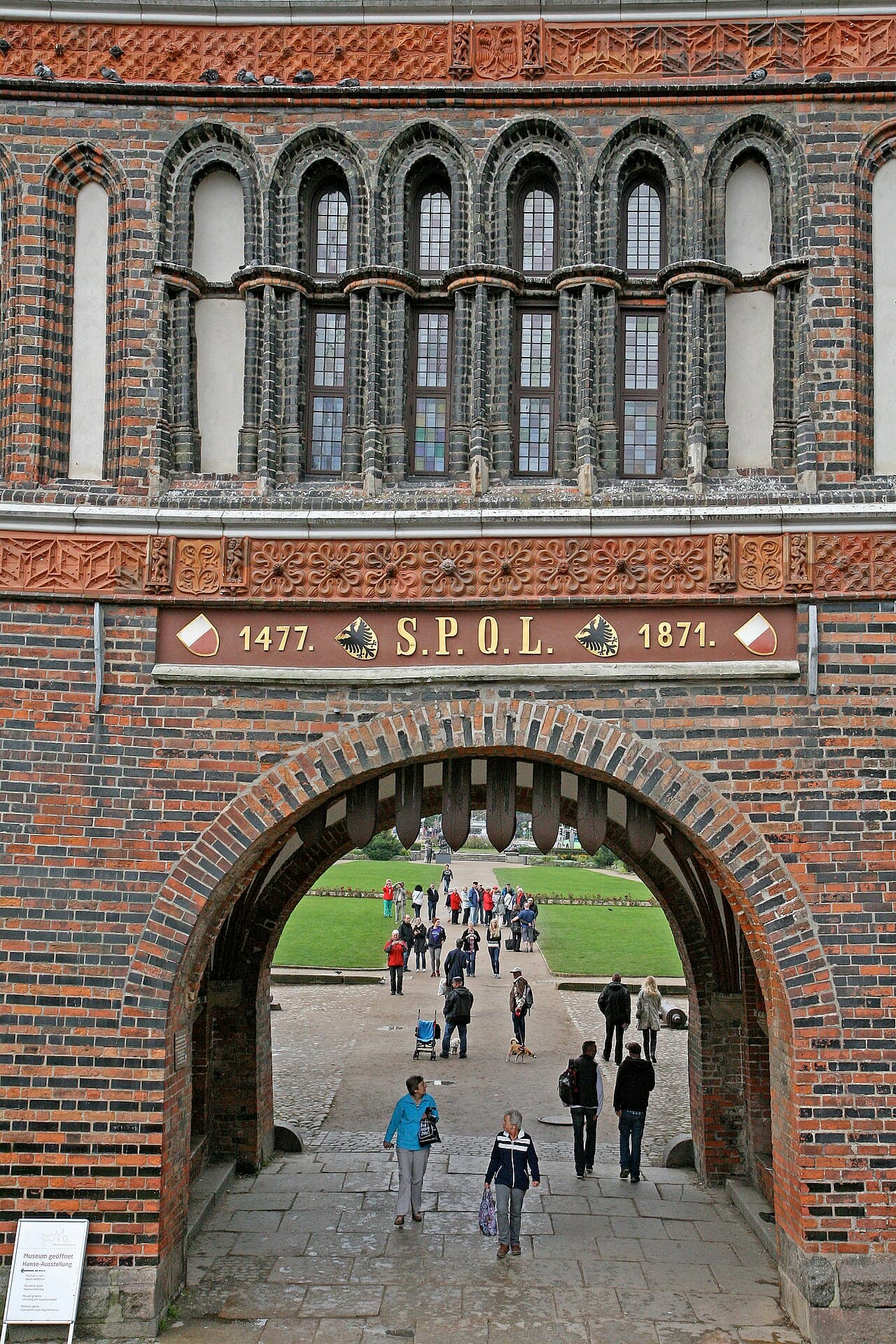
The Holstentor, also known as the Holsten Gate, is a prominent city gate located at the western boundary of the historic old town of Lübeck, Germany. Constructed in 1464, this Brick Gothic edifice stands as one of the most recognizable symbols of Lübeck's rich medieval past. The gate is part of the city's former fortifications and is one of only two surviving city gates, the other being the Burgtor or Citadel Gate. This architectural landmark, with its distinctive twin round towers and arched entrance, embodies the defensive ingenuity and aesthetic style of the late medieval period.
Historical context and significance
The Holstentor was built during a time when Lübeck was a leading city in the Hanseatic League, a powerful economic and defensive alliance of merchant guilds and market towns in Northwestern and Central Europe. The construction of this gate was part of a broader effort to fortify the city against potential military threats and to control access to the prosperous urban center. Its imposing structure served both as a defensive bastion and a symbol of Lübeck's wealth and importance in the 15th century.
Over the centuries, the Holstentor has witnessed numerous historical events, including sieges and political changes, reflecting the turbulent history of the region. Despite the evolution of warfare and urban development, the gate has remained remarkably well preserved, making it a valuable cultural and architectural heritage site.
Architectural features and design
Brick Gothic style and construction
The Holstentor is a quintessential example of Brick Gothic architecture, a style prevalent in Northern Germany and the Baltic region during the Middle Ages. This style is characterized by the use of red brick as the primary building material, due to the scarcity of natural stone in the area. The gate's construction showcases the mastery of medieval brickwork, with intricate patterns and robust structural elements.
Twin round towers and arched gateway
The gate features two massive round towers flanking a central arched entrance. These towers were designed for defensive purposes, equipped to house guards and artillery. Their cylindrical shape was strategic, as it deflected projectiles better than flat walls. The towers rise several stories high, topped with conical roofs that add to the gate's distinctive silhouette.
Defensive elements and bastions
As a bastioned fortress, the Holstentor incorporates various military architectural features. The thick walls, narrow windows, and machicolations allowed defenders to repel attackers effectively. The gate's layout included provisions for portcullises and heavy doors, enhancing its defensive capabilities. These features illustrate the transition from medieval fortification methods to early modern military architecture.
Preservation and cultural importance
The Holstentor has undergone several restoration efforts to maintain its structural integrity and historical appearance. Its status as part of Lübeck's UNESCO World Heritage Site since 1987 underscores its cultural and historical value. The gate is not only a tourist attraction but also a symbol of Lübeck's identity and heritage.
Today, the Holstentor houses a museum dedicated to Lübeck's history, offering visitors insights into medieval urban life, trade, and fortifications. Its preservation allows for educational opportunities and serves as a tangible connection to the past.
Visitor experience and accessibility
Visitors to the Holstentor can explore the interior museum exhibits, which feature artifacts, models, and multimedia presentations related to the city's medieval era. The gate's location at the edge of the old town makes it easily accessible on foot from Lübeck's central areas. Its imposing presence and historical ambiance provide a compelling experience for history enthusiasts and casual tourists alike.
The surrounding area includes other medieval structures and the picturesque old town, enhancing the overall cultural visit. Guided tours and informational materials are available to enrich the understanding of the gate's architectural and historical significance.
Frequently asked questions (FAQ)
- What is the Holstentor?
- The Holstentor is a historic city gate in Lübeck, Germany, known for its distinctive Gothic architecture and significance as a symbol of the city. Built in the 15th century, it served as a primary entrance to Lübeck, showcasing the city's wealth during the Hanseatic League period.
- When was the Holstentor constructed?
- The Holstentor was constructed between 1464 and 1478, making it one of the most iconic structures from the late medieval period in Germany. Its design and construction reflect the architectural trends and defensive needs of the time.
- What are the opening hours for the Holstentor?
- The Holstentor is typically open to visitors from 10 AM to 5 PM, but hours may vary by season. It is advisable to check the official website for the most accurate and up-to-date information before planning your visit.
- Can I enter the Holstentor?
- Yes, visitors can enter the Holstentor, which houses a museum showcasing the history of Lübeck and the Holstentor itself. Admission includes access to various exhibits that detail the city's rich maritime past and its role in trade.
- Is it possible to purchase tickets online for the Holstentor?
- Yes, tickets for the Holstentor can be purchased online, allowing for a quicker entry and the option to skip long lines at the ticket counter. This is highly recommended during peak tourist seasons when the castle can be quite busy.
- When is the best time to visit the Holstentor?
- The best time to visit the Holstentor is during the spring and early autumn months when the weather is mild and favorable for sightseeing. Additionally, visiting during weekdays can help avoid the weekend crowds.
- What nearby attractions can I visit while at Holstentor?
- While visiting the Holstentor, you can also explore Lübeck's charming Old Town, a UNESCO World Heritage site, including attractions such as St. Mary's Church and the Lübeck Cathedral. The nearby Brick Gothic buildings and scenic canals enhance the overall experience of the city's historical ambiance.
- Why is the Holstentor significant to Lübeck?
- The Holstentor is significant as it represents Lübeck’s historical position as a major trade hub within the Hanseatic League. It has become an enduring symbol of the city, reflecting its rich cultural heritage and architectural achievements.
- Is the Holstentor accessible for visitors with disabilities?
- Yes, the Holstentor is equipped with facilities to accommodate visitors with disabilities, including ramps and accessible exhibits. However, it is advisable to check specific accessibility details in advance to ensure a smooth visit.
Photo gallery

Information
Loading map...
Visitor reviews
No reviews yet. Been here? Write the first review and help other travelers!
Write the first reviewVisited this castle? Share your experience
Your review helps other travelers and adds first-hand knowledge to our encyclopedia.



