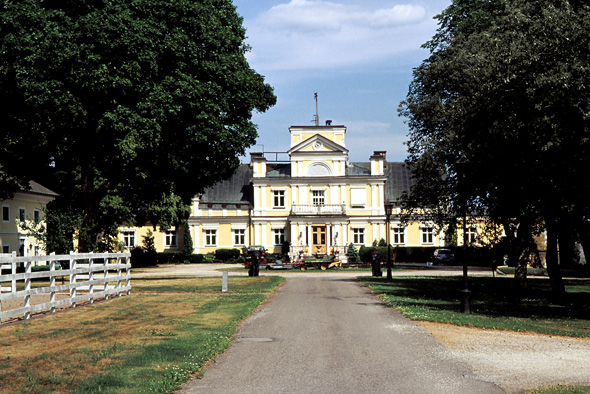
Höjentorp Castle Ruins

Höjentorp Castle ruins in Axvall, Sweden
Axvall, Sweden
High Medieval (11th–13th c.)
Ruins

Höjentorp Castle ruins in Axvall, Sweden, represent a significant medieval site dating back to the 13th century. The castle's origins are closely tied to the ecclesiastical power of the Bishopric of Skara, as it was reportedly donated to the bishop in 1284. This donation reflects the intertwining of religious and secular authority during the High Medieval period in Sweden.

Historical significance and ownership transitions

The castle later returned to the Swedish crown during the Reformation under King Gustav Vasa in the 16th century, a time when many church properties were confiscated. This transfer illustrates the shifting political and religious landscape of Sweden during that era. By the mid-17th century, Queen Christina bestowed Höjentorp as a wedding gift to Maria Eufrosyne, the wife of the prominent nobleman Magnus Gabriel de la Gardie. This gift indicates the castle's continued importance as a noble residence and symbol of status.

The 1722 fire and its aftermath

In 1722, Höjentorp Castle suffered a devastating fire that led to its ruin. According to tradition, Queen Ulrika Eleonora witnessed the blaze from a nearby hill, which was thereafter named Drottningkullen or "the Queen Hill." This event marked the end of the castle as a habitable structure. Today, only the basement ruins remain, providing a tangible link to the castle's medieval past.

Architectural features and landscape

Although the castle is now largely in ruins, the remnants of its basement give insight into the construction techniques of the High Medieval period. The site includes an overgrown garden featuring ash and lime trees, which contribute to the historic ambiance of the location. The slope descending towards the nearby Garden Lake is known for its fragrant ramsons and other rare plants, indicating the area's ecological richness and its integration with the natural landscape.

Context within medieval Skara and regional importance

Höjentorp Castle's location near Skara highlights its strategic and cultural significance during the Middle Ages. Skara was a major center of ecclesiastical and political power in medieval Sweden, and the castle's presence underscores the area's prominence. The ruins serve as a reminder of the region's historical importance and the complex relationships between church, nobility, and monarchy.

Visiting Höjentorp castle ruins today

Visitors to the Höjentorp ruins can explore the remains of the castle's basement and enjoy the surrounding natural beauty. The site offers a quiet glimpse into Sweden's medieval past, with the overgrown gardens and natural flora enhancing the experience. The nearby Drottningkullen provides a vantage point with historical resonance, connecting visitors to the dramatic events of the 18th century.

Frequently asked questions about Höjentorp Castle ruins

  • When was Höjentorp Castle built? The castle dates back to the 13th century, with records indicating it was donated to the bishop of Skara around 1284.
  • What caused the castle to fall into ruin? A major fire in 1722 destroyed much of the castle, leaving only the basement ruins visible today.
  • Can visitors access the ruins? Yes, the ruins are accessible to the public, offering a historical site combined with natural surroundings.
  • Why is the nearby hill called Drottningkullen? It was named after Queen Ulrika Eleonora, who watched the castle fire from that hill in 1722.
  • What is the significance of Höjentorp in Swedish history? The castle reflects medieval ecclesiastical power, royal connections, and noble heritage in the Skara region.

Frequently asked questions (FAQ)

How do I get to Höjentorp Castle Ruins?
Höjentorp Castle Ruins are located in Axvall, Sweden, easily accessible by car or public transportation. The nearest bus stop is just a short walk away, making it convenient for visitors to reach the site.
What is the historical significance of Höjentorp Castle Ruins?
Höjentorp Castle, built in the 15th century, played a crucial role in the region's history as a noble residence. Its ruins now serve as a reminder of Sweden's medieval past and attract history enthusiasts and tourists alike.
When was Höjentorp Castle constructed?
Höjentorp Castle was constructed in the late 1400s, during a time when many such fortifications were built to protect noble families. Although it has mostly crumbled over the centuries, its remnants still convey the architectural style of the period.
Can I explore the ruins of Höjentorp Castle?
Yes, visitors are welcome to explore the ruins of Höjentorp Castle. While there are no formal tours, the site is open to the public, allowing guests to walk around and appreciate the historical architecture and scenic surroundings.
Why is Höjentorp Castle a popular destination for visitors?
Höjentorp Castle is popular due to its rich history and picturesque ruins set in a beautiful natural landscape. It's an ideal spot for photography, picnics, and leisurely walks, making it a perfect day trip for families and history lovers.
Is it possible to visit Höjentorp Castle Ruins year-round?
Yes, Höjentorp Castle Ruins are open year-round, giving visitors the opportunity to explore the site in every season. However, it's advisable to check local weather conditions, as the experience can vary greatly between summer and winter.
What are the opening hours for Höjentorp Castle Ruins?
The ruins are generally accessible at all hours, allowing for flexible visiting times. However, it's recommended to visit during daylight hours to fully enjoy the scenery and ensure safety while exploring.
Are there any nearby attractions to visit while in Axvall?
Yes, Axvall offers several nearby attractions, including picturesque nature trails and other historical sites. Visitors can also enjoy local dining options and cultural experiences, making for a well-rounded trip.
What are the ticket prices for visiting Höjentorp Castle Ruins?
There is no admission fee to visit Höjentorp Castle Ruins, making it an accessible destination for everyone. Visitors can enjoy the historical site without any financial commitment, ideal for budget-friendly outings.

Information

Hill Castle

Loading map...

Visitor reviews

No reviews yet. Been here? Write the first review and help other travelers!

Write the first review

Visited this castle? Share your experience

Your review helps other travelers and adds first-hand knowledge to our encyclopedia.

Write a review

(5/5)

0/2000 characters

Your review will be visible after admin approval

Nearby castles

15.2 km

Mariedal Castle

Lundsbrunn, Sweden

Mariedal Castle, located in the serene surroundings of Lundsbrunn, Sweden, is a distinguished example of Renaissance architecture dating back to 1666. This manor house, originally known as Sörbo, stands in the valley upstream still called Sörbo Valley. The estate's transformation into the present castle began in the mid-17th century when Magnus Gabriel De la Gardie, a prominent Swedish statesman and nobleman, acquired the property. The historical origins and ownership Mariedal Castle owes its name to Maria Euphrosyne, the wife of Magnus Gabriel De la Gardie and sister to King Karl X of Sweden. The manor's history is deeply intertwined with the De la Gardie family, who were influential figures in Swedish nobility during the 17th century. The estate was a symbol of their status and power, reflecting the grandeur expected of noble residences of that era. Architectural design and style The castle is built in the Renaissance style, characterized by its balanced proportions and classical details. The structure consists of two wings, a layout typical of manorial residences of the period, allowing for both residential and administrative functions. While the exact architect remains uncertain, it is widely believed that Jean De la Valle may have influenced the design. This hypothesis stems from the noticeable architectural parallels between Mariedal and other works attributed to De la Valle, especially the Riddarhuset (House of Knights) in Stockholm. However, no definitive evidence confirms his involvement. Interior features The interior of Mariedal Castle is renowned for its stucco ceilings and wainscoting, which exemplify the decorative arts of the Renaissance period in Sweden. These elements contribute to the castle's refined atmosphere and demonstrate the craftsmanship of the time. Additionally, the castle houses a significant collection of portraits belonging to the Sparrerska family, adding historical and artistic value to the estate. Significance and current status Today, Mariedal Castle is owned by the Virgin family and is regarded as one of the finest castles in the region of Västergötland. Its preservation allows visitors to appreciate the architectural and cultural heritage of 17th-century Swedish nobility. The castle's setting in the peaceful Sörbo Valley enhances its appeal as a historical landmark and a testament to Sweden's Renaissance-era manorial architecture. Surrounding landscape and estate The estate's location in Sörbo Valley provides a picturesque backdrop, with natural features that have remained largely unchanged since the castle's construction. The valley and the surrounding grounds contribute to the castle's status as a cultural and historical site, reflecting the traditional Swedish landscape associated with noble estates. Visiting Mariedal Castle While Mariedal Castle is privately owned, its architectural and historical significance draws interest from scholars and enthusiasts of Swedish Renaissance architecture. The castle's well-preserved interiors and art collections offer insights into the lifestyle and aesthetics of the Swedish aristocracy during the 17th century.

Renaissance (15th–17th c.)
Details
16.7 km
Dagsnäs Castle — Sweden castle

Dagsnäs Castle

Falköping, Sweden

Dagsnäs Castle is a historic estate located near Falköping in the region of Västergötland, Sweden. Situated approximately 9 km south of Skara and close to the scenic Lake Hornborga, the castle stands as a notable example of a post-Renaissance hill castle with architectural and cultural significance dating back several centuries. The earliest recorded history of the Dagsnäs estate traces back to the 15th century, when it was owned by the Gumsehuvud family. Over the centuries, ownership transferred through prominent Swedish noble families including the Thott, Soop, Kafle, and Uggla families, reflecting the estate's importance within the regional aristocracy. Architectural development and main building The current main building of Dagsnäs Castle was constructed between 1772 and 1782 under the direction of Per Tham, a noted antiquarian and cultural patron who acquired the estate in 1762. This period corresponds to the post-Renaissance era, and the castle’s architecture embodies characteristics typical of this time, with a robust stone construction that replaced any earlier wooden structures. Per Tham's vision transformed the estate into a cultural center in Västergötland, attracting intellectuals and artists of the period. The castle’s layout includes a central stone building with balanced proportions and classical details that align with late 18th-century Swedish aristocratic architecture. Restoration by Helgo Zettervall In 1874, the castle underwent significant restoration according to plans devised by Helgo Zettervall, a prominent Swedish architect known for his work on historic buildings and churches. Zettervall’s restoration preserved the castle’s structural integrity while enhancing its aesthetic appeal, contributing to the castle’s current appearance. His work often blended historic styles with contemporary needs, ensuring the castle remained functional and visually impressive. Historical significance and cultural heritage Dagsnäs Castle is not only architecturally significant but also culturally important due to its role as a regional hub for arts and antiquarian interests during the 18th and 19th centuries. Per Tham’s stewardship established the castle as a center for cultural exchange, scholarly pursuits, and preservation of regional heritage. The estate’s grounds are notable for housing several Viking Age runestones relocated from surrounding areas, which contribute to its archaeological and historical value. These runestones include: Vg 59 from Norra Härene Vg 67 from Saleby Vg 122 from Abrahamstorp Vg 184 from Smula Vg 186 from Timmele These artifacts provide insight into the region’s Viking past and are an integral part of the castle’s heritage presentation. Location and surroundings Dagsnäs Castle is strategically positioned on a hill overlooking Lake Hornborga, an area known for its natural beauty and rich birdlife, including migratory cranes. The castle’s elevated location classifies it as a hill castle, which historically offered defensive advantages as well as commanding views of the surrounding landscape. The proximity to Skara, one of Sweden’s oldest cities, situates the castle within a historically vibrant region that was central to medieval Swedish politics and culture. Architectural features and estate layout The castle complex includes the main stone building, ancillary structures, and extensive grounds that have been shaped over centuries. The main building features traditional elements such as symmetrical façades, classical window arrangements, and a robust stone foundation typical of late 18th-century Swedish architecture. The estate grounds are landscaped to complement the castle, with areas dedicated to the display of the runestones and other historical artifacts. The preservation of these elements offers visitors a tangible connection to Sweden’s medieval and Viking heritage. Runestones and archaeological importance The presence of multiple runestones on the castle grounds makes Dagsnäs a significant site for those interested in Viking history and runic inscriptions. These stones were carefully moved from their original locations in the surrounding countryside to protect and showcase them. Each runestone bears inscriptions that provide valuable information about the people, events, and beliefs of the Viking Age in this part of Sweden. The castle thus serves both as a historical residence and an open-air museum for ancient Scandinavian culture. Current status and visitor information Dagsnäs Castle remains well preserved and retains much of its historical character. While it is primarily a private estate, the castle and its grounds are occasionally accessible to visitors during special events or by arrangement, offering a glimpse into Sweden’s aristocratic and Viking past. The castle’s combination of post-Renaissance architecture, historical runestones, and scenic location near Lake Hornborga makes it a unique destination for history enthusiasts, archaeologists, and tourists exploring Sweden’s cultural heritage.

Post-Renaissance (17th–18th c.)
Details
19.9 km

Husaby Castle Ruins

Götene, Sweden

Husaby Bishop's castle, located in Götene, Sweden, stands as a historical site marked primarily by its ruins. Constructed in the 1480s, this castle served as the fortified residence of Brynolf Gerlakson, the bishop of Skara. It was designed to fulfill both residential and defensive functions typical of late medieval ecclesiastical castles in Sweden. Historical context and significance The castle's construction in the late 15th century places it within the Late Medieval period, a time when ecclesiastical authorities often built strongholds to assert their power and protect their interests. As the residence of the bishop, Husaby castle was not only a home but also a symbol of the church's influence in the region. The bishopric of Skara was one of the oldest and most significant in Sweden, and the castle reflected this status. During the Reformation in the 1520s, Sweden underwent significant religious and political changes. The castle was confiscated by the state as part of the widespread secularization of church properties. Shortly after this confiscation, the castle was deliberately destroyed, which was a common fate for many ecclesiastical fortifications that were no longer deemed necessary or loyal to the new Protestant regime. Architectural features and layout While much of Husaby castle now lies in ruins, historical records and archaeological findings suggest it was a hill castle type, strategically positioned to oversee the surrounding landscape. The castle likely featured typical medieval defensive elements such as thick stone walls, battlements, and possibly a moat or ditch for added protection. The structure would have included a keep or main residential tower where the bishop lived, along with ancillary buildings for servants and guards. The layout was probably compact, designed for both defense and administrative functions. Its construction in the 1480s suggests the use of local stone and late medieval masonry techniques common in Swedish fortifications of that era. Defensive elements Given its ecclesiastical purpose, the castle balanced comfort with security. Defensive features would have included arrow slits, thick curtain walls, and a gatehouse controlling access. The elevated position provided a natural advantage, allowing defenders to spot approaching threats early. Destruction and current condition Following its confiscation during the Reformation, Husaby castle was destroyed, likely to prevent its use as a military stronghold against the new Protestant authorities. Today, the site is classified as ruins, with only foundational remains and fragments of walls visible. These ruins offer valuable insights into late medieval ecclesiastical architecture and the turbulent history of church-state relations in Sweden. Visiting Husaby castle ruins The ruins of Husaby castle are accessible to the public and serve as a cultural heritage site. Visitors can explore the remains and enjoy the surrounding landscape that once formed the castle's natural defenses. Informational signage at the site provides historical context, helping visitors appreciate the castle's role in Swedish medieval history. The site is particularly interesting for those studying medieval architecture, ecclesiastical history, and the Reformation's impact on Sweden's built environment. Nearby attractions Götene and the surrounding Västra Götaland region offer other historical sites and natural attractions, making a visit to Husaby castle ruins part of a broader cultural itinerary. The area's rich medieval heritage is reflected in nearby churches, ancient monuments, and traditional Swedish countryside.

Late Medieval (14th–15th c.)
Details